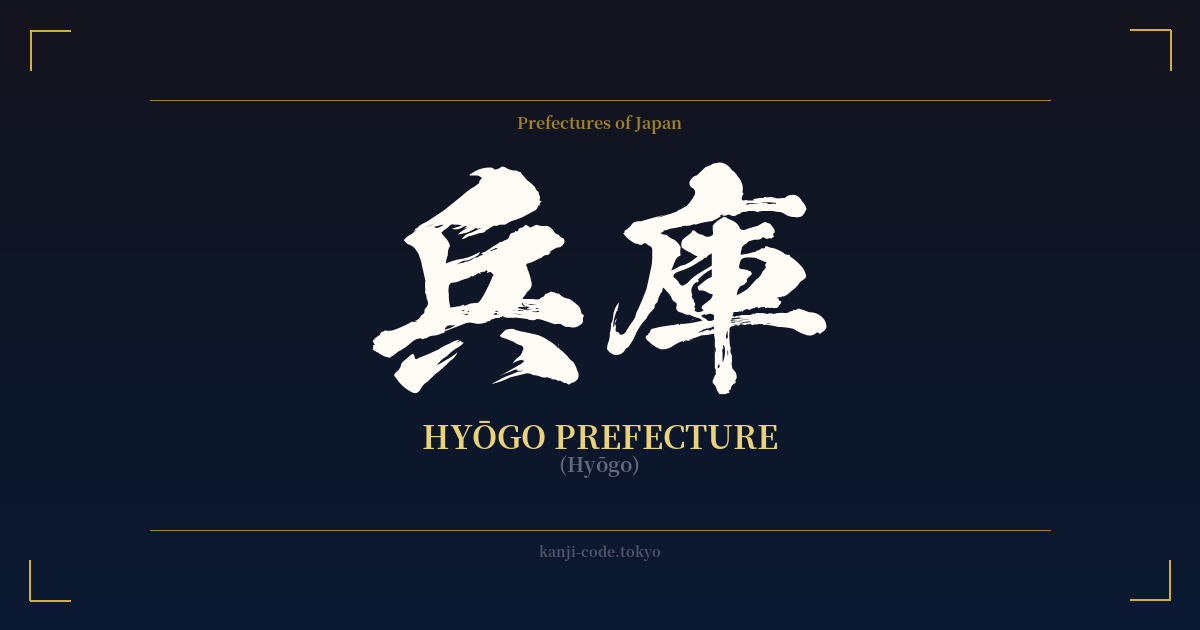
✍️ 兵庫 (Hyōgo) — Cultural Context
The name 兵庫 (Hyōgo) carries a history far deeper than its modern identity as a bustling prefecture in Japan's Kansai region. To understand its essence, one must look at the literal meaning of its characters: 兵 (hyō) meaning 'soldier' or 'arms,' and 庫 (go) meaning 'storehouse' or 'warehouse.' Together, they form the word 'arsenal' or 'armory.'
This name is not a metaphor; it's a direct historical reference. The origin of the name dates back to the Nara period (710-794 AD) when an imperial armory, a 'tsuwamono no kura,' was established in a coastal area of what is now Kobe City. This facility was strategically important for storing weapons and provisioning troops, cementing the area's identity around its military and logistical function. Over centuries, this specific location's name, Hyōgo, expanded to encompass the entire region.
Today, Hyōgo Prefecture is a place of dramatic contrasts and rich culture. It is anchored by the vibrant international port city of Kobe, which rose from the ashes of the devastating Great Hanshin Earthquake in 1995 to become a symbol of resilience and modern urban life. The prefecture is also famous for producing some of the world's most sought-after Kobe beef, a testament to its agricultural heritage.
Stretching from the Seto Inland Sea to the Sea of Japan, Hyōgo's geography is incredibly diverse. It is home to the majestic and iconic Himeji Castle, a UNESCO World Heritage site and arguably Japan's most beautiful feudal castle. It also includes Awaji Island, a place steeped in Japanese creation mythology, and the hot springs of Arima Onsen. Therefore, the kanji 兵庫 represents not just an ancient armory, but a modern, multifaceted region that embodies history, resilience, nature, and culinary excellence.
🖌️ Font Styles for 兵庫
The same kanji can look dramatically different depending on the calligraphy style. Choose a font that matches the mood you want for your tattoo or design.
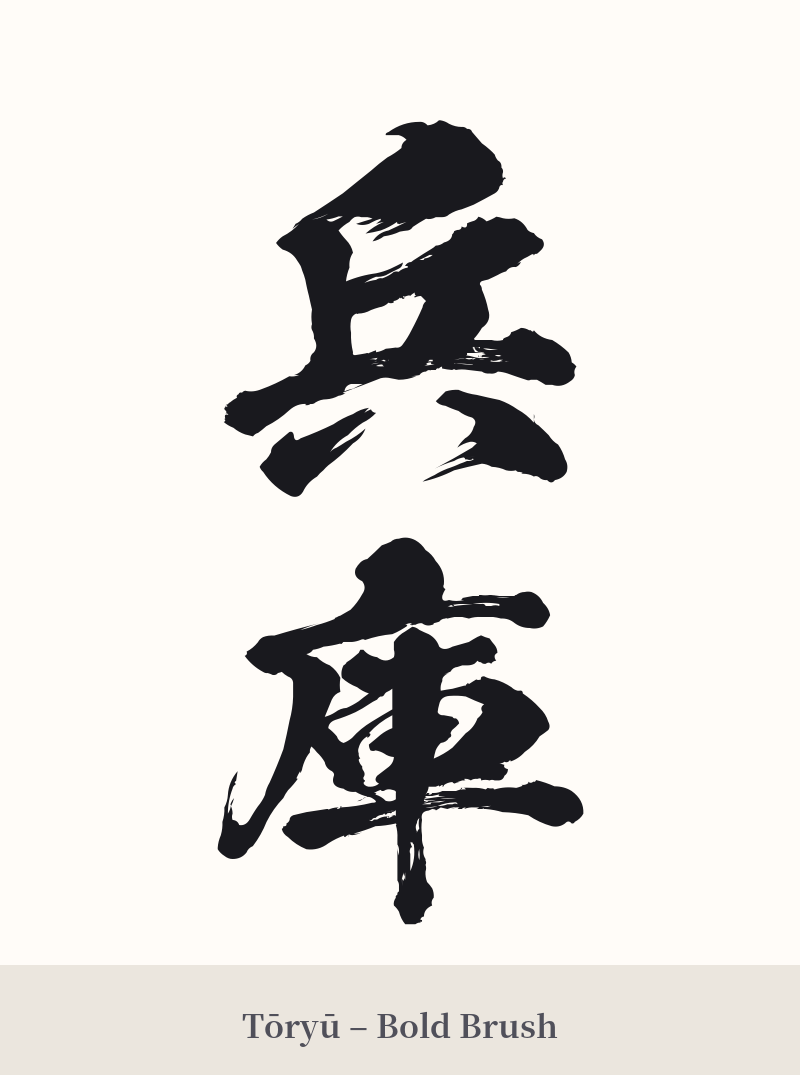
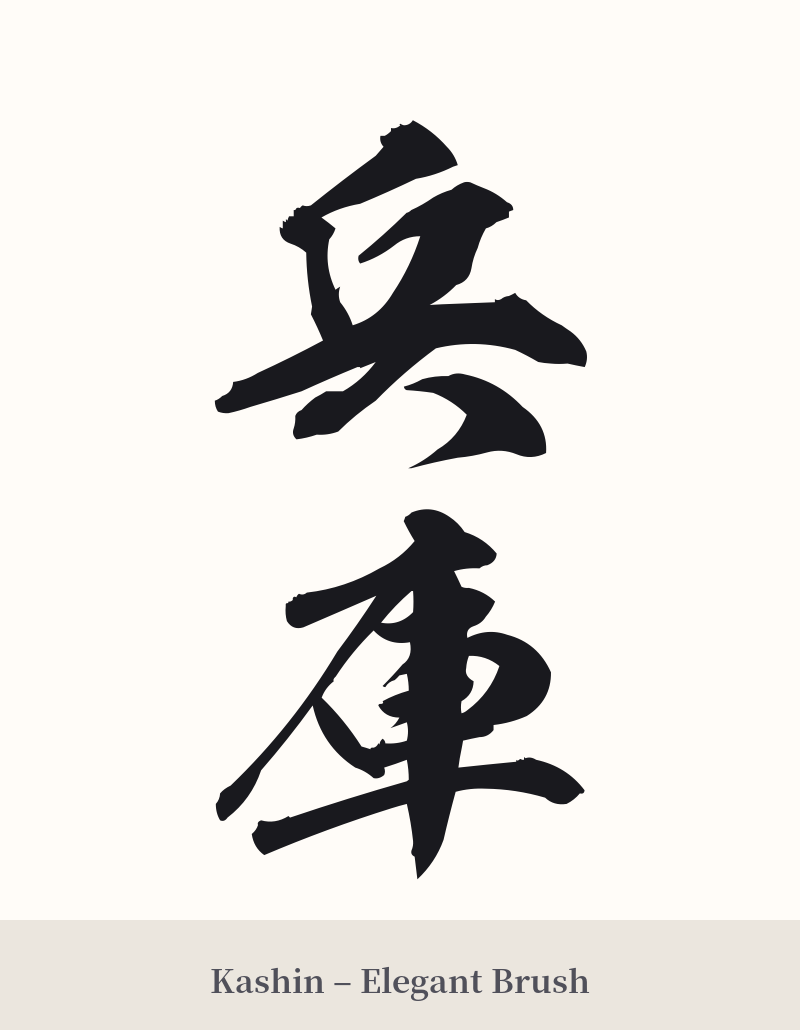
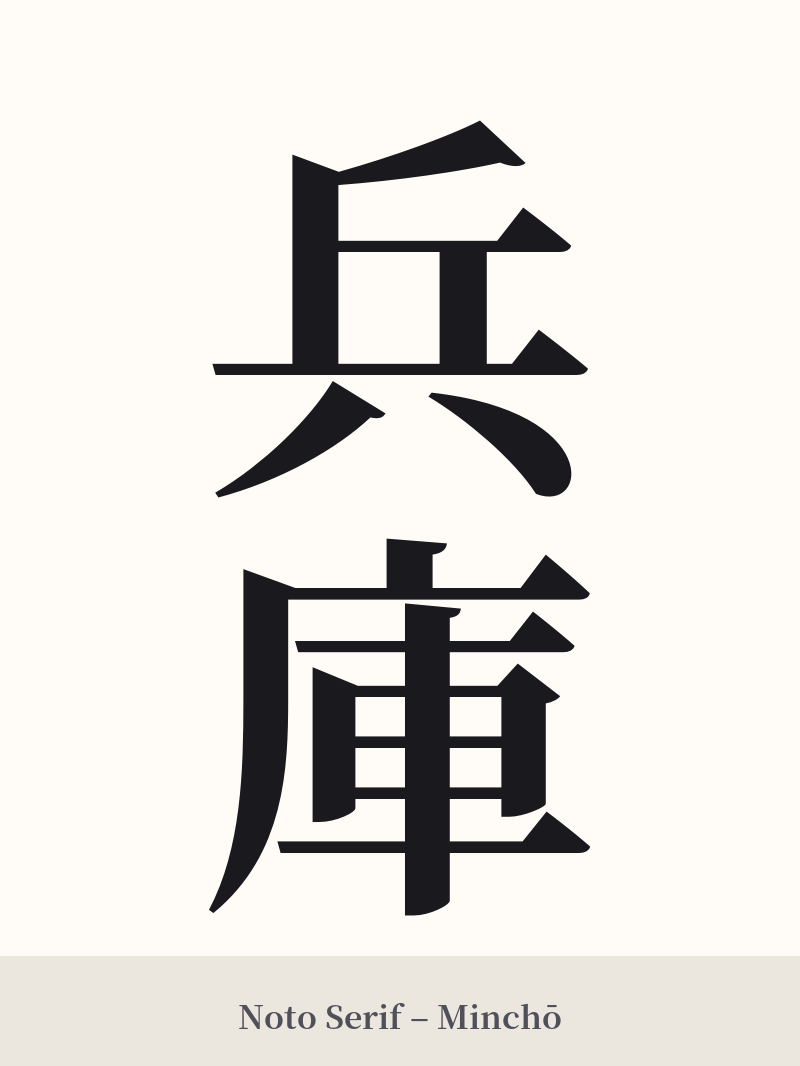
🎨 Tattoo Suitability
📐 Tattoo Design Guide
For a tattoo of 兵庫, the design choices can reflect either its historical roots or its modern identity. The two characters work well both horizontally and vertically.
– Placement: A vertical arrangement is classic and would look great along the spine, the back of the neck, or down the forearm. A horizontal design fits well across the chest, on the upper back, or along the inner bicep.
– Font Style: For a historical feel, consider a powerful calligraphy script like Kaisho (block script) or Gyosho (semi-cursive). This connects the design to the era of castles and samurai. For a more modern take, a clean, sans-serif Mincho-style font can represent Kobe's contemporary, resilient spirit.
– Visual Elements: Consider pairing the kanji with imagery specific to Hyōgo. A silhouette of Himeji Castle behind the characters would be a powerful statement. You could also incorporate waves to represent the port of Kobe or the Akashi Kaikyō Bridge, one of the world's longest suspension bridges.
Comments