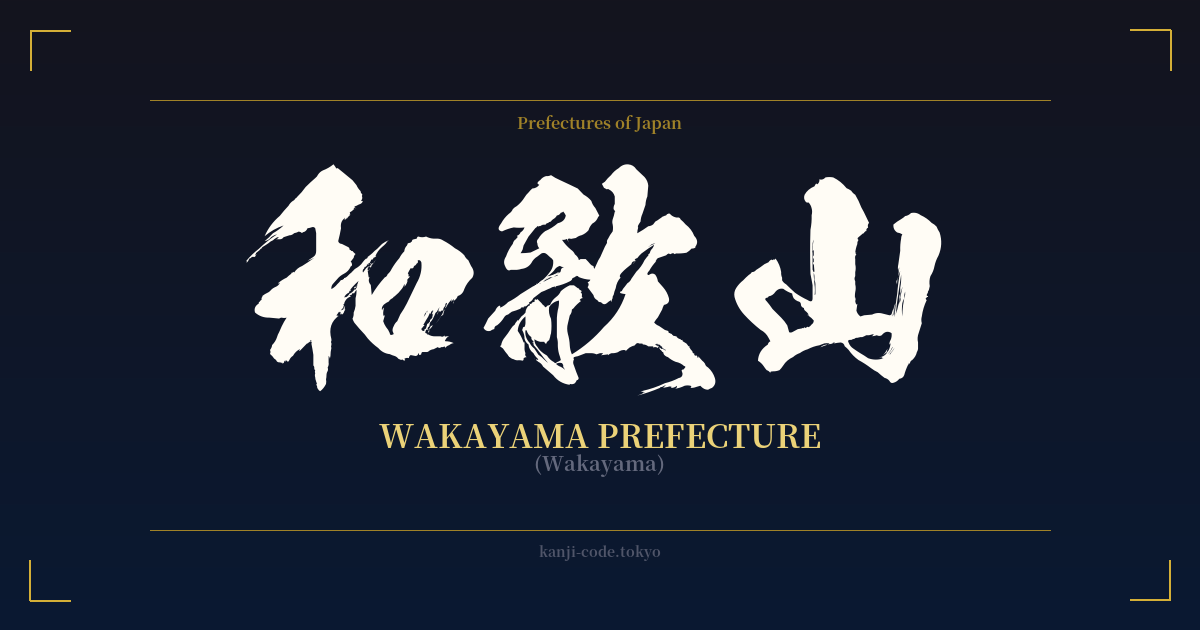
✍️ 和歌山 (Wakayama) — Cultural Context
The name 和歌山 (Wakayama) literally translates to "Harmony Song Mountain," a poetic combination that beautifully hints at the region's deep cultural and natural identity. Situated on the Kii Peninsula, one of Japan's most sacred and historically rich areas, Wakayama is far more than just a name on a map; it's a destination for spiritual pilgrimage and a bastion of natural beauty.
The name itself is believed to originate from Waka-no-ura, a scenic bay celebrated for centuries in Japanese classical poetry. The "Waka" (和歌) in the bay's name refers to a traditional form of Japanese poetry, and the area was so inspiring that it became a muse for countless poets. The name of a local mountain, Okayama, was eventually combined with this poetic legacy, its kanji changed to create the modern name "Wakayama."
This prefecture is the heartland of Japanese spiritualism. It is home to the majority of the Kumano Kodō, a network of ancient pilgrimage trails that have been walked for over a thousand years. These trails, designated a UNESCO World Heritage site, weave through dense forests and rugged mountains, connecting the three grand shrines of Kumano: Hongū Taisha, Hayatama Taisha, and Nachi Taisha. Pilgrims from all walks of life, from emperors to commoners, have sought purification and enlightenment along these sacred paths.
Even more renowned is Kōyasan (Mount Kōya), the center of Shingon Buddhism. Founded in the 9th century by the monk Kūkai (also known as Kōbō Daishi), Kōyasan is a sprawling temple complex nestled in a mountain valley. It houses the Okunoin cemetery, Japan's largest, where Kūkai is believed to be in eternal meditation, and countless historical figures and families have their final resting place. The atmosphere here is one of profound tranquility and timeless spirituality, surrounded by towering cedar trees.
Therefore, the kanji 和歌山 represents a place where harmony (和) between humanity and nature is palpable, where the songs (歌) of ancient poets and spiritual chants echo through the air, and where the mountains (山) stand as silent witnesses to a millennium of faith. It embodies a unique blend of Shinto animism and esoteric Buddhism, making it a cornerstone of Japan's cultural identity.
🖌️ Font Styles for 和歌山
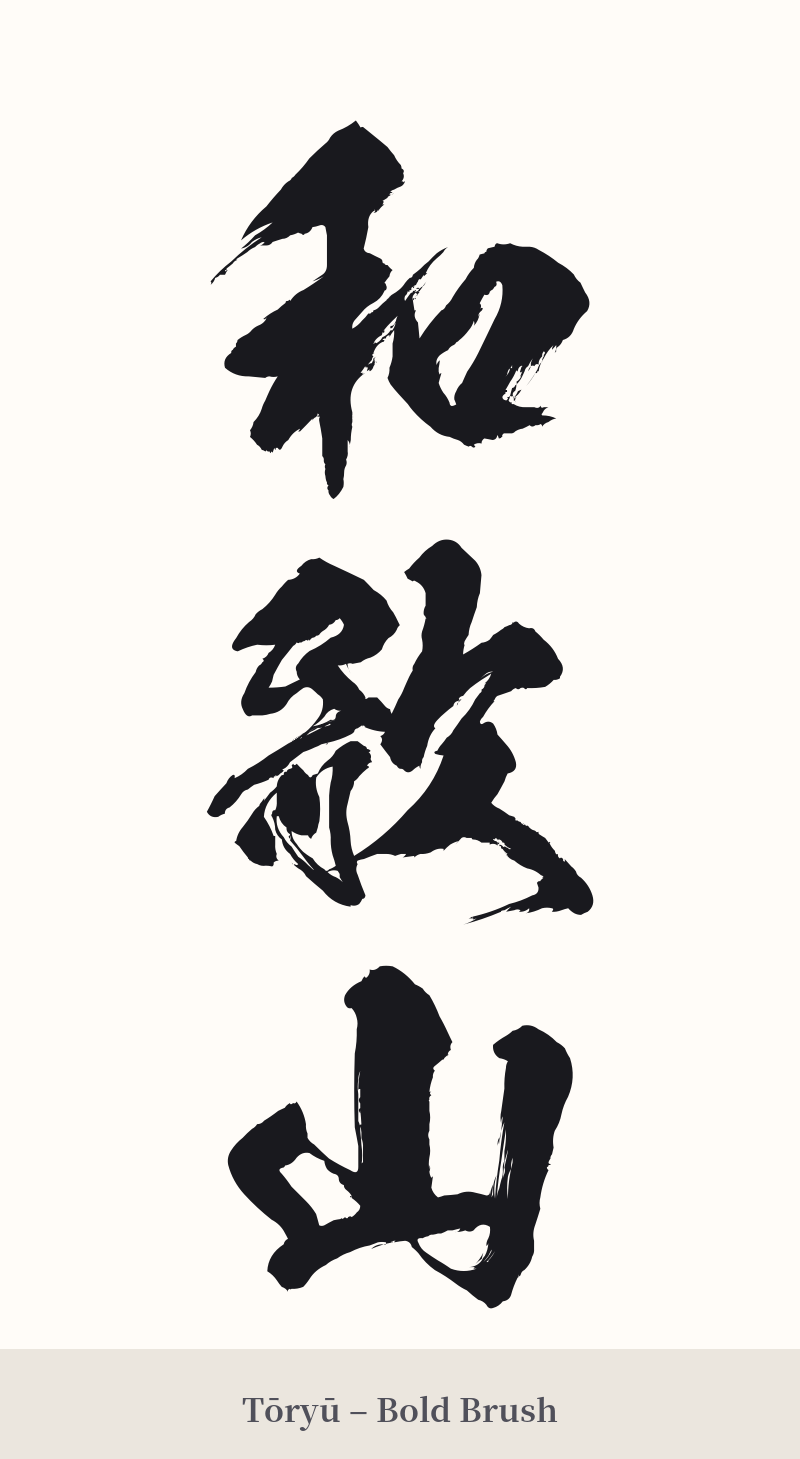
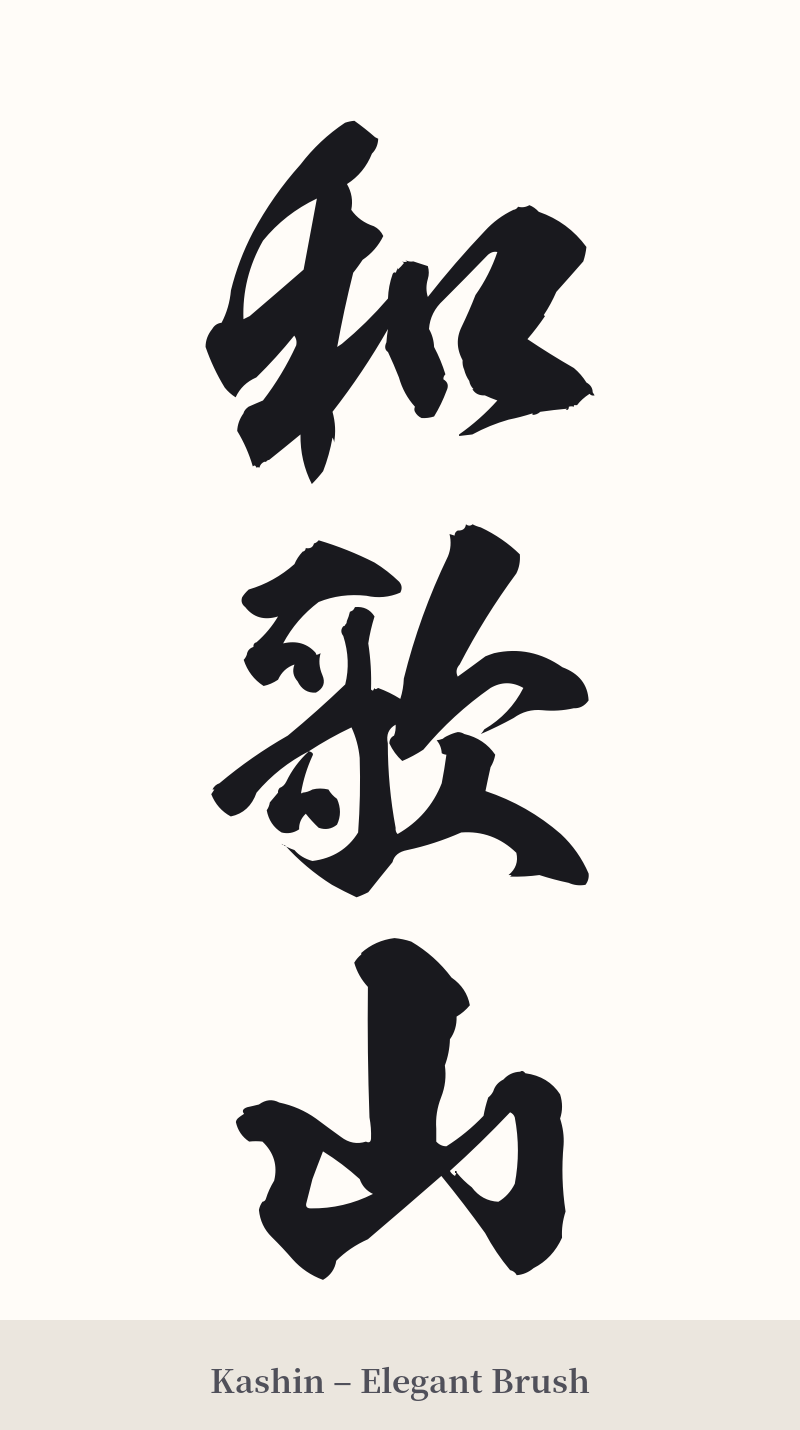
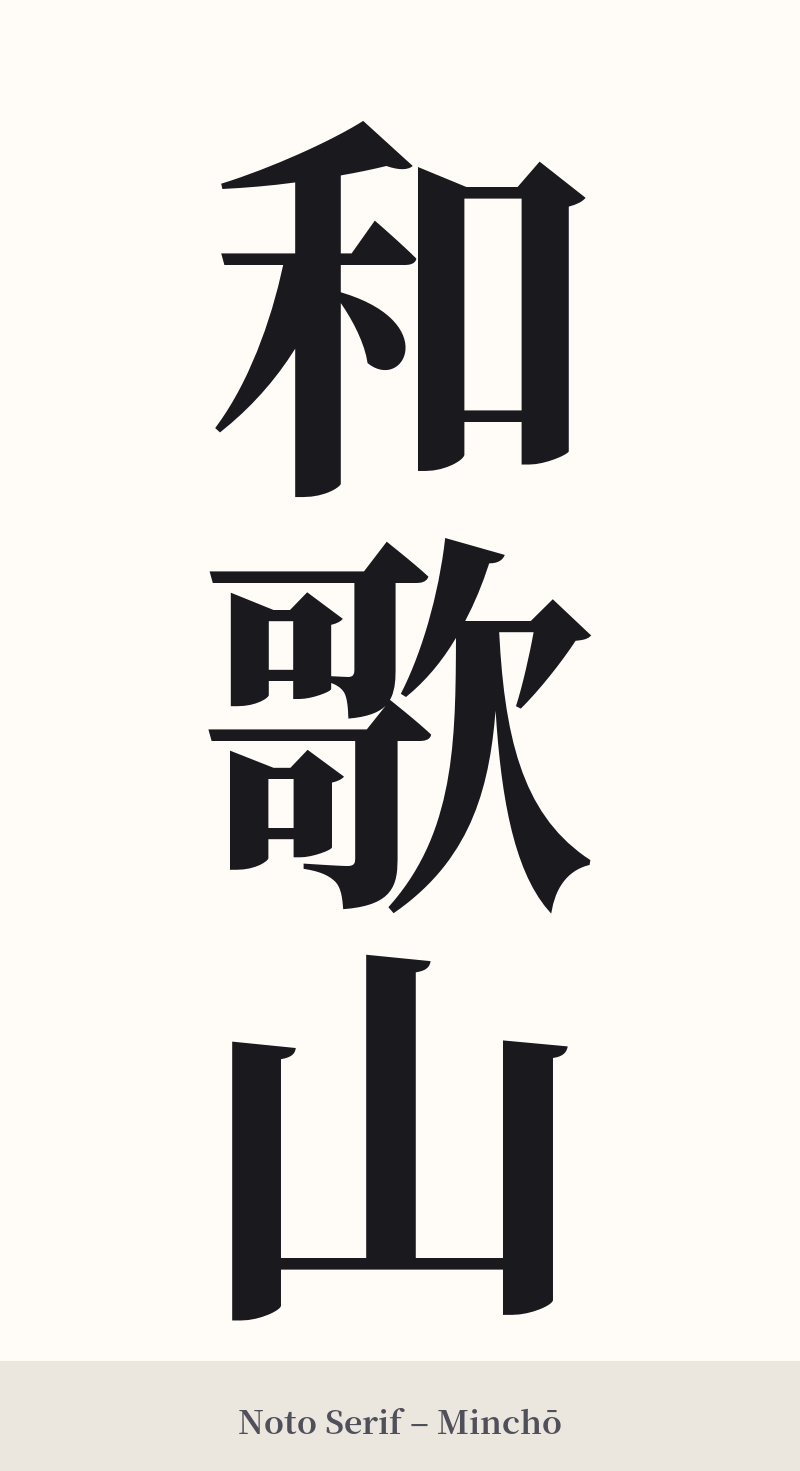
The same kanji can look dramatically different depending on the calligraphy style. Choose a font that matches the mood you want for your tattoo or design.
🎨 Tattoo Suitability
📐 Tattoo Design Guide
For a tattoo of 和歌山, the visual arrangement and stylistic choice are key to honoring its significance. The three-character structure lends itself perfectly to a vertical composition.
– Placement: A vertical layout looks powerful running down the forearm, the calf, or along the spine. For a horizontal design, the back of the neck or across the chest could work, but vertical is often preferred for multi-kanji words in Japan.
– Font Style: To connect with the region's spiritual and historical depth, a traditional calligraphy script is highly recommended. A semi-cursive Gyosho (行書) style offers a balance of legibility and artistic flow, while a more abstract Sosho (草書) can create a dynamic, personal piece. A classic Mincho (明朝) font provides a clean, elegant, and timeless look.
– Visual Tips: Consider incorporating subtle elements that nod to the region's identity. This could be a stylized cedar branch to represent Kōyasan, a small depiction of a torii gate for the Kumano Kodō, or wave patterns to evoke the Waka-no-ura bay. These additions can transform the design from a simple place name into a richer personal story.
Comments