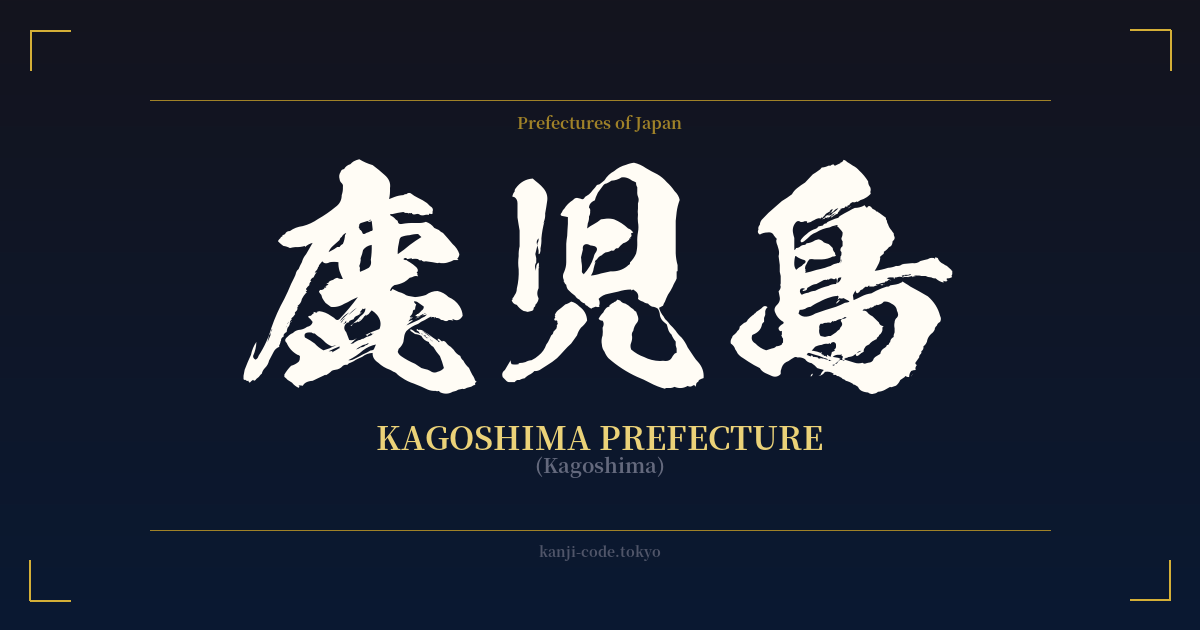
✍️ 鹿児島 (Kagoshima) — Cultural Context
鹿児島 (Kagoshima) is the name of Japan's southernmost mainland prefecture, a region defined by its dramatic volcanic landscapes, rich samurai history, and resilient spirit. The name itself is ancient and evocative, though its precise origin is debated among historians. Literally translating to "Deer-Child-Island," the most popular theory connects it to the Kagoshima Shrine and a legend about a deity who was guided by a deer.
This story paints a picture of a sacred, natural place, with the deer serving as a divine messenger. The kanji 鹿 (deer) anchors the name in Shinto mythology, where deer are often seen as companions to the gods. The character 島 (island) is a direct nod to the region's geography, encompassing the Satsuma and Ōsumi peninsulas and a chain of islands stretching southwest towards Okinawa.
However, the cultural weight of Kagoshima extends far beyond its literal meaning. For centuries, this region was known as the Satsuma Domain (薩摩藩), one of the most powerful and influential feudal domains in Japan. Ruled by the formidable Shimazu clan, Satsuma was known for its martial prowess, its independent spirit, and its unique system of samurai education.
This warrior legacy came to a head in the 19th century during the twilight of the shogunate. Satsuma, along with the Chōshū Domain, was a driving force behind the Meiji Restoration, the political revolution that overthrew the shogun and propelled Japan into the modern era. Many of Japan's most celebrated modernizers, including the iconic Saigō Takamori—often called "the last samurai"—hailed from Kagoshima. This history instills the name with a sense of strength, rebellion, and profound historical change.
Today, Kagoshima is famous for the active volcano Sakurajima, which constantly dusts the city with ash, a daily reminder of nature's power. It's also renowned for its culinary treasures, such as Kurobuta pork, sweet potatoes (satsuma-imo), and a distinctive style of shōchū. To choose the name Kagoshima is to evoke this entire tapestry: a land of gods and deer, of fierce samurai and revolutionaries, and of a people living in harmony with a powerful, untamed nature.
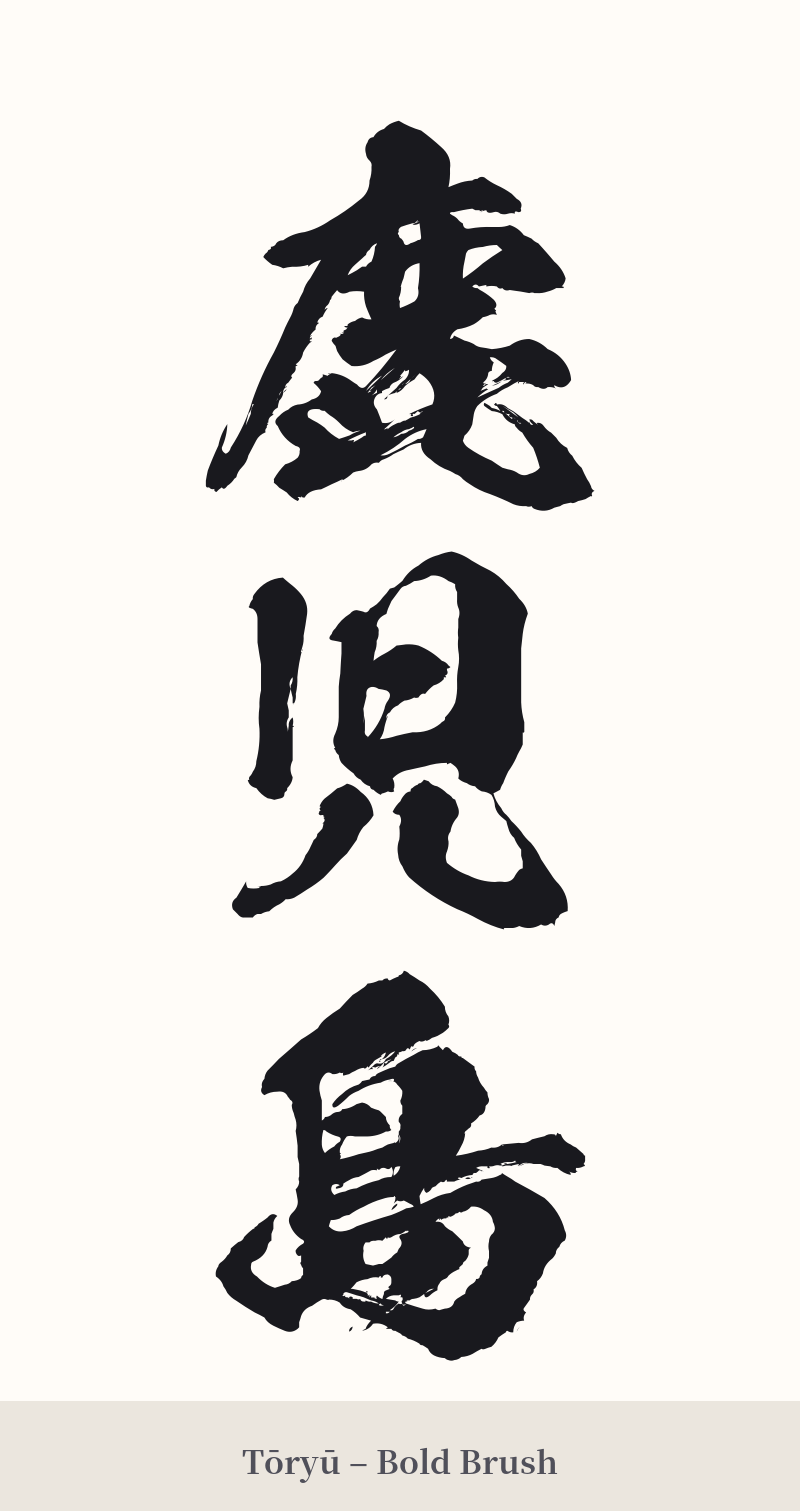
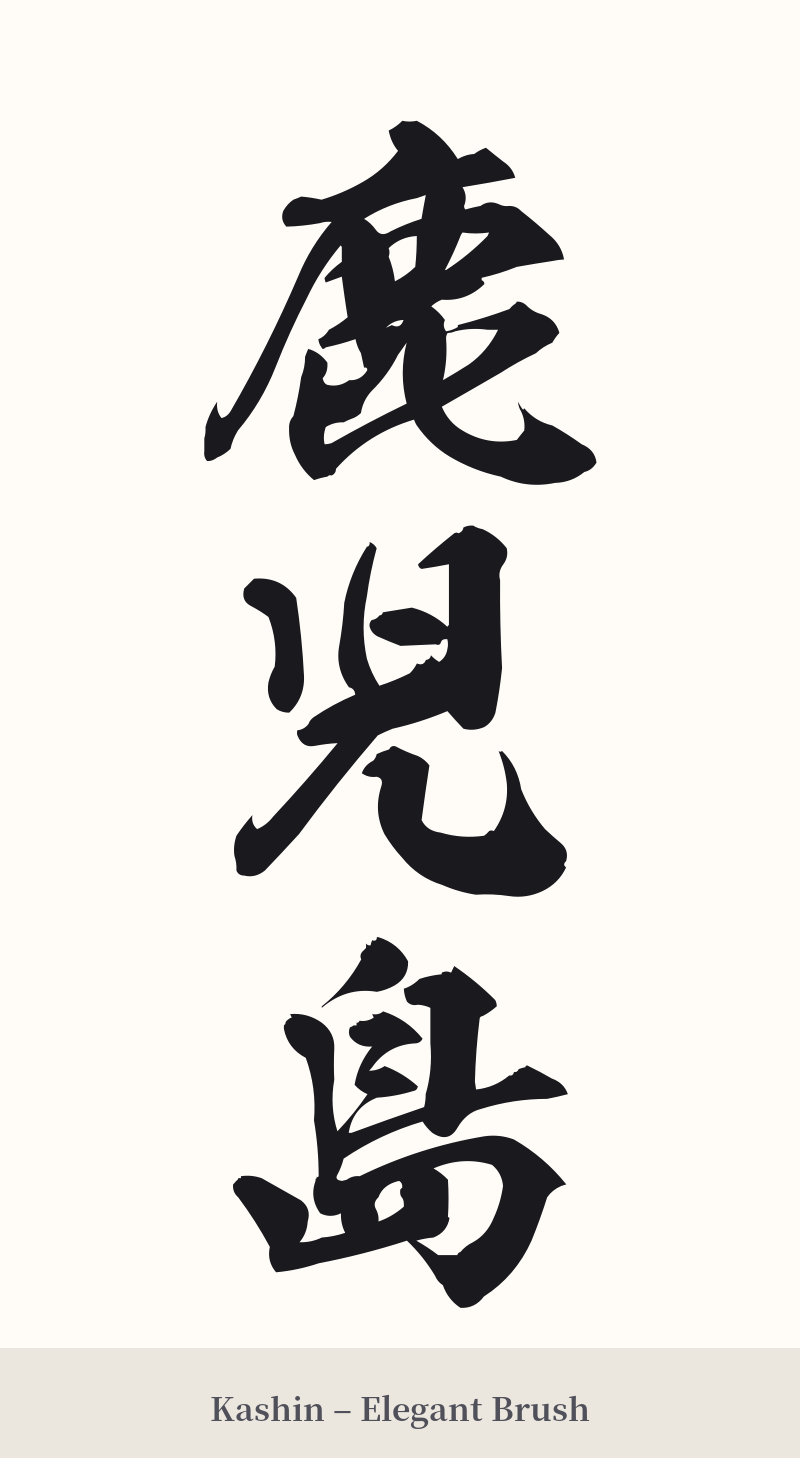
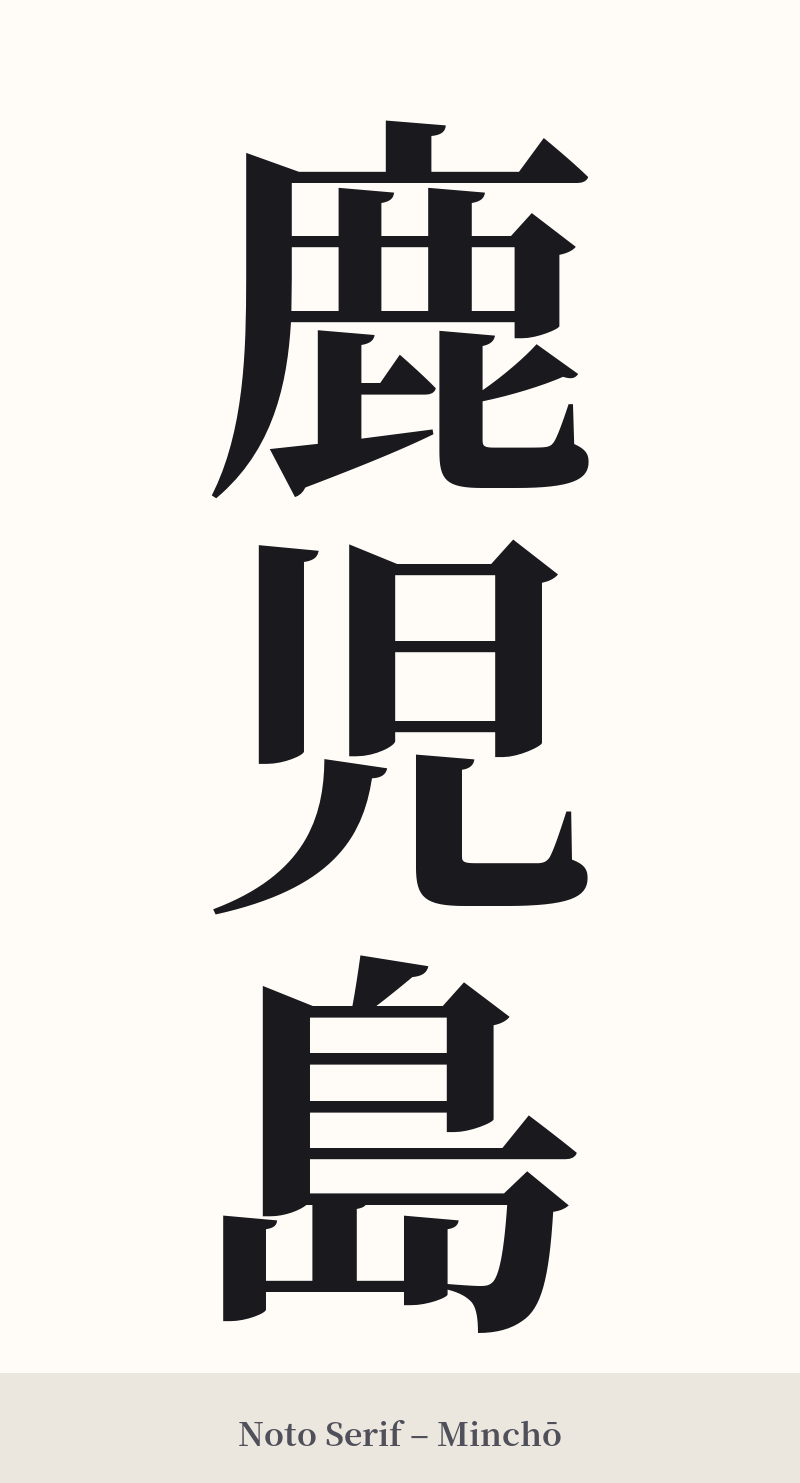
🖌️ Font Styles for 鹿児島
The same kanji can look dramatically different depending on the calligraphy style. Choose a font that matches the mood you want for your tattoo or design.
🎨 Tattoo Suitability
📐 Tattoo Design Guide
The three characters of 鹿児島 offer a balanced and stately appearance, making it well-suited for a vertical design. This orientation honors traditional Japanese writing and works perfectly on the forearm, calf, or along the spine.
– Placement: For a vertical tattoo, consider the inner forearm, allowing the characters to flow down towards the wrist. The back of the calf is another excellent spot, providing a long, flat canvas. A horizontal placement can also work across the chest or upper back.
– Style: A semi-cursive (gyōsho) or cursive (sōsho) calligraphy style would beautifully capture the historical depth and flowing nature of the name. For a more modern and impactful look, a bold, angular font like a Kaisho or even a stylized Gothic script can emphasize the strength of its samurai legacy.
– Visual Elements: Consider incorporating elements symbolic of the region. A background of gray, swirling ash to represent Sakurajima, waves crashing to signify its island geography, or the Shimazu clan crest (a circle with a cross) are all powerful additions that can enrich the design's story.
Comments