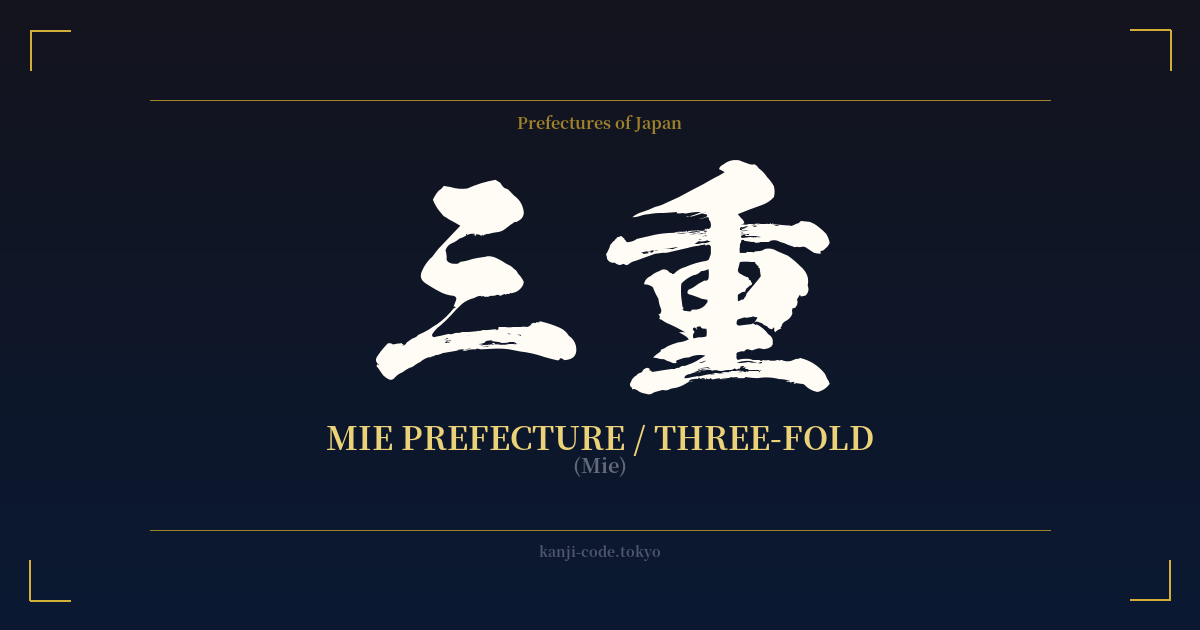
✍️ 三重 (Mie) — Cultural Context
The kanji 三重 (Mie) is a name steeped in legend, spirituality, and history. While its most common and immediate meaning refers to Mie Prefecture in Japan, its literal translation, 'three-fold' or 'triple layer,' hints at a deeper story that forms the very foundation of the region's identity.
The origin of the name 'Mie' is famously tied to a tale from the Kojiki, an ancient chronicle of Japanese myths and history. The story follows the legendary prince Yamato Takeru no Mikoto. After a series of arduous campaigns, the weary prince was making his way back to his homeland. As he passed through the region that would one day bear this name, his legs became so exhausted and swollen that he lamented they felt 'bent in three layers' (我が足三重に曲りて、甚だ疲れたり – Waga ashi mie ni magarite, itahada tsukaretari).
This single, poignant expression of exhaustion gave the land its name, forever linking it to the legendary hero's journey. It’s a name born not of conquest or power, but of human struggle and perseverance, adding a layer of relatable, mythic depth to the place.
Today, Mie Prefecture is known throughout Japan and the world for something even more profound: it is the home of the Ise Grand Shrine (伊勢神宮, Ise Jingū). This is not just any shrine; it is the most sacred and spiritually significant site in the Shinto religion. Dedicated to the sun goddess Amaterasu Ōmikami, the ancestral deity of the Japanese Imperial Family, Ise Jingū is considered the spiritual heart of the nation. Millions of pilgrims travel here to connect with Japan's ancient traditions and pay their respects. The presence of this sacred complex imbues the word 'Mie' with a sense of holiness and deep cultural reverence.
Beyond its spiritual core, Mie is also famous as the historical homeland of the Iga-ryū ninja, one of the two most renowned schools of ninjutsu in feudal Japan. The mountainous terrain of the Iga Province (now part of Mie) provided the perfect cover for these masters of espionage and unconventional warfare to develop their secret arts. This adds an element of mystery, skill, and intrigue to the cultural identity of Mie.
Therefore, the kanji 三重 is more than just a name on a map. It is a word that encapsulates a heroic legend, the nation's spiritual center, and the shadowy world of the ninja. It represents a place where the divine, the legendary, and the human intersect.
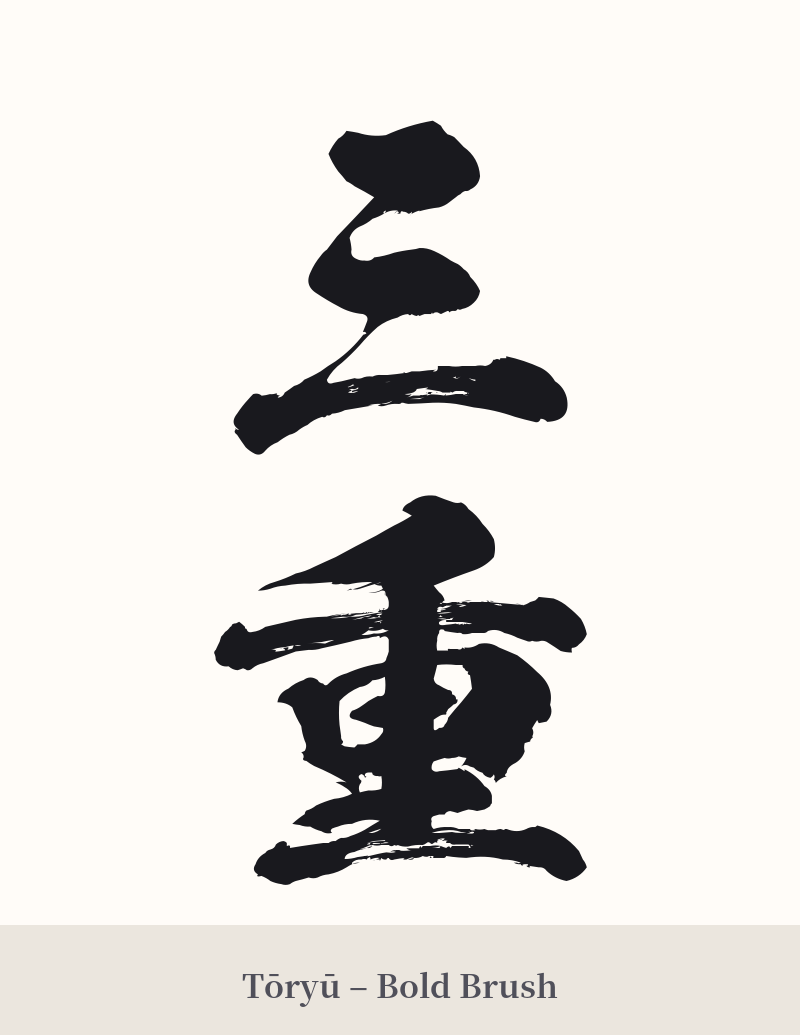
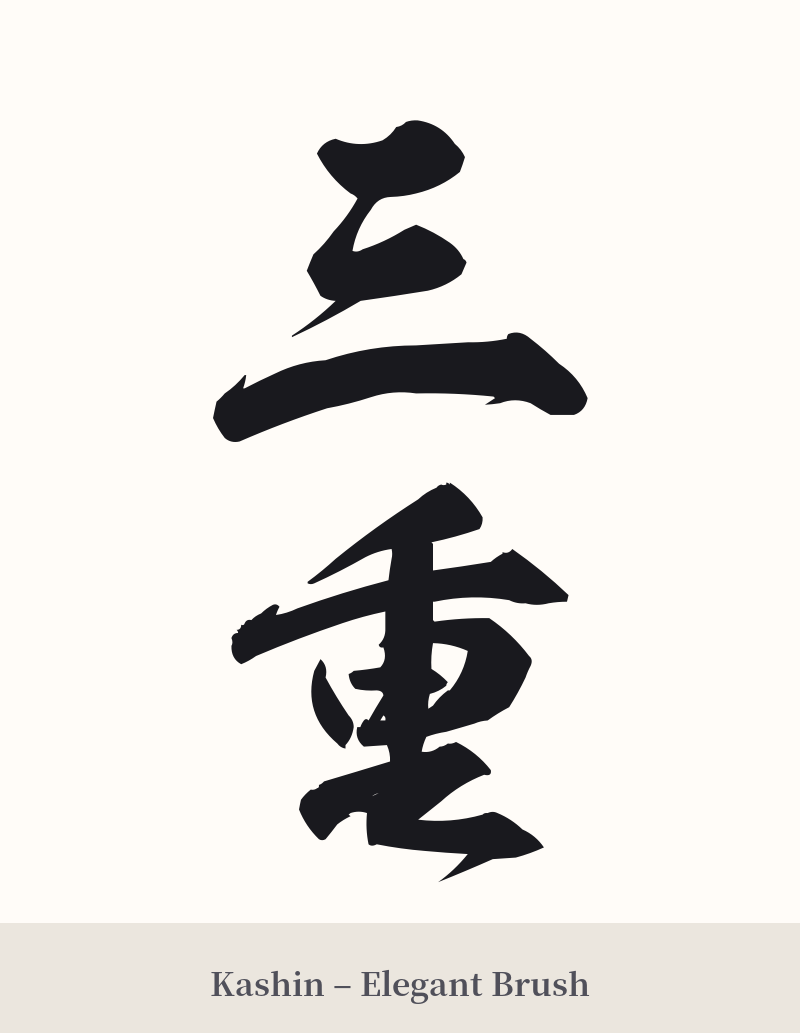
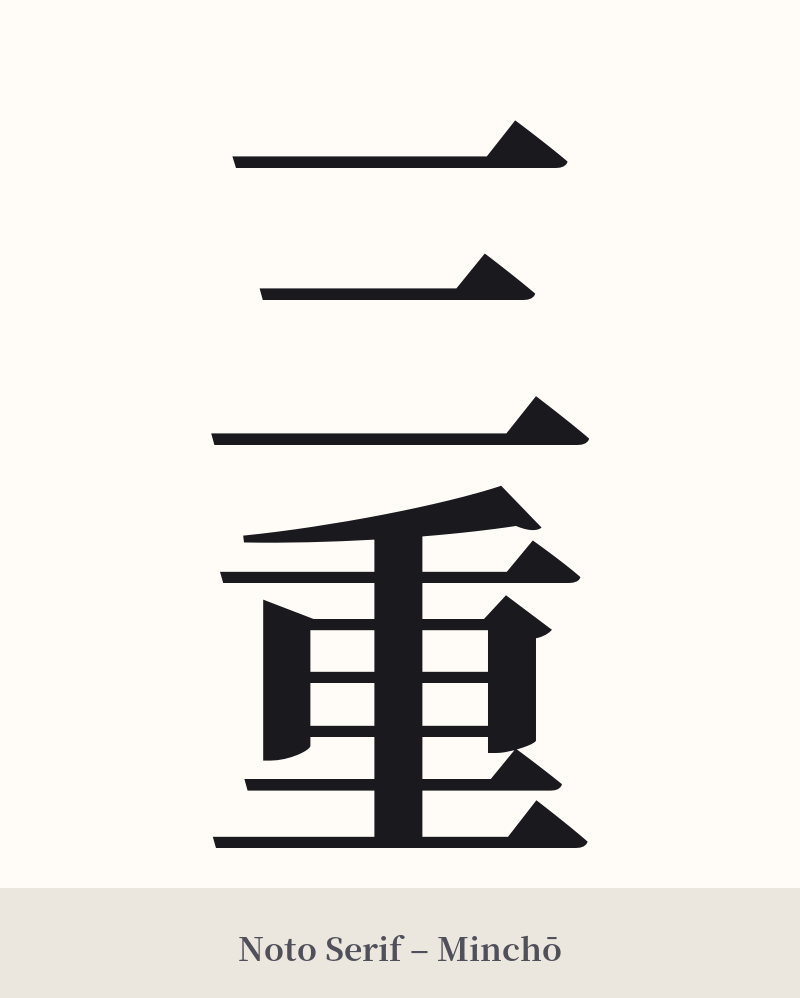
🖌️ Font Styles for 三重
The same kanji can look dramatically different depending on the calligraphy style. Choose a font that matches the mood you want for your tattoo or design.
🎨 Tattoo Suitability
📐 Tattoo Design Guide
For a tattoo of 三重, the design should honor its rich cultural and historical context. The two characters offer a pleasant visual contrast, with the simple, open '三' and the more contained, complex '重'.
– Placement: This two-character compound works exceptionally well in a vertical orientation. Consider placements like the forearm, the calf, or along the spine to create an elegant, flowing line.
– Font Style: A traditional script like Kaisho (formal block style) or Gyosho (semi-cursive) would be highly appropriate, reflecting the historical and sacred nature of Mie. A powerful, expressive brushstroke style (shodō) can capture the legendary energy of Yamato Takeru's story.
– Visual Embellishments: While the kanji stands strong on its own, you could incorporate subtle elements that hint at Mie's identity. This might include a stylized Torii gate to represent Ise Shrine, a single pearl (for Mikimoto pearls, originating in Mie), or abstract wave patterns to evoke the prefecture's coastline.
Comments