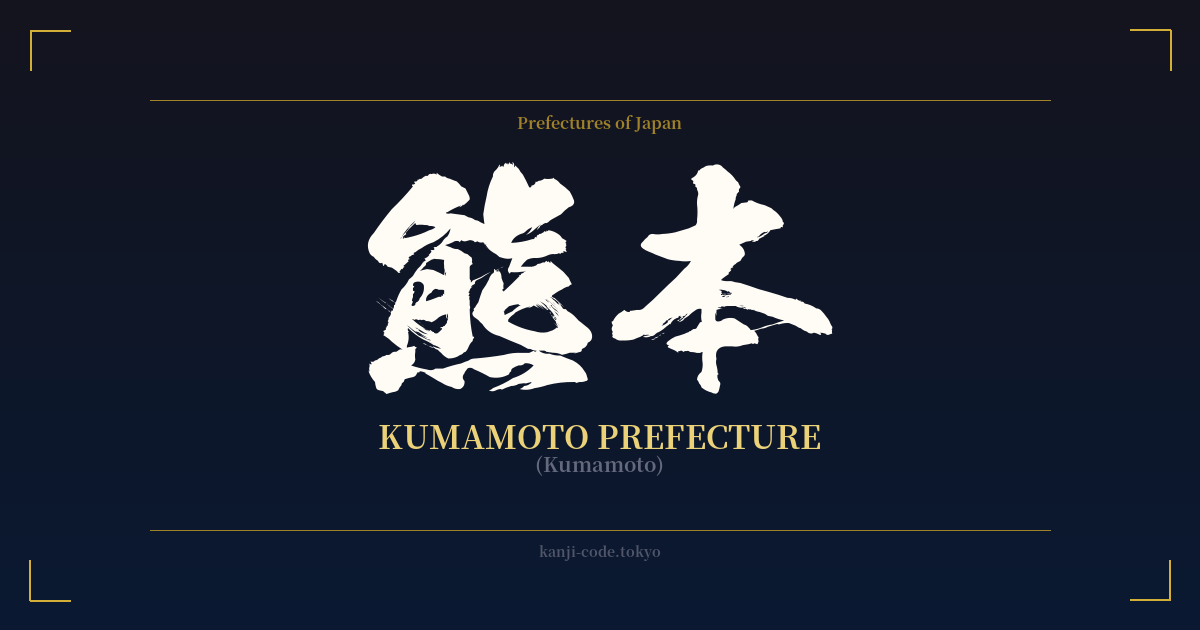
✍️ 熊本 (Kumamoto) — Cultural Context
The name 熊本 (Kumamoto) translates literally as 'Bear Origin,' a name as powerful and evocative as the region it represents. Located on the southern island of Kyushu, Kumamoto Prefecture is a land of dramatic contrasts, from the smoldering caldera of Mount Aso, one of the world's largest active volcanoes, to the serene beauty of the Amakusa islands.
The name's origin is rooted in history and geography. The original name of the area's castle was written with different characters. However, the powerful daimyō Katō Kiyomasa, who became lord of the region in the late 16th century, changed the name to 熊本. The choice was a masterful stroke of branding; 'Kuma' (熊), meaning bear, evokes a sense of wild strength and natural power, fitting for a rugged and formidable domain.
At the heart of the prefecture's identity is Kumamoto Castle. An architectural marvel, it was renowned for its ingenuity and defensive prowess. Though severely damaged in the devastating 2016 earthquakes, the castle has become a powerful symbol of resilience. The ongoing restoration efforts are a testament to the community's unbreakable spirit, a modern reflection of the strength embodied in its name.
In the 21st century, Kumamoto's 'bear' identity took on a new, unexpectedly charming form with the creation of Kumamon. This rosy-cheeked black bear mascot was designed to promote tourism but quickly became a global phenomenon. Kumamon perfectly captures the duality of the region: he is cute and friendly, yet his name connects back to the wild, powerful 'kuma' of the prefecture's name. He represents the modern, accessible face of a region with deep historical roots.
Therefore, the kanji 熊本 is more than just a name on a map. It represents a place of fiery volcanic power, the enduring strength of its castle, the resilience of its people, and the playful spirit of its famous mascot. It speaks to a deep connection with nature and a history of fortitude.
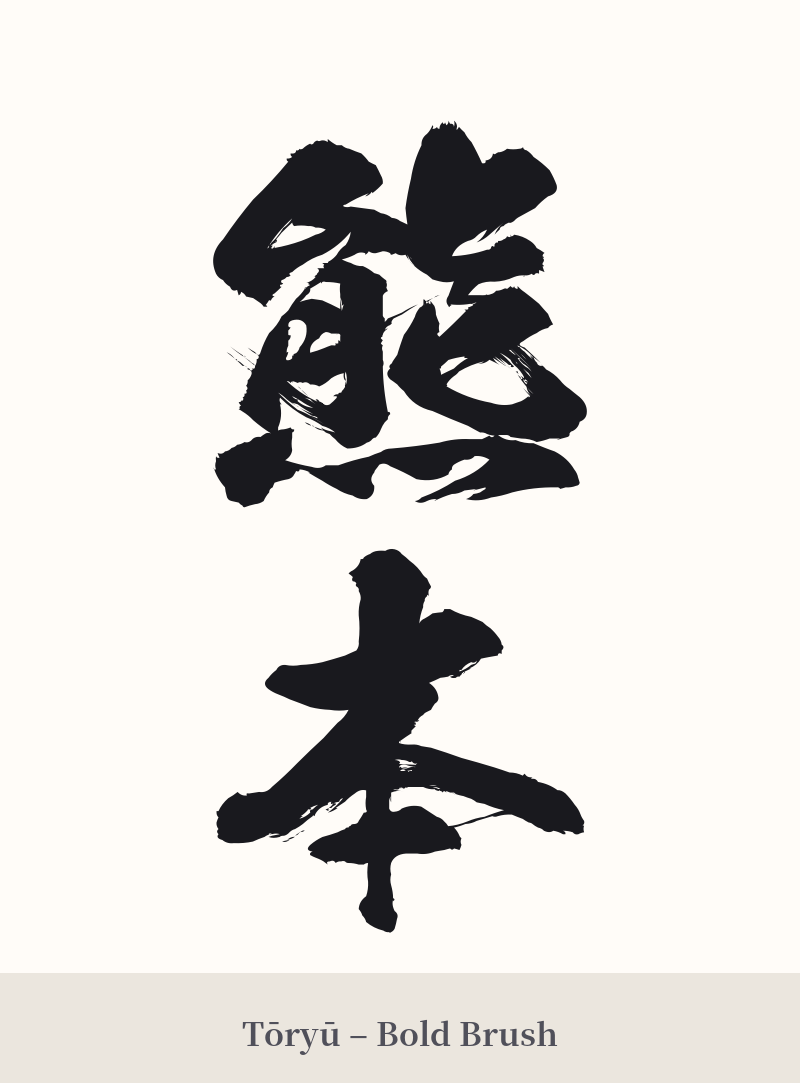
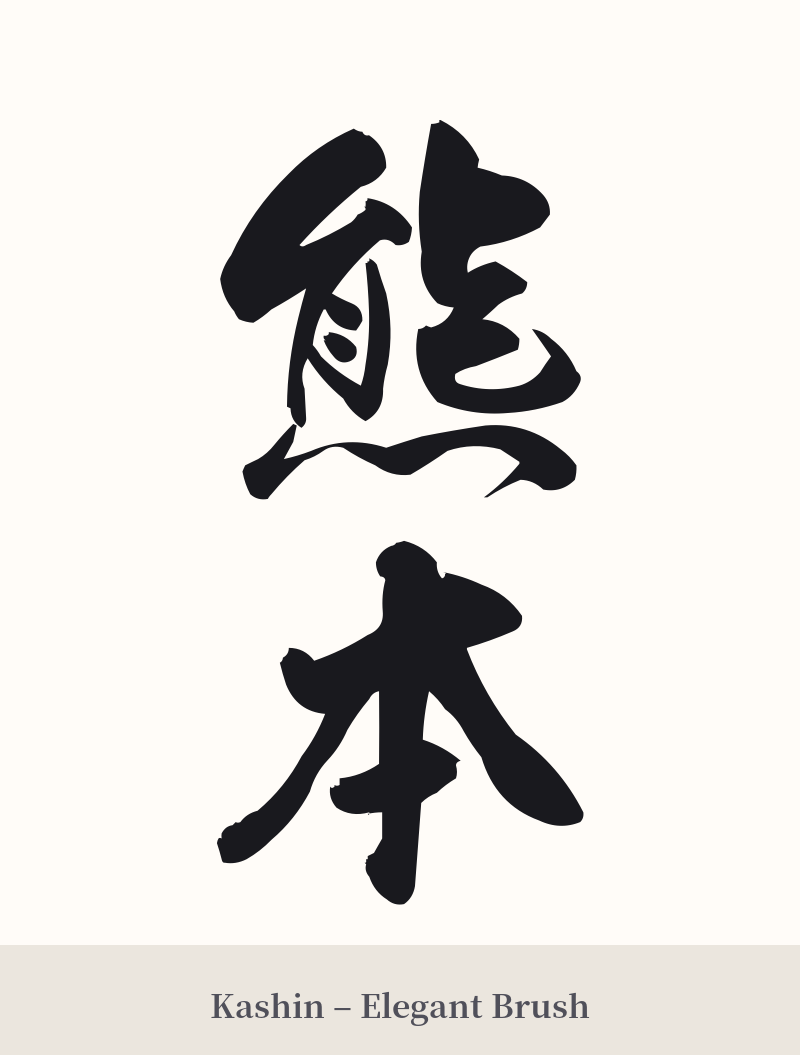
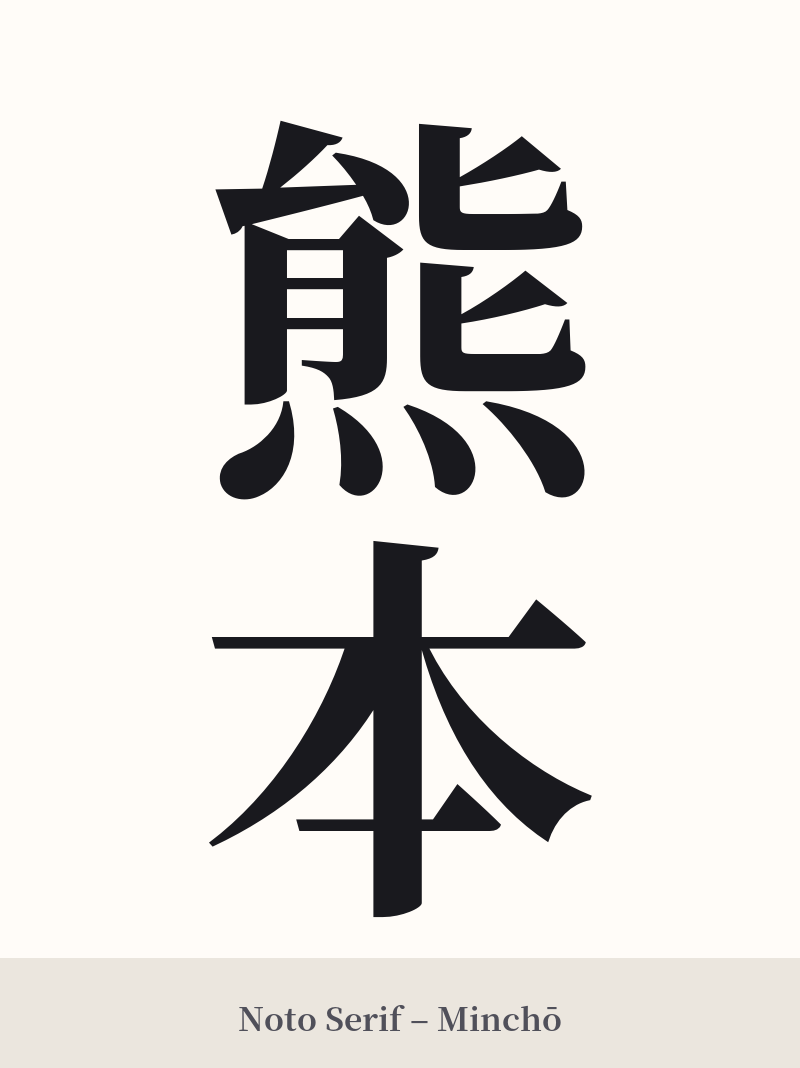
🖌️ Font Styles for 熊本
The same kanji can look dramatically different depending on the calligraphy style. Choose a font that matches the mood you want for your tattoo or design.
🎨 Tattoo Suitability
📐 Tattoo Design Guide
For a 熊本 tattoo, the visual balance between the two characters is key. The first character, 熊 (kuma), is complex and detailed, while the second, 本 (moto), is simple and geometric.
– Placement: A vertical orientation on the calf, forearm, or along the spine can look very elegant. For a horizontal design, the upper back or chest provides a wide canvas that allows the details of the '熊' character to shine.
– Font Style: A thick, bold calligraphy style (gyōsho or sōsho) can emphasize the 'wild bear' aspect of the name. Conversely, a crisp, clean Mincho or Kaisho font can highlight the historical and established nature of the prefecture.
– Visual Elements: Consider pairing the kanji with imagery related to the region. A subtle silhouette of Kumamoto Castle, the fiery ring of Mount Aso, or even a stylized, abstract bear (avoiding a direct copy of the Kumamon mascot unless a humorous design is intended) can add a layer of personal meaning and visual context.
Comments