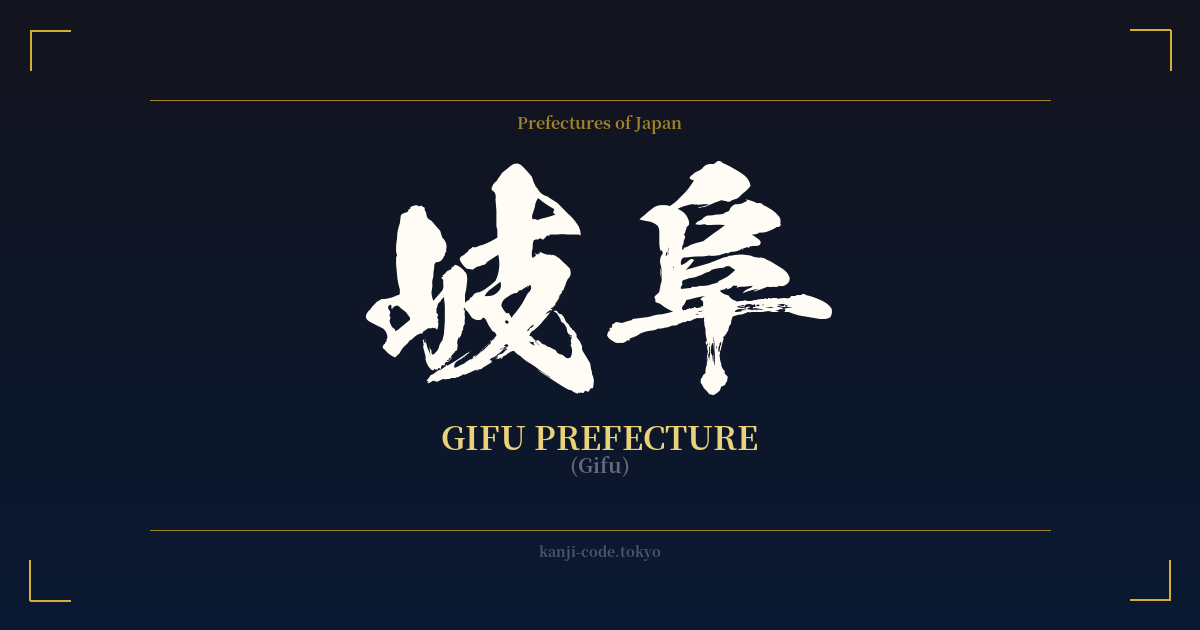
✍️ 岐阜 (Gifu) — Cultural Context
The name 岐阜 (Gifu) is not just a label for a place; it's a declaration of ambition, steeped in the history of one of Japan's most formidable figures, Oda Nobunaga. Before the 16th century, the area was known as Inokuchi. When Nobunaga conquered the castle there in 1567, he renamed the entire province, marking it as the new base for his campaign to unify Japan.
The choice of characters was deeply symbolic and inspired by ancient Chinese history. The first kanji, 岐 (Gi), was taken from Mount Qi (岐山, Qíshān), the mountain from which King Wen of the Zhou Dynasty launched his campaign to unite the warring states of ancient China. This was a clear statement of Nobunaga's own grand ambitions.
The second kanji, 阜 (Fu), comes from Qufu (曲阜), the birthplace of the great sage Confucius. In this context, 阜, meaning 'hill' or 'mound,' symbolized a foundation or a center of culture and learning. By combining these two characters, Nobunaga was not only christening his new capital but also aligning himself with legendary leaders and thinkers, projecting an image of a ruler who would bring both military unification and cultural prosperity.
This act of naming was a powerful piece of political branding. Nobunaga even adopted the slogan "Tenka Fubu" (天下布武), meaning "Rule the Empire with Military Force," which he stamped on his official seal. The name Gifu became inextricably linked to this pivotal moment in Japanese history when a fractured nation began its journey toward unification under a single, ambitious warlord.
Today, Gifu Prefecture is known as the 'heart' of Japan due to its central location. It's a region of stunning natural beauty, with the Japanese Alps to the north and clear rivers like the Nagara, famous for its traditional cormorant fishing (ukai). The name 岐阜 carries the weight of this history—a symbol of a new beginning, a strategic heartland, and the unyielding ambition of a man who dared to change Japan forever.
🖌️ Font Styles for 岐阜
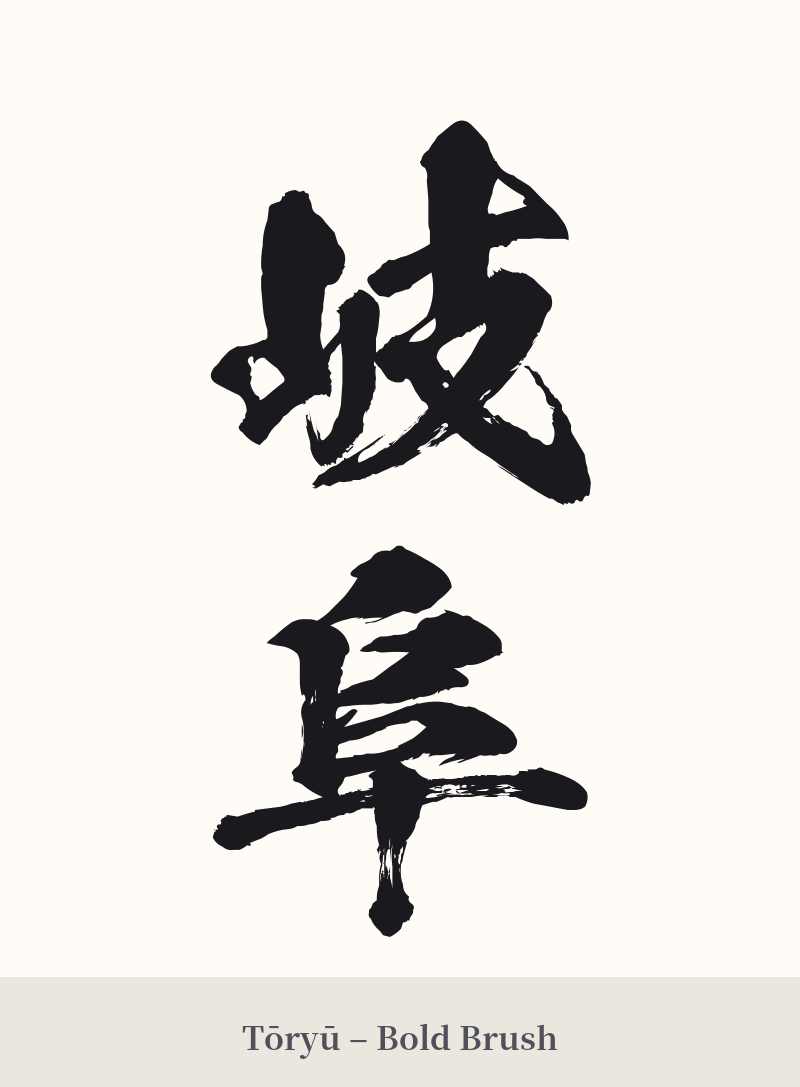
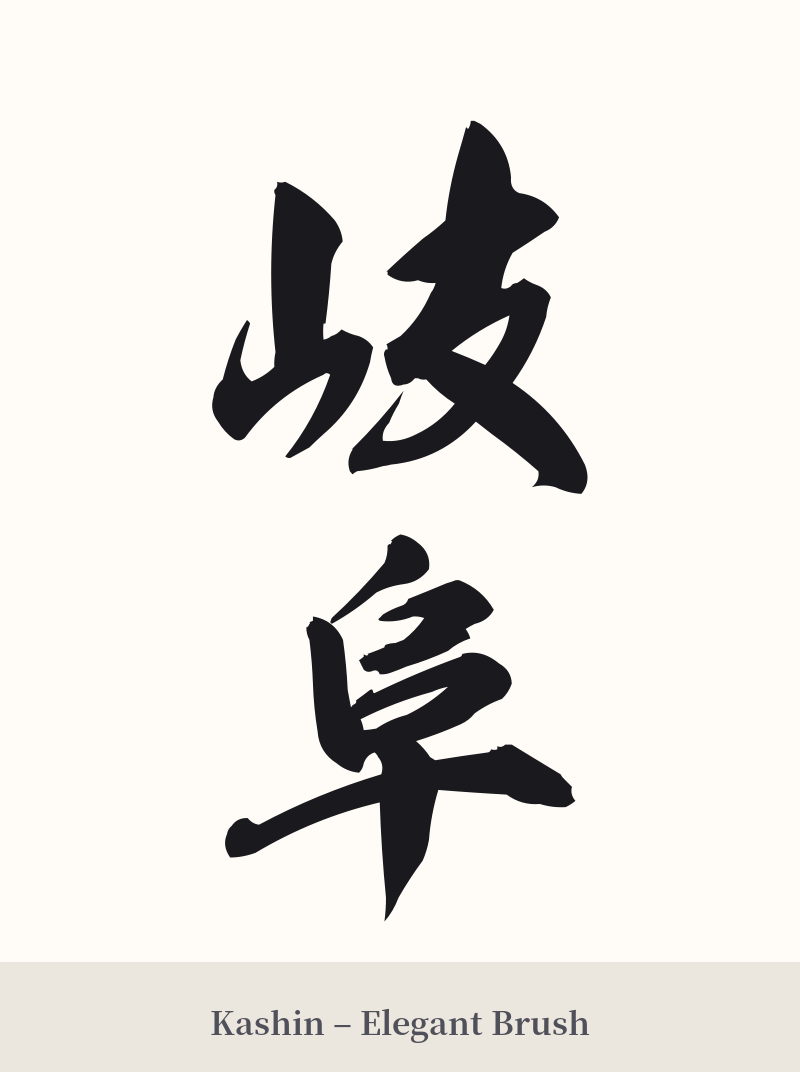
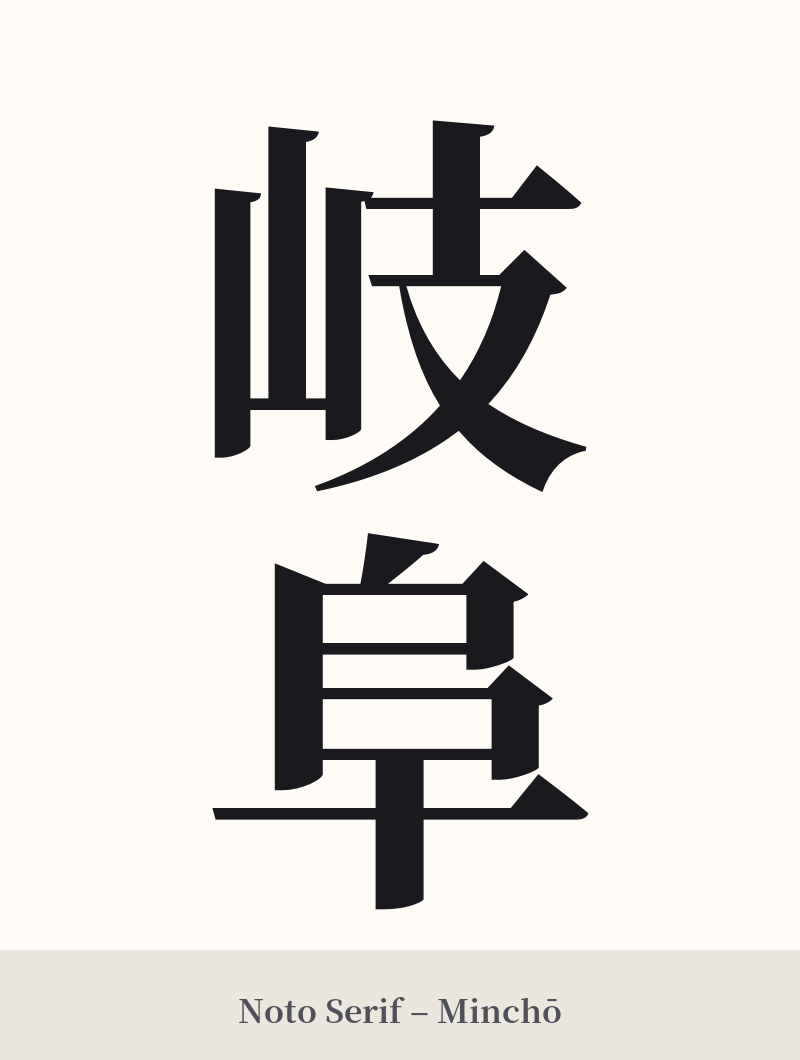
The same kanji can look dramatically different depending on the calligraphy style. Choose a font that matches the mood you want for your tattoo or design.
🎨 Tattoo Suitability
📐 Tattoo Design Guide
Because 岐阜 is a proper noun with deep historical roots, the design can lean into either tradition or personal connection.
– Placement: A two-character compound works well both horizontally and vertically. Consider the forearm, calf, or along the ribs for a vertical orientation. A horizontal placement across the upper back or chest is also a strong choice.
– Style: A traditional calligraphy style, such as Gyosho (semi-cursive) or Kaisho (block script), would honor the historical context of Oda Nobunaga. This connects the design to the era it was born from. For a more modern take, a clean, bold Mincho or Gothic font can work, but it may detach the word from its rich history.
– Visual Elements: To add more narrative to the tattoo, consider incorporating imagery associated with Gifu or Nobunaga. This could include a silhouette of Gifu Castle, a cormorant bird from the famous ukai fishing, or the 'Oda Mokkō' (Oda clan crest).
Comments