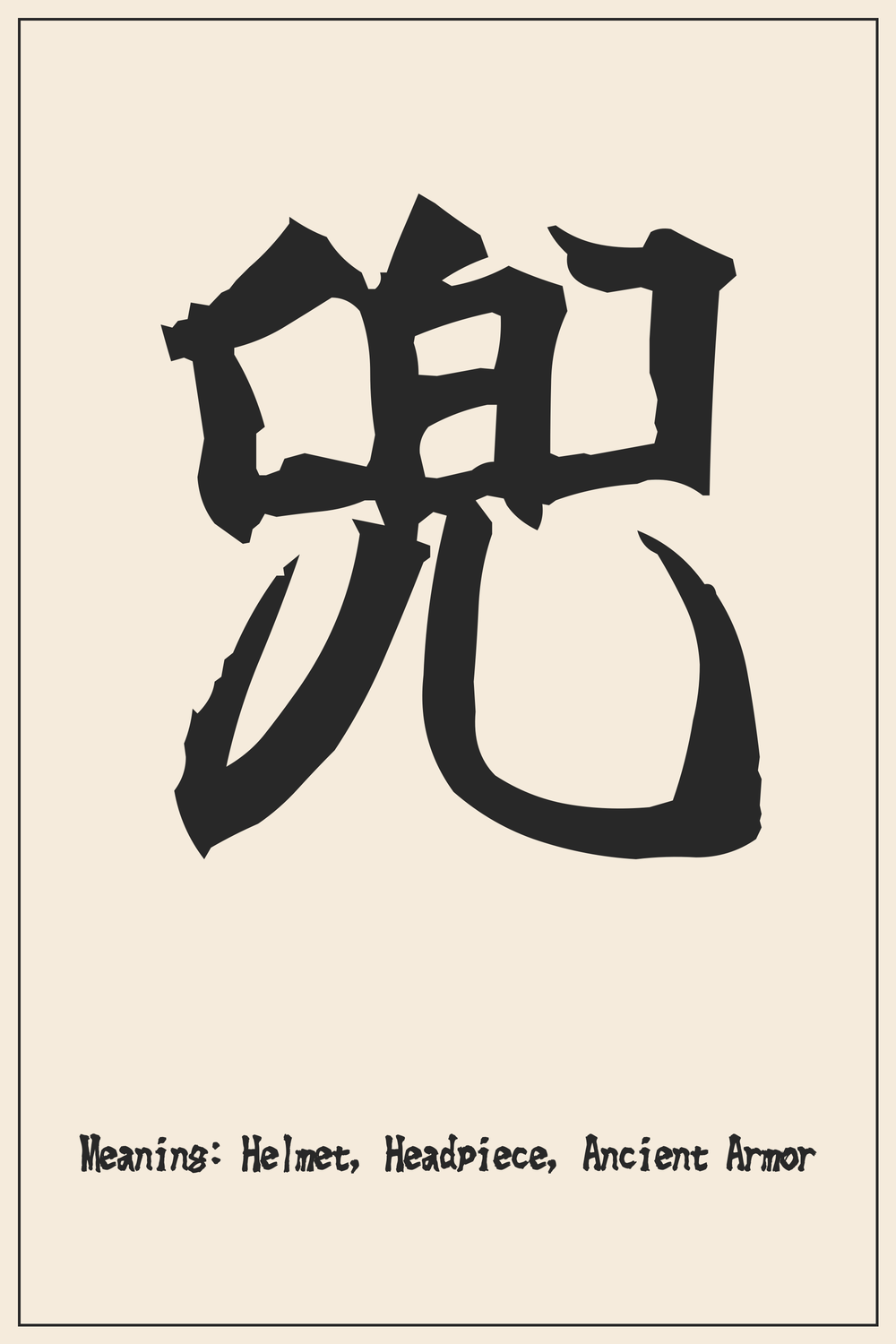
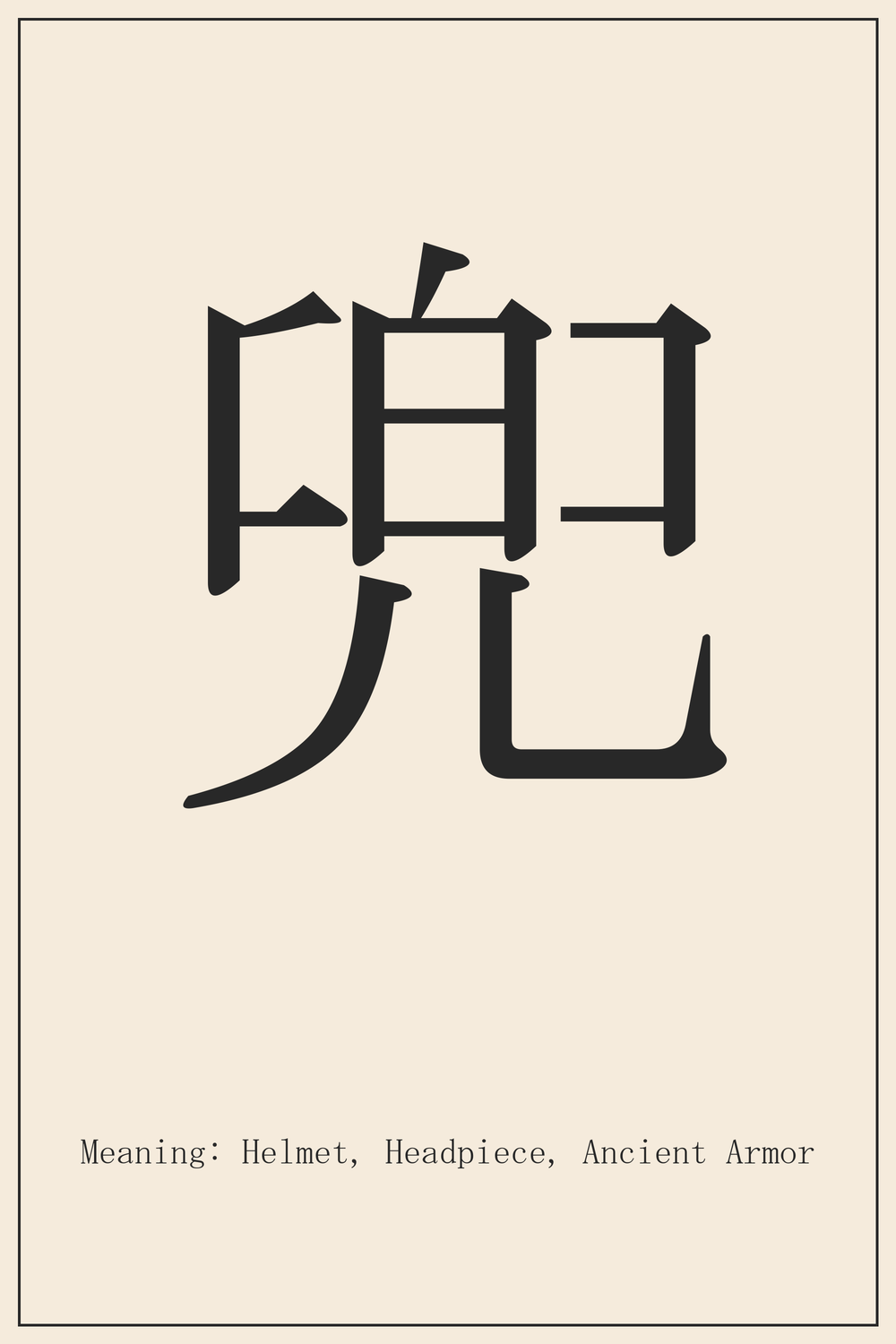
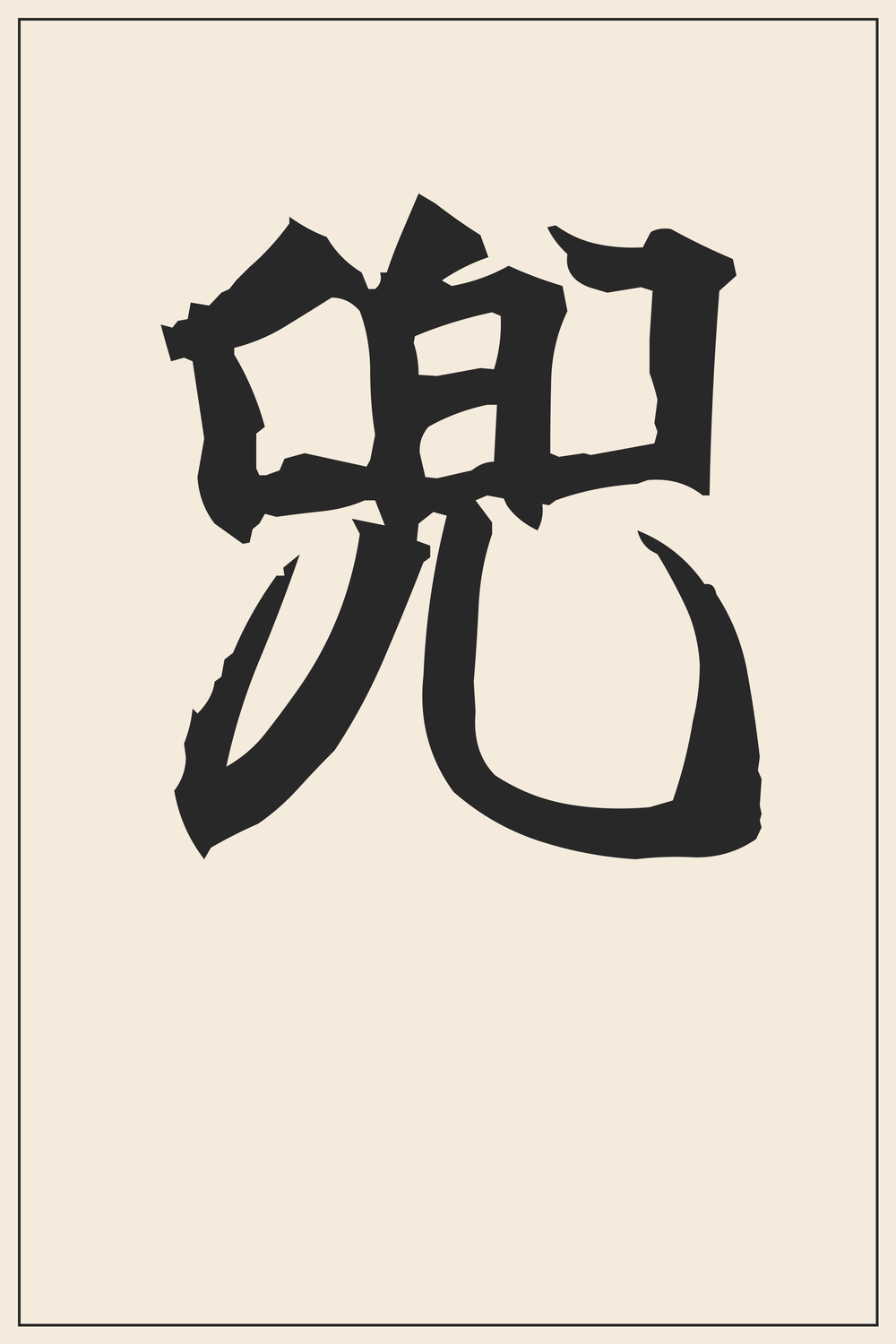
The Kanji 兜 embodies the spirit of ancient warriors, symbolizing protection, strength, and unwavering resolve. It represents not just a piece of armor, but a guardian of honor and tradition.
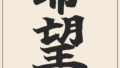
The atmosphere of a Kanji character changes dramatically depending on the font style. A character that looks elegant in a brush style might look bold and modern in a different font.
Recommendation:
Since a tattoo is permanent, we strongly recommend comparing various font styles beyond what is shown here. Use our designs as a trusted reference for the correct structure, but feel free to explore different artistic variations to find the perfect match for your vision.
The Deep Meaning Behind 兜
The character 兜 (kabuto) visually depicts a helmet. Its ancient forms suggest a head covered with a protective covering, emphasizing its primary function as defensive headgear worn in battle. This ideogram evolved to clearly represent the object.
In Japanese culture, the kabuto, particularly the samurai helmet, is an iconic symbol of the warrior class. It represents not only physical protection but also the wearer’s status, family lineage, and spirit, often adorned with elaborate crests (maedate) that signified identity and prowess on the battlefield.
Kanji Breakdown
The character 兜 is a complex ideogram whose form visually evokes the object it represents through its integrated components.
Meaning: The upper strokes form a distinct shape reminiscent of a protective covering or dome, directly suggesting the top part of a helmet.
Meaning: The lower strokes provide the base and structural elements, completing the helmet’s form. While some components may have had phonetic or specific semantic roles in older script, they are visually integrated into the depiction of protective headgear.
Conclusion
兜 beautifully encapsulates the essence of protection, valor, and the unwavering spirit of the Japanese warrior. It serves as a powerful reminder of resilience and honor, reflecting the enduring legacy of samurai culture.
Choosing 兜 for a tattoo signifies a connection to ancient martial traditions and a personal commitment to safeguarding one’s principles. Its striking form and profound meaning make it an excellent choice for a symbolic and aesthetically rich tattoo, especially when rendered with a clear, bold style to honor its intricate details.
Comments