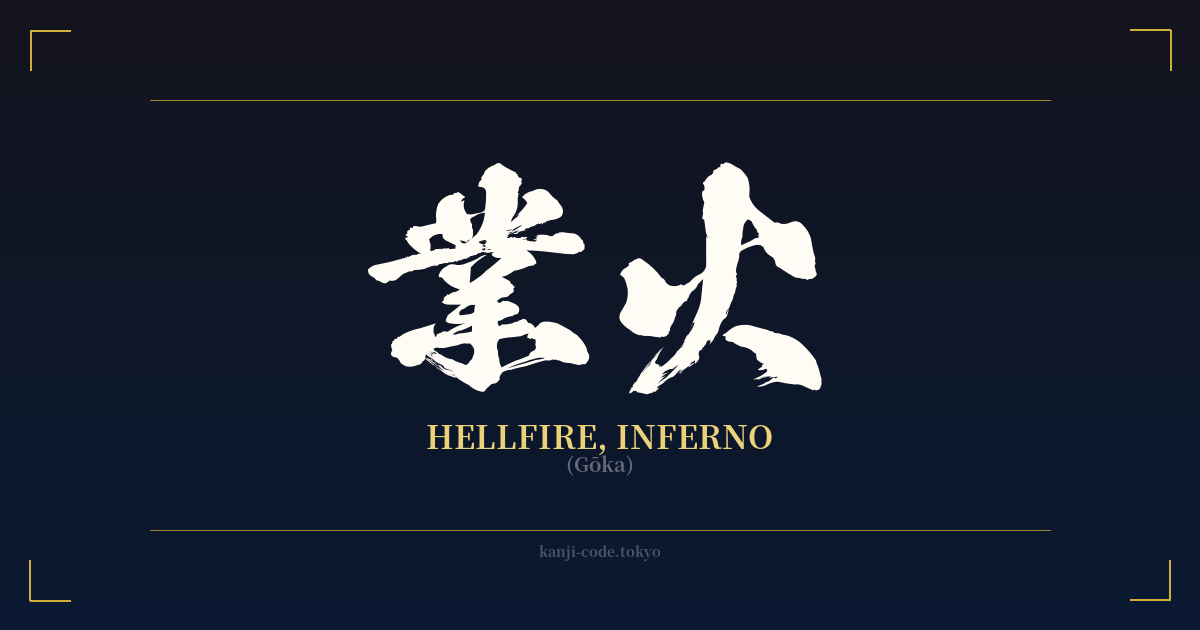
✍️ 業火 (Gōka) — Cultural Context
業火 (Gōka) translates to 'hellfire' or 'inferno,' but its meaning is far deeper and more specific than a simple, large fire. This is a word steeped in Buddhist cosmology, representing a force both terrifying and karmic.
The key to understanding Gōka lies in its first character, 業 (gō). While it can mean 'vocation' or 'deed' in a general sense, in this context, it unequivocally refers to 'karma'—the sum of a person's actions and their consequences in this life and the next. The second character, 火 (ka), is the universal symbol for fire. Therefore, Gōka is literally 'karma-fire.'
In Buddhist teachings, particularly within the concept of the Six Realms of reincarnation, hell (地獄, Jigoku) is a place of immense suffering designed to purify souls of their negative karma. Gōka is the very fire that burns in these hells. It is not a natural flame; it is a supernatural, inescapable torment that consumes sinners. The intensity and duration of the burning are said to be directly proportional to the weight of the sins committed during one's life. This makes Gōka a symbol of ultimate, unavoidable justice and retribution.
This concept distinguishes Gōka from other Japanese words for fire. A regular building fire is a 火事 (kaji). A blaze or conflagration is a 火炎 (kaen). Gōka, however, is a spiritual punishment. It’s the fire wielded by figures like Fudō Myōō, the Immovable Wisdom King, who uses his purifying flames to destroy evil and delusion.
In modern Japan, while the deep religious meaning persists, Gōka has also been adopted into popular culture. In anime, manga, and video games, it's often the name of a character's ultimate fire-based attack, representing an overwhelming and destructive power. Here, the nuance of 'karma' is sometimes lost, and it simply becomes a cool-sounding word for 'super-inferno.'
Metaphorically, Gōka is also used to describe consuming, destructive emotions. The phrase 嫉妬の業火 (shitto no gōka) means 'the hellfire of jealousy,' perfectly capturing how such an emotion can feel like it's burning someone from the inside out. It paints a picture of a passion so intense it becomes a form of self-inflicted torment, much like the fires of hell itself.
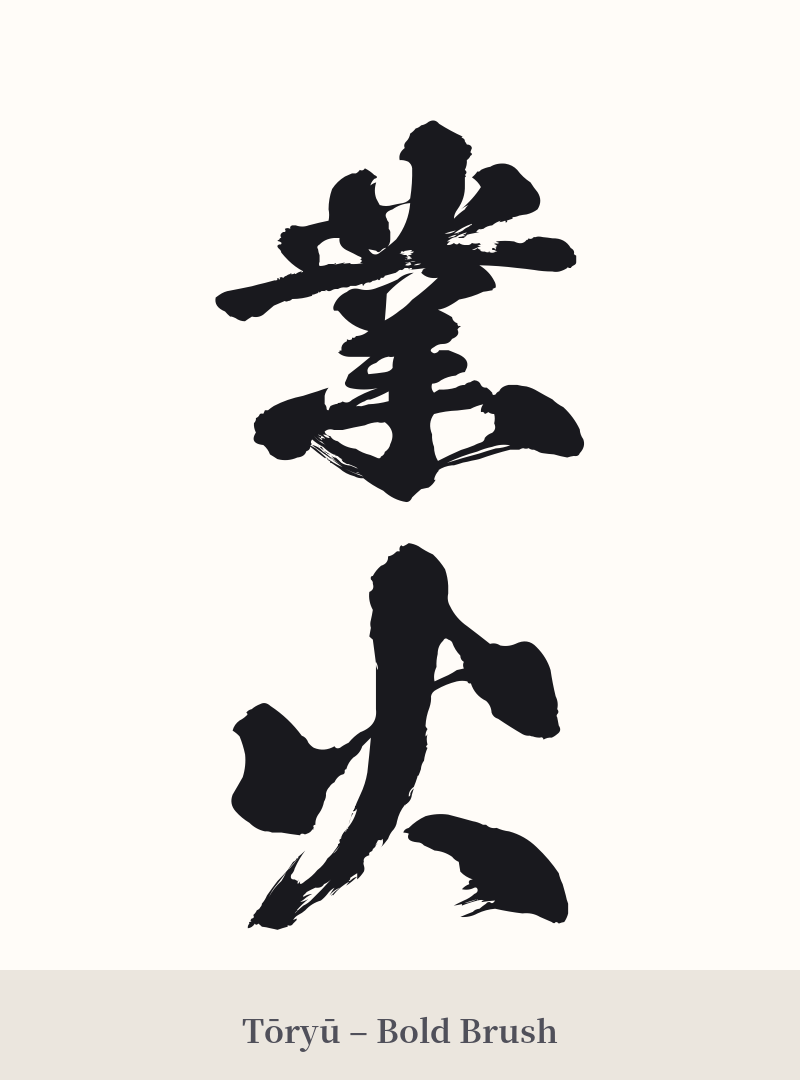
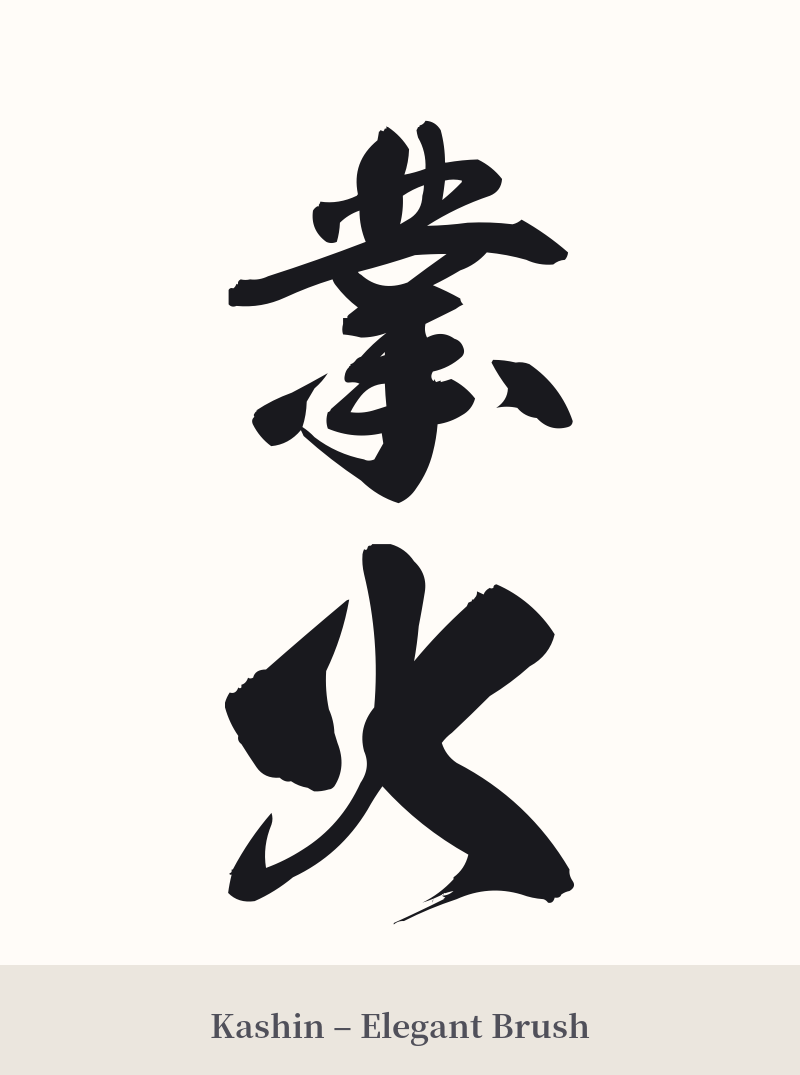
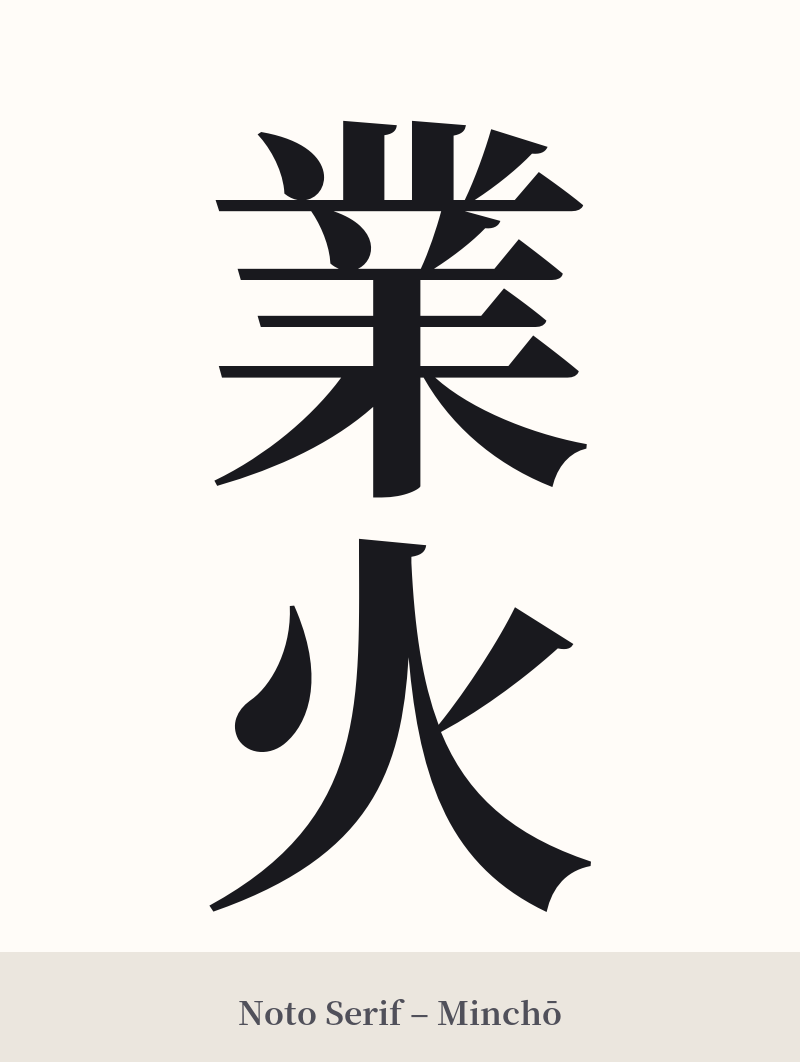
🖌️ Font Styles for 業火
The same kanji can look dramatically different depending on the calligraphy style. Choose a font that matches the mood you want for your tattoo or design.
🎨 Tattoo Suitability
📐 Tattoo Design Guide
A 業火 tattoo makes a powerful and intense statement. Given its dark and fiery nature, design choices should amplify this energy.
– Placement: Vertical alignment is highly recommended for Gōka. Placing it along the spine, forearm, or calf creates a sense of powerful energy flowing downwards or upwards. A larger piece on the back or ribs would also be very effective.
– Font Style: An aggressive, semi-cursive brush style (Gyosho) can capture the chaotic, flickering nature of flames. For a more solid, imposing feel, a thick and stable block script (Kaisho) can emphasize the weight of karma and the permanence of its consequences.
– Visual Tips: This is a perfect candidate for incorporating color. Adding red, orange, or even black and grey flames that lick and curl around the kanji can bring the design to life. Consider having the top character, 業, appear solid and dark, with the 火 below it seemingly bursting into flame, visually telling the story of karma igniting into fire.
Comments