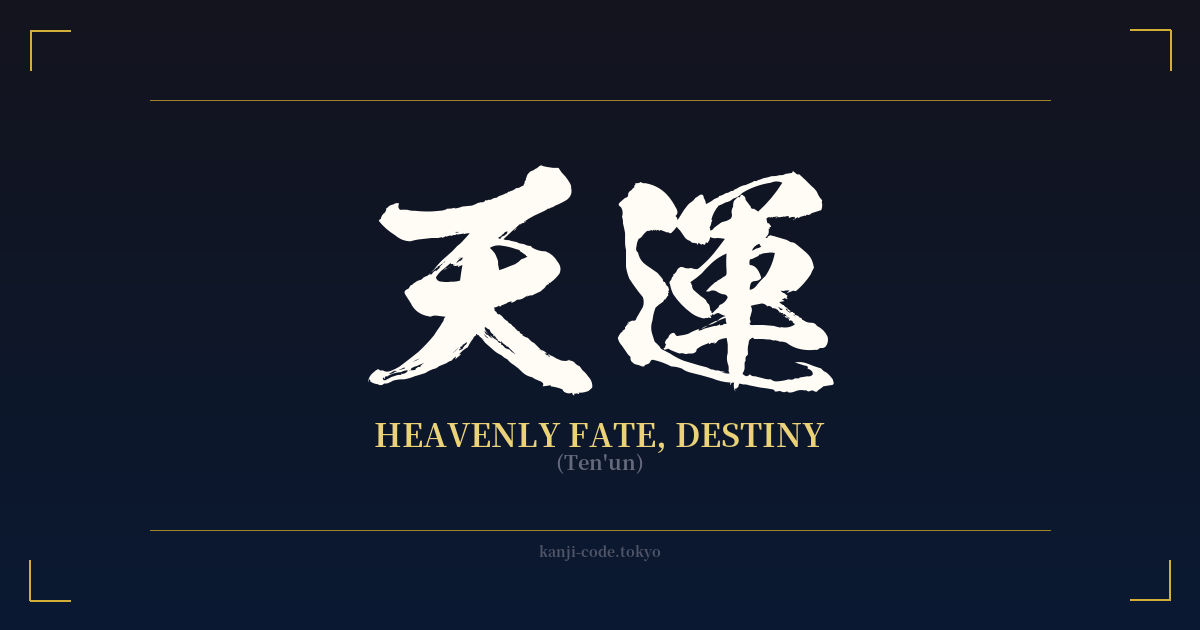
✍️ 天運 (Ten'un) — Cultural Context
天運 (Ten'un) is a Japanese word that translates to "heavenly fate" or "destiny." It's a term steeped in philosophy and history, suggesting a fortune that is not merely random but is bestowed by the heavens themselves. It speaks to a grand, cosmic plan that guides one's life, particularly towards a great or fortunate outcome.
The word is composed of two powerful kanji: 天 (ten), meaning "heaven" or "sky," and 運 (un), meaning "luck," "fate," or "transport." When combined, they don't just mean "good luck." They create a concept of a destiny that is carried down from the celestial realm, a fate that is divinely ordained. This is not the luck of finding a ten-dollar bill on the street; this is the luck of a general winning a decisive battle against impossible odds.
Historically, the concept of Ten'un was deeply intertwined with the lives of samurai, daimyō, and emperors. A leader's success was often attributed to their possession of Ten'un. To be blessed by Ten'un meant that heaven itself sanctioned your actions and guided you to victory. Conversely, to be "abandoned by Ten'un" (天運に見放される, ten'un ni mihanasareru) was to face certain doom, a sign that your time of greatness was over. This belief reflects a worldview where human effort is crucial, but ultimate success or failure rests in the hands of a higher power.
While Ten'un shares the character 運 with 運命 (unmei, fate/destiny), they carry different nuances. Unmei is a more neutral term for the predetermined course of one's life, which can be good or bad. Ten'un, however, almost exclusively refers to a positive, auspicious destiny. It is the favorable intervention of the cosmos in one's life.
In modern Japan, using Ten'un in everyday conversation might sound a bit dramatic or old-fashioned. It's reserved for momentous occasions—a once-in-a-lifetime opportunity, a miraculous survival, or achieving a long-held dream against all odds. It captures the feeling that your success wasn't just your own doing, but was aided by forces beyond your comprehension. This makes it a profound and powerful word, representing a destiny that is not just lived, but granted.
🖌️ Font Styles for 天運
The same kanji can look dramatically different depending on the calligraphy style. Choose a font that matches the mood you want for your tattoo or design.
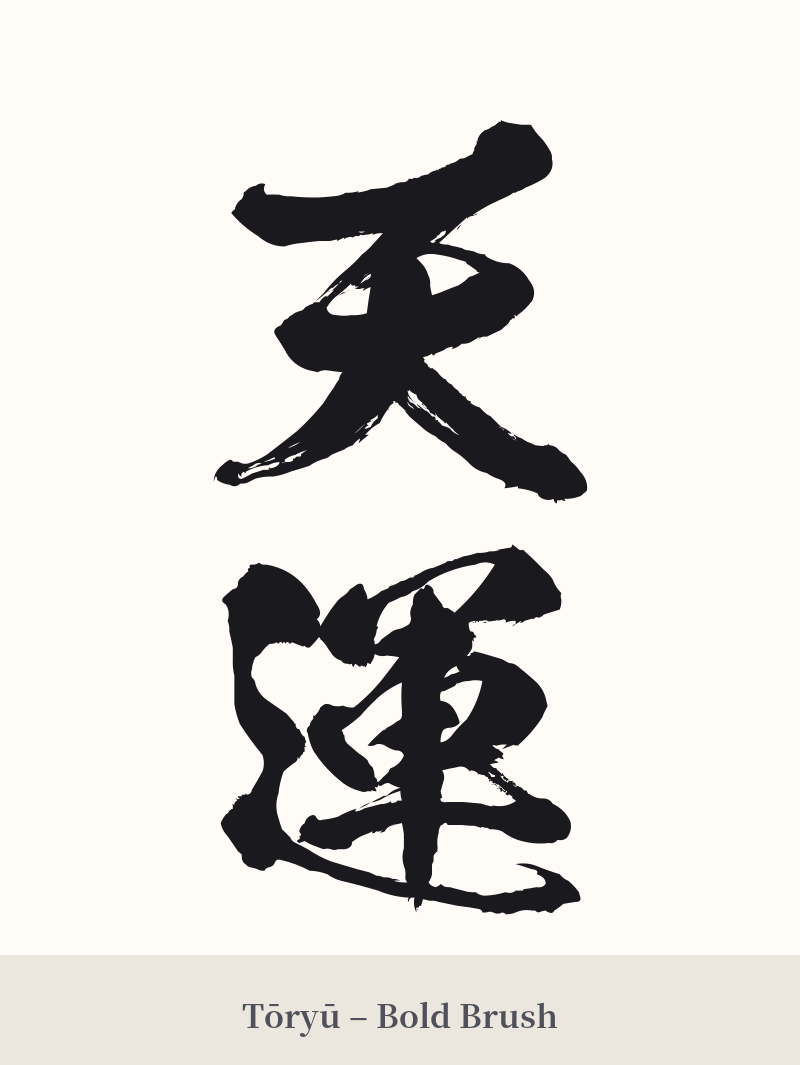
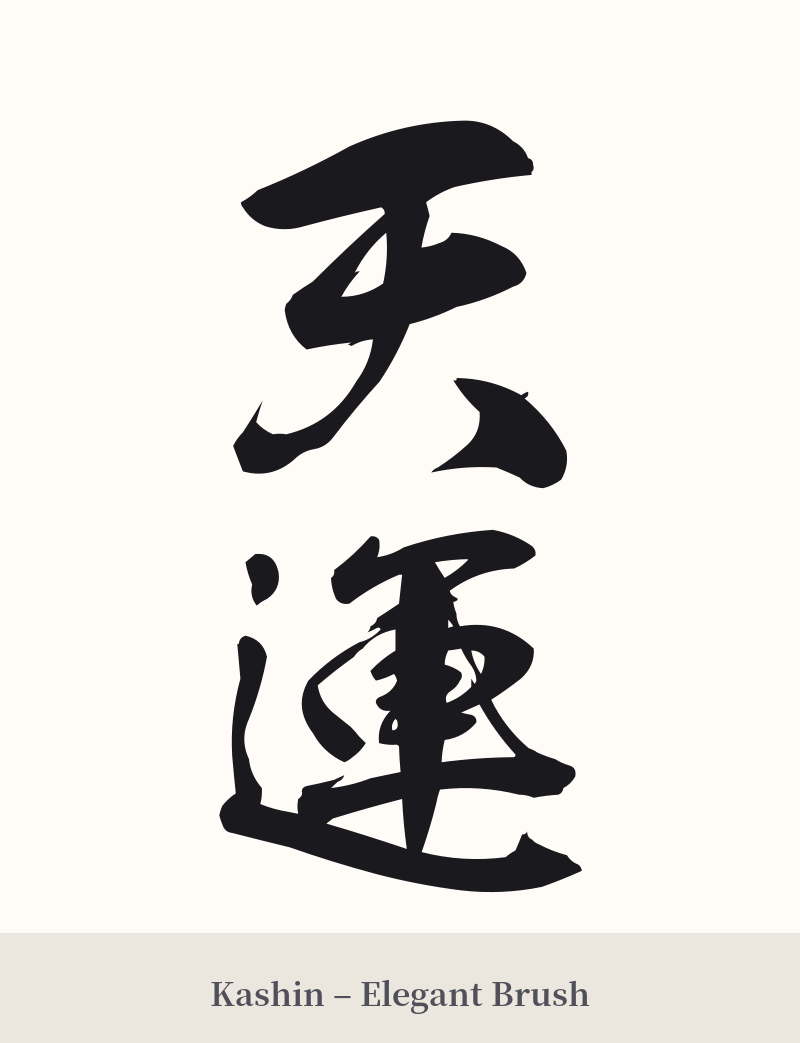
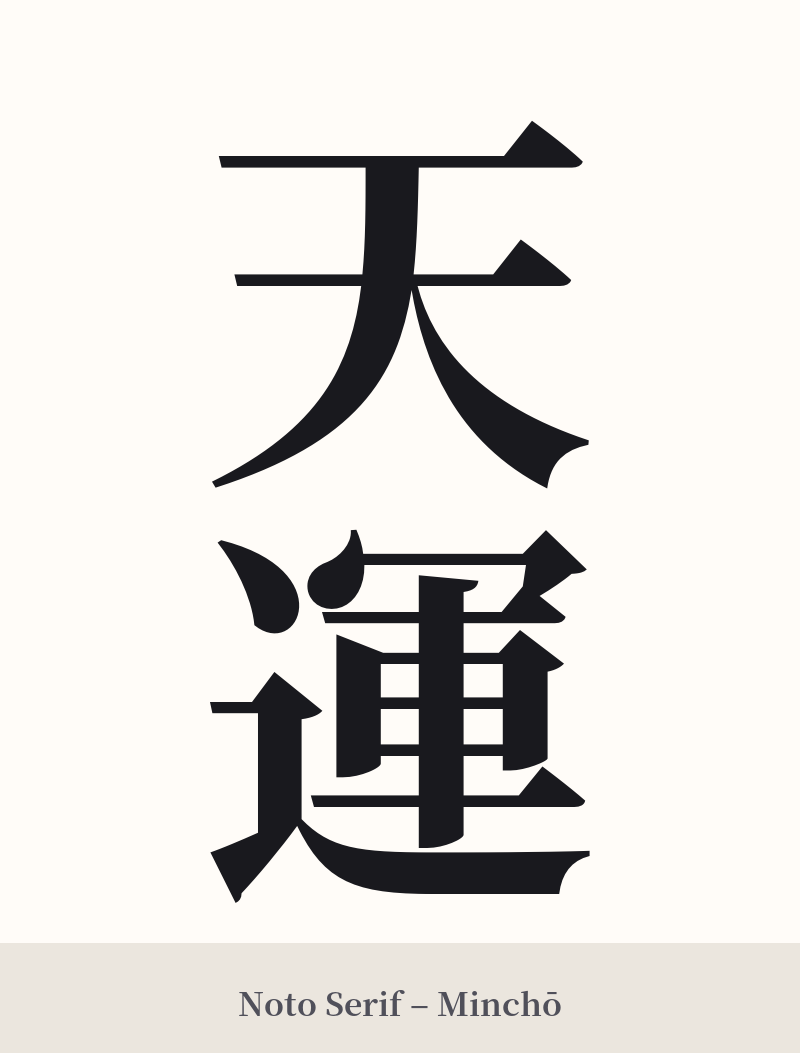
🎨 Tattoo Suitability
📐 Tattoo Design Guide
For a 天運 tattoo, the classic vertical arrangement is highly recommended. This orientation suits placements like the spine, forearm, or along the calf, enhancing the sense of destiny flowing downwards from the heavens.
A horizontal design can also be effective, particularly across the chest or upper back, giving a sense of stability and breadth.
– Font Style: A dynamic, semi-cursive script (gyōsho) can capture the flowing, active nature of 'fate'. For a more solid and impactful statement, a bold, traditional block script (kaisho) emphasizes the weight and inevitability of destiny.
– Visual Elements: Consider complementing the kanji with subtle background elements. Wispy clouds or a hint of a celestial spiral around the characters can reinforce the 'heavenly' aspect without overpowering the word itself. The contrast between the simple, open form of 天 and the more intricate 運 is a beautiful design element on its own.
Comments