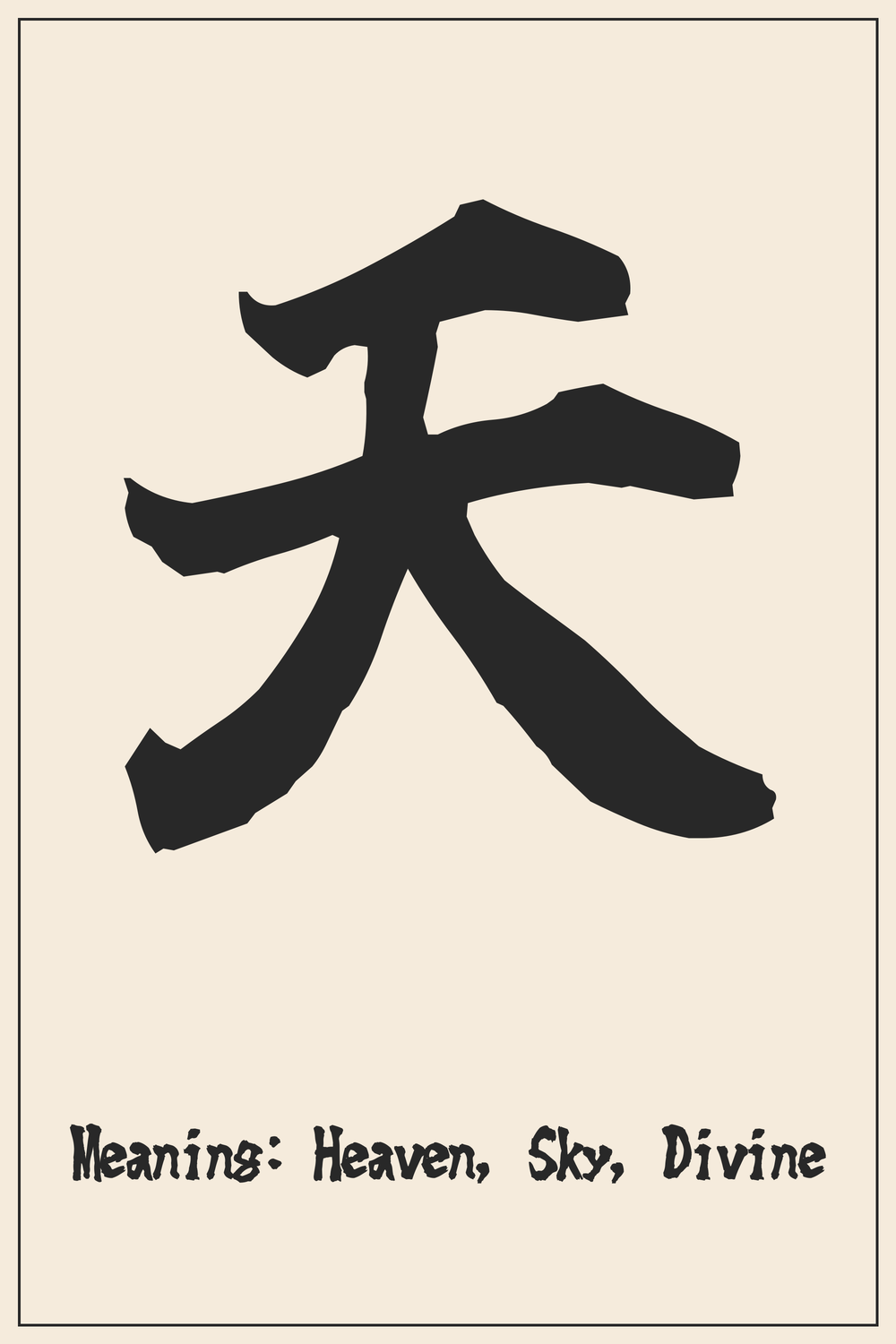
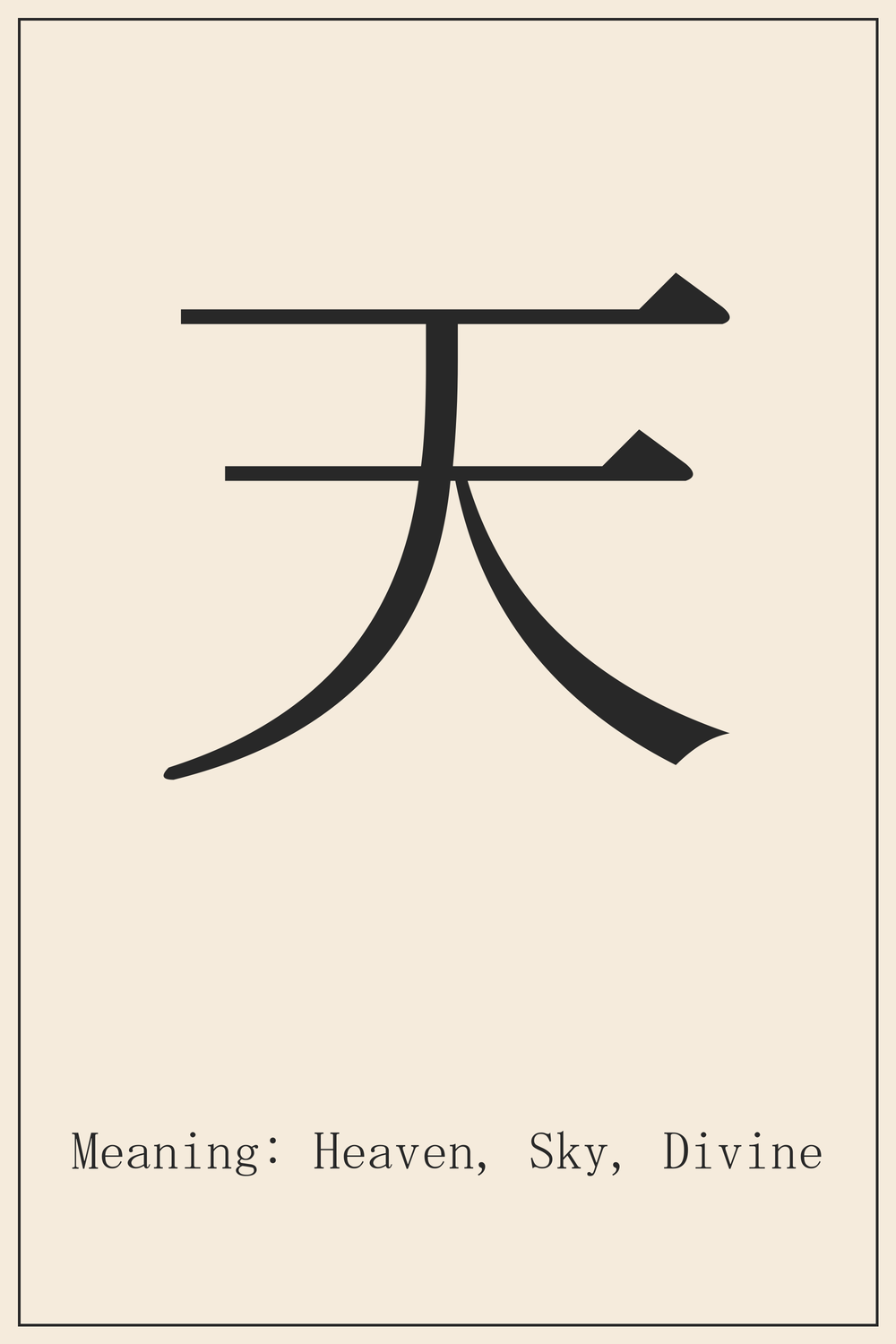
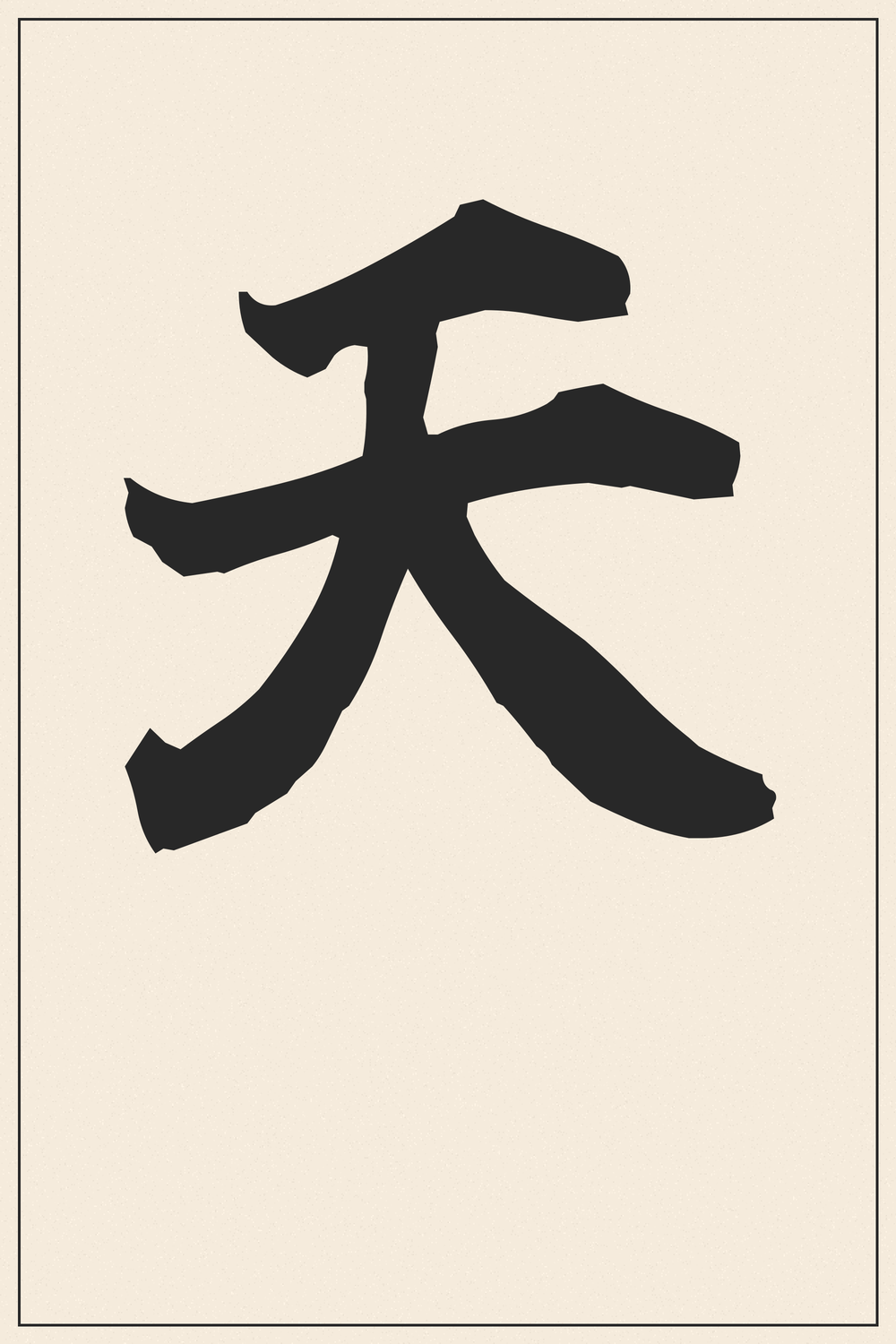
The kanji 天 (Ten) is a symbol of immense power, representing the vastness of the heavens and the divine forces that govern existence. It encapsulates concepts ranging from the literal sky above to destiny and spiritual realms.
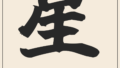
The atmosphere of a Kanji character changes dramatically depending on the font style. A character that looks elegant in a brush style might look bold and modern in a different font.
Recommendation:
Since a tattoo is permanent, we strongly recommend comparing various font styles beyond what is shown here. Use our designs as a trusted reference for the correct structure, but feel free to explore different artistic variations to find the perfect match for your vision.
The Deep Meaning Behind 天
The kanji 天 (Ten) is one of the most ancient and profound characters in the Japanese lexicon. Its pictographic origin depicts a human figure (大) with a prominent line above, symbolizing ‘what is above’ a person’s head, initially signifying the literal sky.
Over millennia, its meaning expanded to encompass the celestial realm, divine providence, and the ultimate cosmic authority. This evolution reflects a deep philosophical connection to fate, destiny, and the spiritual forces that govern human existence in East Asian thought.
Kanji Breakdown
The character 天 is a single, fundamental ideogram, rich in historical significance.
Origin: This character’s ancient form vividly depicted a person with an emphasized head, or a line above a person, to represent the ‘sky’ or ‘heaven’ above them. This simple yet powerful visual effectively conveys the concept of the uppermost expanse.
Conclusion
The kanji 天 (Ten) is a powerful emblem of the cosmos, encapsulating the vastness of the sky, the concept of divine will, and the overarching forces of destiny. It speaks to both the natural world and the spiritual universe, offering a rich tapestry of meaning that transcends simple translation.
Choosing 天 for a tattoo signifies a profound connection to the celestial, an acceptance of one’s fate, or an aspiration towards higher, divine ideals. Its elegant simplicity and profound depth make it a timeless and truly meaningful choice for a personal emblem that resonates with universal truths.
Comments