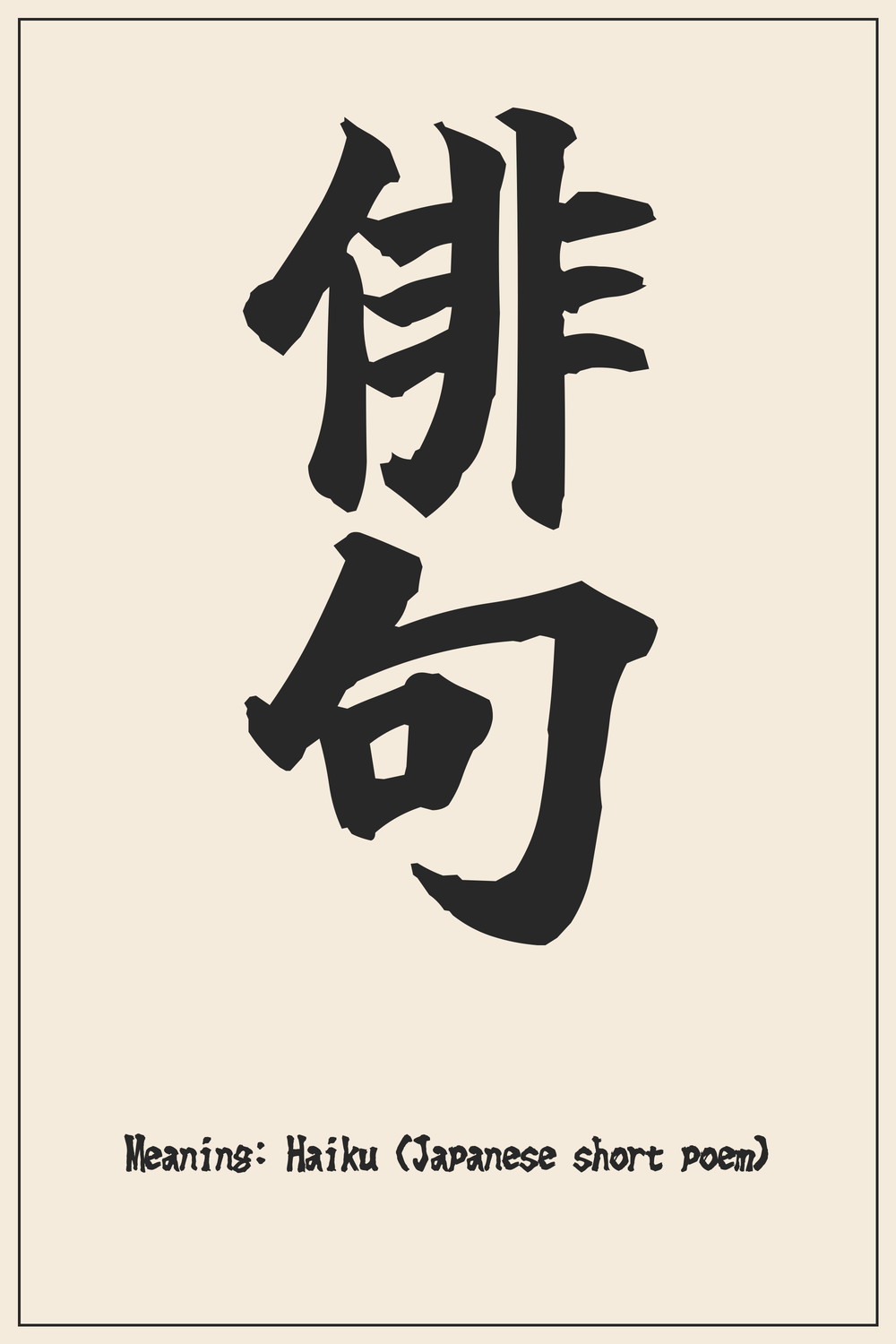
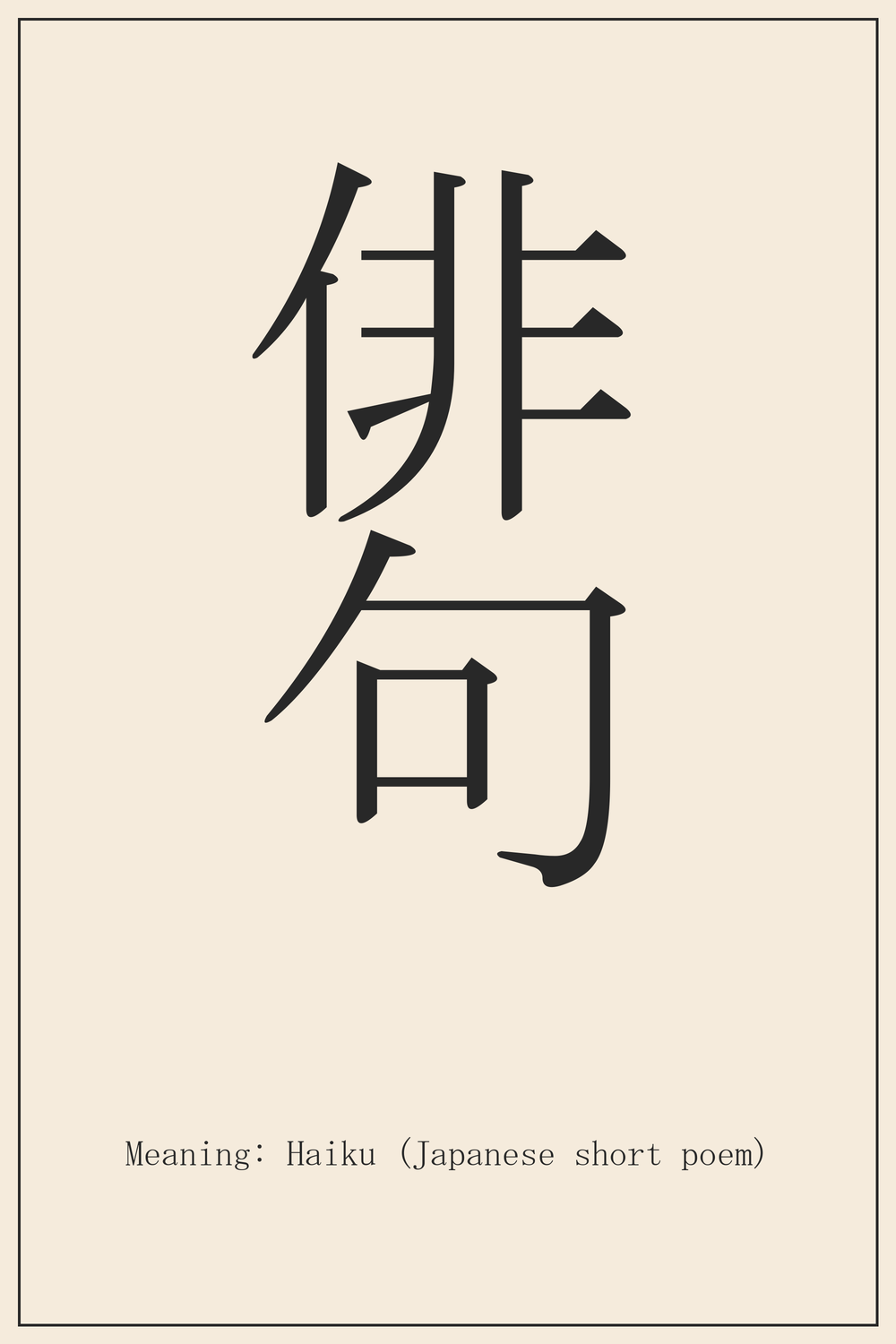
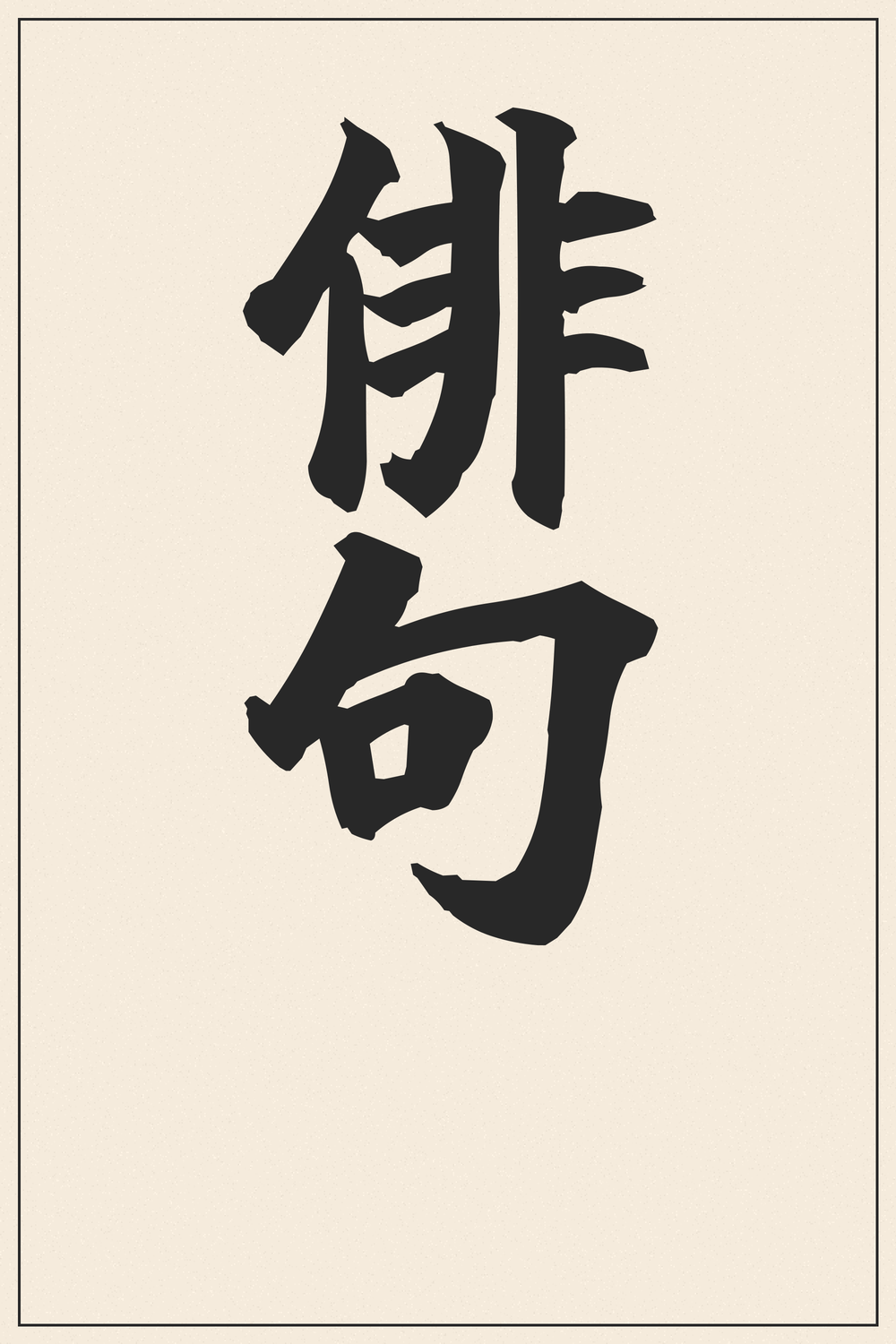
“Haiku” represents more than just a 17-syllable poem; it embodies a profound Japanese aesthetic that distills observation into art. This elegant compound captures the essence of fleeting moments and deep contemplation, making it a powerful symbol of mindful expression.
The atmosphere of a Kanji character changes dramatically depending on the font style. A character that looks elegant in a brush style might look bold and modern in a different font.
Recommendation:
Since a tattoo is permanent, we strongly recommend comparing various font styles beyond what is shown here. Use our designs as a trusted reference for the correct structure, but feel free to explore different artistic variations to find the perfect match for your vision.
The Deep Meaning Behind 俳句
The term 俳句 (Haiku) refers to a traditional Japanese poetic form, typically characterized by a 5, 7, 5 syllable structure. Its roots trace back to the opening verse (hokku) of a collaborative linked verse poetry called ‘haikai no renga,’ eventually evolving into an independent genre.
Haiku often focus on a single moment in time, juxtaposing two images or ideas with a ‘kireji’ (cutting word) and incorporating a ‘kigo’ (season word). It embodies a profound connection to nature, the changing seasons, and the art of expressing deep emotion or observation with succinct beauty, often influenced by Zen Buddhist principles of simplicity and directness.
Kanji Breakdown
The compound 俳句 is composed of two distinct characters, each contributing to its profound meaning.
Meaning: Actor; comedian; haiku poet. This character originally referred to an actor or performer, stemming from the component 人 (person) and 非 (not; wrong), which here functions phonetically to suggest “to perform” or “to entertain.” In 俳句, it relates to ‘haikai,’ the playful or unconventional style of linked verse from which haiku originated.
Meaning: Phrase; clause; line of poetry. This character combines 口 (mouth) and 勹 (a wrapper or enclosure), conceptually representing spoken words or phrases. In the context of 俳句, it signifies a short poetic verse or phrase, underscoring the brevity and concise nature of the art form.
Conclusion
The Kanji 俳句 beautifully encapsulates a world-renowned poetic tradition, symbolizing not only a specific literary form but also the profound act of observing the world with keen awareness and expressing it with elegant simplicity. It speaks to the power of brevity and the beauty found in everyday moments.
For those who value mindfulness, artistic expression, and the appreciation of nature’s fleeting beauty, a tattoo of 俳句 serves as a constant reminder of these cherished ideals. It’s a statement of aesthetic depth and cultural appreciation, perfect for someone who finds inspiration in condensed wisdom.
Comments