福
Good Fortune, Blessing
A character born when someone placed a full wine jar on an altar and prayed—combining divine blessing with earthly abundance into one powerful symbol.
Every lunar New Year, Chinese communities worldwide paste 福 characters on doors—sometimes upside down because “upside down” (倒, dào) sounds like “arrive” (到, dào), making 福倒 become “fortune arrives.” Japanese New Year’s celebrations feature 福 on decorations, lucky charms, envelopes containing money for children. The beckoning cat (招き猫, maneki-neko) often wears 福 on its belly, promising prosperity to shop owners who display it.
The character combines two powerful components: 示 (shimesu, altar/deity) and 畐 (fuku, full vessel). Picture the scene: a worshipper approaches a sacred altar carrying a wine jar filled to the brim—not empty or half-full, but overflowing with abundance. They place this offering before the gods. That image—divine connection PLUS material prosperity, spiritual devotion PLUS earthly plenty—captured the complete concept of blessing.
福 means more than “luck” in the gambling sense or “happiness” in the emotional sense. It describes the state where everything aligns favorably: your health holds strong, your family thrives, your work prospers, disasters pass you by, opportunities find you. It’s comprehensive wellbeing—material security AND spiritual peace, personal satisfaction AND social harmony. The character doesn’t promise permanent euphoria. It offers something more valuable: the sustained condition where life works, where you have enough, where blessings outnumber curses.
✨ Kanji Styles Gallery
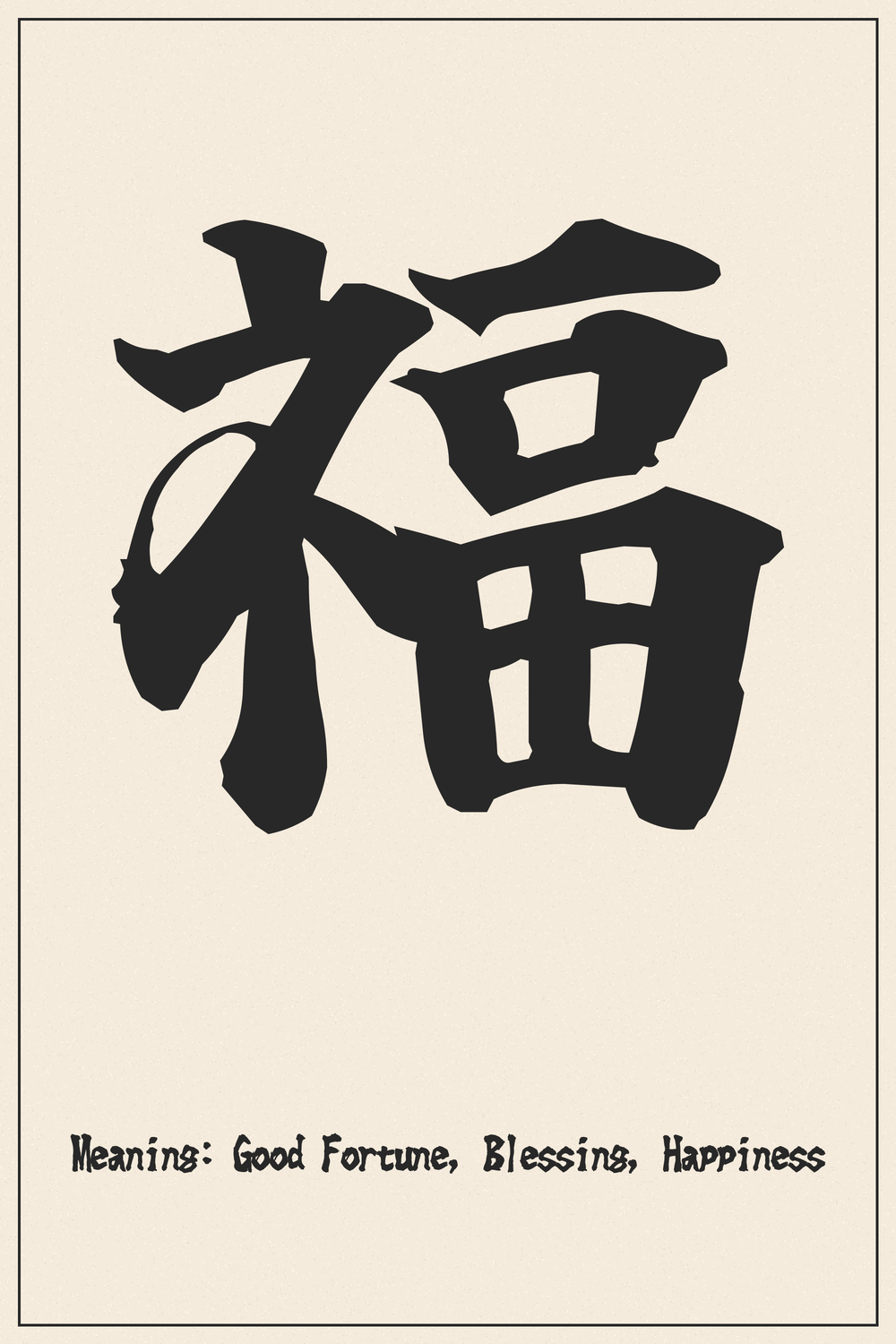
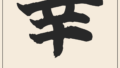
🖌️ Calligraphy Style
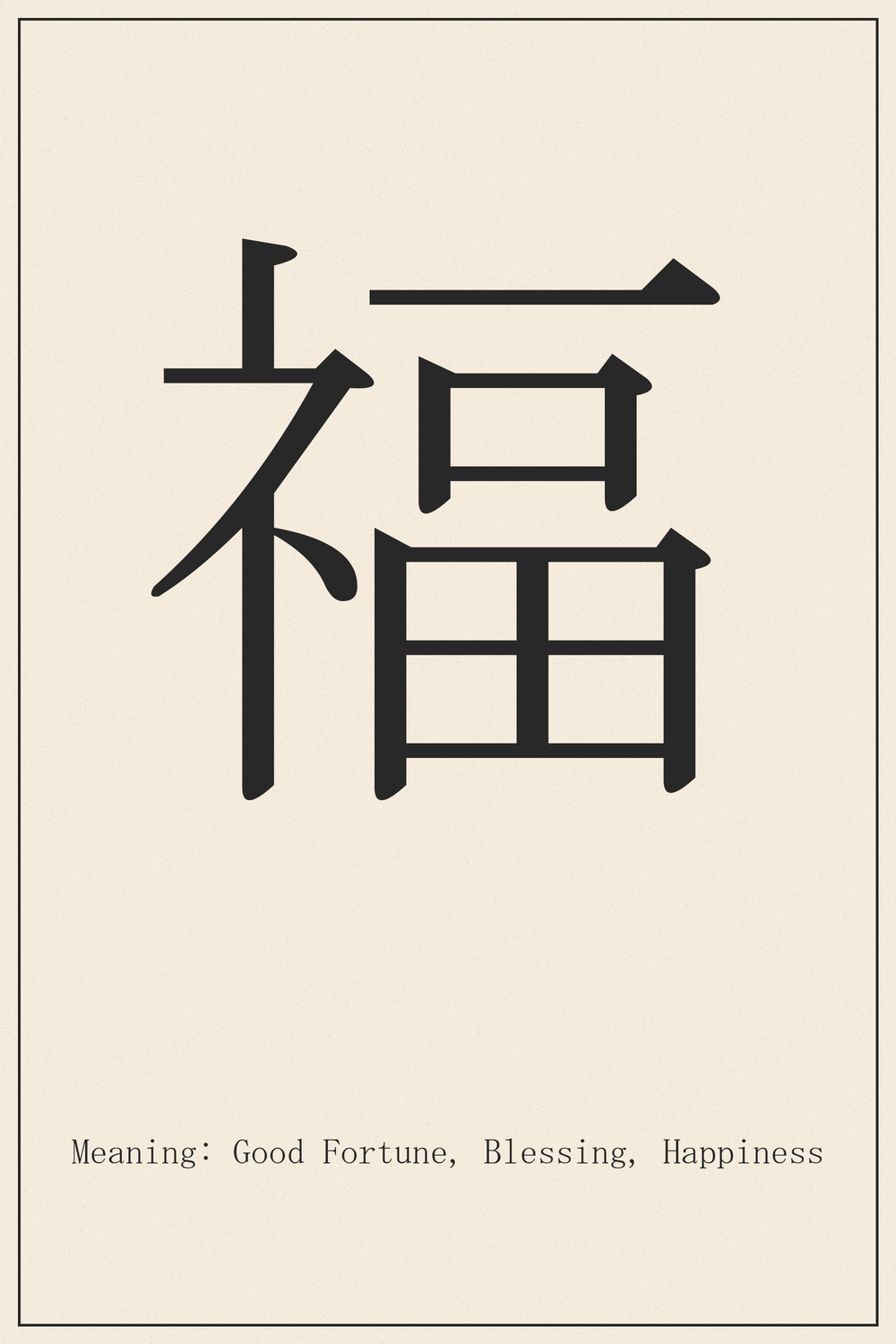
📝 Mincho Style
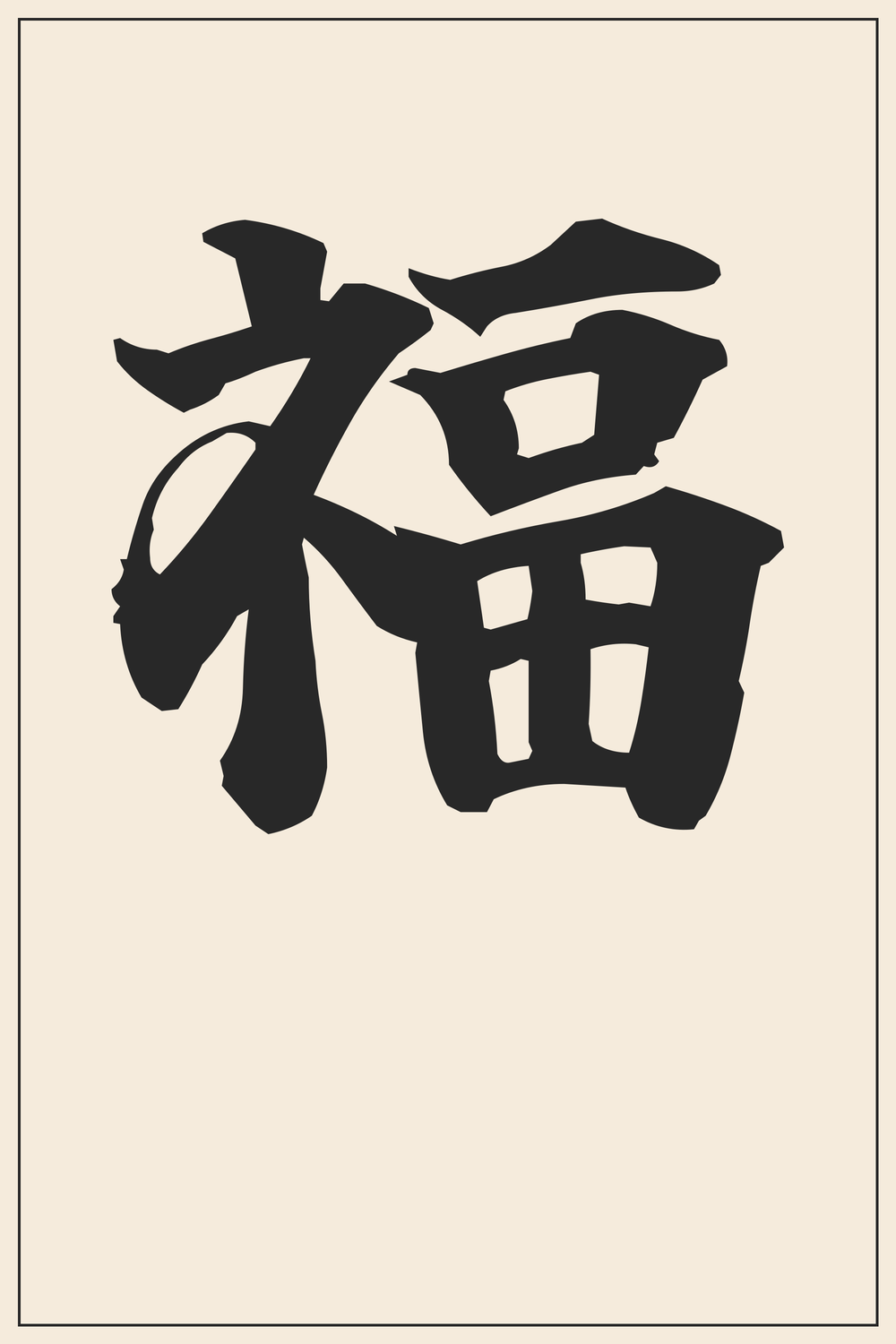
📜 Vertical Writing
⚡ Quick Facts
Breaking Down 示 (Shimesu)
The radical 示 (called shimesu-hen when appearing on the left side of characters) originated as a pictograph of an altar—the ancient oracle bone form shows a T-shaped table with an offering placed on top. The horizontal line represents the sacrifice or offering. The vertical structure depicts the altar itself. The small strokes below suggest blood dripping from the offering or support legs holding the altar steady.
This radical appears throughout kanji related to religion, spirits, and divine matters: 神 (kami/shin, god/spirit), 祈 (inoru/ki, to pray), 祭 (matsuri/sai, festival/worship), 祝 (iwau/shuku, to celebrate), 禁 (kin, to forbid—originally religious taboos). Any character containing 示 connects somehow to sacred space, divine interaction, or spiritual practice.
In 福, the 示 component establishes that fortune comes from or involves the divine realm. Blessings aren’t random accidents—they flow from proper relationship with sacred forces, from making appropriate offerings, from maintaining ritual connection between human and spiritual worlds. The altar reminds us that fortune requires both receiving (from gods) and giving (offerings to gods). It’s transactional spirituality made visible.
When 示 appears as a radical on the left side of characters, it’s written as ネ (ne) rather than the full form—a simplified version with four strokes instead of five. This happened through centuries of handwriting simplification. Despite looking different, it still represents altars and deities. Recognizing ネ as the “altar radical” unlocks dozens of spirit-related kanji.
Breaking Down 畐 (Fuku)
The component 畐 depicts a narrow-necked vessel or jar completely filled—some scholars interpret it as a wine jar with a stopper, others as a person with a full belly. The structure shows a lid or covering on top (一), an opening or neck (口), and a full container below (田). The imagery is unmistakable: fullness, abundance, having more than enough, prosperity made tangible.
This component appears in other wealth-related kanji: 富 (tomi/fu, wealth—a house containing 畐), 副 (fuku, vice/assistant—dividing wealth creates a secondary portion), 幅 (haba/fuku, width—cloth measured in abundant spans). Wherever 畐 appears, it brings connotations of fullness, completeness, having sufficient quantity or quality.
In ancient agricultural societies, having full storage jars meant surviving winter, feeding your family, maintaining social status, avoiding desperation. Empty jars meant hunger, debt, vulnerability. 畐 captures the relief and security of abundance—not luxurious excess necessarily, but the blessed state of having enough. When you place that fullness on the altar (示), you’re acknowledging gratitude for material prosperity while seeking its continuation.
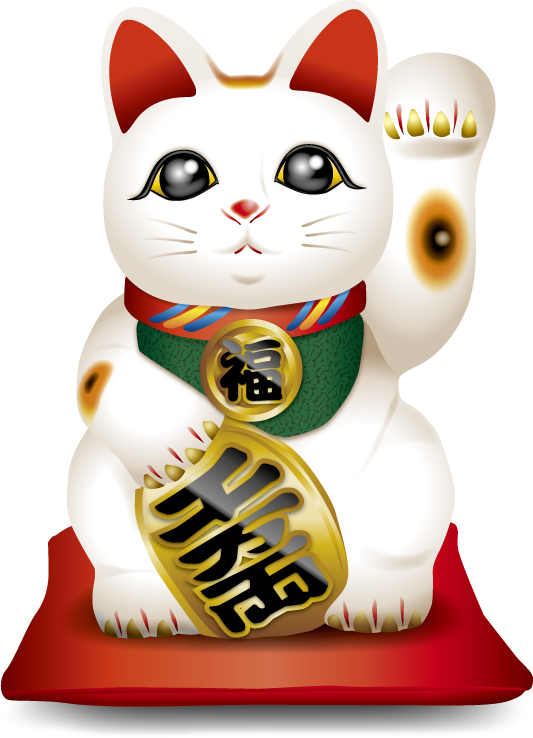
Divine blessing meets earthly abundance—the complete formula for fortune
New Year’s Fortune Culture
Japanese New Year (お正月, Oshōgatsu) saturates with 福 symbolism. Households display kadomatsu (門松, pine decorations) at entrances welcoming the year’s deity. They hang shimenawa (注連縄, sacred rope) marking purified space. They prepare osechi ryōri (おせち料理, special New Year’s food) in stacked boxes—each dish carries auspicious meaning related to fortune, health, prosperity, fertility.
The first shrine visit (初詣, hatsumōde) involves purchasing new good-luck charms (お守り, omamori) often featuring 福. People buy hamaya (破魔矢, demon-destroying arrows) decorated with 福 and the year’s zodiac animal to protect homes from evil spirits. Fortune-telling paper strips (おみくじ, omikuji) predict the year’s luck—if you draw bad fortune, you tie it to tree branches at the shrine, leaving the misfortune behind while taking 福 home.
Children receive otoshidama (お年玉)—money in decorative envelopes from relatives, the envelopes often printed with 福. The entire holiday functions as concentrated fortune-seeking: clean house thoroughly to remove old year’s accumulated misfortune, prepare special foods inviting prosperity, visit shrines requesting divine blessing, give gifts maintaining social harmony. Every ritual aims at securing 福 for the coming year.
Compound Words and Expressions
福 anchors numerous Japanese words describing fortune and wellbeing. 幸福 (kōfuku) doubles up on blessing—combining 幸 (happiness/good fortune) with 福 to create emphatic “happiness/welfare/bliss.” 祝福 (shukufuku) means “blessing” as noun or “to bless” as verb—祝 (celebrate) plus 福 suggesting blessed celebration. 福祉 (fukushi) means “welfare/wellbeing”—福 plus 祉 (happiness) describing social support systems.
多福 (tafuku) literally means “many blessings”—appearing on lucky charms promising abundant good fortune. 福音 (fukuin) translates as “gospel/good news”—福 plus 音 (sound/news), used specifically for Christian gospel but applicable to any joyful announcement. 福袋 (fukubukuro, “lucky bag”) are grab bags sold at New Year’s containing merchandise worth more than the bag’s price—gambling on fortune literally packaged.
Regional place names incorporate 福: 福岡 (Fukuoka, “fortunate hill”), 福島 (Fukushima, “fortunate island”), 福井 (Fukui, “fortunate well”). Naming places after fortune reflects hope that blessing permeates the location, that residents will prosper, that the land itself carries positive energy. Geography becomes prayer made permanent.
Japanese tradition includes 七福神 (shichifukujin, “Seven Fortune Gods”)—deities bringing specific blessings: wealth, longevity, happiness, honest poverty, popularity, wisdom, food. Pilgrims visit shrines dedicated to all seven seeking comprehensive fortune. The group’s name literally contains 福, marking them as fortune-bringing entities. Their images appear on New Year’s decorations, shop signs, and lucky charms.
🎨 Tattoo Design Ideas
- ✨ Traditional Bold Calligraphy — Single character in thick, confident brushwork captures 福’s power and positive energy. The strokes should feel prosperous and abundant—visual manifestation of the blessing itself. Perfect for medium-to-large placements (5-8 inches) on upper back, chest, or thigh where the character commands attention.
- ✨ Red Circle Seal Design — Place 福 within traditional red circular seal (hanko format) as it appears on New Year’s decorations and lucky charms. Red symbolizes happiness and wards off evil in East Asian culture. The enclosed circle creates unified composition suggesting completeness and protection. This format honors cultural authenticity.
- ✨ Upside-Down Fortune — Display 福 inverted following Chinese New Year tradition where upside-down (倒, dào) sounds like “arrive” (到, dào), so upside-down fortune = fortune arrives. This requires cultural explanation but creates conversation starter while demonstrating deeper knowledge of fortune symbolism across East Asian traditions.
- ✨ Minimalist Modern Line — Clean, precise strokes without decorative flourish for contemporary aesthetic. Despite traditional meaning, modern execution feels fresh and sophisticated. Ideal for smaller placements (4-6 inches) on forearm, shoulder blade, or calf where simplicity creates elegant statement.
- ✨ With Prosperity Symbols — Pair 福 with other fortune imagery—gold coins, lucky bamboo, plum blossoms, koi fish, cranes. Keep additional elements minimal and tasteful, ensuring 福 remains dominant. The supporting symbols reinforce fortune concept through multiple cultural references without cluttering composition.
- ✨ Scroll Format Design — Present 福 in traditional hanging scroll (kakejiku) composition with decorative borders above and below. This format honors how single powerful characters are displayed in Japanese homes and temples as meditation objects and blessing reminders. Works beautifully vertically along spine, forearm, or outer leg.
Who Chooses This Tattoo
Entrepreneurs and business owners choose 福 invoking prosperity for their ventures. They need fortune—in the comprehensive sense of customers appearing, deals closing, obstacles clearing, timing working favorably. The tattoo becomes permanent good-luck charm, visible reminder that success requires both hard work AND favorable circumstances, effort AND blessing. It acknowledges the role of fortune in all achievement.
People beginning new life chapters—marriages, relocations, career changes, recoveries from illness—select 福 marking fresh starts with blessing-seeking. They’re stepping into uncertainty and want fortune’s favor. The character becomes prayer and promise: “may this new beginning bring comprehensive wellbeing, may circumstances align favorably, may blessings outnumber struggles.” It’s hope made permanent.
Those drawn to East Asian cultural aesthetics wear 福 connecting to traditions around fortune-seeking, ritual blessing, and proper relationship between humans and cosmic forces. They appreciate how cultures developed sophisticated systems for invoking good fortune, how single characters carry entire philosophies, how visual symbols function as active agents attracting positive energy. The tattoo becomes cultural bridge and personal talisman simultaneously.
福 ranks among the most recognized Chinese characters globally—even people who can’t read kanji often recognize it from Chinese restaurants, New Year’s decorations, and cultural celebrations. This universal recognition means your tattoo communicates clearly across cultures. You’re not explaining obscure symbol; you’re displaying universally understood blessing wish that transcends language barriers.
Why This Character Endures
Humans across cultures developed fortune-seeking practices because we understand fundamentally that effort alone doesn’t guarantee success. You can work brilliantly and still fail through bad timing, hostile circumstances, random catastrophe. Conversely, mediocre work sometimes succeeds through lucky breaks, perfect timing, favorable conditions. Fortune—call it luck, blessing, providence, grace—plays undeniable role in outcomes.
福 acknowledges this reality without falling into pure fatalism. The character’s etymology—placing full jar on altar—suggests fortune requires BOTH components. You need the full jar (your effort, your resources, your preparation) AND you need to place it on the altar (appeal to forces beyond your control, maintain proper relationships, position yourself favorably). Fortune favors those who prepare and position themselves to receive it.
The character endures because we keep needing language for that mysterious X-factor separating success from failure, wellbeing from suffering, thriving from merely surviving. Getting 福 tattooed becomes permanent acknowledgment that life requires more than individual effort—it requires favorable circumstances, good timing, blessings received. The character functions as both prayer (“may fortune find me”) and commitment (“I’ll position myself to receive it”). That wisdom—working hard while acknowledging fortune’s role, making offerings while building abundance—remains worth carrying permanently.
Comments