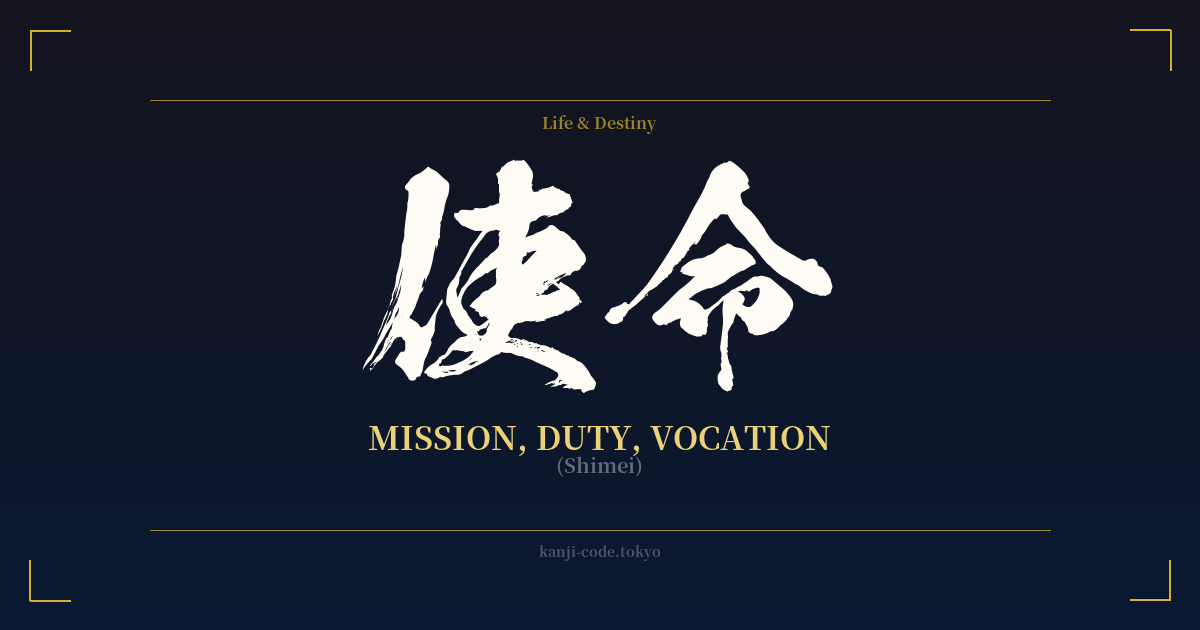
✍️ 使命 (Shimei) — Cultural Context
使命 (Shimei) is a Japanese word that transcends the simple English translations of 'mission' or 'duty.' It speaks to a higher calling, a life's purpose that feels divinely appointed or intrinsically woven into one's very being. This is not a task you are assigned at work; it is the very reason you feel you exist.
The power of Shimei comes from its two constituent kanji. The first, 使 (shi), means 'to use' or 'an envoy, a messenger.' It carries the sense of being sent, of being put into service for a purpose. The second kanji, 命 (mei), is incredibly potent, meaning both 'life' and 'a command' or 'decree.' When combined, 使命 literally translates to 'using one's life for a command' or 'the command given to a messenger.' It suggests a directive that is so fundamental it defines one's entire existence.
In Japanese culture, the concept of a Shimei is deeply respected. It is distinct from 任務 (ninmu), which is a concrete task or assignment, and from 職業 (shokugyō), which is merely a job or occupation. A doctor might see their Shimei not just as treating patients (their ninmu), but as dedicating their entire life to the preservation of human health. An artisan might view their Shimei as the perfection of their craft, passed down through generations, seeing each piece as a testament to this lifelong calling.
This idea has historical roots in concepts like Bushidō (the way of the warrior), where a samurai's Shimei was unwavering loyalty and service to their lord, a duty for which they would willingly give their life. While the context has changed, the spirit remains. Today, you might hear it used to describe an entrepreneur driven by a world-changing vision, an activist fighting for a cause, or an artist compelled to create. It's the internal fire that drives a person forward, regardless of obstacles.
Shimei is closely related to, but distinct from, the popular concept of Ikigai (生き甲斐), or 'reason for being.' While Ikigai is the source of value and joy in one's life, Shimei is the grand, overarching mission that one actively pursues. Your Shimei often gives you your Ikigai. It is the 'what' and 'why' of your life's grand narrative, a powerful and profound concept for anyone seeking to live a life of purpose.
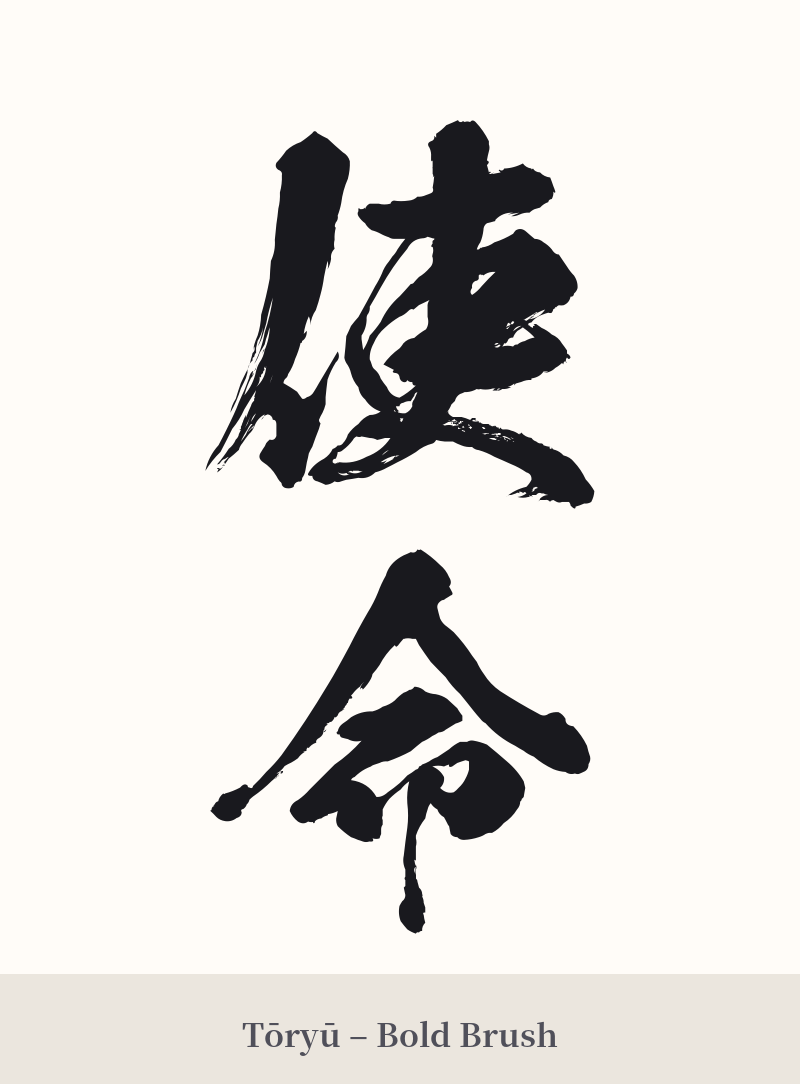
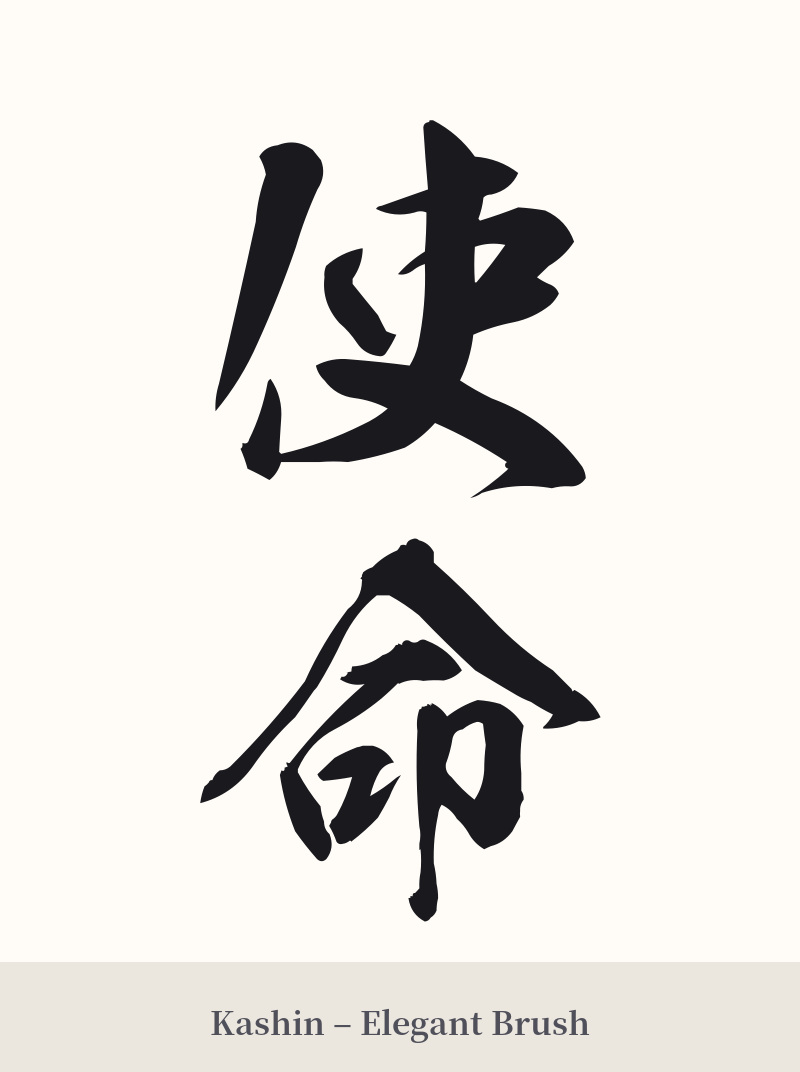
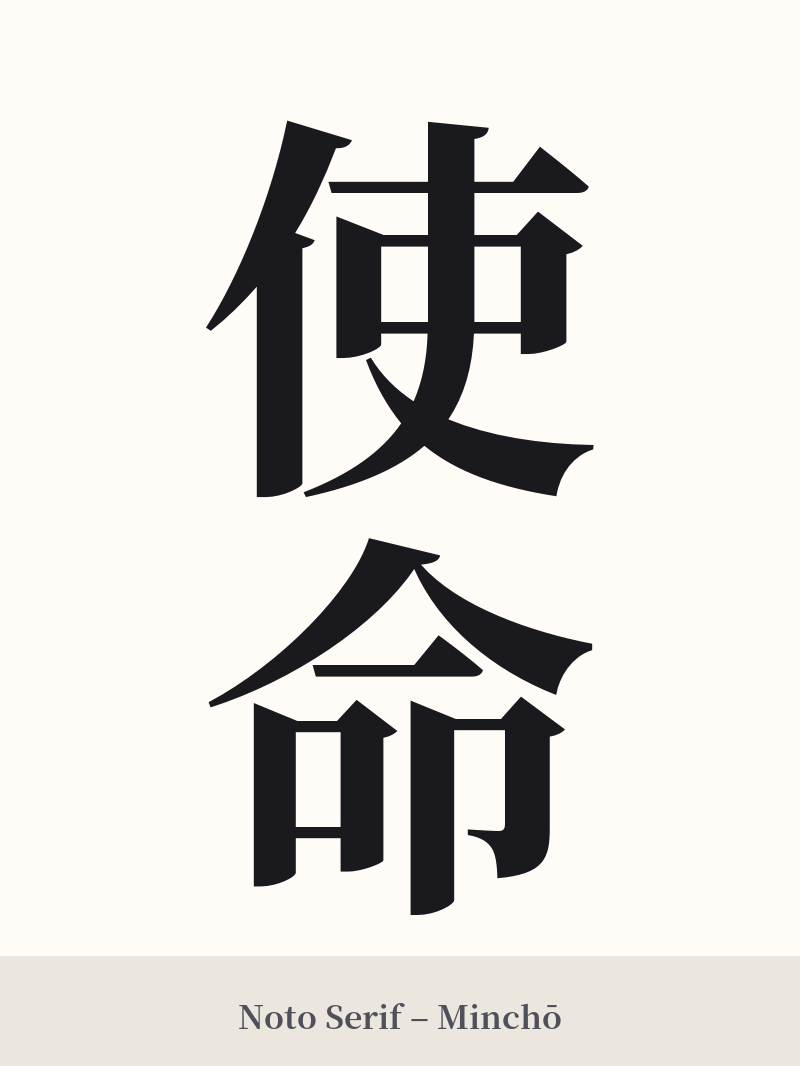
🖌️ Font Styles for 使命
The same kanji can look dramatically different depending on the calligraphy style. Choose a font that matches the mood you want for your tattoo or design.
🎨 Tattoo Suitability
📐 Tattoo Design Guide
The word 使命 (Shimei) is powerful and best served by a design that reflects its gravity and clarity.
– Placement: A vertical orientation is highly recommended and traditional for multi-kanji words. It works exceptionally well along the spine, forearm, or calf, creating a strong visual line. A horizontal placement can also work across the chest or upper back.
– Font Style: The choice of script can dramatically alter the feel. A standard Kaisho (block script) style emphasizes clarity, order, and determination. For a more fluid and personal touch, a Gyōsho (semi-cursive) script suggests a journey in motion. A bold, expressive shodō (calligraphy) brush style can capture the passion and unwavering energy behind one's mission.
– Visual Elements: While 使命 is powerful enough to stand alone, it can be subtly complemented. Consider a background element that represents your personal mission—perhaps an abstract wash of color, a compass rose, or a natural element like a mountain or tree. Keep it subtle, as the kanji should remain the focus.
Comments