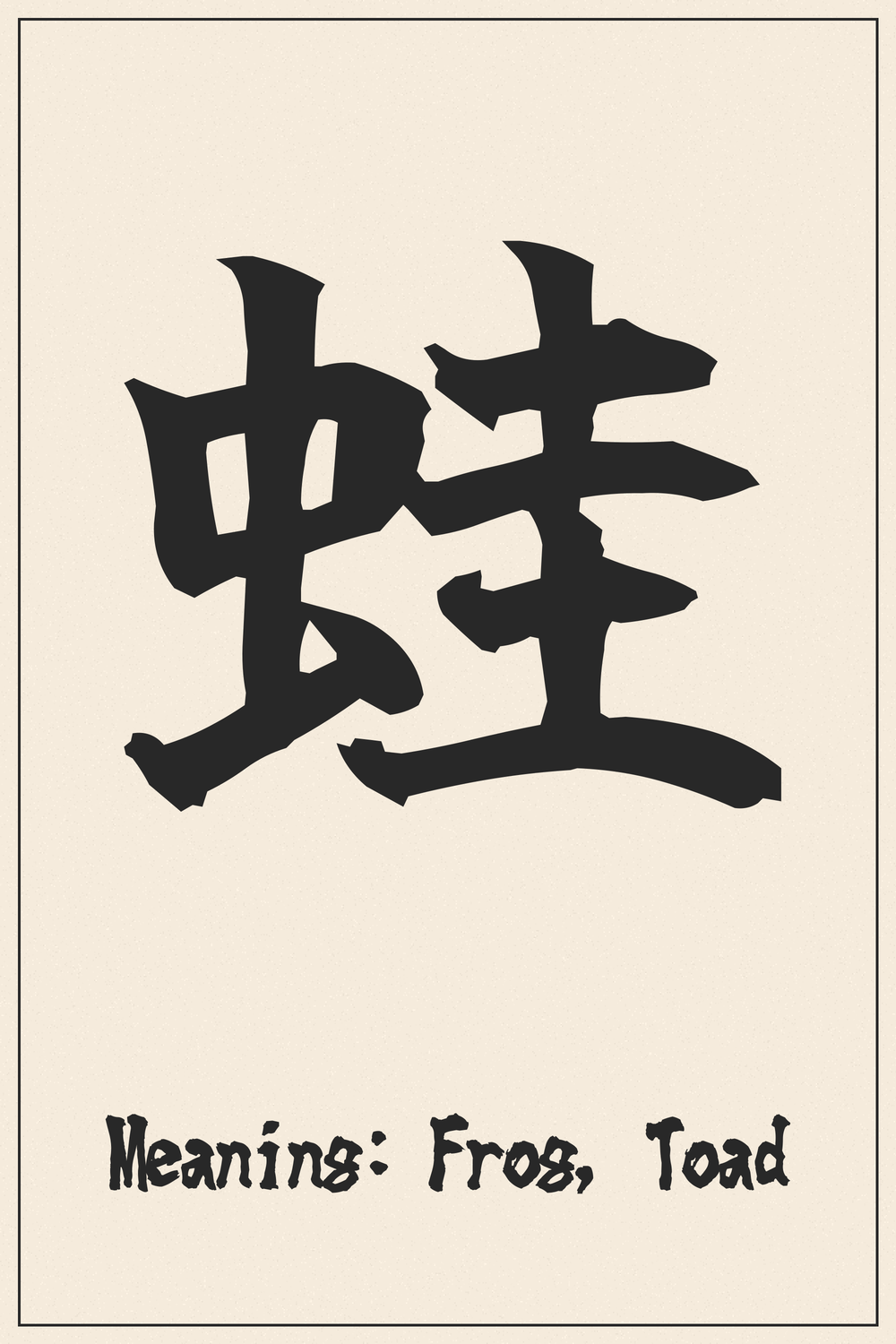
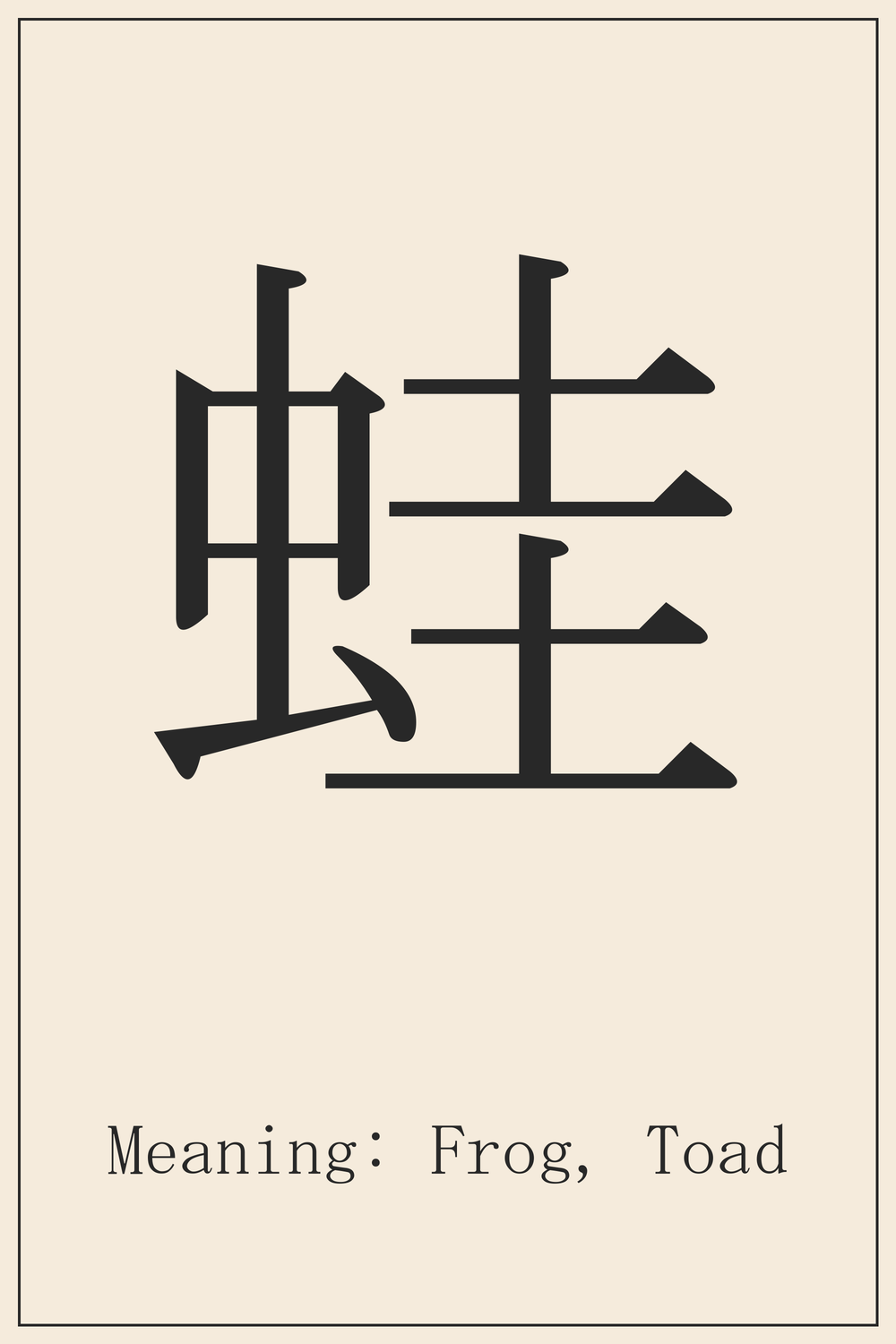
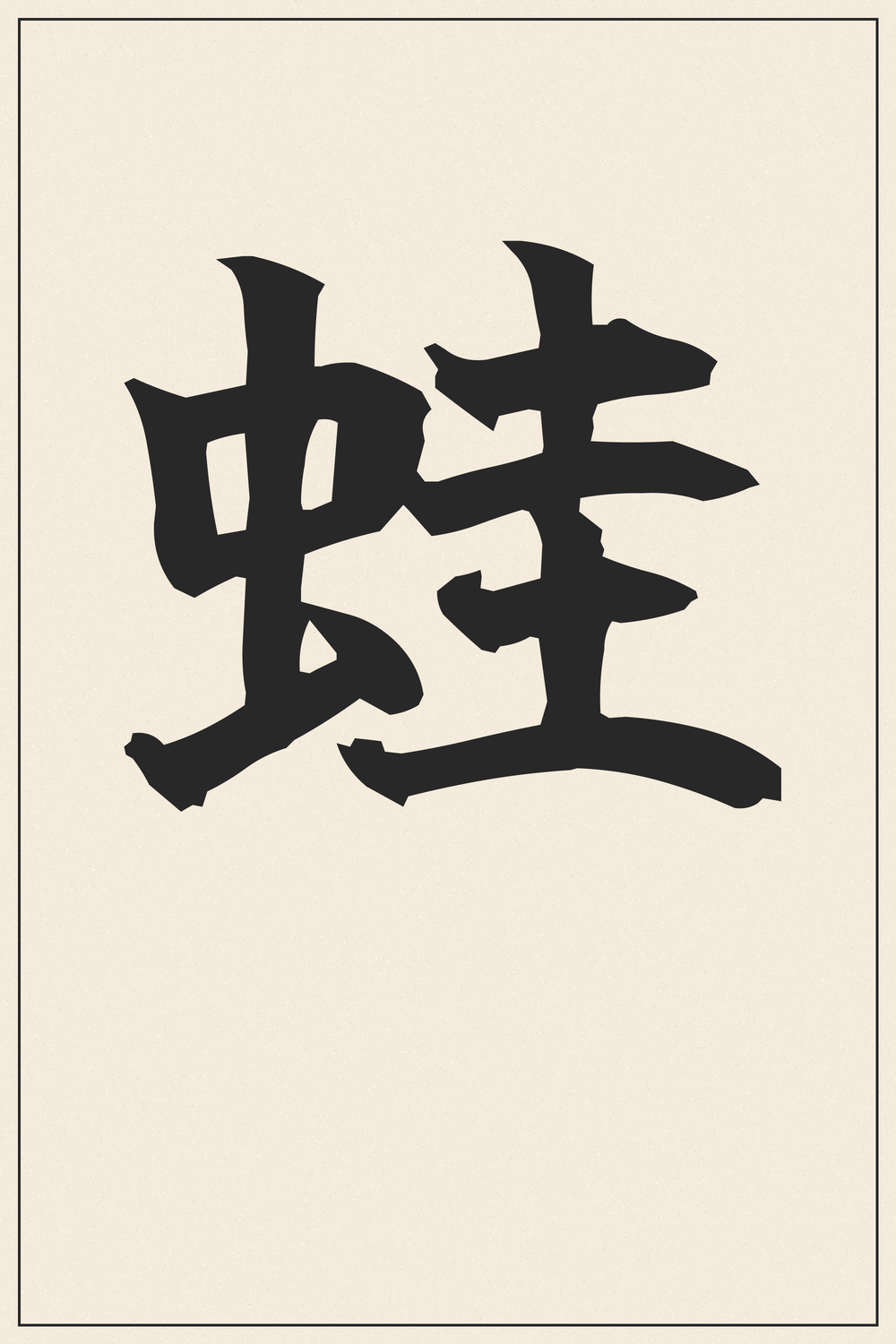
The Kanji for ‘frog,’ 蛙, encapsulates an intriguing creature that bridges land and water, often carrying profound cultural significance in Japan. This character offers a subtle yet powerful statement on adaptation, luck, and personal evolution.
The atmosphere of a Kanji character changes dramatically depending on the font style. A character that looks elegant in a brush style might look bold and modern in a different font.
Recommendation:
Since a tattoo is permanent, we strongly recommend comparing various font styles beyond what is shown here. Use our designs as a trusted reference for the correct structure, but feel free to explore different artistic variations to find the perfect match for your vision.
The Deep Meaning Behind 蛙
The character 蛙, meaning ‘frog,’ carries a history rooted in observational semantics. Its composition points to ancient understanding of this unique creature, bridging the gap between land and water with its distinct life cycle.
In Japanese culture, frogs (蛙, kaeru) are highly symbolic. The word ‘kaeru’ is a homophone for verbs meaning ‘to return’ (帰る) or ‘to change’ (変える), leading to rich associations with safe return, bringing back good fortune, or personal transformation. Frogs are also celebrated figures in haiku and traditional art, symbolizing summer, rain, and the vitality of nature.
Kanji Breakdown
The character 蛙 is composed of two primary elements, each contributing to its overall meaning and form.
Meaning: Insect, Bug, Creature
This radical is commonly used for various invertebrates and small creatures, including reptiles and amphibians. Its presence immediately categorizes 蛙 as an animal, particularly one associated with the natural world.
Meaning: Gem, Square Jewel, Land Boundary Marker
While 圭 typically means a gem or square jewel, here it functions largely as a phonetic component, giving the ‘kae’ sound. Historically, it might also visually represent the frog’s stout body or distinct shape, though its primary role is phonetic in this compound.
Conclusion
The Kanji 蛙 is more than just a representation of an amphibian; it embodies themes of return, transformation, and good luck within Japanese culture. Its simplicity belies a depth of meaning that resonates with natural cycles and human hopes.
Choosing 蛙 for a tattoo can symbolize a personal journey of change, a longing for a safe return, or a wish for fortune to come your way. Its connection to nature and traditional arts makes it a unique and thoughtful emblem for those who appreciate subtle depth.
Comments