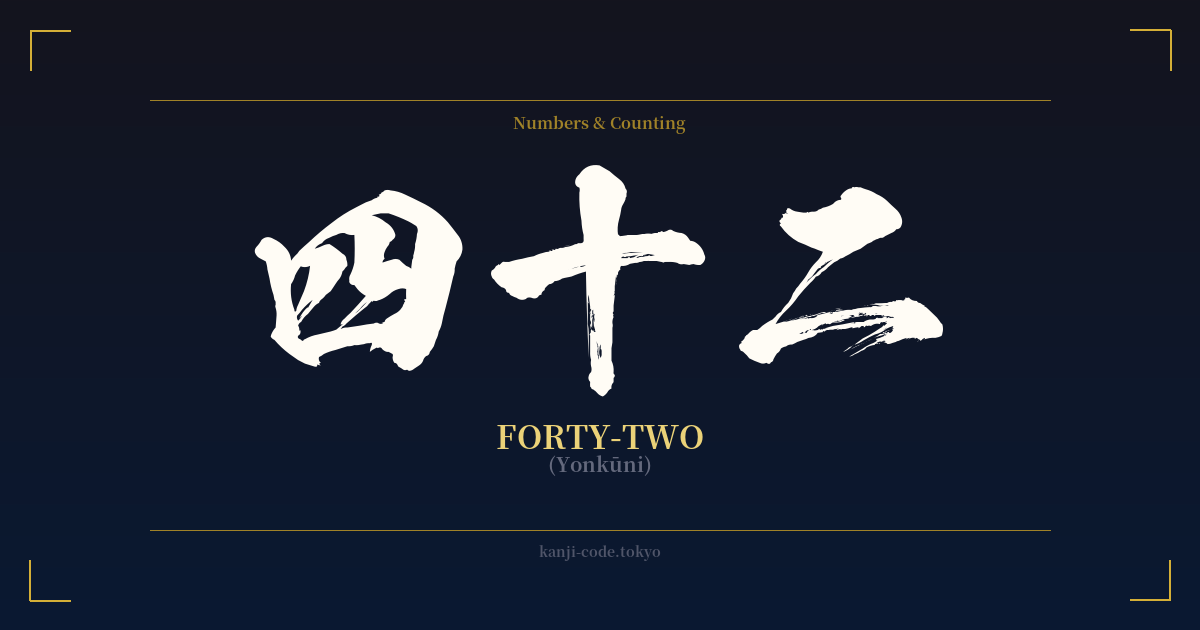
✍️ 四十二 (Yonkūni) — Cultural Context
The Japanese word 四十二 (yonjūni) literally translates to 'forty-two.' It is constructed in a straightforward, mathematical way: 四 (yon) for four, 十 (jū) for ten, and 二 (ni) for two. This structure, 'four-tens-two,' is the standard method for forming numbers in Japanese, creating a logical and efficient system.
However, the simple arithmetic of the word belies its deeply ingrained cultural significance. In Japan, 四十二 is widely considered one of the most unlucky numbers, a superstition rooted in a concept called 'goroawase'—a form of wordplay using the different phonetic readings of numbers. The kanji for four, 四, can be read as 'shi,' which is the same pronunciation as the kanji for death, 死. The kanji for two, 二, is read as 'ni.' When combined, 'shi-ni' (四二) sounds identical to the word for 'to die.'
This unfortunate phonetic coincidence has cemented the number 42's reputation as a harbinger of bad luck. You will often find this number actively avoided in daily life. Hospitals and hotels may skip room number 42, going straight from 41 to 43. Some buildings omit the 42nd floor entirely. It is considered poor form to give a gift that consists of 42 items, and people may avoid license plates or phone numbers containing this sequence.
For many in the English-speaking world, the number 42 evokes a completely different feeling, thanks to Douglas Adams' beloved novel, 'The Hitchhiker's Guide to the Galaxy.' In the book, 42 is famously revealed as 'the answer to the ultimate question of life, the universe, and everything.' This has made the number a celebrated symbol within geek and sci-fi culture, representing a kind of cosmic, humorous wisdom.
It is crucial to understand that this Western pop-culture meaning has no connection to the kanji's use in Japan. A Japanese person viewing the characters 四十二 will not think of a supercomputer or the meaning of life; they will almost certainly think of the unlucky 'shi-ni' reading. This stark cultural disconnect makes it a particularly perilous choice for a tattoo, as the intended meaning of a quirky sci-fi reference would be completely overshadowed by a very strong, very local superstition about death.
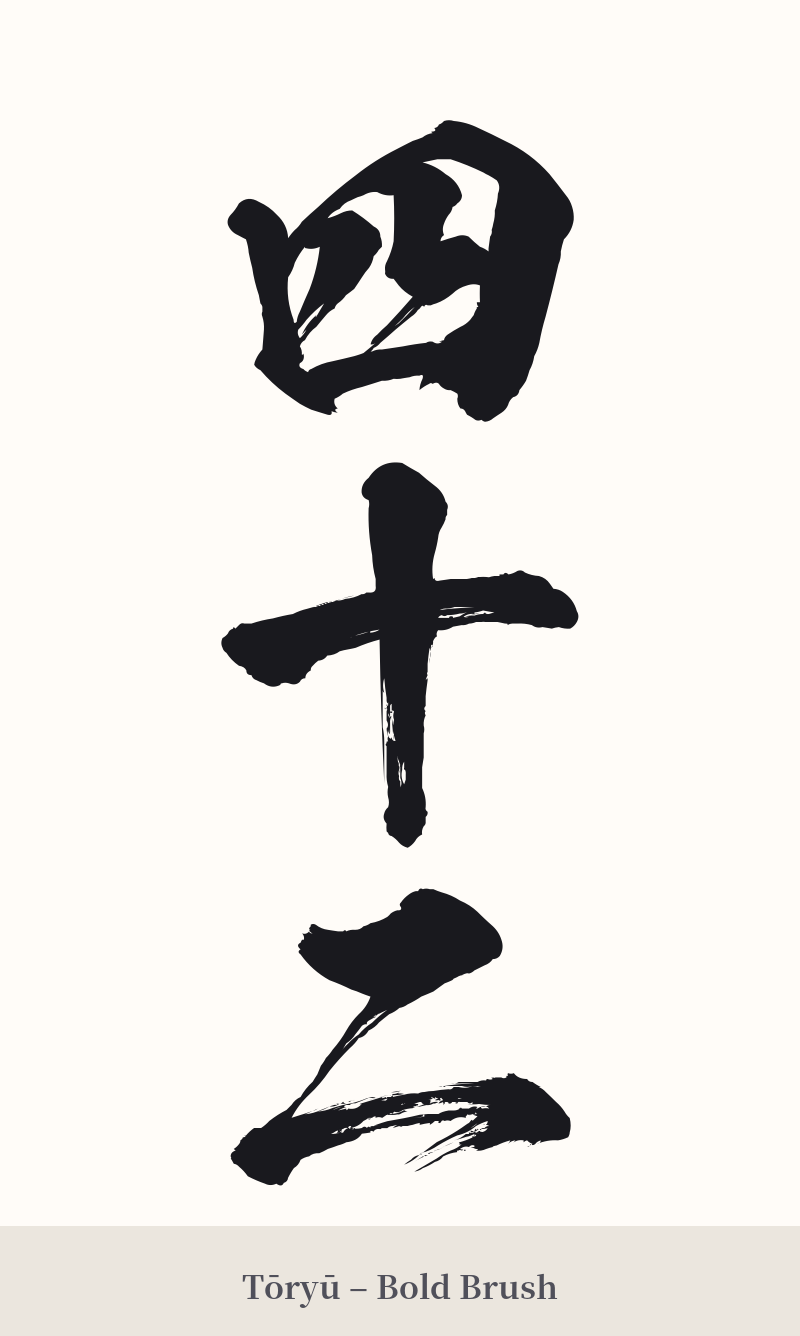
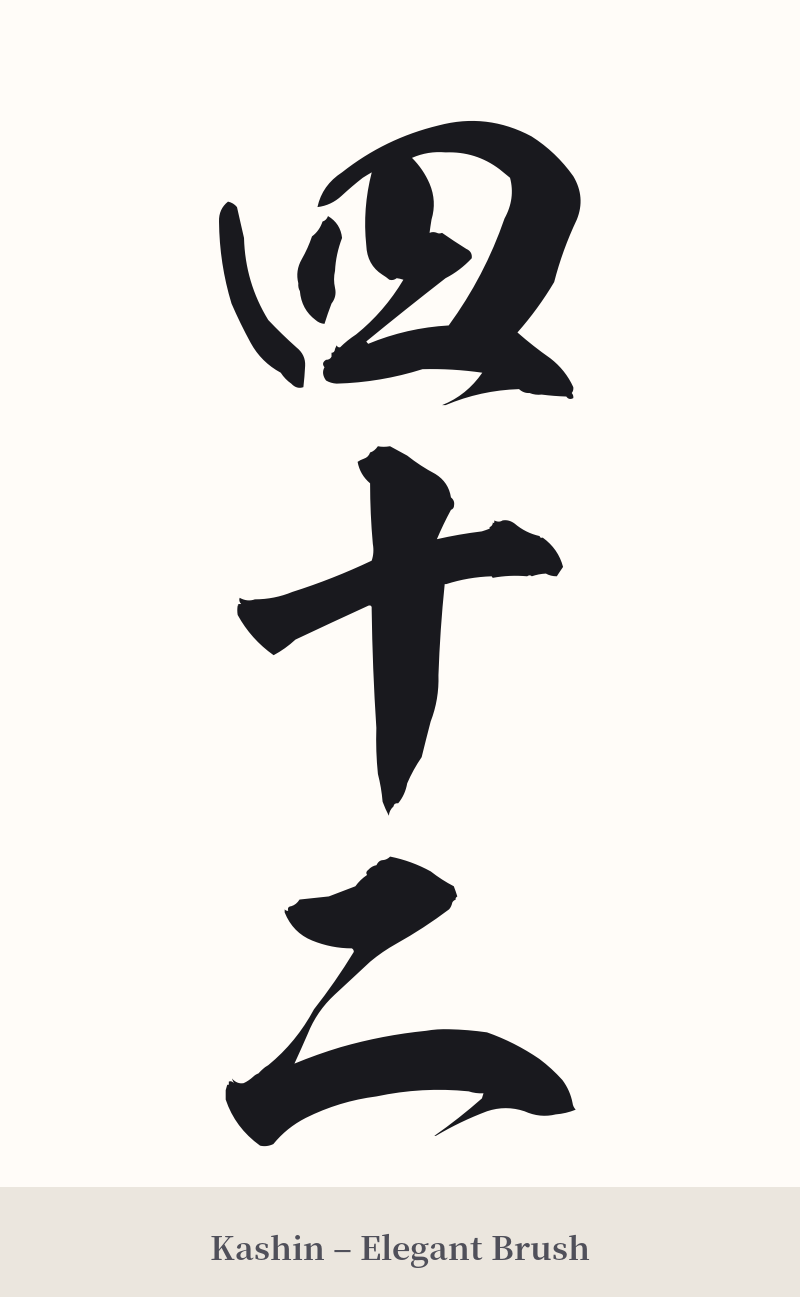
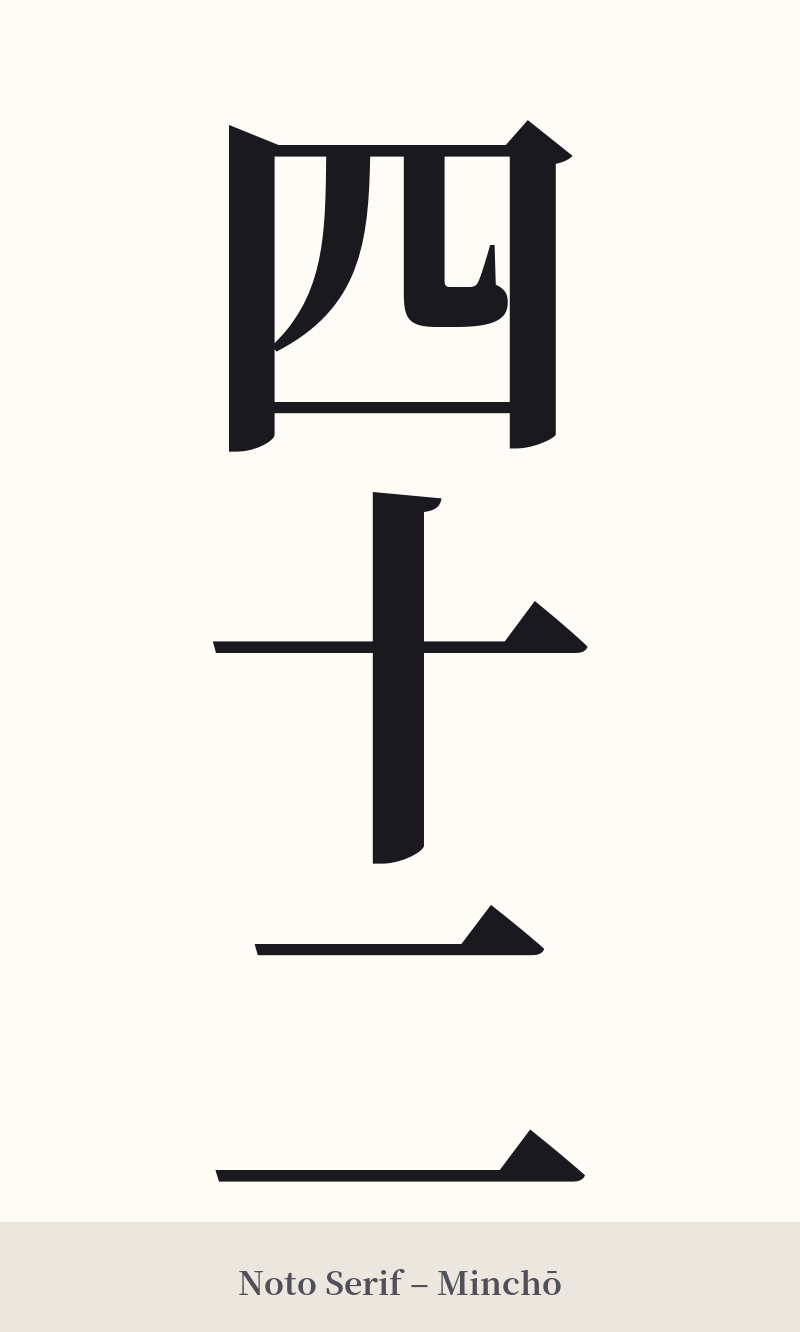
🖌️ Font Styles for 四十二
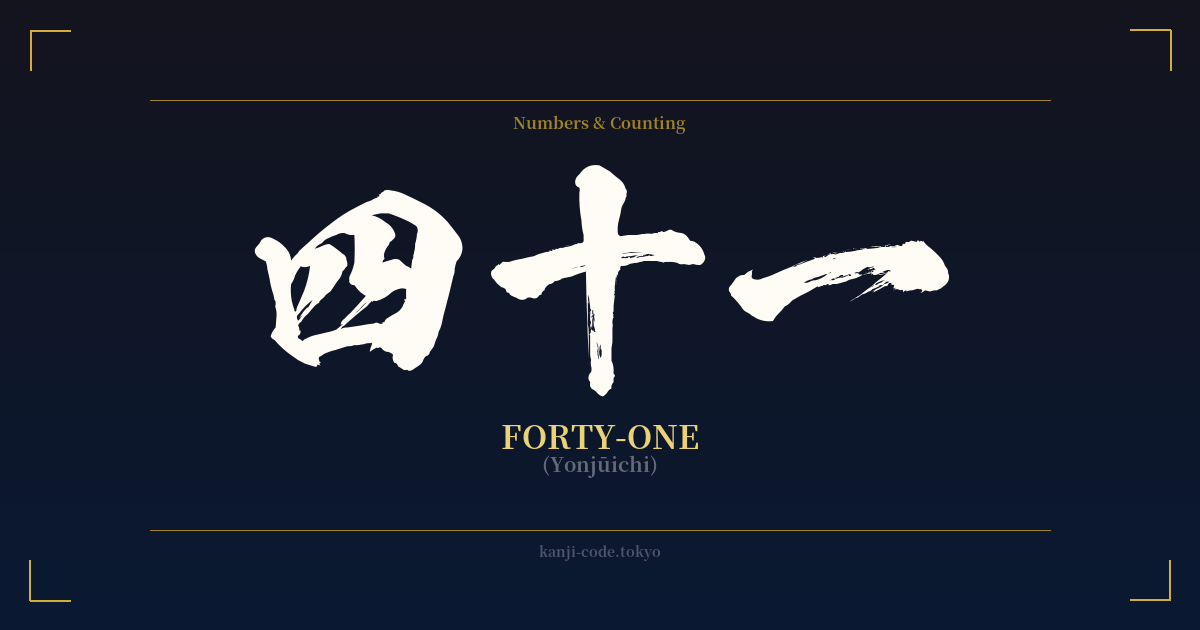
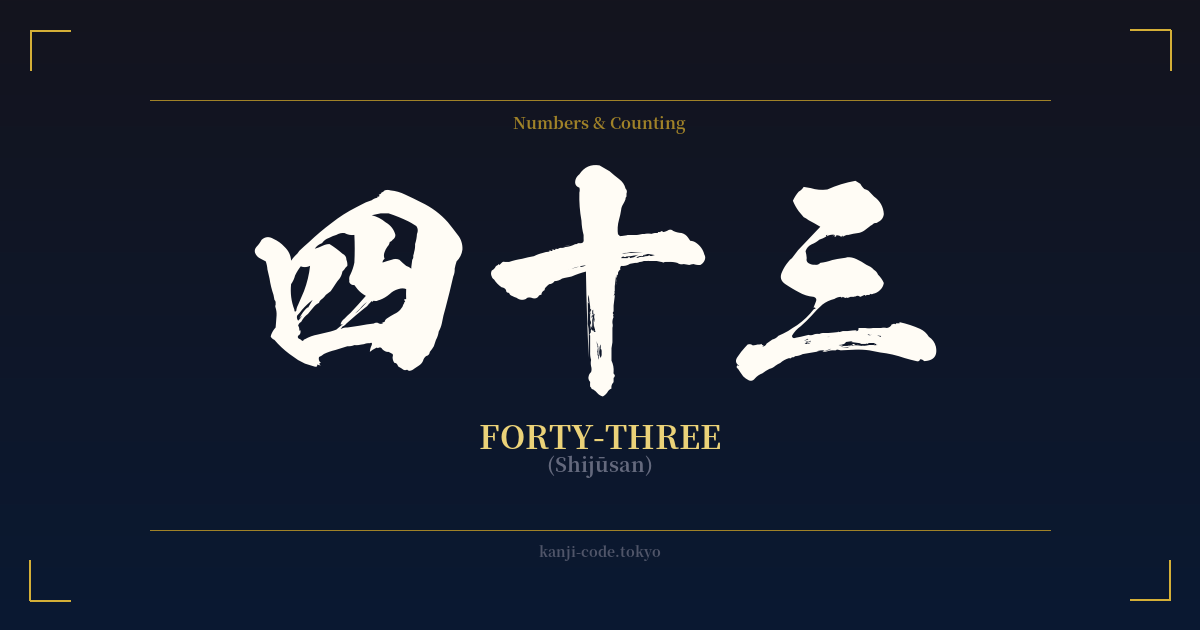
The same kanji can look dramatically different depending on the calligraphy style. Choose a font that matches the mood you want for your tattoo or design.
🎨 Tattoo Suitability
📐 Tattoo Design Guide
Given the strong negative connotations in Japanese culture, we do not recommend this kanji combination for a tattoo. However, if you are absolutely set on this design for personal reasons related to its Western pop-culture meaning, and you understand the cultural risks, here are some design considerations:
– Vertical Orientation: A traditional vertical layout (top to bottom) will immediately signal that the characters are intended as Japanese writing. This can help frame it culturally, even if the meaning is misunderstood.
– Font Style: Avoid generic, computerized fonts. A dynamic, semi-cursive calligraphy style (gyōsho) can add artistic flair. Alternatively, a clear, crisp block script (kaisho) emphasizes the characters' forms, but it won't change the underlying meaning.
– Placement: Consider a more private placement, such as the ribs, inner arm, or thigh. A highly visible tattoo of 四十二 on the forearm or neck is more likely to invite questions and concerned looks from those who understand its Japanese context.
– Alternative Ideas: We strongly suggest considering alternative kanji that capture the spirit of 'the answer to life' without the negative baggage. Words like 宇宙 (uchū – universe), 知恵 (chie – wisdom), or 探求 (tankyū – quest/inquiry) might be far more suitable and positive choices.
Comments