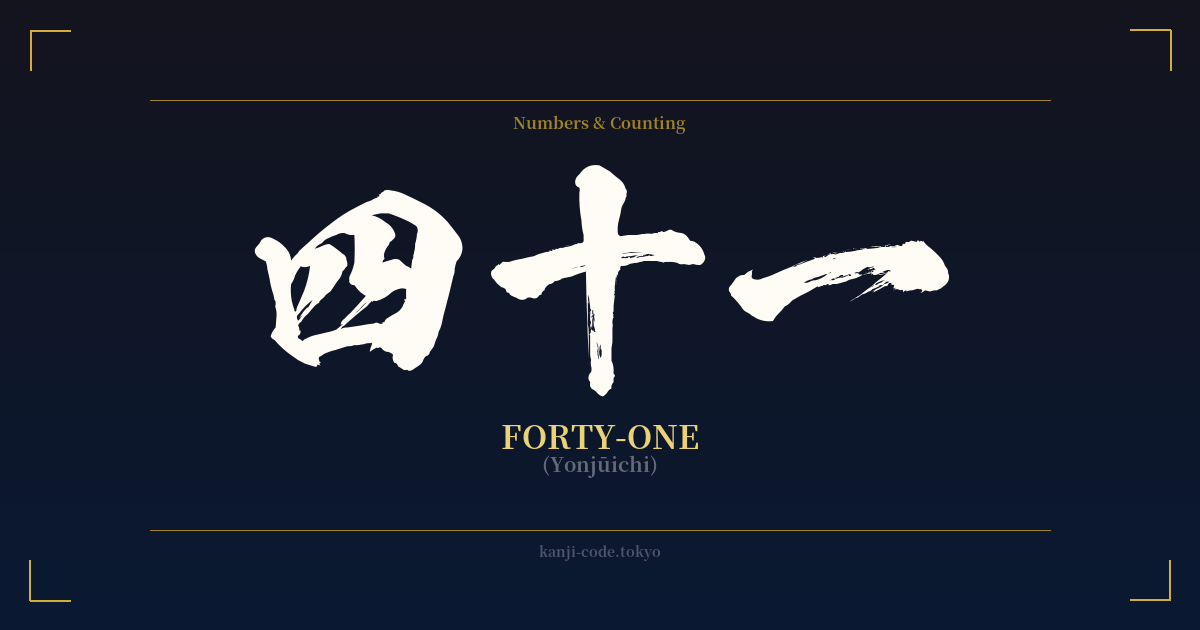
✍️ 四十一 (Yonjūichi) — Cultural Context
The Japanese word for forty-one, 四十一 (yonjūichi), is a perfect example of the logical and additive nature of the kanji numbering system. It is not a single abstract concept but a literal construction: 四 (yon) means four, 十 (jū) means ten, and 一 (ichi) means one. Put together, it reads as "four-tens-one," a straightforward mathematical expression that forms the number 41.
This construction method is consistent across most numbers in Japanese. For example, twenty-one is 二十一 (nijūichi) or "two-tens-one," and ninety-nine is 九十九 (kyūjūkyū) or "nine-tens-nine." This system, inherited from Chinese, makes learning to count in kanji a relatively simple process once the basic characters from one to ten, plus the multipliers like hundred (百) and thousand (千), are understood.
One of the most important cultural nuances surrounding this number is the character for four, 四. This kanji has two primary readings: "yon" and "shi." The reading "shi" is a homophone for the word for death (死). Because of this ominous association, a phenomenon known as tetraphobia is common in Japan and other East Asian cultures. In many public and private buildings, such as hospitals and hotels, you will find that the fourth floor is skipped, going directly from three to five. When counting, "yon" is often preferred over "shi" to avoid the unlucky connection, which is why forty-one is read as "yonjūichi" and not "shijūichi."
In terms of cultural significance, the number 41 itself does not hold a strong symbolic meaning in the way that numbers like seven or eight (considered lucky) do. However, it does have a place within the concept of yakudoshi (厄年), or unlucky years. For men, the age of 42 is considered a major unlucky year (hon-yaku). Consequently, the age of 41 is the maeyaku (前厄), or the "pre-unlucky year," a time when one is advised to be cautious and prepare for the difficulties of the year to come. This gives the number a specific, if somewhat somber, cultural context related to life stages and traditional beliefs.
Today, while Arabic numerals (41) are used for most everyday purposes like prices, phone numbers, and digital clocks, kanji numerals (四十一) retain a sense of formality and tradition. You will still see them on formal documents, certificates, traditional restaurant menus, and in vertical writing, where their shape and flow are aesthetically pleasing.
🖌️ Font Styles for 四十一
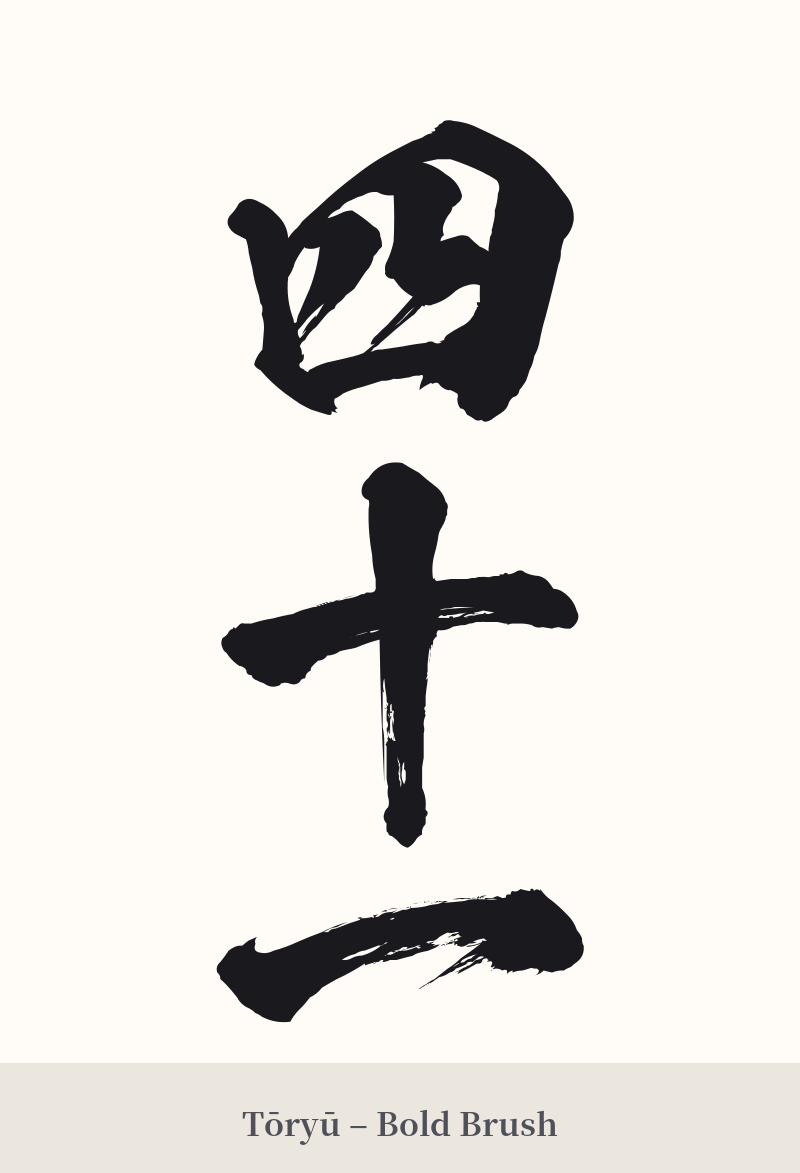
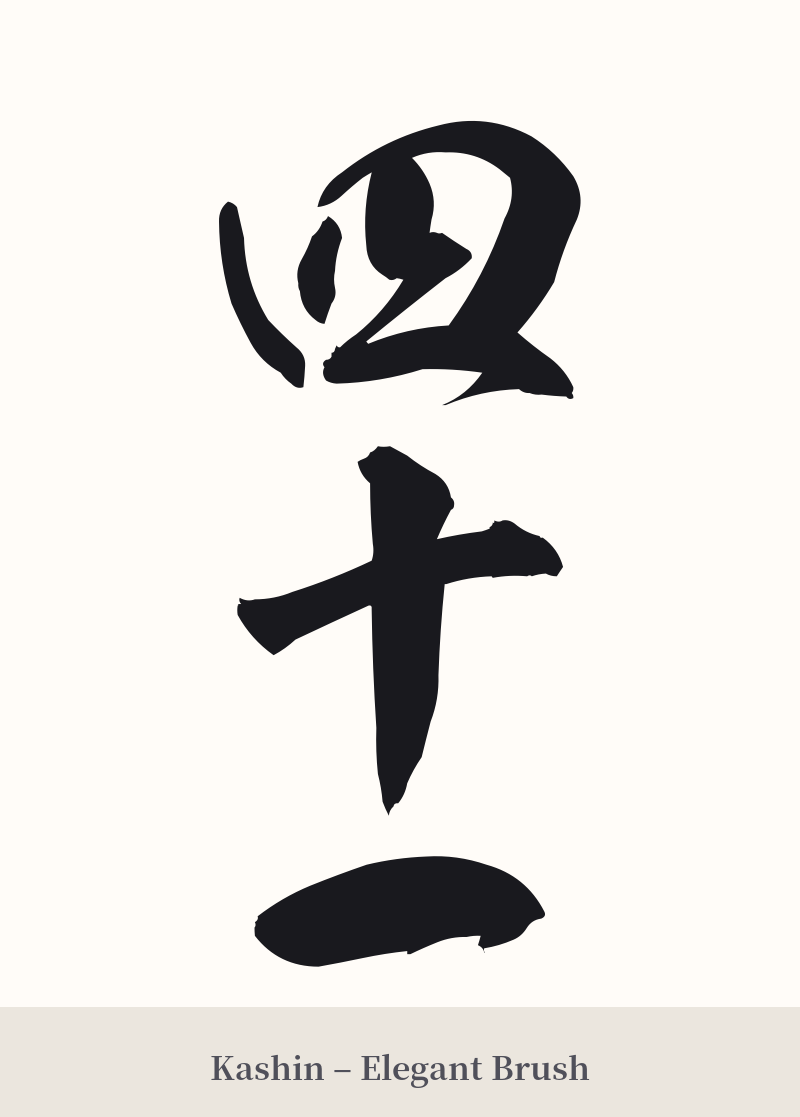
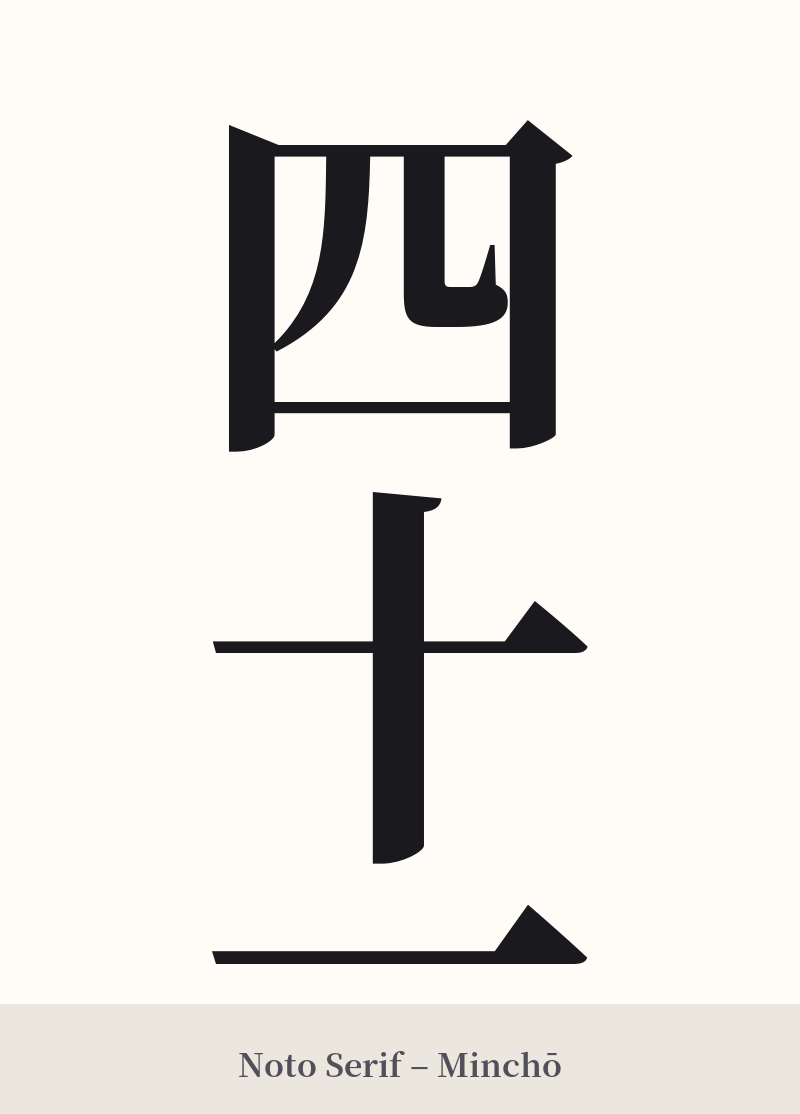
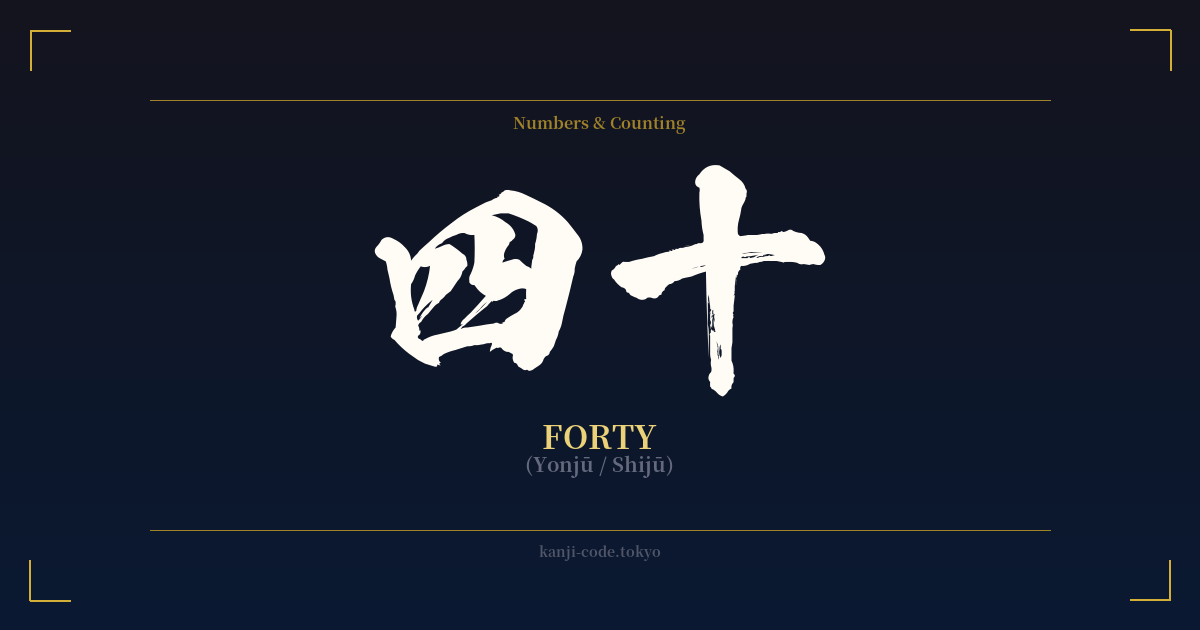
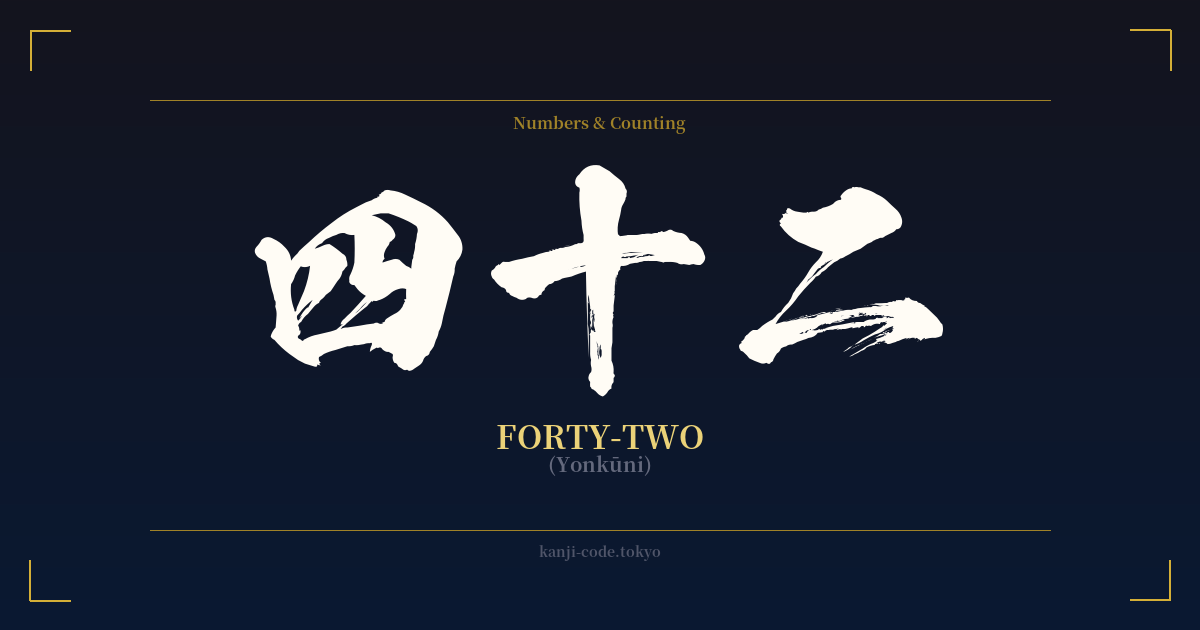
The same kanji can look dramatically different depending on the calligraphy style. Choose a font that matches the mood you want for your tattoo or design.
🎨 Tattoo Suitability
📐 Tattoo Design Guide
For a tattoo of 四十一, the visual arrangement is key to its success. The three simple characters lend themselves well to a clean, structured design.
– Placement: Vertical alignment is highly recommended. The characters stack naturally and look elegant on the spine, forearm, inner bicep, or along the ribs. A horizontal design is possible but can look less balanced.
– Font Style: A traditional kaisho (block) script will give it a formal, clear appearance. For a more fluid and artistic feel, a semi-cursive gyōsho style is an excellent choice. Avoid overly stylized or unreadable fonts that could obscure the simple characters.
– Visual Tips: Because the meaning is purely numerical, consider pairing it with an image that explains its significance to you. This could be a small symbol representing a person, an event, or a date. This adds a layer of personal narrative and transforms it from a random number into a meaningful statement.
Comments