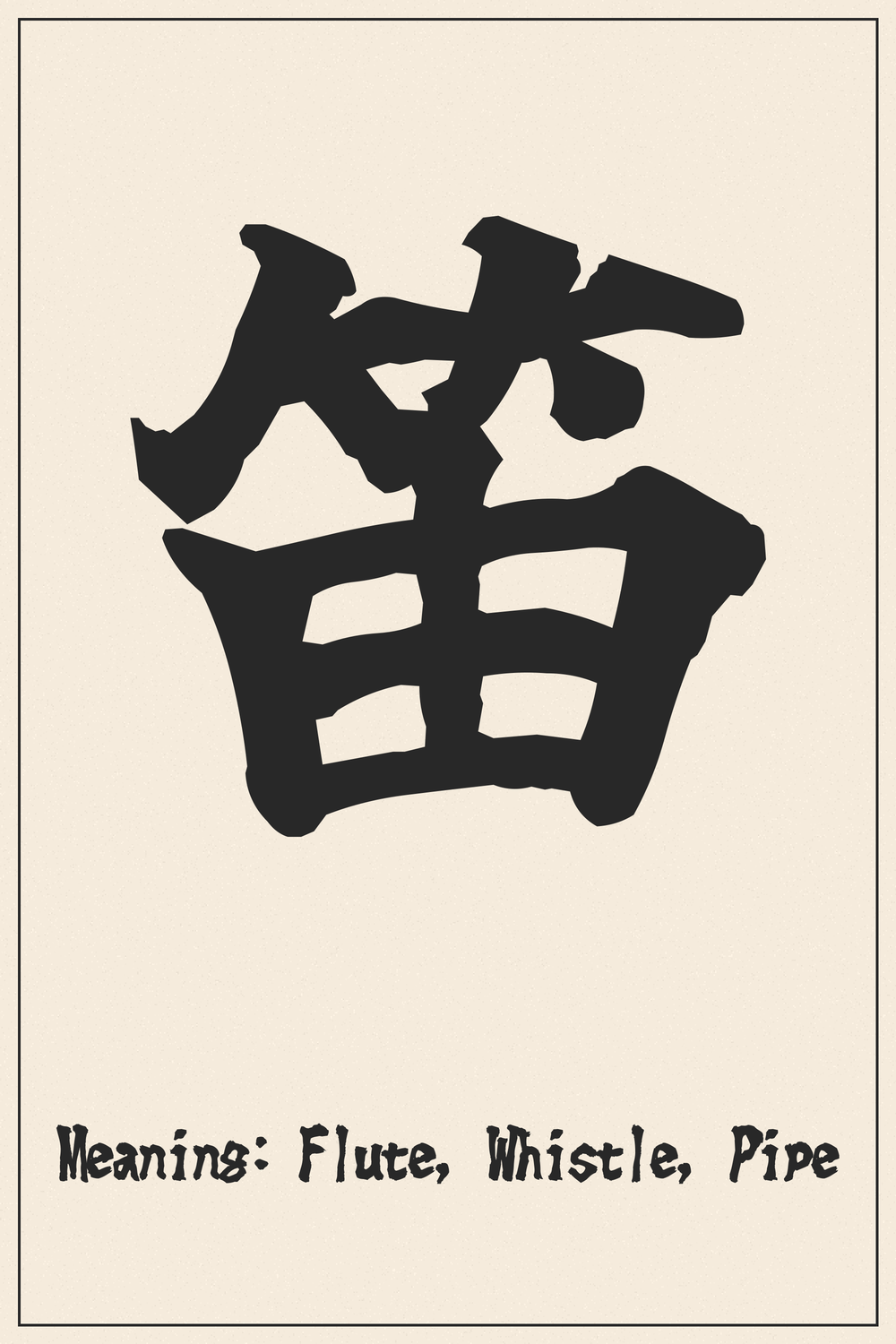
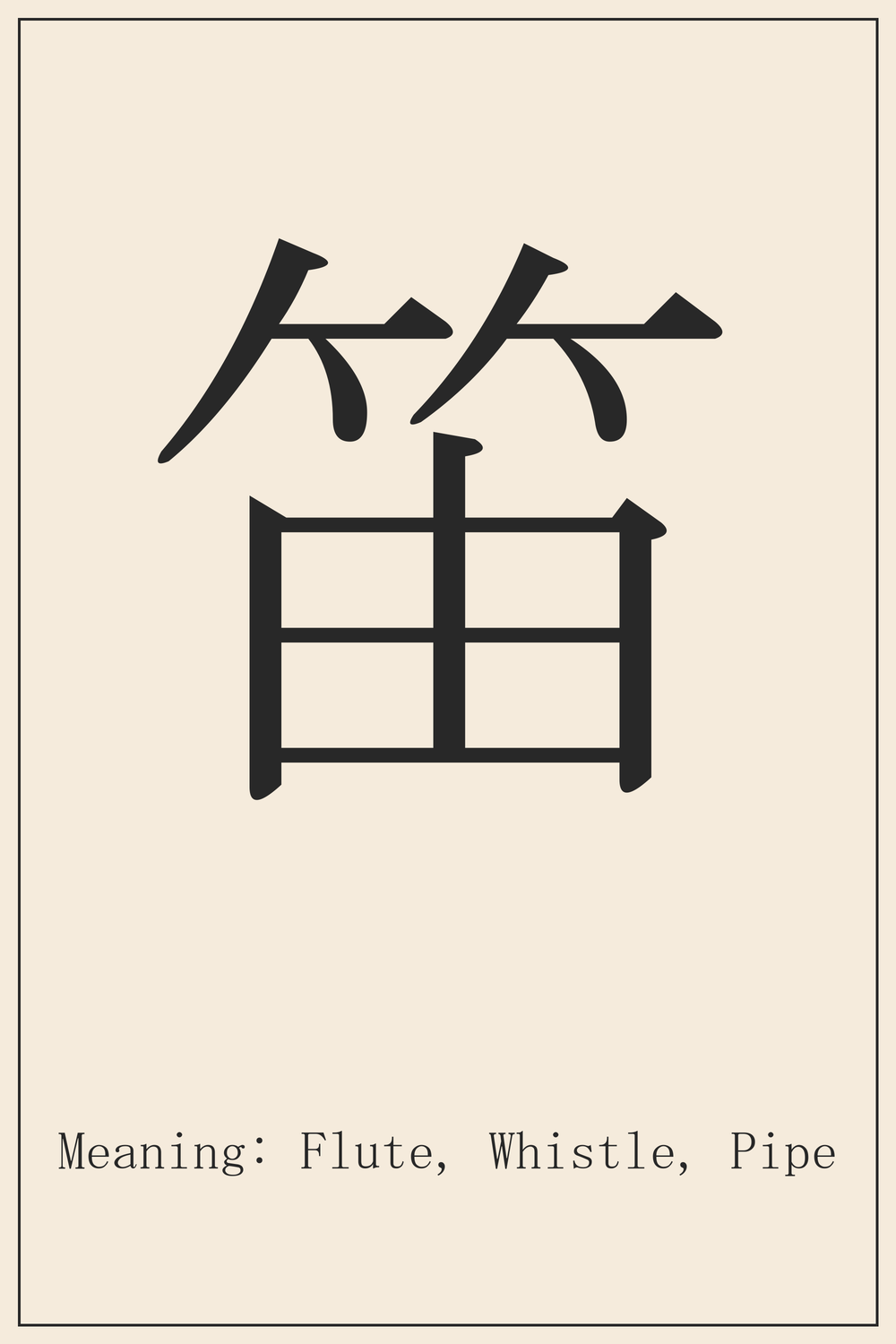
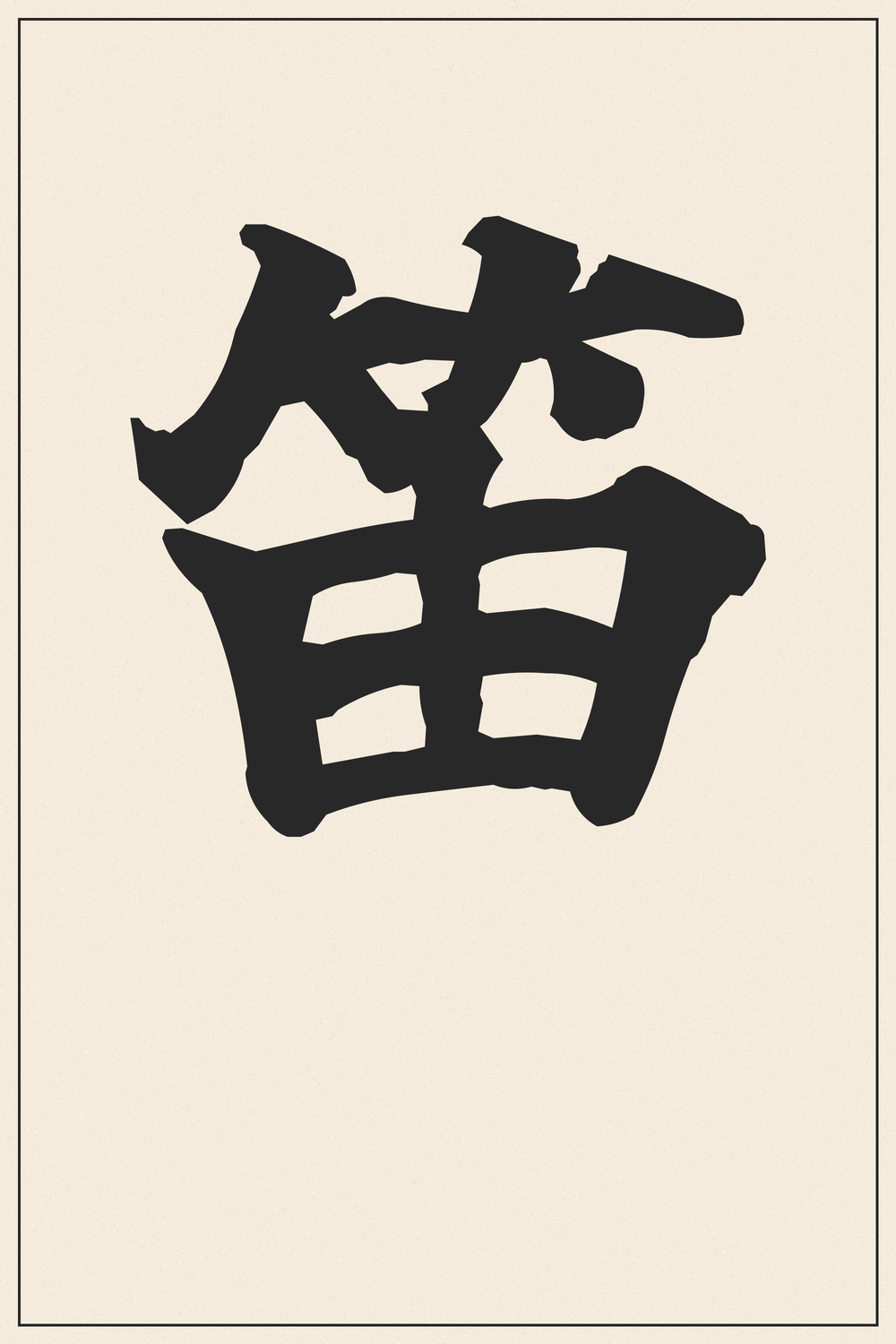
The Kanji 笛 (Fue) encapsulates the essence of music and the gentle power of sound, evoking images of traditional melodies carried on the wind.
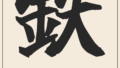
The atmosphere of a Kanji character changes dramatically depending on the font style. A character that looks elegant in a brush style might look bold and modern in a different font.
Recommendation:
Since a tattoo is permanent, we strongly recommend comparing various font styles beyond what is shown here. Use our designs as a trusted reference for the correct structure, but feel free to explore different artistic variations to find the perfect match for your vision.
The Deep Meaning Behind 笛
The Kanji 笛 (fue) is a phono-semantic compound, offering a direct insight into its meaning and traditional form. It ingeniously combines a semantic radical with a phonetic component to convey ‘flute’ or ‘whistle’. This structure highlights the character’s ancient roots and its connection to natural materials and sound production.
Culturally, the flute, or ‘fue’, holds significant importance in Japanese arts and traditions. It is a staple in various traditional musical forms, including Gagaku (ancient court music), Noh, and Kabuki theatre. Flutes also play a crucial role in Shinto rituals and local festivals (matsuri), often symbolizing communication with the divine or simply bringing joy to gatherings. Its sound often evokes serene landscapes and the tranquility of nature, reinforcing its association with the natural world.
Kanji Breakdown
The character 笛 is composed of two primary elements, each contributing to its overall meaning and sound.
Meaning: Bamboo. This radical clearly indicates that traditional flutes were often crafted from bamboo, a material abundant in Japan and valued for its resonant qualities. It grounds the instrument in its natural origins.
Meaning: Reason, cause, origin (phonetic component ‘yū’). While primarily a phonetic element that contributes to the ‘fue’ pronunciation, it can also be interpreted to suggest the ‘origin’ or ‘reason’ for the sound, or the channel through which sound flows.
Conclusion
The Kanji 笛, meaning ‘flute’ or ‘whistle’, is a testament to the simplicity and elegance of traditional Japanese craftsmanship and musical heritage. Its components reveal a clear connection to nature and the profound role sound plays in human culture, from ceremonial music to the joyful melodies of everyday life. It evokes a sense of harmony and tradition.
For those seeking a tattoo that symbolizes musicality, connection to nature, or the gentle beauty of traditional Japanese arts, 笛 offers a clean and meaningful choice. While not a top-tier iconic symbol, its understated charm and cultural relevance make it a heartfelt and personal statement.
Comments