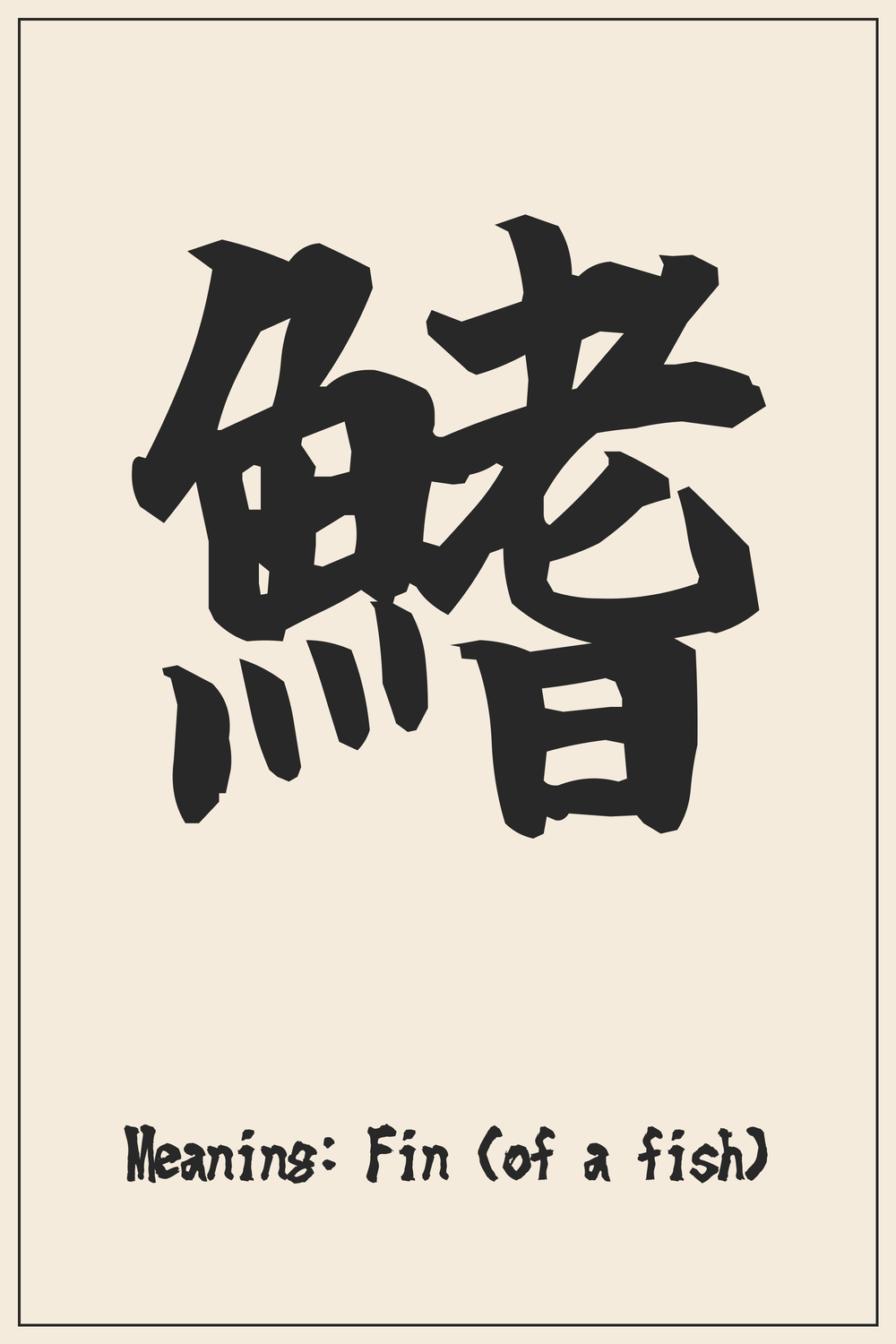
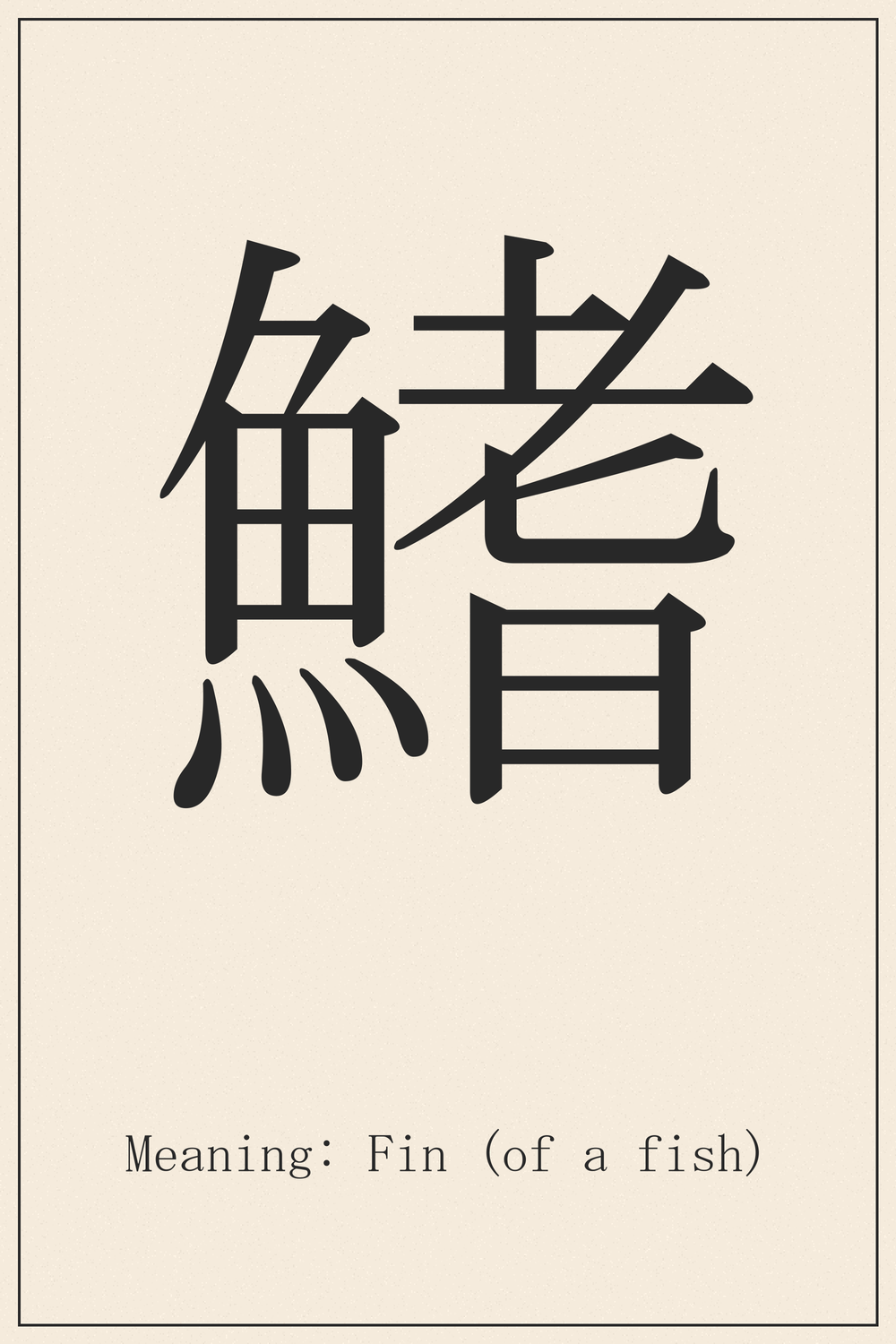
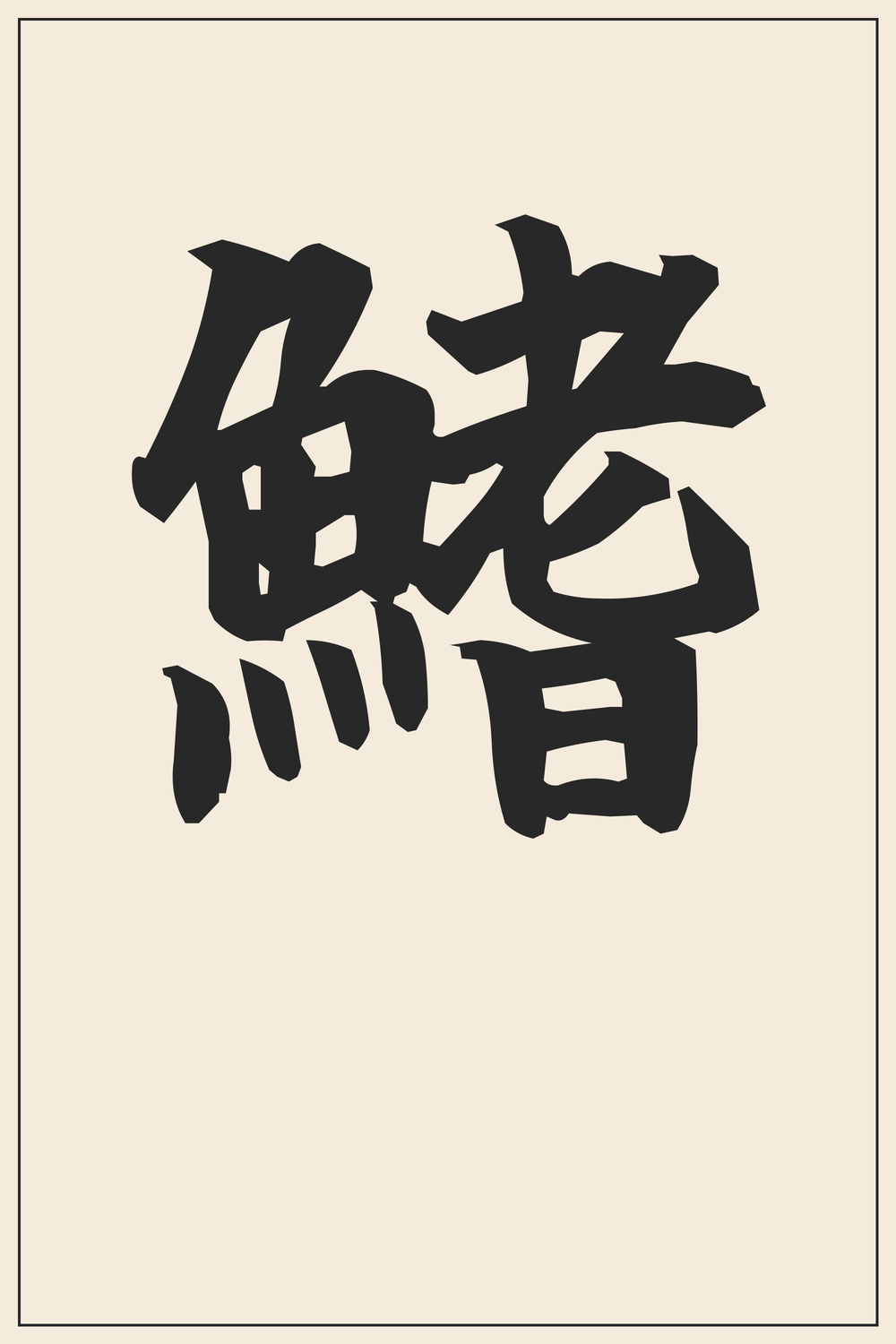
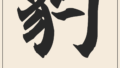
The kanji 鰭, pronounced ‘hire’, embodies the essence of aquatic movement and life. It captures the dynamic elegance of fish, representing the vital structures that propel them through water.
The atmosphere of a Kanji character changes dramatically depending on the font style. A character that looks elegant in a brush style might look bold and modern in a different font.
Recommendation:
Since a tattoo is permanent, we strongly recommend comparing various font styles beyond what is shown here. Use our designs as a trusted reference for the correct structure, but feel free to explore different artistic variations to find the perfect match for your vision.
The Deep Meaning Behind 鰭
The character 鰭 is a classic example of a semantic-phonetic compound kanji. Its left radical, 魚 (sakana), explicitly denotes ‘fish’, immediately establishing its connection to the aquatic world.
The right component, 費 (hi), serves primarily as a phonetic element, guiding the pronunciation to ‘hire’. While 費 itself means ‘cost’ or ‘expense’, its role here highlights the ingenious way kanji combine semantic categories with phonetic cues to form complex meanings, symbolizing the fin as a fundamental aspect of a fish’s existence and movement.
Kanji Breakdown
The Kanji 鰭 visually articulates its meaning through a clear combination of components.
Meaning: Fish
This radical directly signifies the character’s relation to fish and the aquatic environment. It is the semantic core of 鰭.
Meaning: Cost / Expense (Phonetic)
While its independent meaning is ‘cost’ or ‘expense,’ in 鰭, 費 acts as a phonetic component, guiding the pronunciation towards ‘hire.’ It is a common technique in Kanji formation where a component lends its sound.
Conclusion
Choosing 鰭 as a tattoo signifies an appreciation for the fluidity, strength, and grace of marine life. It represents not just a biological part but the very essence of aquatic locomotion and survival.
This Kanji, with its evocative imagery of the ocean’s inhabitants, serves as a powerful symbol for adaptability, movement, and the hidden depths of nature, making it a thoughtful and visually appealing choice for a Kanji tattoo.
Comments