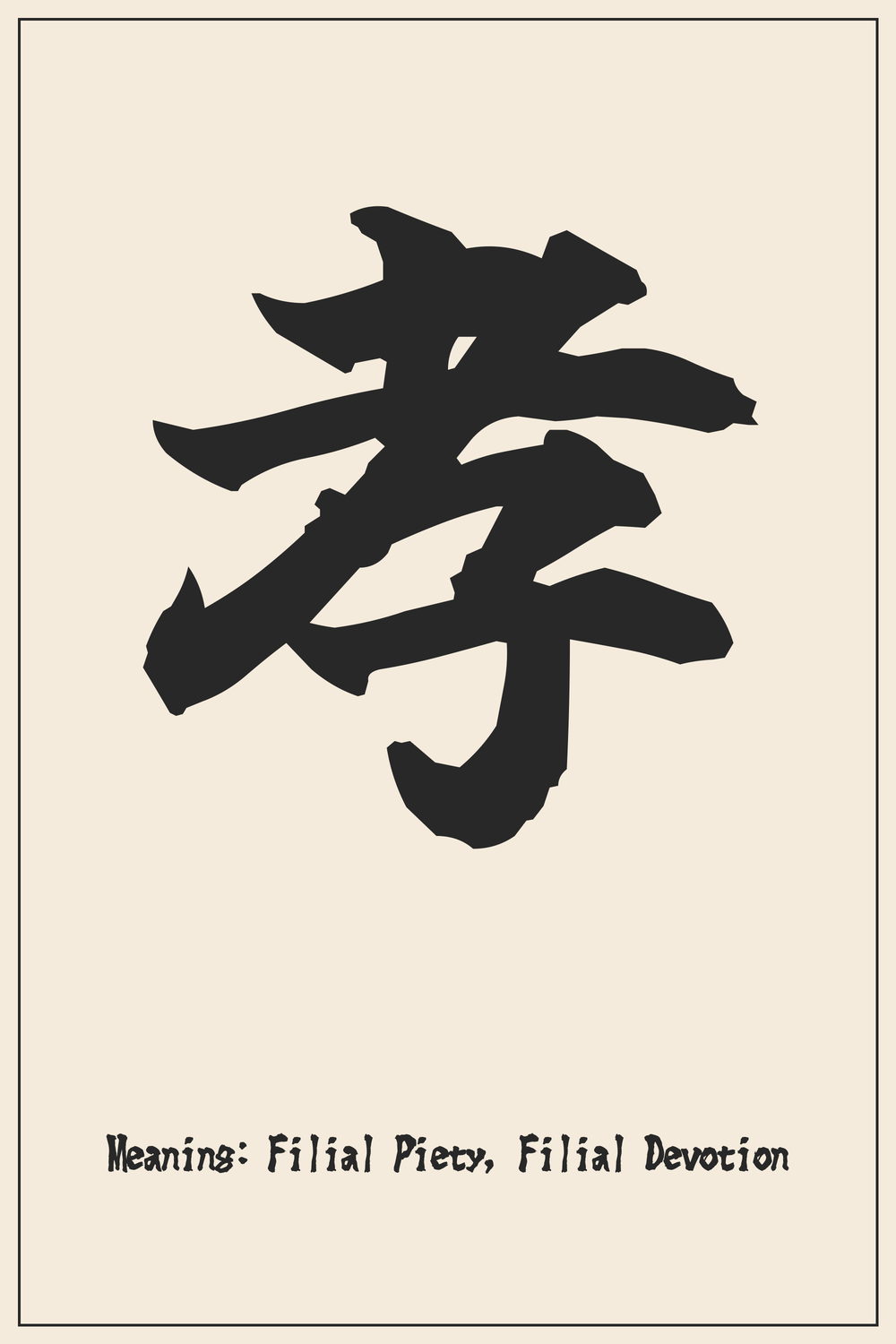
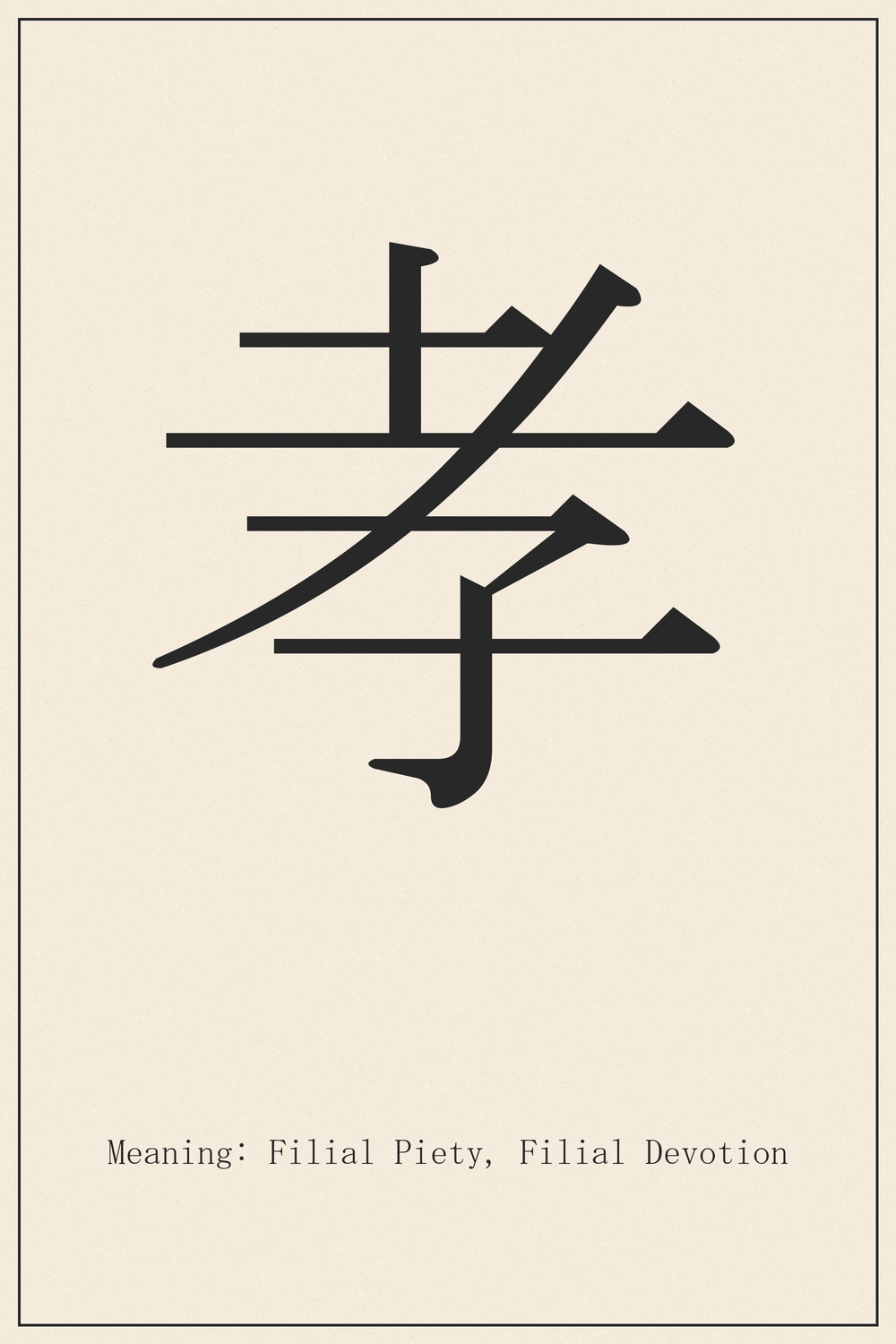
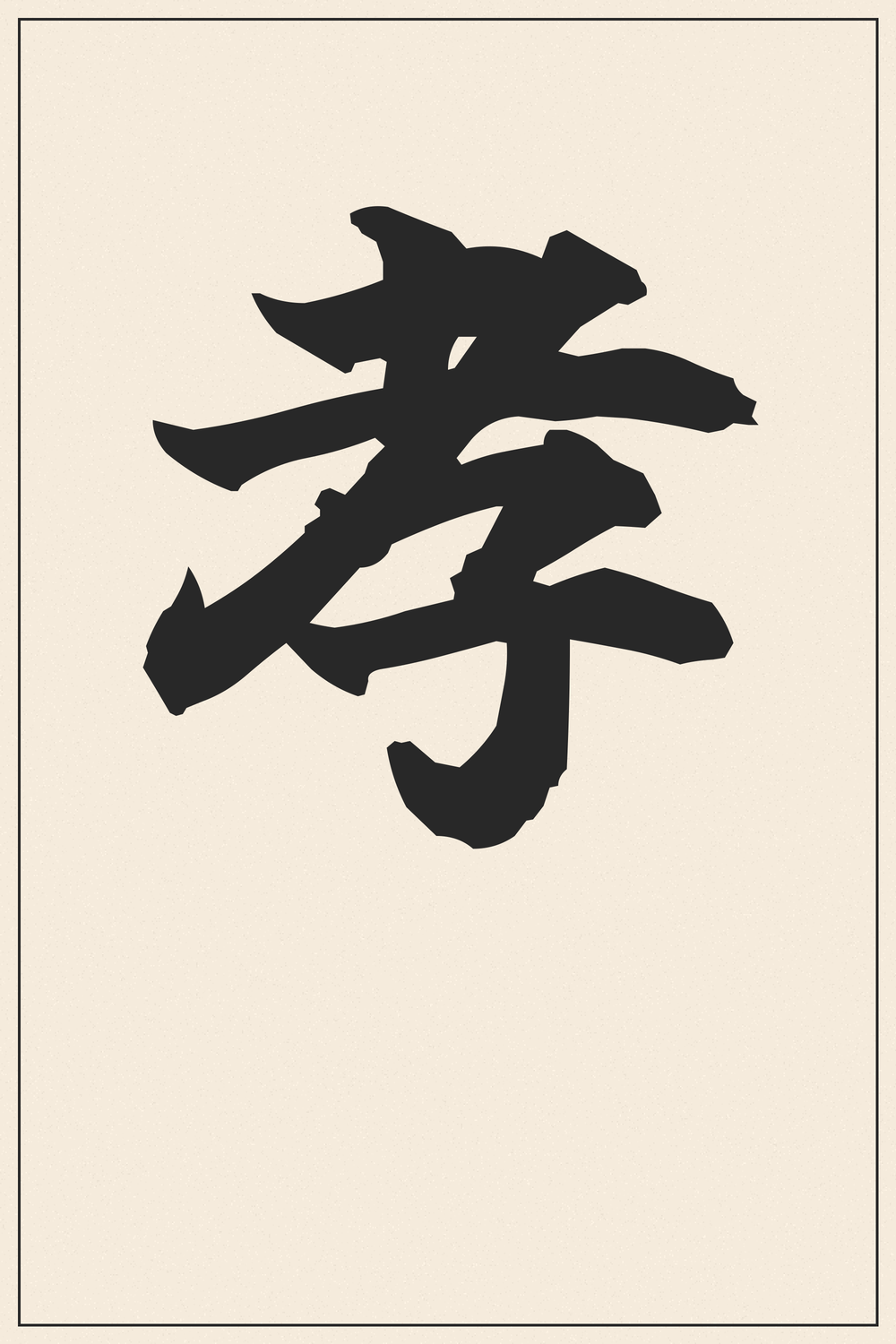
The Kanji 孝 (Kou) embodies one of the most fundamental virtues in East Asian culture: filial piety. It represents the profound respect, love, and care children owe their parents, serving as a cornerstone of social harmony and personal ethics.
The atmosphere of a Kanji character changes dramatically depending on the font style. A character that looks elegant in a brush style might look bold and modern in a different font.
Recommendation:
Since a tattoo is permanent, we strongly recommend comparing various font styles beyond what is shown here. Use our designs as a trusted reference for the correct structure, but feel free to explore different artistic variations to find the perfect match for your vision.
The Deep Meaning Behind 孝
The Kanji 孝 (Kou) beautifully illustrates its meaning through its very composition. It combines the radical ⺹ (or 耂), a variant of 老 (rou), meaning “old” or “elderly,” placed atop 子 (ko), meaning “child.” This visual arrangement symbolically depicts a child supporting an elderly person.
This ancient character thus encapsulates the essence of filial piety, signifying a child’s duty to care for and respect their parents and elders. Rooted deeply in Confucian ethics, 孝 has historically been considered the primary virtue, extending beyond individual family units to influence broader societal structures and governance in East Asian cultures.
Kanji Breakdown
The character 孝 visually communicates its core meaning through the harmonious combination of two fundamental components.
Old/Elderly: This radical, a modified form of 老 (rou), clearly represents an elderly person, often depicted with a bent back or a long beard, symbolizing age and wisdom.
Child: Positioned beneath the elder, 子 (ko) signifies a child. Its placement beneath the elder visually implies support, reverence, and care provided by the younger generation.
Conclusion
Choosing 孝 for a tattoo is a powerful statement of commitment to one of humanity’s most cherished values: filial piety. It symbolizes profound respect, unwavering love, and a sense of duty towards one’s family, especially parents and elders.
This Kanji is more than just a word; it is a timeless principle reminding us of the foundational bonds that shape individuals and society. A tattoo of 孝 serves as a constant reminder of these sacred connections and a personal pledge to honor them.
Comments