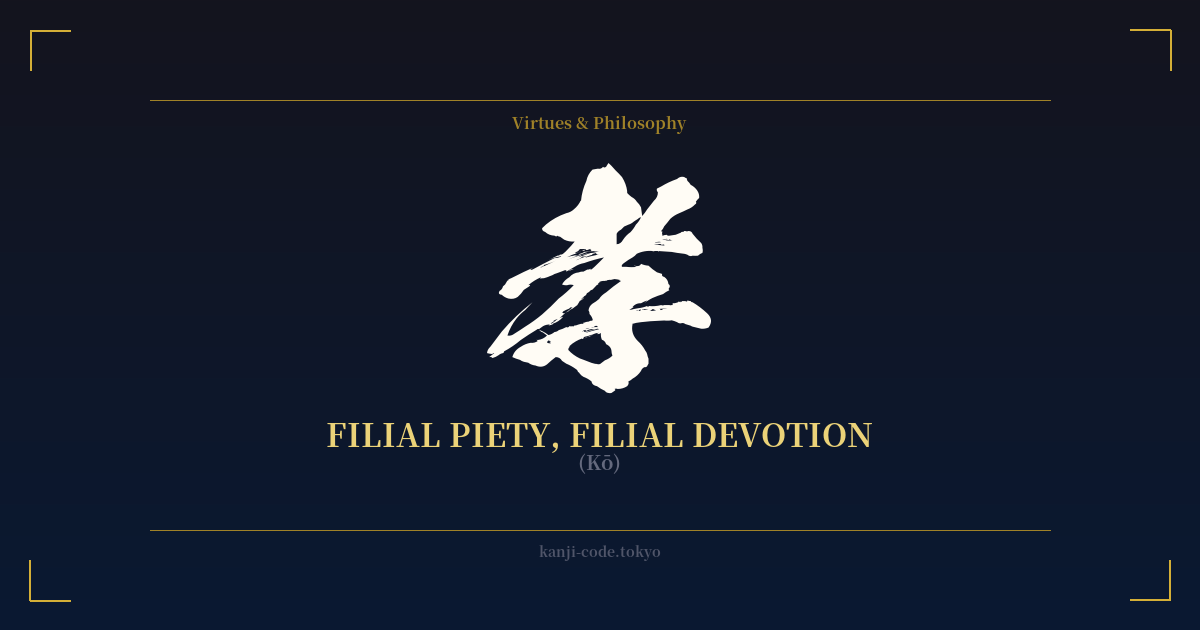
✍️ 孝 (Kō) — Contexto cultural
El kanji 孝 (kō) es uno de los caracteres más profundos y culturalmente significativos de la filosofía de Asia Oriental, ya que encarna la virtud de la piedad filial. Su estructura misma cuenta una historia: la parte superior es una versión simplificada de 老 (rō), que significa "viejo" o "anciano", mientras que la inferior es 子 (ko), que significa "niño". Juntos, crean una poderosa metáfora visual de un niño que sostiene a su anciano, representando un pilar fundamental de la armonía social. Este único carácter encapsula un mundo de deber, gratitud y amor hacia los padres y antepasados. Profundamente arraigada en el confucianismo, la piedad filial se considera una de las "Cinco Virtudes Constantes" y la base de todas las demás virtudes. Postula que una persona respetuosa y obediente con su propia familia extenderá naturalmente ese sentido de moralidad y respeto a los demás en la sociedad, desde amigos hasta gobernantes. Esta idea fue una piedra angular de las estructuras sociales y políticas en China, y fue adoptada y adaptada en Japón, dando forma a la vida familiar durante siglos. En Japón, el concepto de 孝 se entrelazó con el sistema familiar tradicional, conocido como 'ie' (家). Este sistema enfatizaba la continuidad del linaje familiar, y la piedad filial era el vínculo moral que lo mantenía unido. No se trataba solo de amar a los padres; era un conjunto concreto de obligaciones. Estas incluían cuidarlos en su vejez, realizar ritos conmemorativos para los ancestros para asegurar su descanso eterno y comportarse con honor para mantener la reputación de la familia. Historias como las "Veinticuatro obras de piedad filial", un texto clásico chino, eran ampliamente leídas en Japón, proporcionando ejemplos dramáticos de hijos que llegaban a extremos para cuidar a sus padres, afianzando aún más esta virtud en el imaginario popular. Si bien el rígido sistema 'ie' fue desmantelado legalmente después de la Segunda Guerra Mundial, el espíritu de 孝 sigue siendo un valor respetado en el Japón moderno. Su expresión ha evolucionado desde una obligación estricta y jerárquica a un sentimiento más matizado de gratitud y apoyo mutuo. Hoy en día, se considera menos una obligación y más una expresión natural de amor y agradecimiento por los sacrificios que los padres han hecho. Se trata de recordar de dónde venimos y honrar el vínculo que une a las generaciones. En definitiva, 孝 (kō) representa una experiencia humana universal y atemporal: el ciclo de ser cuidado y, a su vez, convertirse en cuidador. Es un homenaje a la familia, un símbolo de profunda gratitud y un recordatorio de los lazos perdurables que nos definen.
🖌️ Estilos de fuente para 孝
Los mismos caracteres kanji pueden verse muy diferentes según el estilo de caligrafía. Elige una fuente que se ajuste al ambiente que deseas para tu tatuaje o diseño.
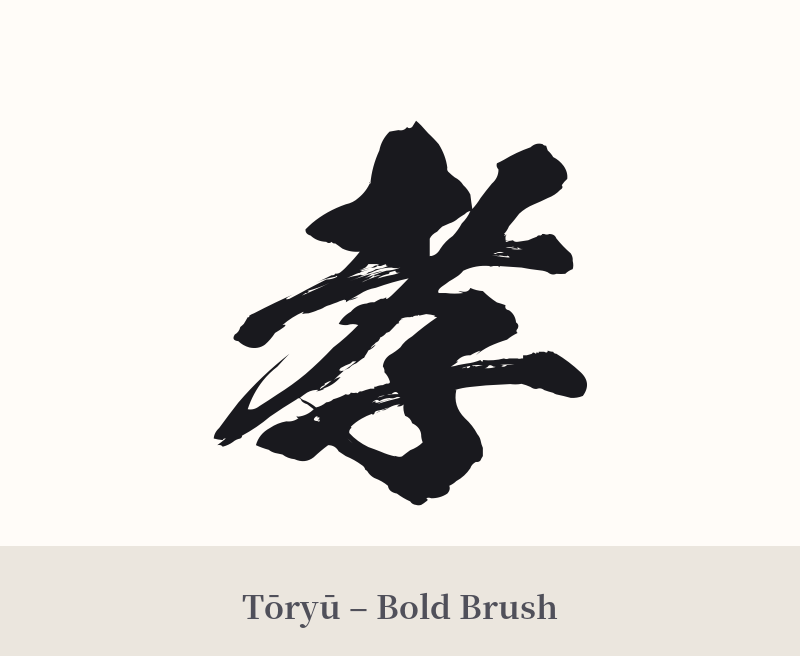
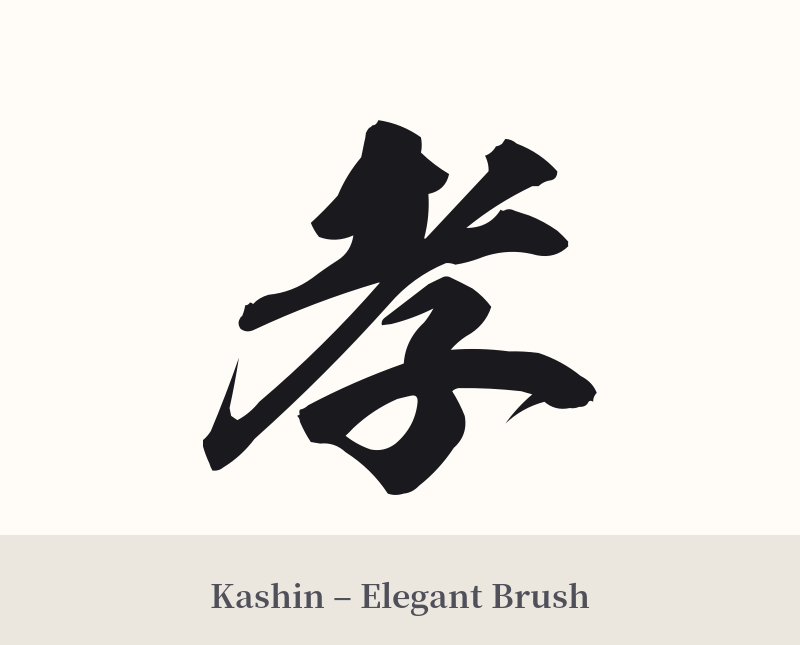
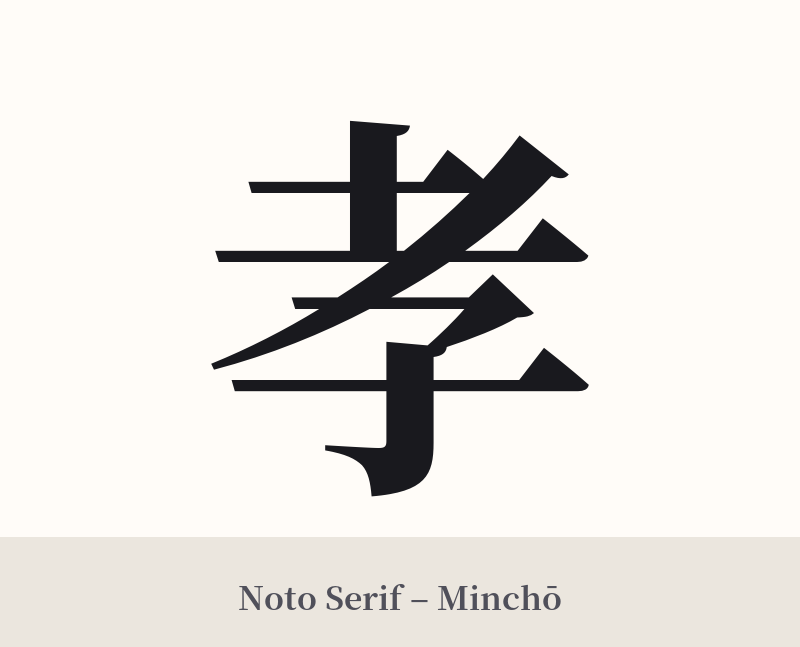
🎨 Idoneidad para tatuajes
📐 Guía de diseño de tatuajes
El kanji 孝 (kō) posee una dignidad serena, lo que lo hace adecuado para diseños personales y significativos, más que puramente estéticos. Su forma simple permite versatilidad en la ubicación y el estilo. – Ubicación: Para un recordatorio personal de este valor, considere ubicaciones sutiles como la parte interna de la muñeca, detrás de la oreja o en el tobillo. Como pieza más llamativa, funciona bien en el antebrazo, las costillas o centrado en la espalda, donde se puede apreciar su forma equilibrada. – Estilo de fuente: Una escritura Kaisho (de bloque) tradicional enfatiza la naturaleza formal y respetuosa de la virtud. Para una sensación más fluida y personal, un estilo Gyosho (semicursivo) agrega un toque de elegancia y movimiento. Una fuente minimalista y de líneas limpias puede ofrecer una interpretación moderna de este concepto tradicional. – Consejos visuales: Si bien 孝 es lo suficientemente fuerte como para destacar por sí solo, puede integrarse con otros elementos. Considere combinarlo con una flor de cerezo para simbolizar la naturaleza transitoria de la vida y la importancia de honrar a la familia mientras se pueda, o con un sutil círculo enso para representar el ciclo completo de dar y recibir cuidados.
Comentarios