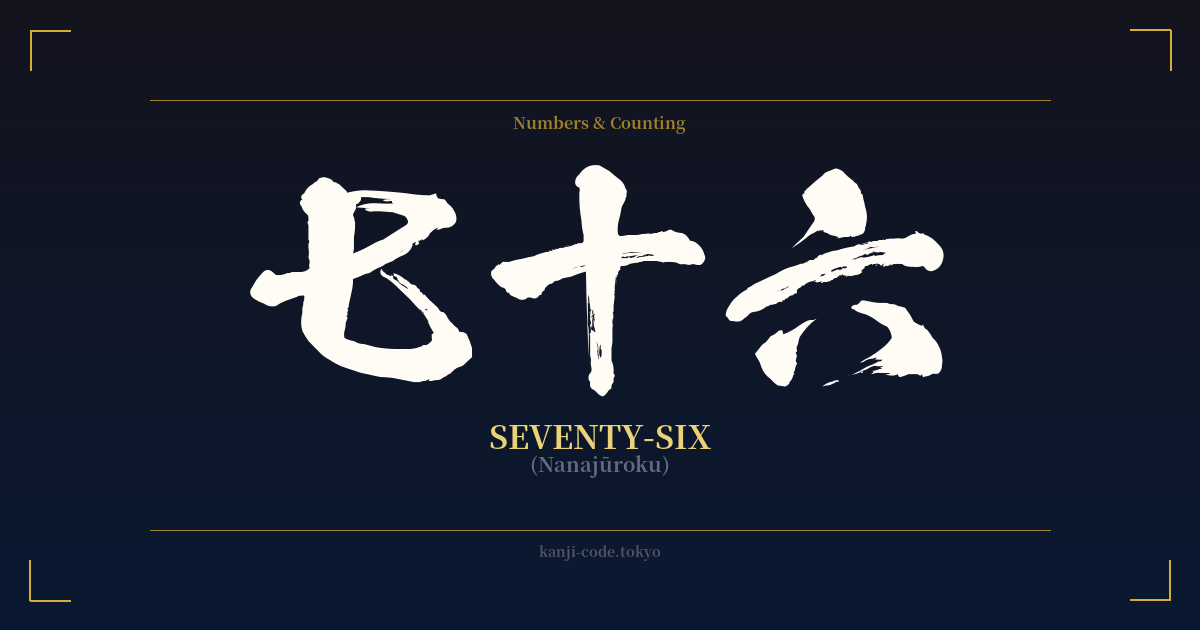
✍️ 七十六 (Nanajūroku) — Cultural Context
The kanji compound 七十六 (Nanajūroku) is the Japanese representation of the number seventy-six. Its structure is a perfect example of the logical and additive nature of the Japanese counting system, which was adopted from Chinese. The word is constructed as 七 (nana, seven) followed by 十 (jū, ten) and then 六 (roku, six), literally translating to "seven tens plus six."
Unlike numbers that carry heavy cultural or religious weight, such as seven, eight, or four, the number seventy-six is largely neutral in Japanese society. It doesn't possess any famous lucky or unlucky connotations on its own. Its significance is almost always derived from personal context—a 76th birthday, the year '76, a jersey number, or another meaningful milestone.
Individually, however, the characters have their own stories. The character 七 (nana/shichi) for seven is often considered a lucky number, appearing in concepts like the 七福神 (Shichifukujin), the Seven Lucky Gods, and the traditional seven-day-long celebration for a newborn. The character 十 (jū) for ten represents completeness, a full cycle. 六 (roku) for six is more neutral but appears in various contexts.
In modern Japan, the use of kanji for numbers like 七十六 is becoming less common in everyday life. Arabic numerals (76) are ubiquitous on signs, price tags, and digital displays. However, kanji numbers are still essential for formal documents, traditional vertical writing, and in contexts where an artistic or classical feel is desired. This includes certificates, legal papers, and traditional restaurant menus.
Choosing to represent 'seventy-six' in kanji rather than numerals is a stylistic decision. It evokes a sense of tradition and permanence, connecting a simple number to the deep history of the Japanese writing system. While it may not be a common choice for a standalone tattoo, its power lies in its ability to encode a personal story within a classical and structured form.
🖌️ Font Styles for 七十六
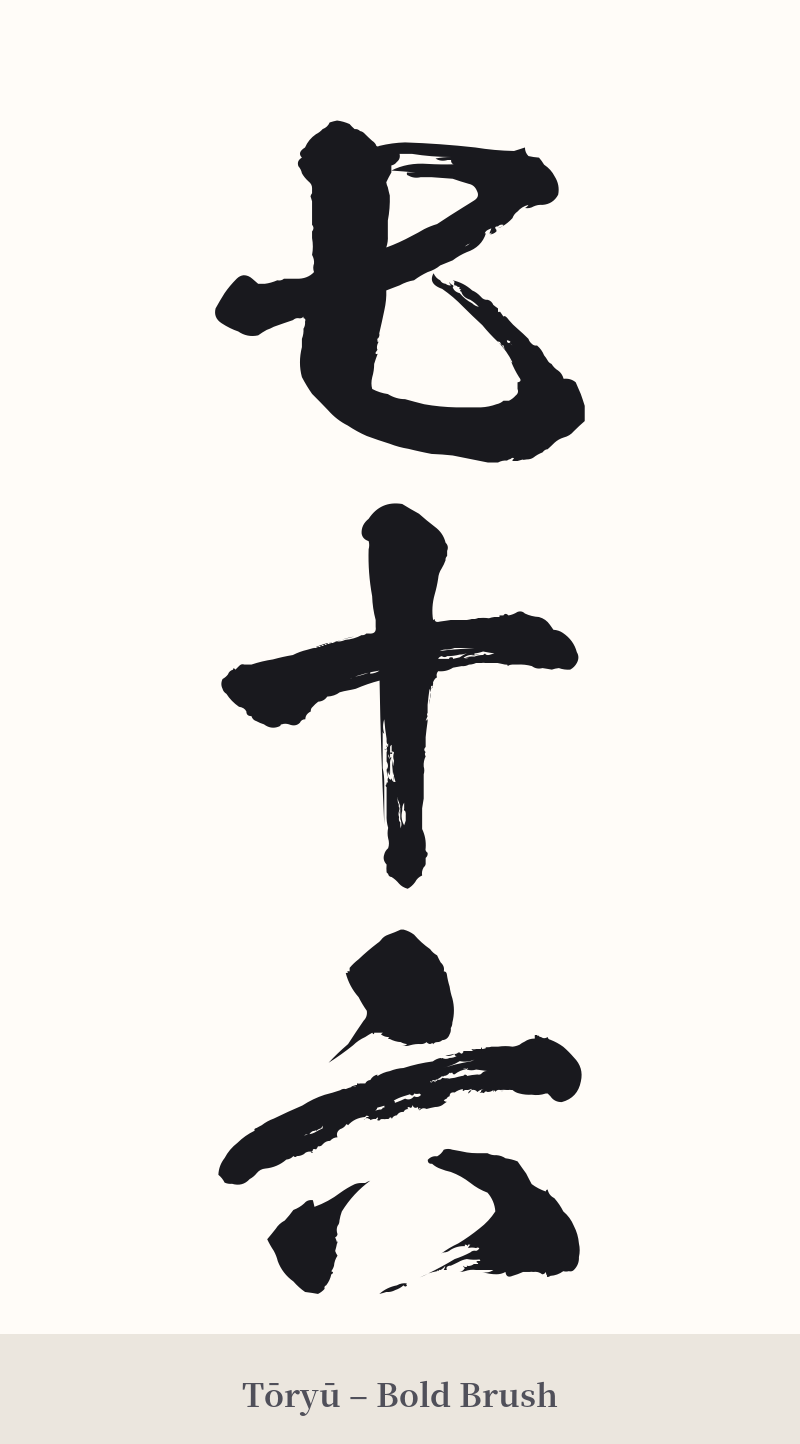
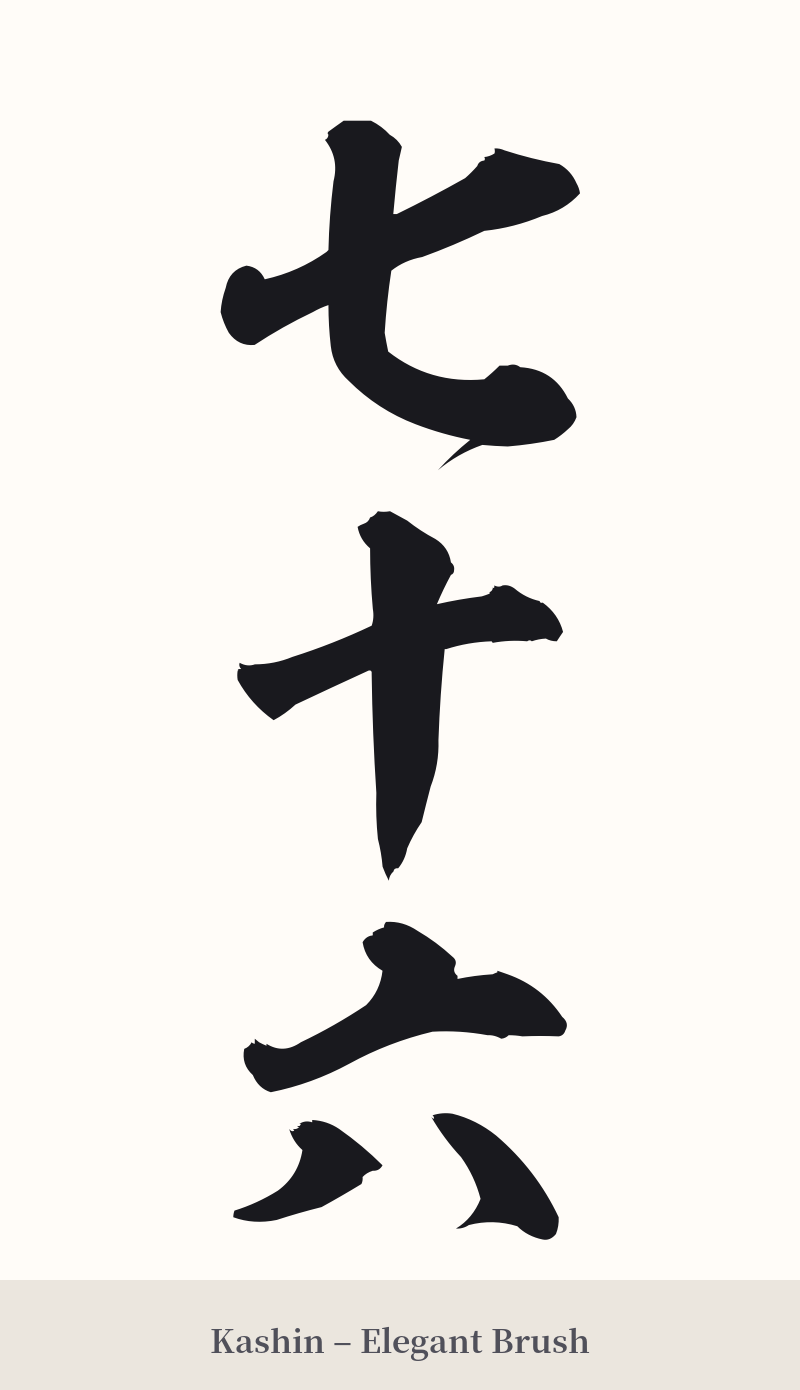
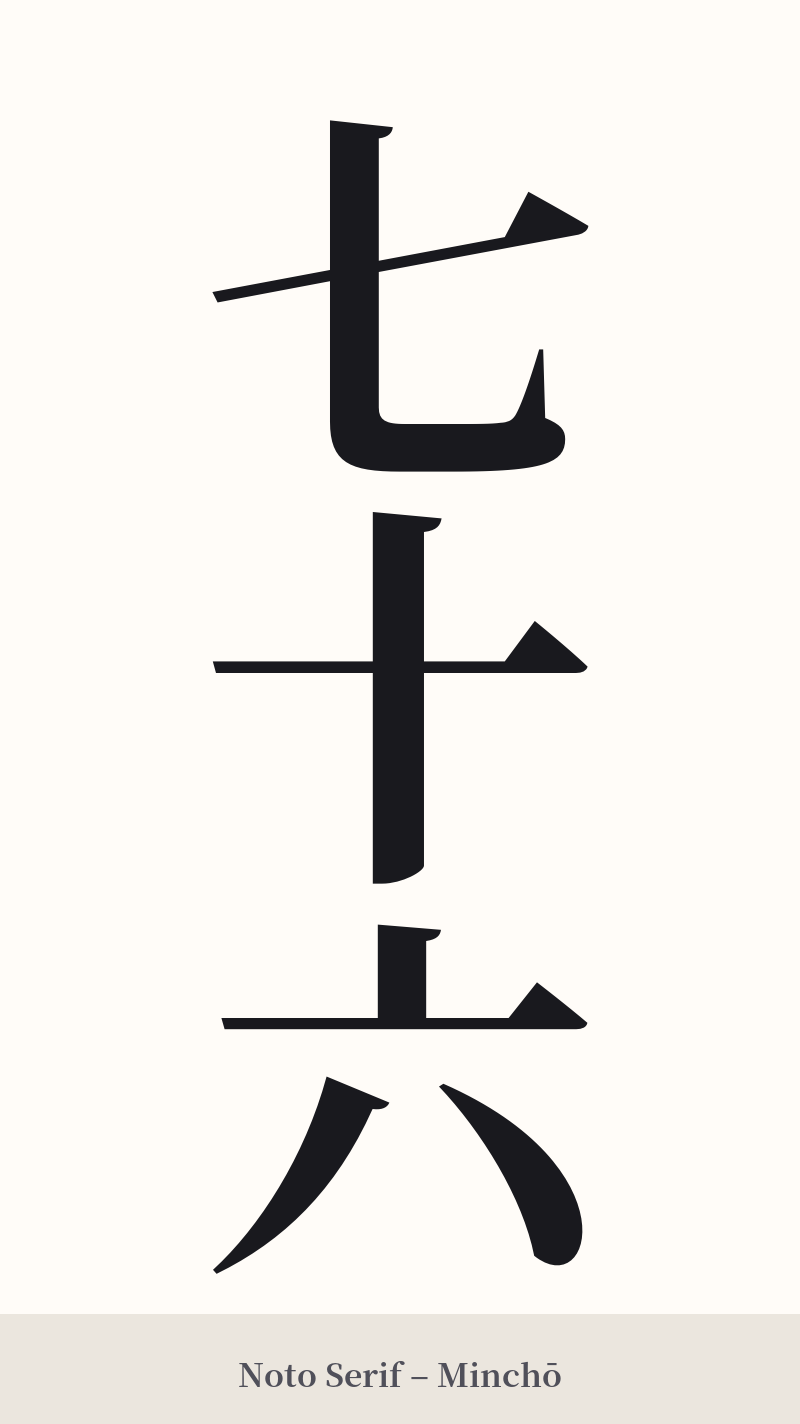
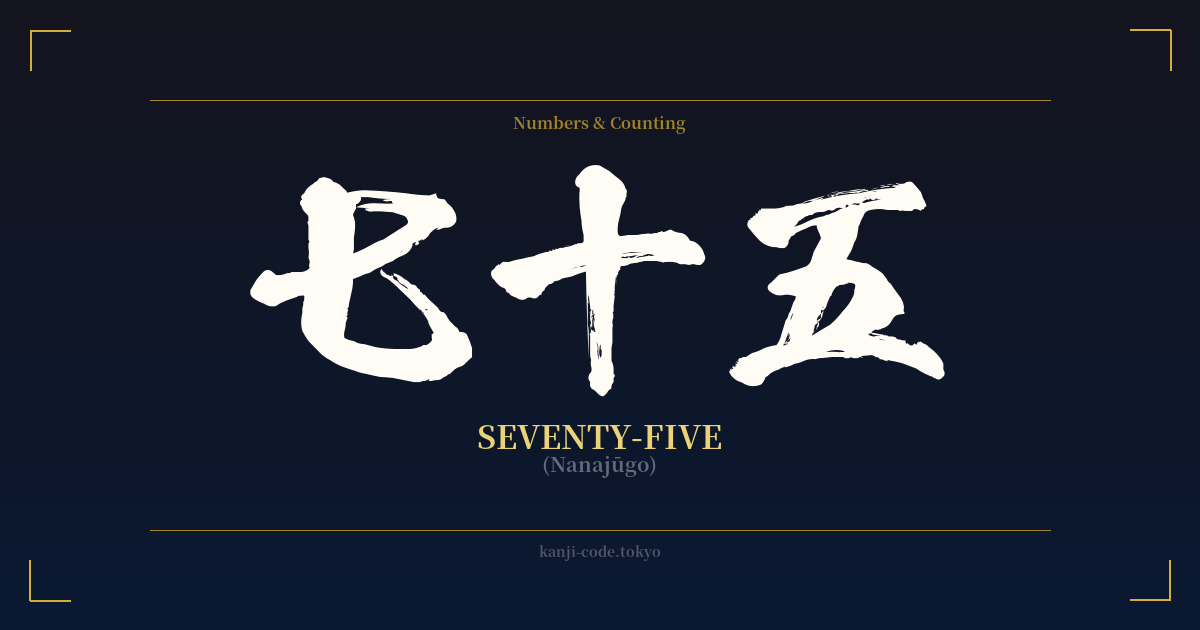
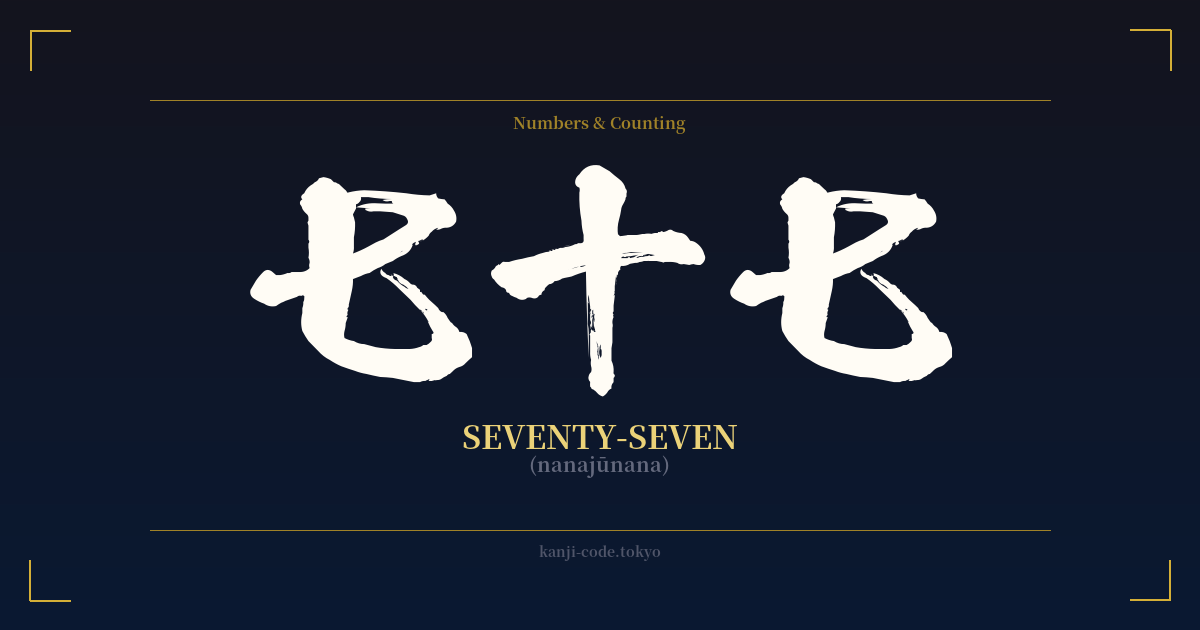
The same kanji can look dramatically different depending on the calligraphy style. Choose a font that matches the mood you want for your tattoo or design.
🎨 Tattoo Suitability
📐 Tattoo Design Guide
Given the simplicity of the characters in 七十六, the design's success hinges on style and placement.
– Placement: This kanji works well in discreet locations where personal meaning is prioritized over public display. Consider the inner wrist, ankle, behind the ear, or along the ribs. For a larger piece representing a full date, it could be incorporated into a sleeve or back design.
– Font Style: A bold, expressive calligraphy style (shodō) like gyōsho (semi-cursive) or sōsho (cursive) can inject energy and movement into the simple characters. Conversely, a clean, minimalist Mincho or Gothic font emphasizes the structured, numerical nature of the word.
– Orientation: Vertical alignment (tategaki) is the traditional format for Japanese writing and is highly recommended for a tattoo. It creates a more elegant and authentic flow than a horizontal layout.
Comments