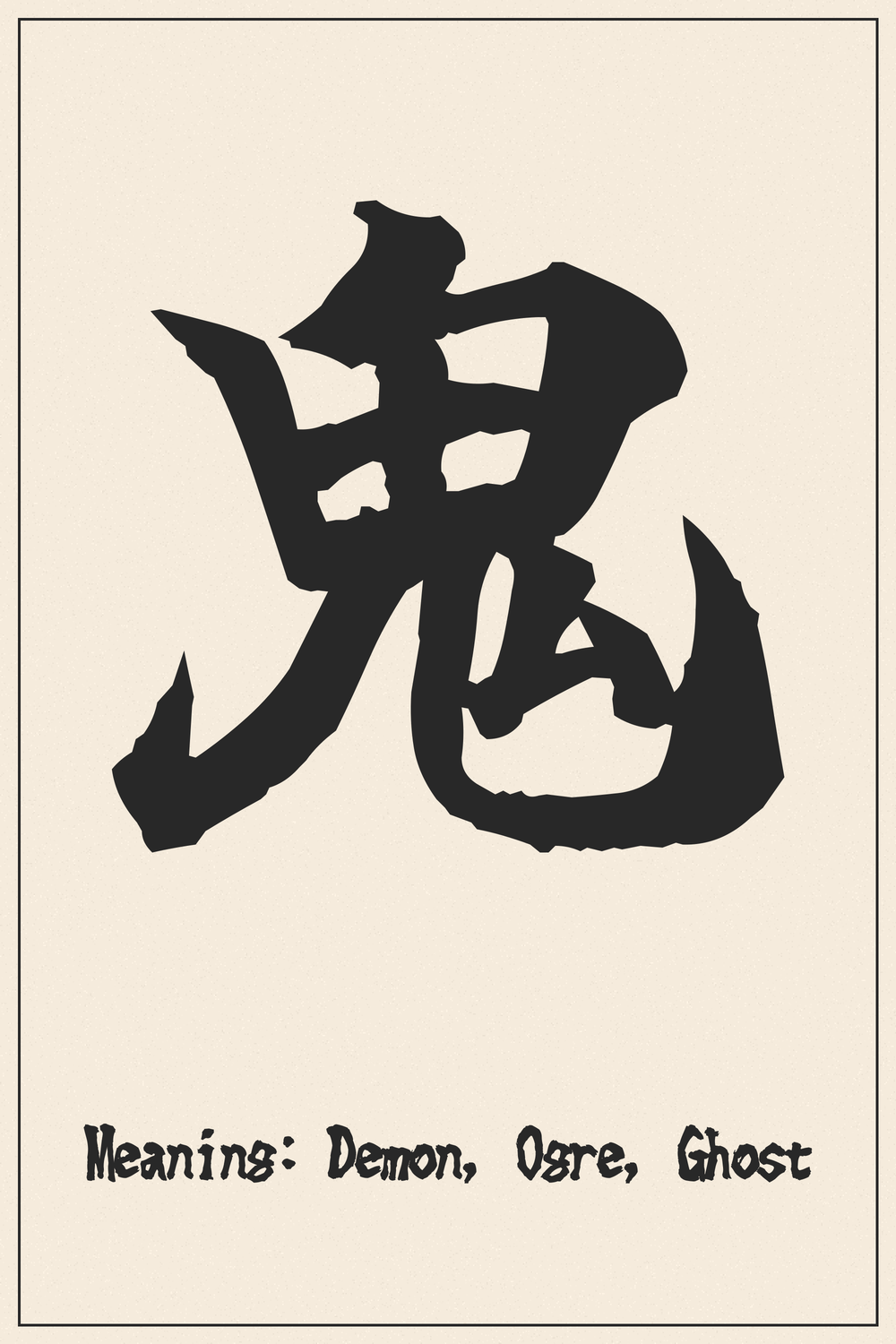
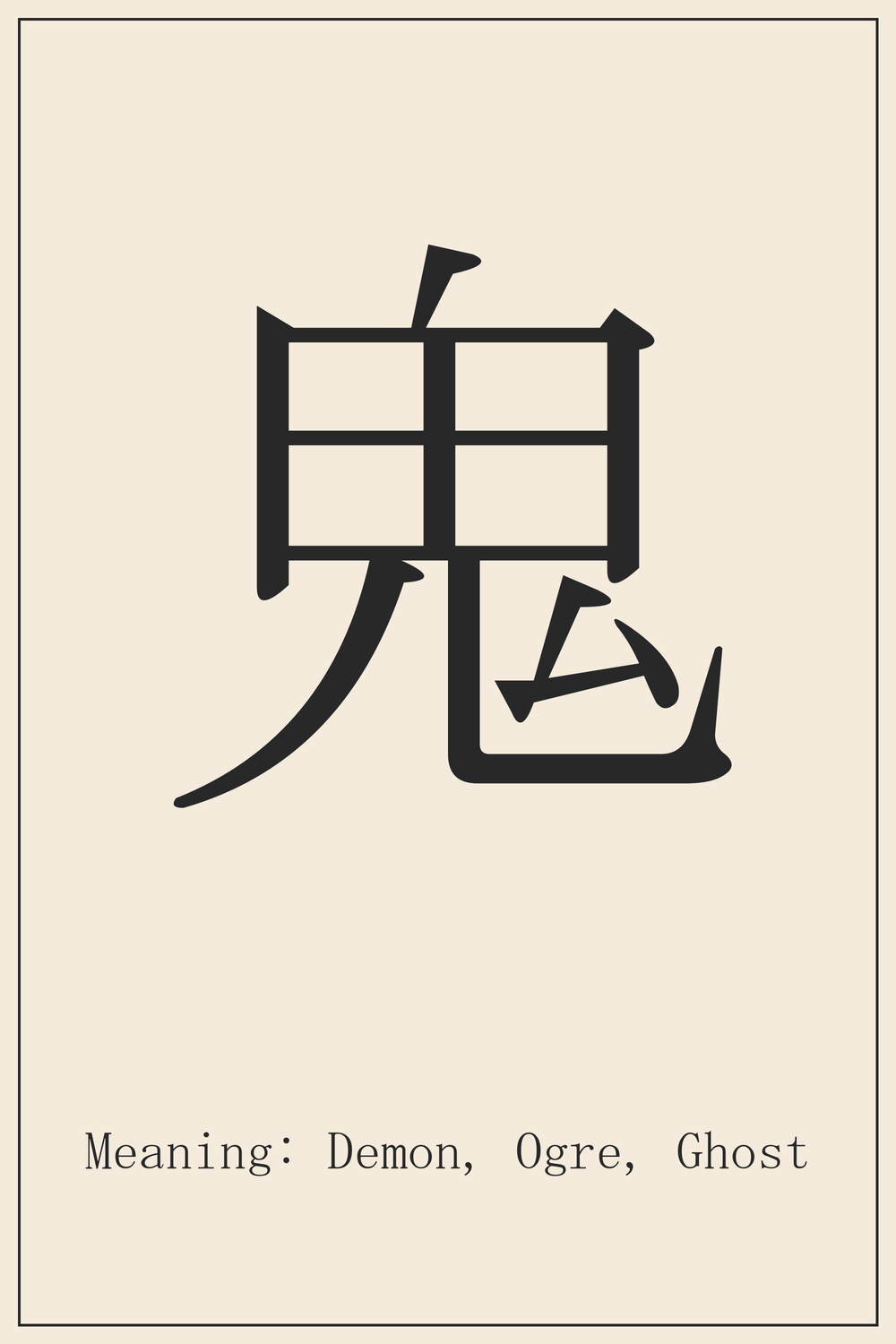
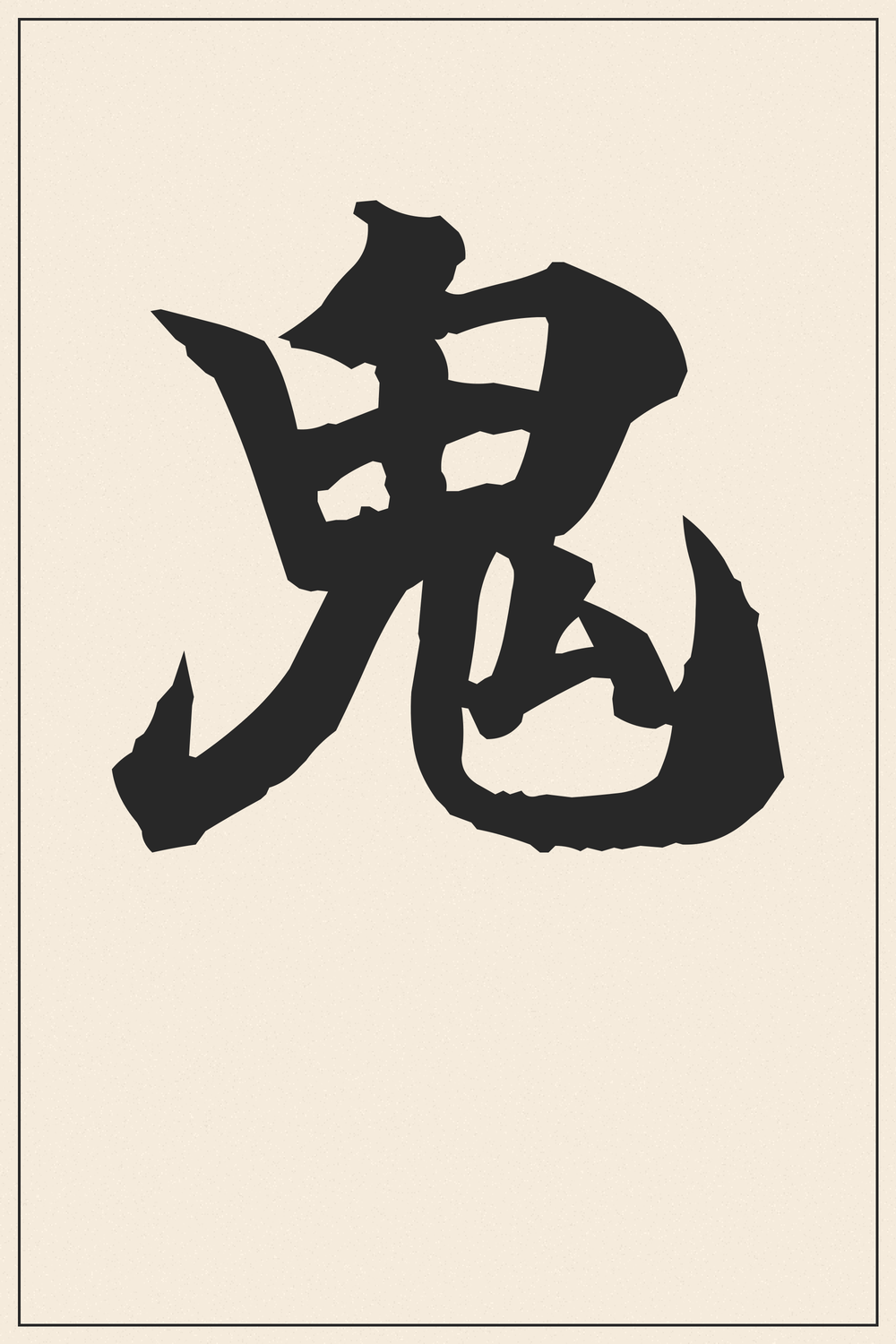
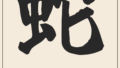
The Kanji 鬼 embodies the fearsome yet complex essence of Japanese folklore. It represents powerful supernatural entities, ranging from malevolent demons to protective spirits, holding a significant place in culture and art.
The atmosphere of a Kanji character changes dramatically depending on the font style. A character that looks elegant in a brush style might look bold and modern in a different font.
Recommendation:
Since a tattoo is permanent, we strongly recommend comparing various font styles beyond what is shown here. Use our designs as a trusted reference for the correct structure, but feel free to explore different artistic variations to find the perfect match for your vision.
The Deep Meaning Behind 鬼
The character 鬼 (oni) has ancient origins, believed to be a pictograph depicting a fearsome, large-headed entity with a human-like body. Its earliest forms often emphasize a monstrous mask or face atop a figure, embodying the idea of an unseen, powerful spirit or being.
In Japanese culture, 鬼 are iconic figures of folklore. While often portrayed as malevolent demons or ogres in tales, they also represent powerful forces that can be benevolent protectors, warding off evil. Their presence is significant in festivals like Setsubun, where people throw beans to drive away 鬼, and in various art forms, symbolizing both primal fears and strength against adversity.
Kanji Breakdown
The Kanji 鬼 is a single, complex character whose etymology primarily stems from its ancient pictographic representation rather than simple radical decomposition.
Pictographic Origin: The entire character is thought to depict a large-headed, horned, or masked figure standing on human-like legs. This visual encapsulates the idea of a ghost, demon, or powerful spiritual entity, combining elements of the unknown and human form to create a formidable image.
Conclusion
The Kanji 鬼 offers a profound connection to Japanese mythology and the powerful duality of spiritual entities. It symbolizes strength, protection, and the confrontation of inner or outer demons, making it a compelling choice for those drawn to its deep cultural resonance.
Choosing 鬼 for a tattoo signifies an appreciation for Japan’s rich folklore and a desire to embody the potent energy of these mythical beings. Its striking visual presence ensures a tattoo that is both culturally significant and artistically powerful, a true masterpiece of traditional Japanese body art.
Comments