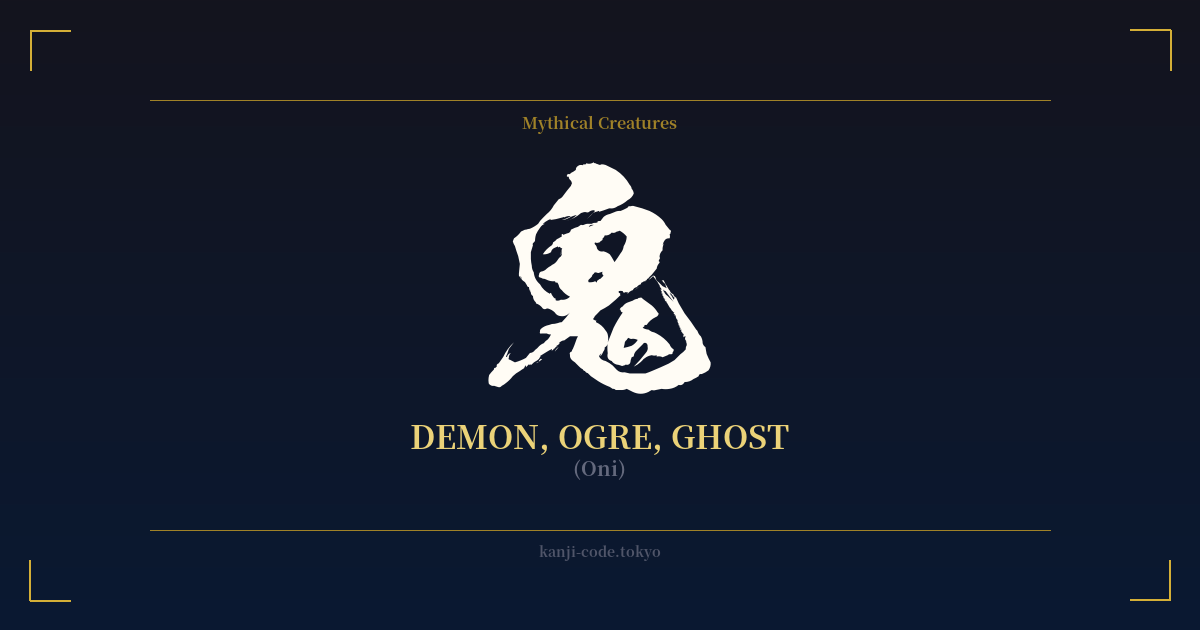
✍️ 鬼 (Oni) — Contexto cultural
El kanji 鬼 (Oni) es uno de los caracteres más evocadores y visualmente impactantes del idioma japonés, que evoca imágenes de temibles bestias con cuernos del folclore antiguo. Sus orígenes se remontan a un carácter chino que representaba un espíritu o fantasma, a menudo con una cabeza grande y siniestra. En Japón, este concepto evolucionó hasta convertirse en la figura del Oni, una criatura que ocupa un lugar central en el imaginario cultural del país.
Los oni no son simplemente 'demonios' en el sentido occidental judeocristiano. Son una categoría única de seres sobrenaturales, a menudo traducidos como ogros, trolls o gigantes. Tradicionalmente, se les representa con piel roja o azul, cabello salvaje, garras afiladas y uno o más cuernos. Suelen vestir un taparrabos de piel de tigre (fundoshi) y portar una enorme maza de hierro llamada kanabō. Esta imagen es un elemento básico del arte japonés, desde antiguos pergaminos y grabados ukiyo-e hasta el manga y el anime modernos.
Históricamente, los Oni representaban fuerzas del caos, el desastre y la enfermedad. Eran los villanos de innumerables cuentos populares, como la famosa historia de Momotarō (El Niño Melocotón), quien viaja a Onigashima (la Isla de los Demonios) para derrotar a sus monstruosos habitantes. Este papel antagónico se celebra durante el festival Setsubun a principios de la primavera, donde la gente arroja soja tostada por la puerta mientras grita "¡Oni wa soto! ¡Fuku wa uchi!" – "¡Fuera demonios! ¡Que entre la fortuna!""
Sin embargo, la naturaleza de los Oni es profundamente dualista. No todos los Oni son puramente malévolos. Algunas historias presentan Oni que se convierten en deidades protectoras tras ser derrotados por un monje budista o un héroe. Las temibles Onigawara, o tejas con rostros demoníacos, se colocan en templos y casas tradicionales no para atraer el mal, sino para usar la aterradora imagen del Oni y ahuyentar a otros espíritus malignos. Esto refleja una creencia arraigada en aprovechar fuerzas poderosas y peligrosas para la protección.
En la actualidad, la percepción de los Oni se ha vuelto aún más compleja. En la cultura popular, especialmente en animes como 'Demon Slayer: Kimetsu no Yaiba', suelen representarse como figuras trágicas con historias personales complejas, difuminando la línea entre monstruo y víctima. El término también se usa metafóricamente en el lenguaje cotidiano. A una persona con una fuerza o habilidad extraordinarias se le puede llamar 'oni' en su oficio, como Shigoto no Oni, un 'demonio del trabajo', alguien que trabaja con una concentración obsesiva y sobrehumana. Este personaje, por lo tanto, engloba una rica gama de miedo, poder, protección e incluso admirable intensidad.
🖌️ Estilos de fuente para 鬼
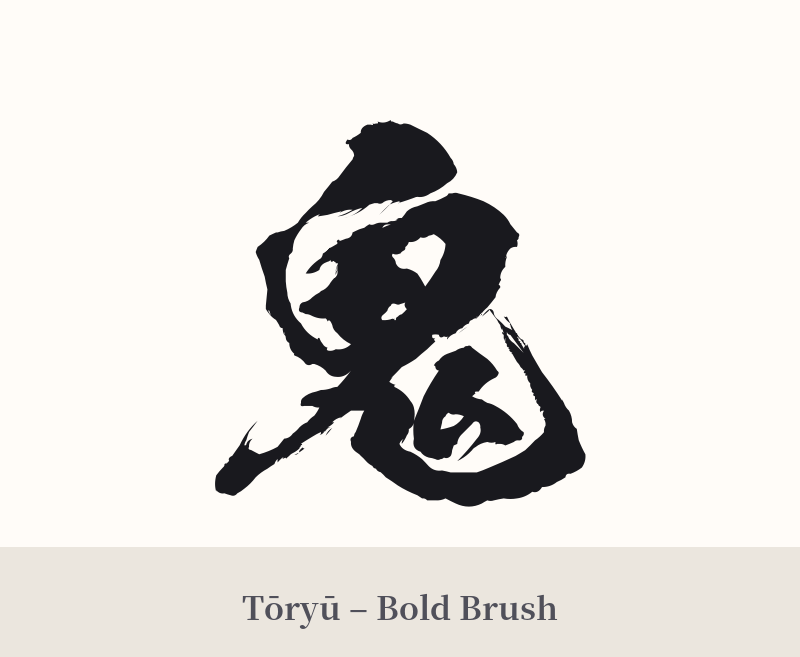
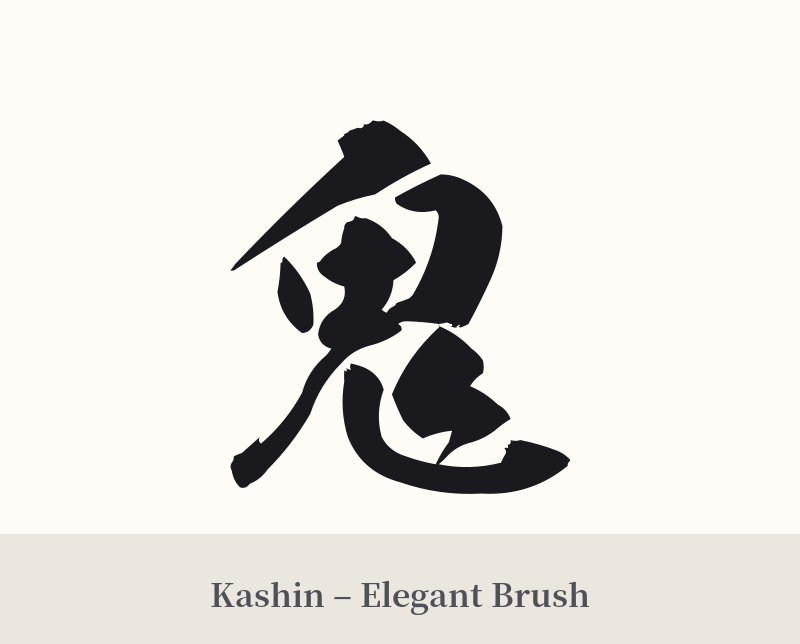
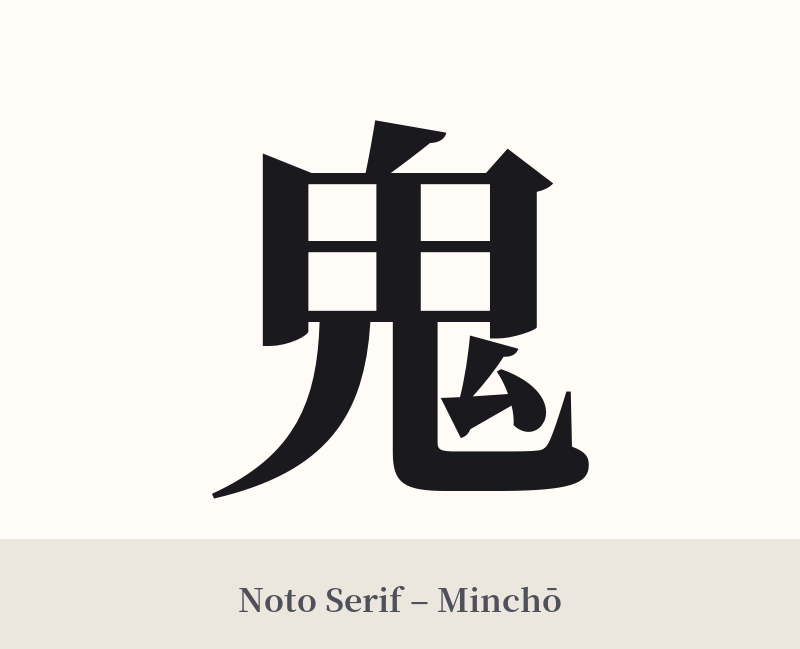
Los mismos caracteres kanji pueden verse muy diferentes según el estilo de caligrafía. Elige una fuente que se ajuste al ambiente que deseas para tu tatuaje o diseño.
🎨 Idoneidad para tatuajes
📐 Guía de diseño de tatuajes
El kanji 鬼 (Oni) es una expresión de poder puro, y su diseño debe reflejarlo. No es un carácter para usos sutiles o delicados.
– Ubicación: Este kanji luce mejor en zonas más grandes y musculosas del cuerpo que puedan realzar su fuerte presencia. La pantorrilla, el antebrazo, la parte superior del brazo o como pieza central en la espalda o el pecho son opciones excelentes.
– Estilo de fuente: Opta por estilos caligráficos audaces y dinámicos. Un trazo de pincel tosco y agresivo (Sōsho o Gyōsho) puede capturar la naturaleza salvaje e indomable del Oni. Por otro lado, una tipografía gruesa y angular (Kaisho) puede transmitir una sensación de poder inmenso e inamovible. Evita las fuentes finas y delicadas, ya que contradicen el significado del personaje.
Consejos visuales: Si bien el carácter es lo suficientemente poderoso como para lucir por sí solo, combina excepcionalmente bien con otros elementos del arte japonés. Considere incorporarlo a una obra más grande con una máscara Hannya, olas rompiendo, nubes de tormenta o relámpagos. Rodear el kanji con llamas rojas o naranjas, o con remolinos azul oscuro, puede realzar aún más su poder elemental.
Comentarios