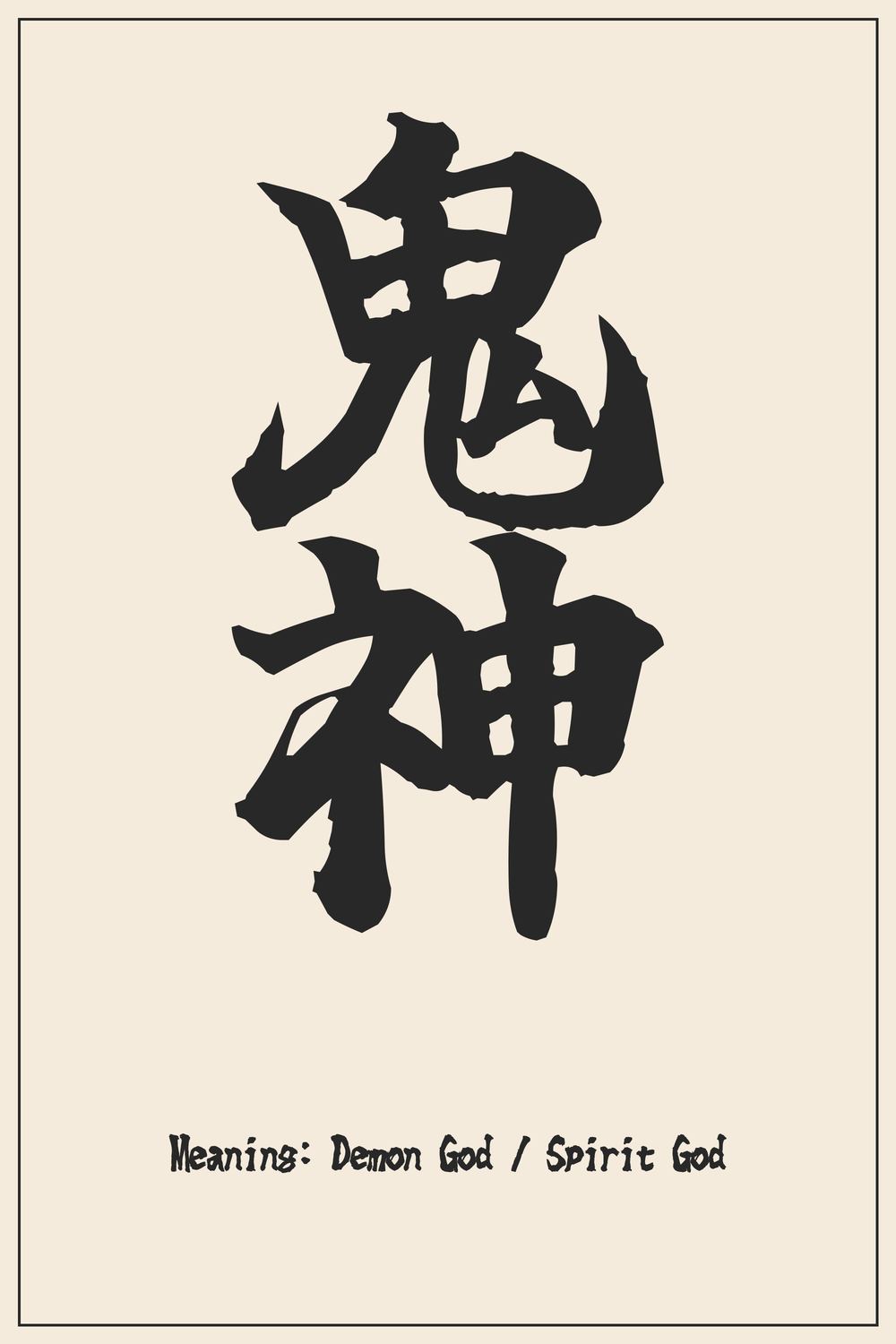
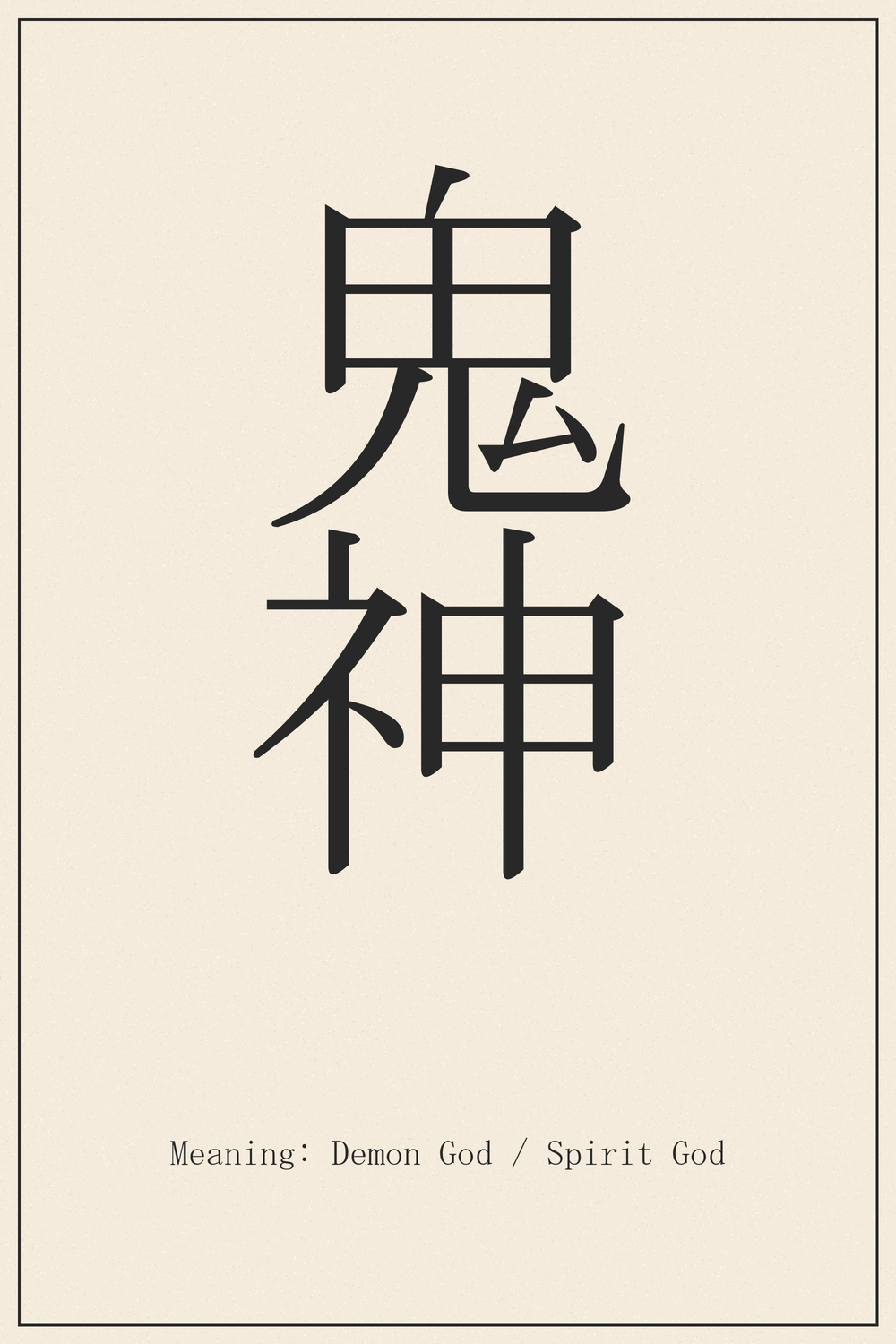
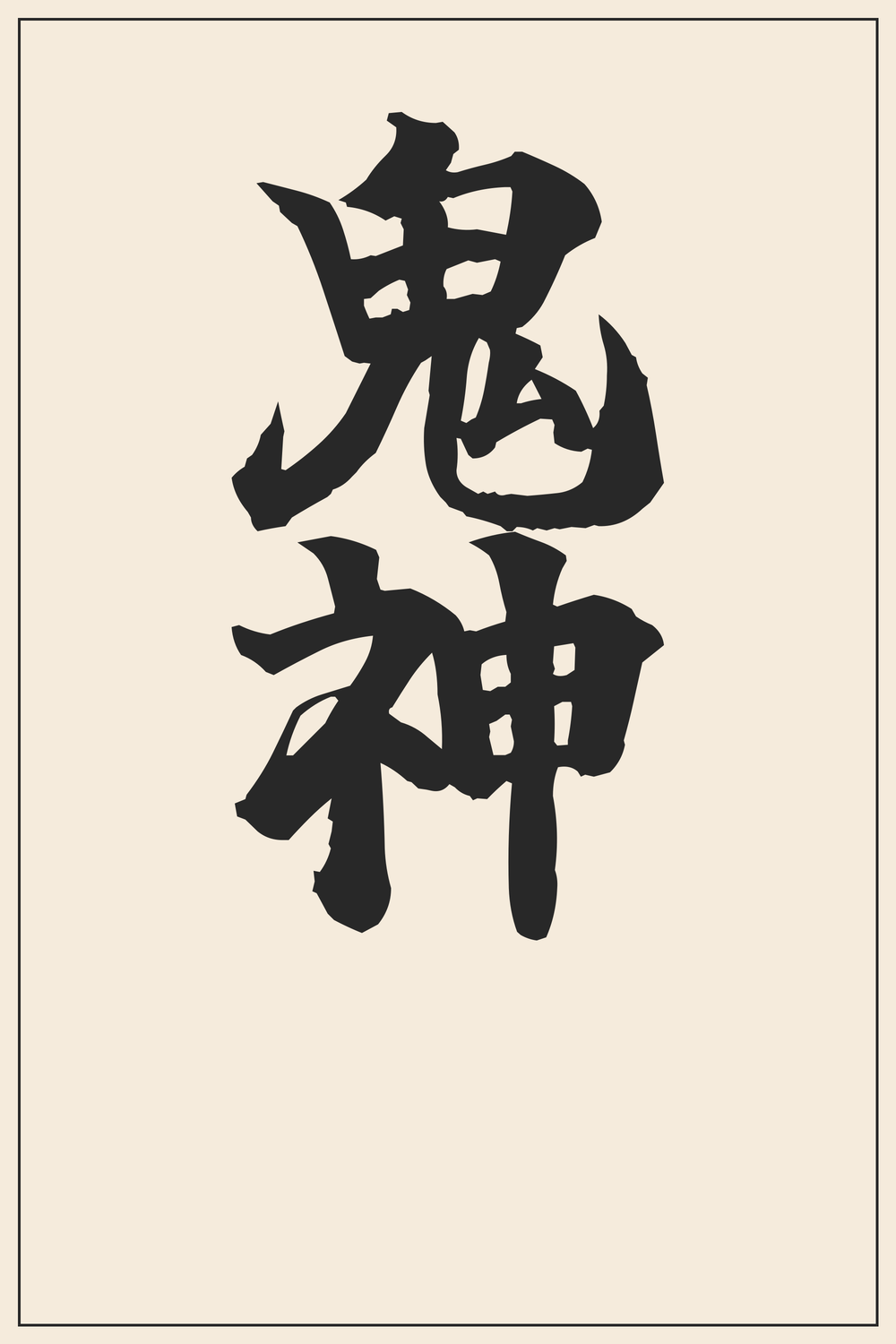
Dive into the formidable world of 鬼神 (Kijin), a Kanji that encapsulates the essence of powerful, supernatural entities in Japanese tradition. This term represents an awe-inspiring force, combining both the fearsome and the divine within a single powerful expression.
The atmosphere of a Kanji character changes dramatically depending on the font style. A character that looks elegant in a brush style might look bold and modern in a different font.
Recommendation:
Since a tattoo is permanent, we strongly recommend comparing various font styles beyond what is shown here. Use our designs as a trusted reference for the correct structure, but feel free to explore different artistic variations to find the perfect match for your vision.
The Deep Meaning Behind 鬼神
The term 鬼神, Kijin, is a compound word formed from 鬼 (oni), meaning ‘demon’ or ‘ghost,’ and 神 (kami), meaning ‘god’ or ‘spirit.’ Historically, these two characters were often used interchangeably or in combination to denote supernatural beings of extraordinary power, whether benevolent or malevolent.
In Japanese culture, 鬼神 refers to potent deities, spirits, or even formidable demons who possess immense spiritual authority. They are not merely ‘good’ or ‘evil’ but embody a raw, untamed aspect of nature and the spiritual world, inspiring both reverence and fear. From ancient folklore to Shinto beliefs, Kijin represent the unseen forces that shape destiny.
Kanji Breakdown
To fully grasp the essence of Kijin, let’s examine its constituent Kanji characters:
Meaning: Demon, Ghost, Ogre. The character 鬼 depicts a mask-wearing figure, often associated with a large head, horns, and sharp claws, symbolizing the supernatural and often terrifying aspects of demons or ghosts in Japanese folklore.
Meaning: God, Deity, Spirit. The character 神 combines the radical 示 (shimesu), meaning “altar” or “reveal,” with 申 (shin), which suggests “lightning” or “to state/announce,” implying a divine presence or message revealed from the heavens.
Conclusion
Choosing 鬼神 for a tattoo signifies an appreciation for the profound and multifaceted nature of spiritual power in Japanese thought. It embodies the balance between fearsome might and divine reverence, representing a comprehensive view of supernatural forces.
This Kanji is a powerful statement for those who resonate with the awe-inspiring, untamed energies of the universe and wish to carry a symbol of ultimate spiritual authority and mystic strength.
Comments