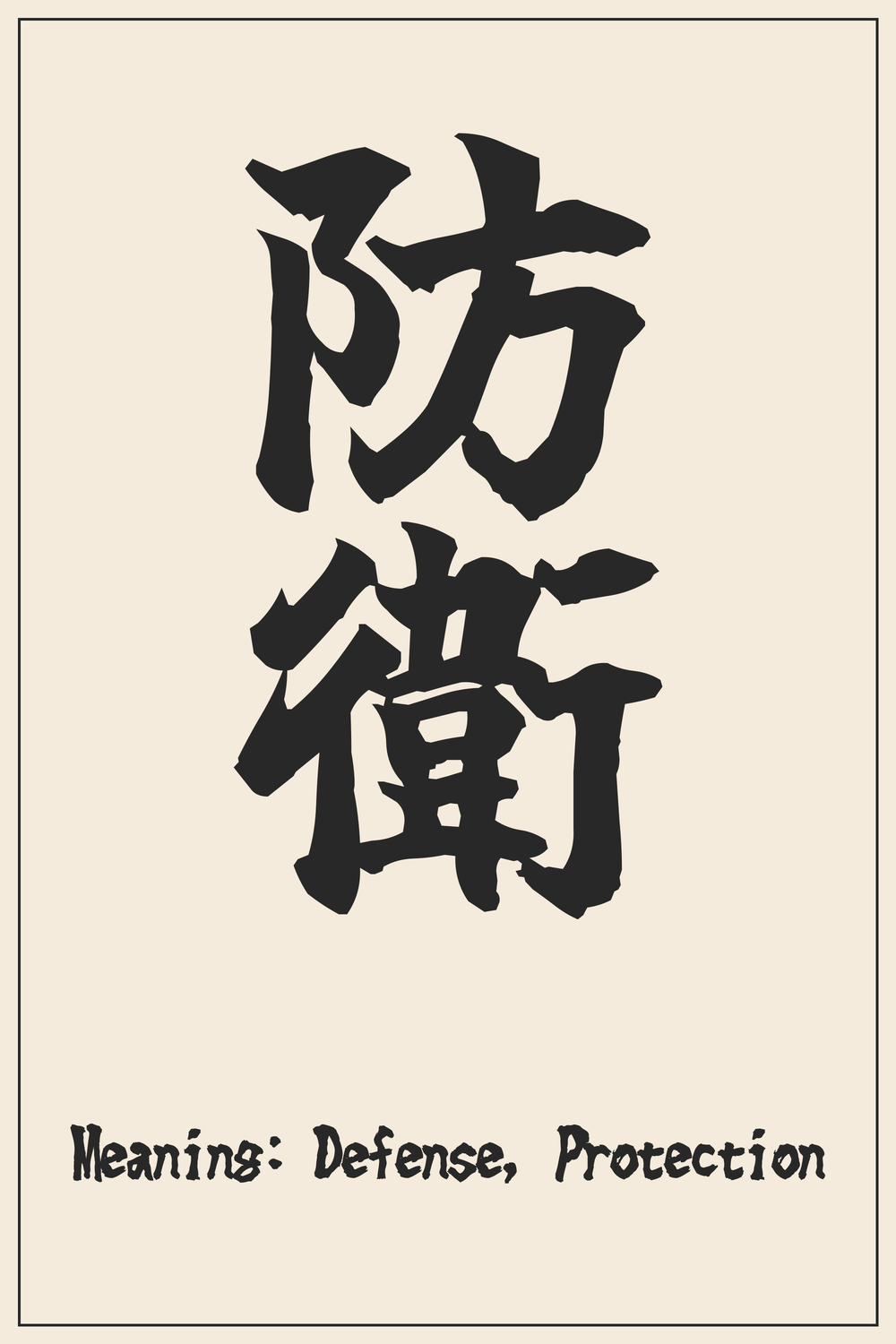
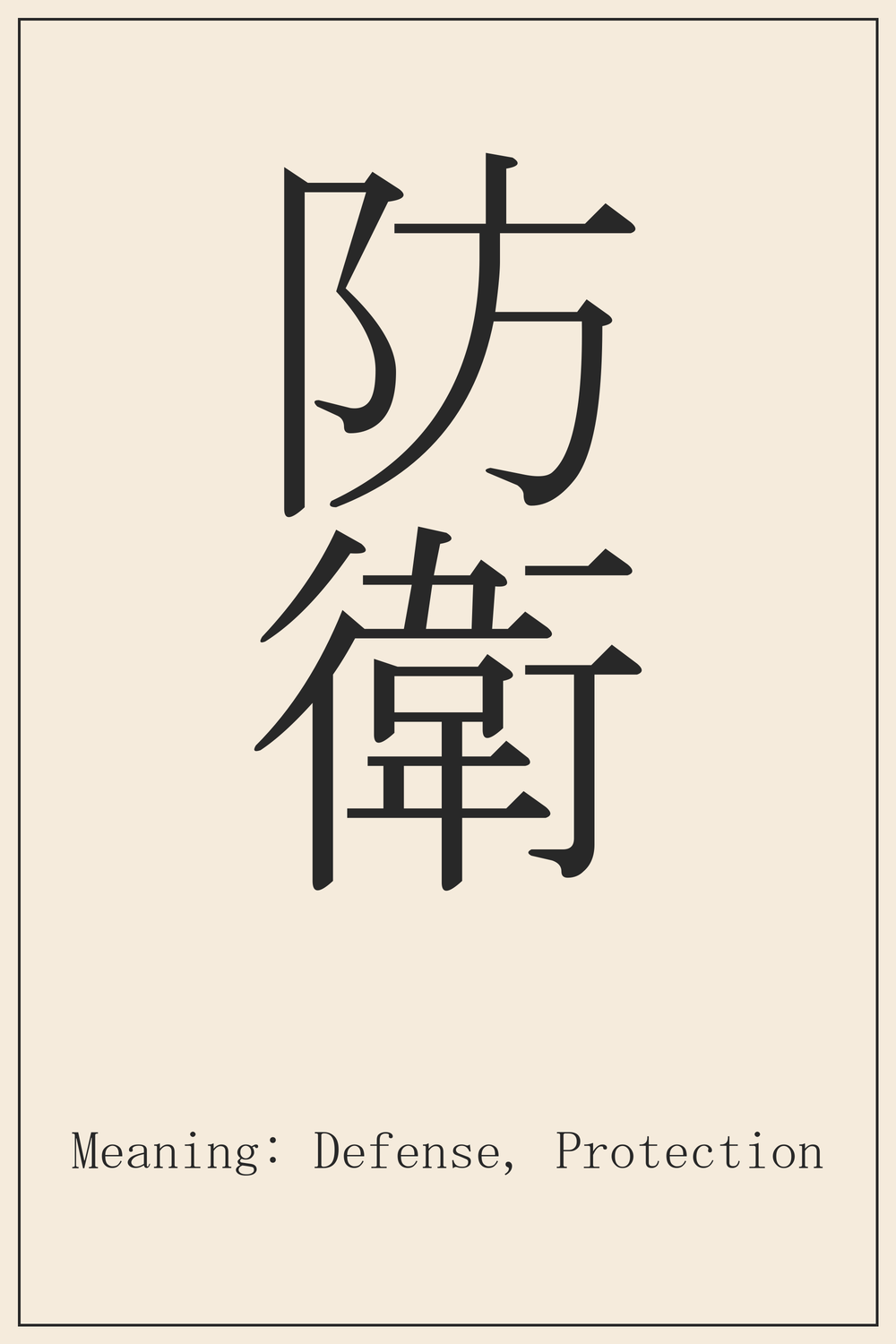
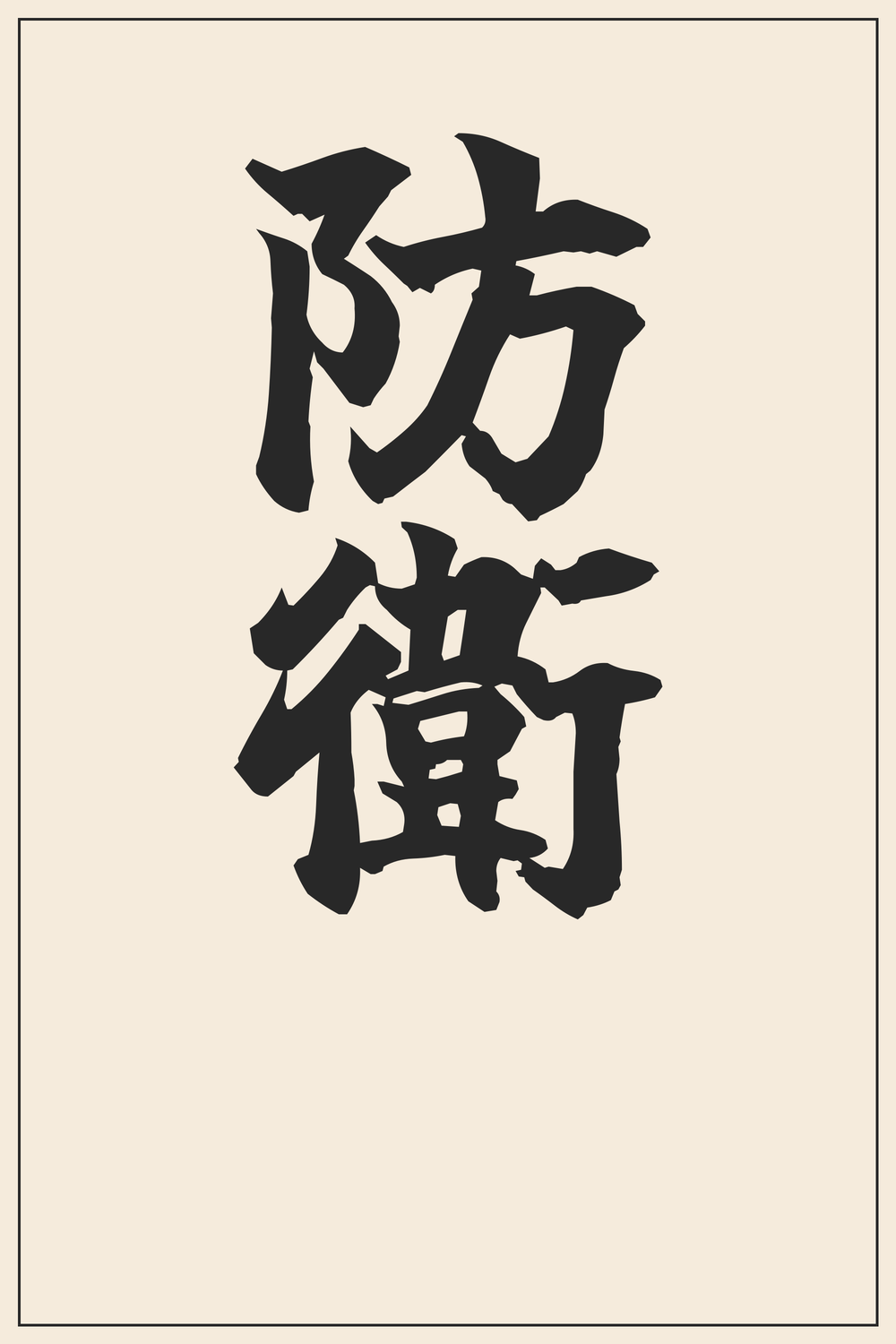
The Kanji compound ‘防衛’ encapsulates the profound concepts of defense and protection. It stands as a powerful symbol for safeguarding what is cherished and upholding security against challenges.
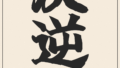
The atmosphere of a Kanji character changes dramatically depending on the font style. A character that looks elegant in a brush style might look bold and modern in a different font.
Recommendation:
Since a tattoo is permanent, we strongly recommend comparing various font styles beyond what is shown here. Use our designs as a trusted reference for the correct structure, but feel free to explore different artistic variations to find the perfect match for your vision.
The Deep Meaning Behind 防衛
The compound ‘防衛’ (Bouei) carries deep historical and cultural weight in Japanese thought. ‘防’ (bou) signifies to prevent or defend, often involving the establishment of physical or metaphorical barriers. ‘衛’ (ei) refers to guarding or protecting, implying active vigilance and surveillance.
Together, they form a robust concept not merely of passive protection, but of proactive defense and unwavering security. This duality reflects the Japanese cultural value of both preparation against adversity and steadfast commitment to protecting one’s community, values, or cherished ideals.
Kanji Breakdown
To fully appreciate ‘防衛’, let’s examine its constituent kanji and their individual meanings.
Meaning: Defend, Prevent, Ward off. This character combines the radical 阝, representing a mound or barrier, and 方, which can signify a direction or cover. Together, they depict setting up a barrier to ward off harm or prevent entry.
Meaning: Guard, Protect, Defend. The character ‘衛’ originally depicted a person guarding a city perimeter. It features the radical 行 (go, street) suggesting movement or patrols, and 韋, which means to surround, symbolizing a protective enclosure or defense.
Conclusion
The Kanji ‘防衛’ is a powerful emblem of unwavering protection and steadfast vigilance. It represents not just the act of defending, but the commitment to stand firm against threats, safeguarding what is valuable and maintaining security.
Choosing ‘防衛’ for a tattoo is a profound declaration of your resolve to protect. It serves as a constant reminder of your strength, your watchful nature, and your dedication to preserving peace and safety, whether for yourself, your loved ones, or your ideals.
Comments