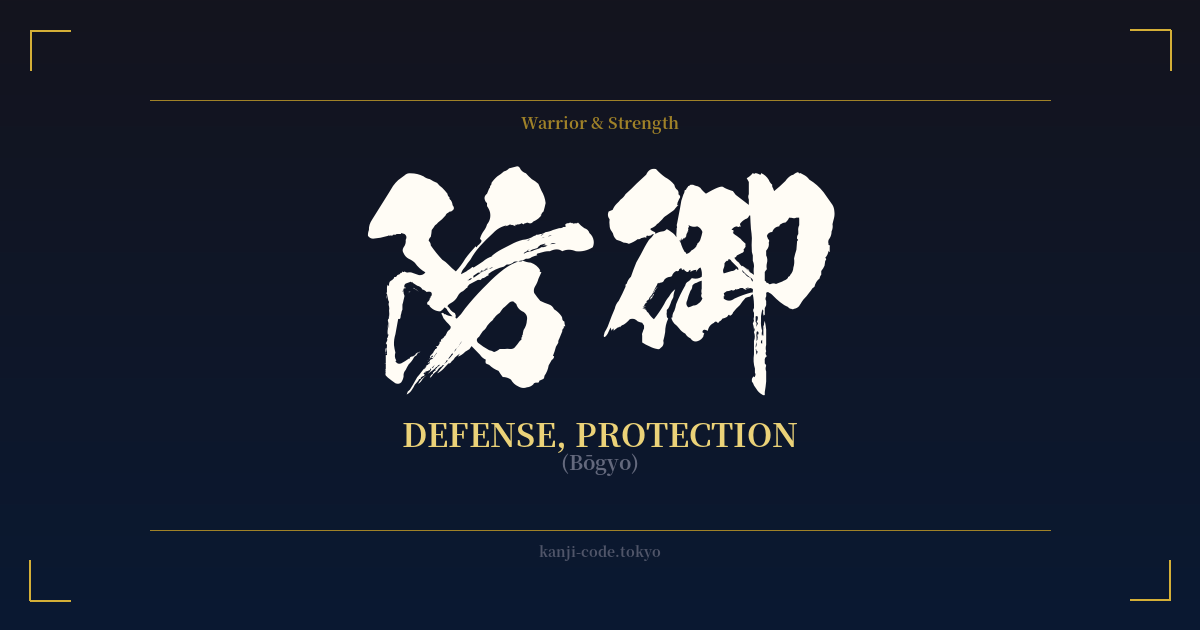
✍️ 防御 (Bōgyo) — Cultural Context
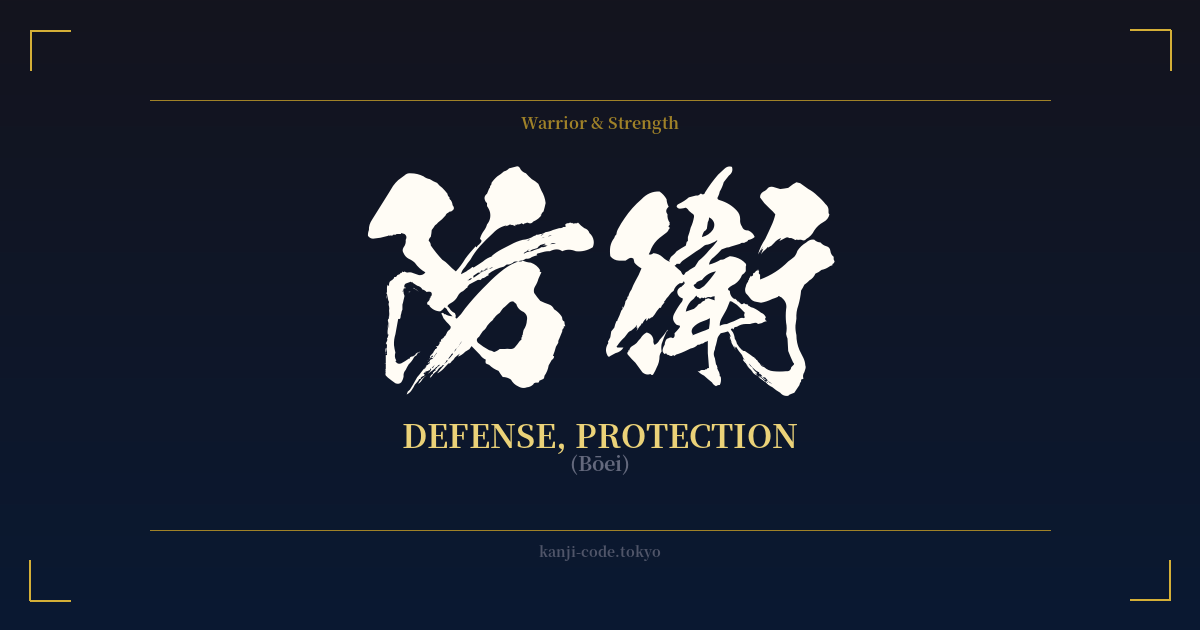
防御 (Bōgyo) is the Japanese word for defense, protection, or guarding. It's a term steeped in the history of martial strategy and the warrior ethos, conveying a sense of active, prepared resistance against an external force. It’s not just about passively blocking an attack, but about the art and science of protecting oneself, one’s territory, or one’s principles.
Historically, the concept of bōgyo was central to the samurai and the construction of Japanese castles. A fortress's defenses—its moats, walls, and strategic layouts—were all part of its bōgyo. For a warrior, defensive techniques were as crucial as offensive ones. True mastery in bushidō (the way of the warrior) involved a seamless flow between attack and defense, understanding that a strong guard creates opportunities to strike.
This idea carries directly into modern Japanese martial arts. In Kendo, Karate, Judo, and Aikido, students spend countless hours perfecting `bōgyo no waza` (defensive techniques). This training instills the idea that defense is not an act of weakness or fear, but one of intelligence, control, and patience. It is about conserving energy, reading an opponent's intentions, and maintaining one's balance until the right moment.
The word transcends physical combat. It can also refer to protecting one's honor, family, or way of life. It implies a steadfast and vigilant stance against any threat, whether physical, social, or emotional. It is the strength to hold your ground and shield what is important to you.
In contemporary Japanese culture, 防御 is instantly recognizable from the world of video games and anime. Characters have a "defense stat" (防御力, bōgyoryoku), and special moves often involve creating defensive barriers. This has made the word familiar to a global audience, associating it with resilience, strength, and the ability to withstand immense pressure. It represents the unyielding will to endure and protect.
🖌️ Font Styles for 防御
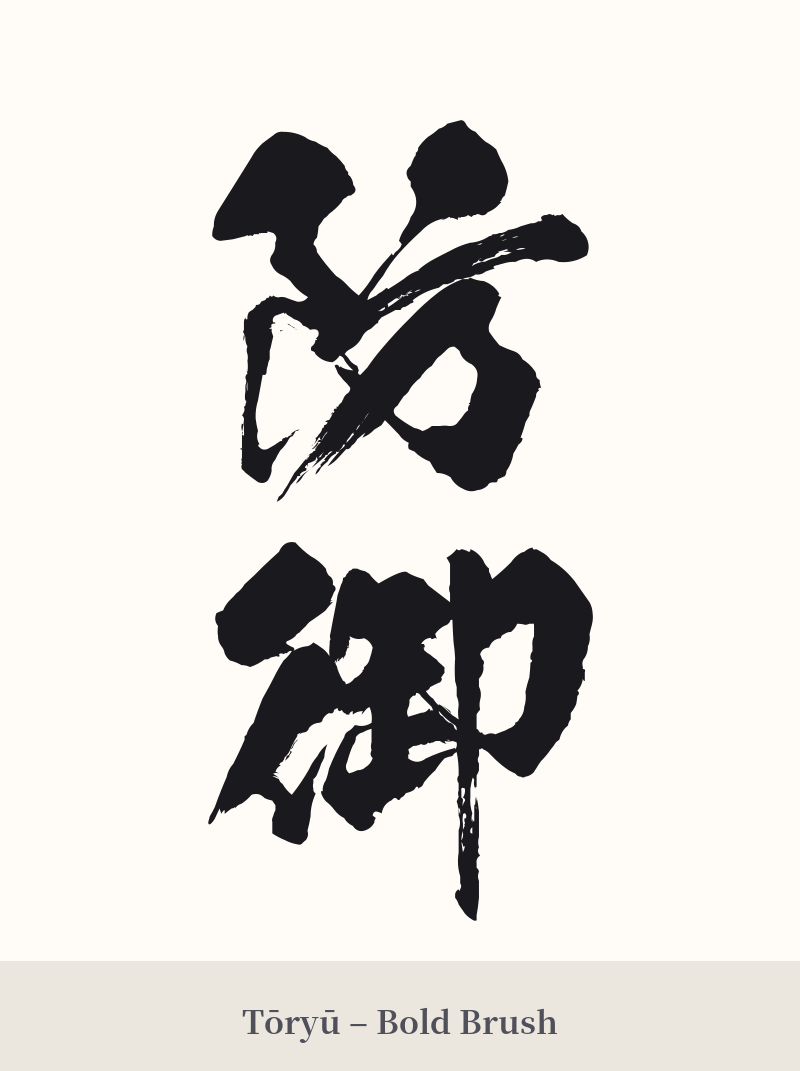
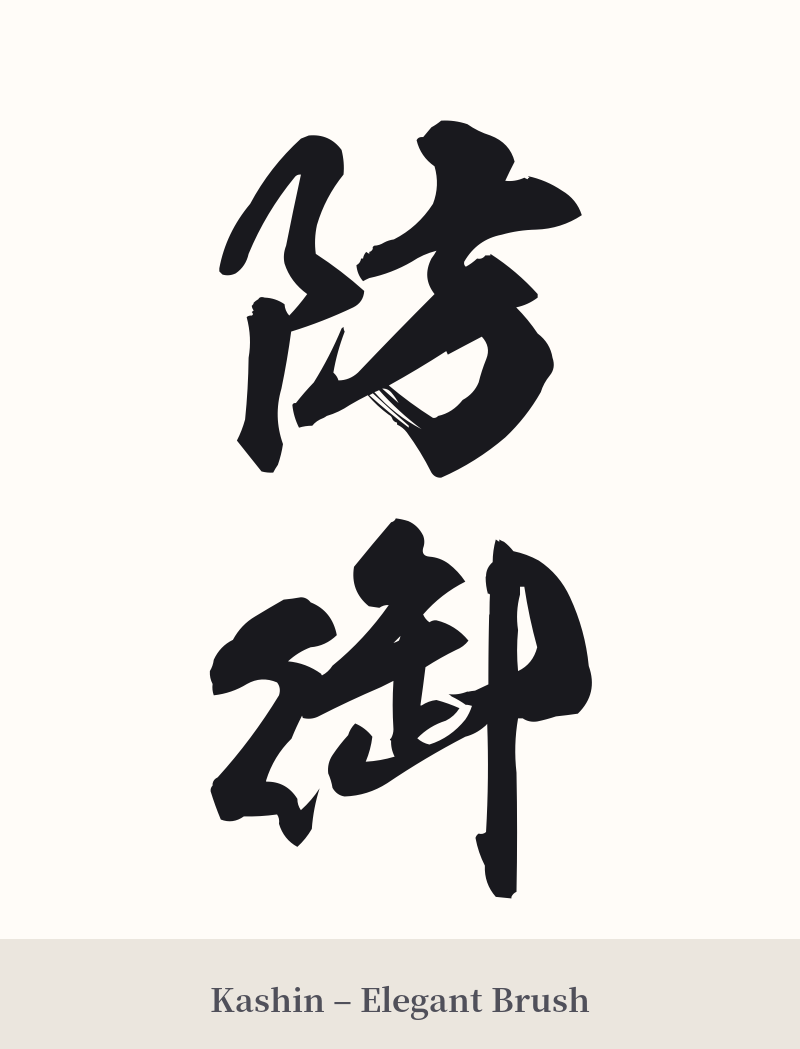
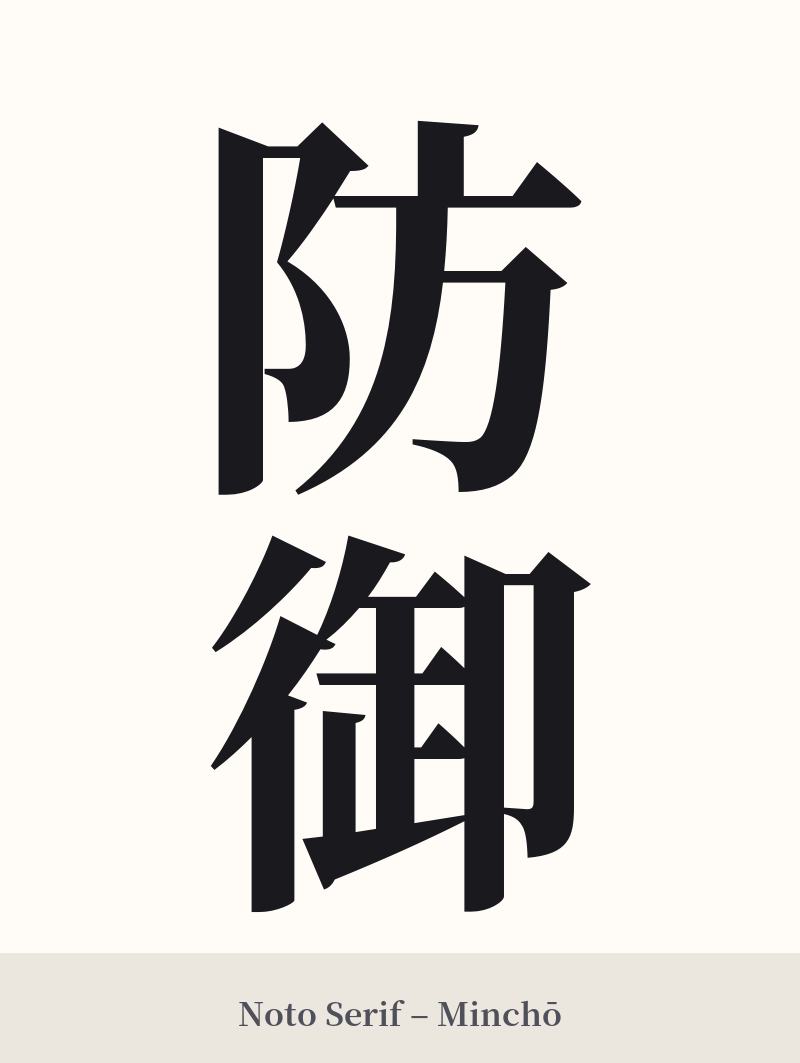
The same kanji can look dramatically different depending on the calligraphy style. Choose a font that matches the mood you want for your tattoo or design.
🎨 Tattoo Suitability
📐 Tattoo Design Guide
For a 防御 tattoo, the design should evoke a feeling of strength and stability. It's a word that stands its ground.
– Placement: This kanji works well on solid, muscular parts of the body. The forearm, calf, shoulder blade, or chest are excellent choices, as they reinforce the concept of a strong foundation and shield.
– Font Style: Consider a thick, blocky script like a heavy Mincho or a square-ish Gothic style to give it a fortress-like appearance. For a more dynamic feel that hints at martial arts, a strong, controlled brushstroke style (Gyosho) can capture the energy of a parry or block.
– Orientation: A vertical alignment is traditional and visually striking, especially along the length of a limb. A horizontal layout can also work well across the chest or upper back.
– Visual Elements: Complement the kanji with imagery that enhances its meaning. A shield, a piece of samurai armor (yoroi), a steadfast tortoise, or even a dragon encircling the characters can create a powerful narrative of protection.
Comments