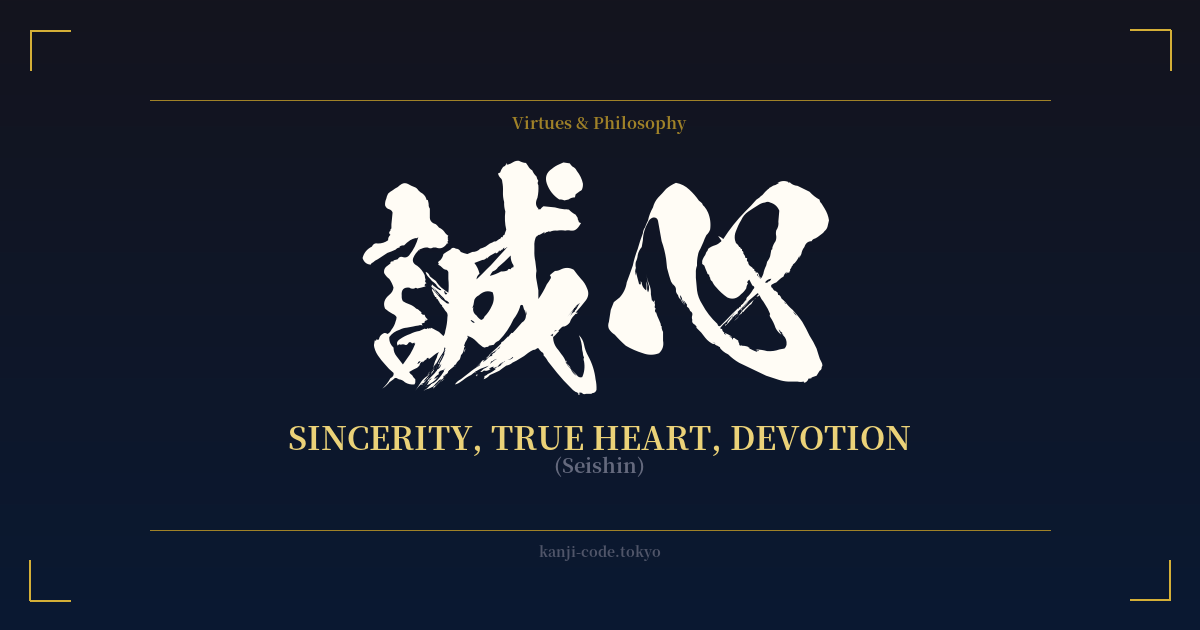
✍️ 誠心 (Seishin) — Cultural Context
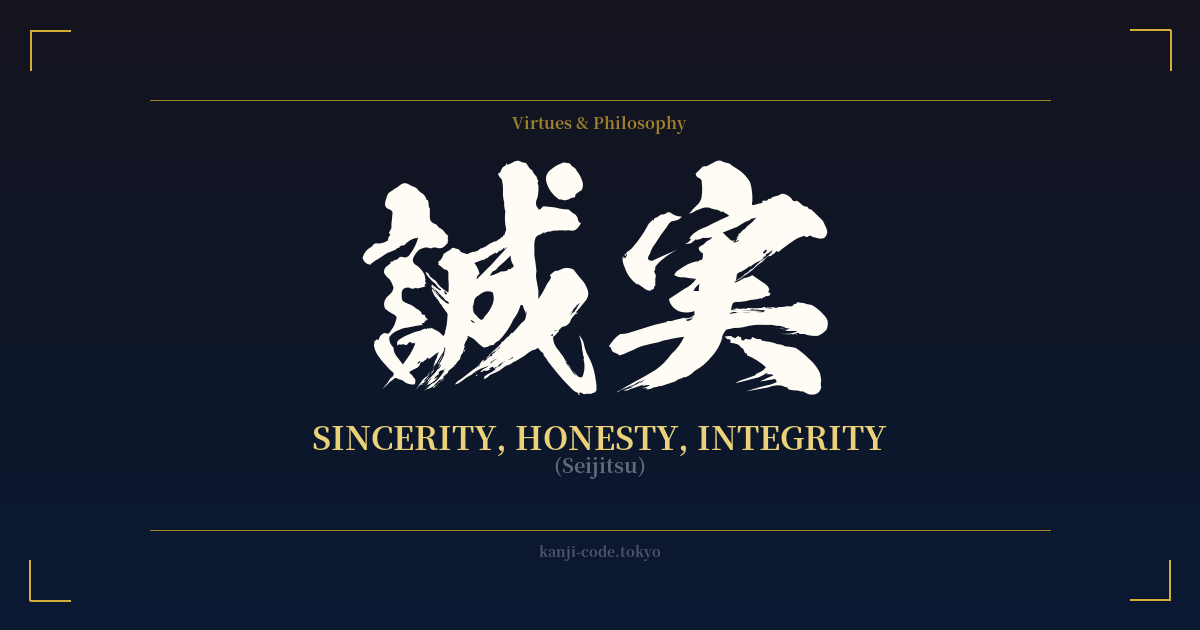
誠心 (Seishin) is a Japanese word that goes far beyond a simple translation of 'sincerity'. It is a compound of 誠 (makoto/sei), meaning sincerity or truth, and 心 (kokoro/shin), meaning heart, mind, and spirit. Together, they create a concept that signifies a 'sincere heart' or 'true mind'—a state of being where one's intentions, words, and actions are all in perfect, honest alignment.
This idea is deeply woven into the fabric of Japanese culture and ethics. It is a cornerstone of Bushido, the code of the samurai, where 誠 (makoto) was considered a vital virtue. A warrior's word was their bond, and this commitment was expected to come from a place of Seishin, a deep, internal wellspring of integrity. It wasn't just about acting honorably; it was about being honorable from the core of one's being.
In a social context, Seishin stands in contrast to the well-known concepts of 'honne' (one's true feelings) and 'tatemae' (the public facade). While Japanese society often requires the use of 'tatemae' to maintain harmony, Seishin represents the ideal of expressing one's true, pure intentions. It's the quality you see in someone who helps without seeking reward, or speaks a difficult truth out of genuine care.
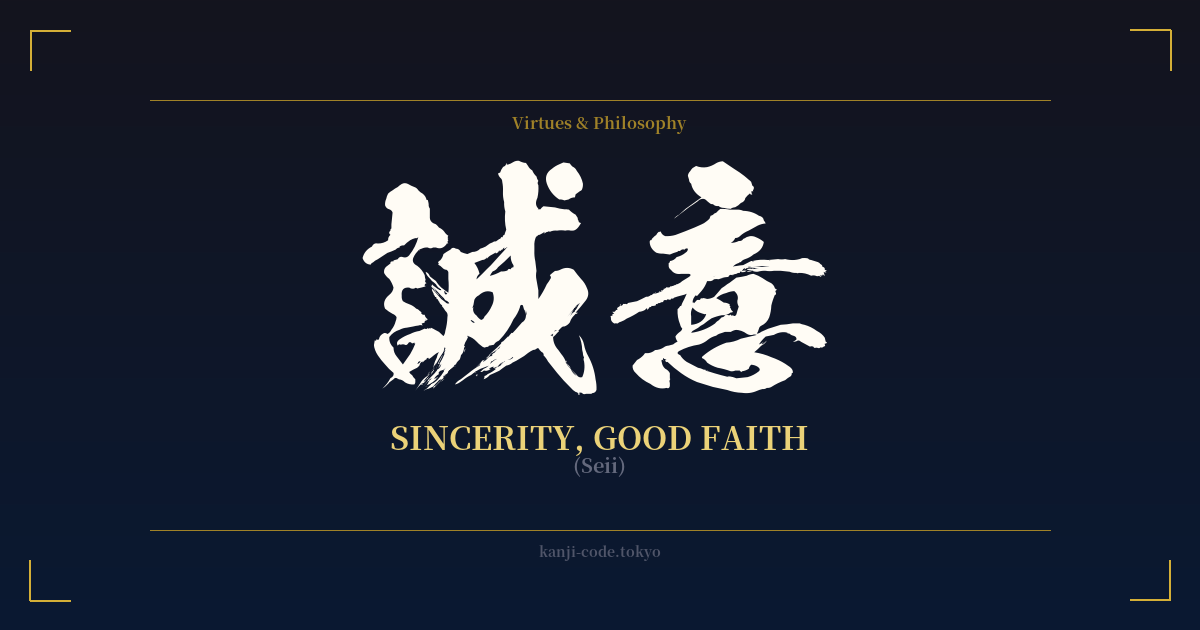
The phrase 誠心誠意 (seishin seii), meaning 'with all one's heart and soul' or 'in all sincerity,' further illustrates its importance. This phrase is often used in formal apologies, business commitments, or personal vows to emphasize absolute genuineness and dedication. It signals that the person is not merely going through the motions but is committing their entire being to the promise or action at hand.
Today, Seishin remains a highly respected personal quality. It is the devotion of an artisan perfecting their craft, the loyalty between true friends, and the underlying principle of trust in relationships. It embodies a quiet strength and an unwavering moral compass, representing a purity of spirit that is admired in all walks of life in Japan. Choosing this word is to align oneself with a powerful and profound ideal of authenticity and devotion.
🖌️ Font Styles for 誠心
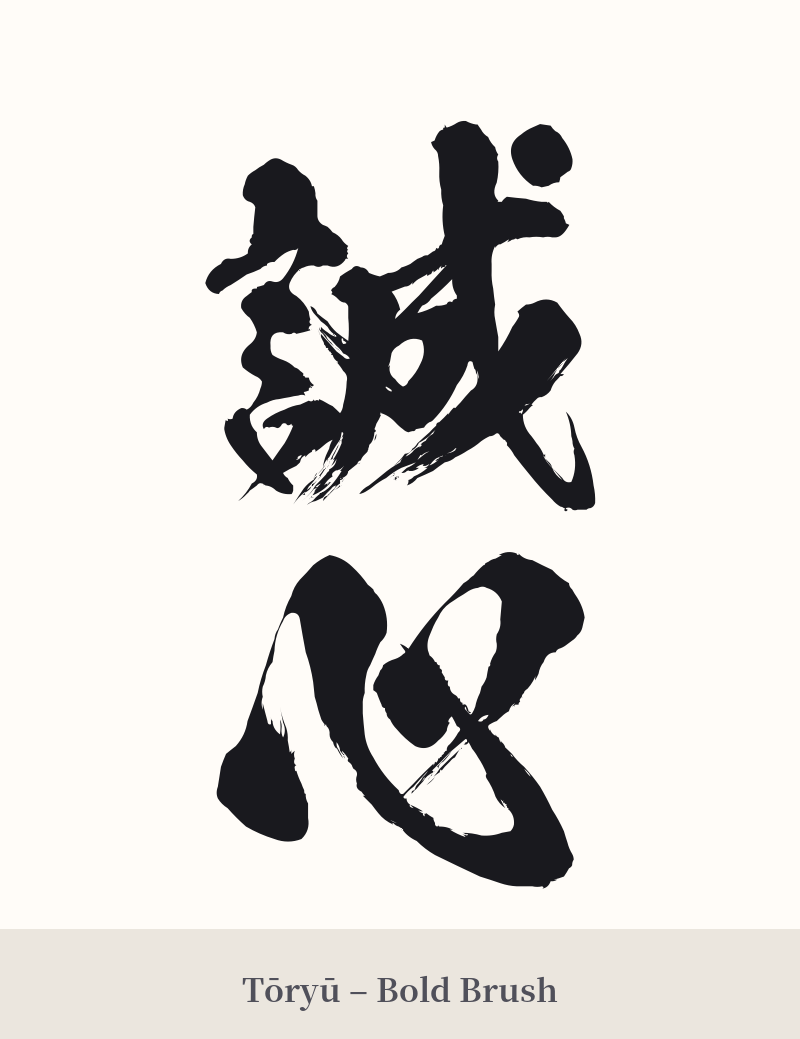
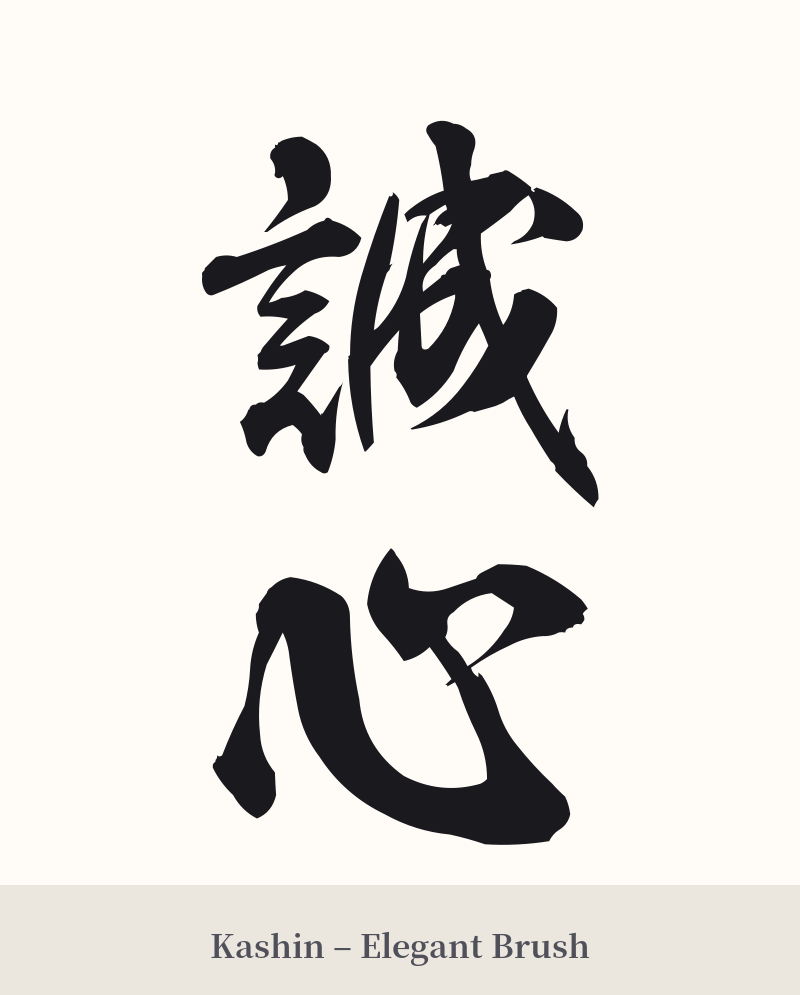
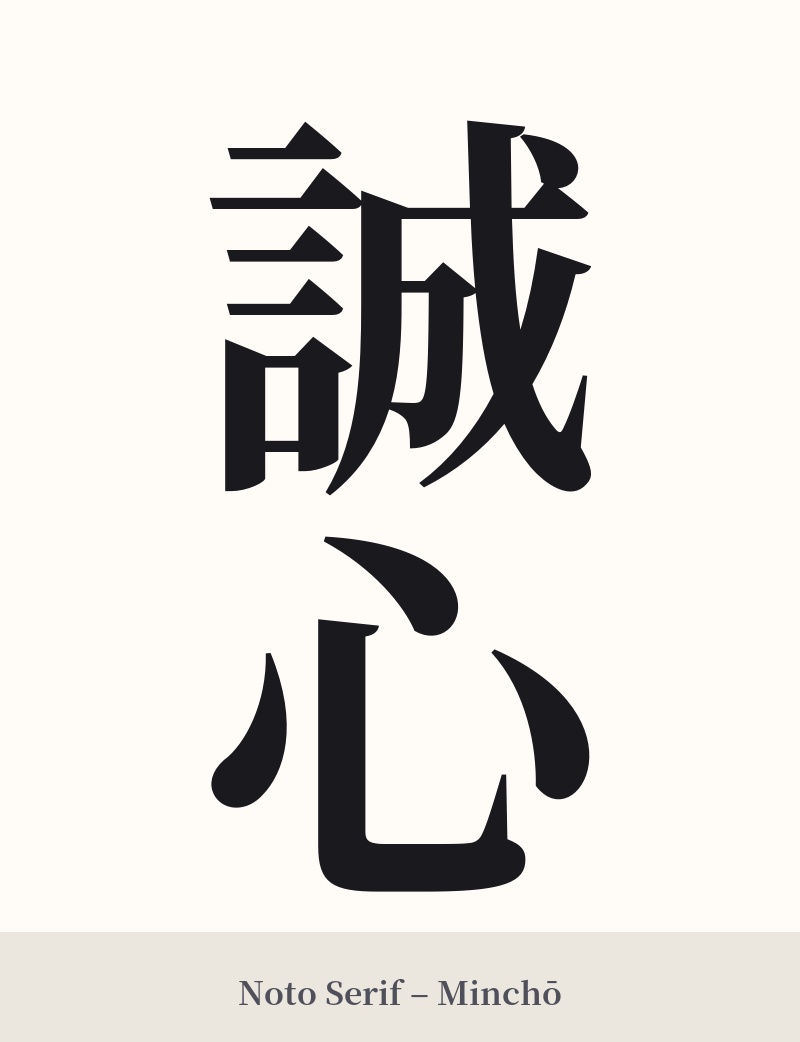
The same kanji can look dramatically different depending on the calligraphy style. Choose a font that matches the mood you want for your tattoo or design.
🎨 Tattoo Suitability
📐 Tattoo Design Guide
A 誠心 tattoo speaks of inner virtue and commitment, and its design should reflect that. A vertical orientation is traditional for Japanese script and works beautifully on the forearm, calf, or along the spine, creating an elegant flow.
For font styles, consider these options: – Kaisho (block script): This style offers clarity, strength, and a sense of formality. It emphasizes the structure of each character and conveys a feeling of unwavering principle. – Gyosho (semi-cursive script): For a more personal and fluid look, Gyosho adds a touch of artistry and movement. It suggests that this sincerity is a living, breathing part of you, not just a rigid rule. – Shodo (calligraphy): A custom piece by a shodo artist can capture the energy and emotion of the word, making the tattoo truly unique. The interplay between the more complex 誠 and the simpler 心 offers a great opportunity for artistic expression.
Placement along the inner bicep or over the heart can be a powerful symbolic choice, keeping this personal value close to you. Ensure the artist is skilled with kanji, as the balance and stroke order are crucial to the word's integrity and aesthetic.
Comments