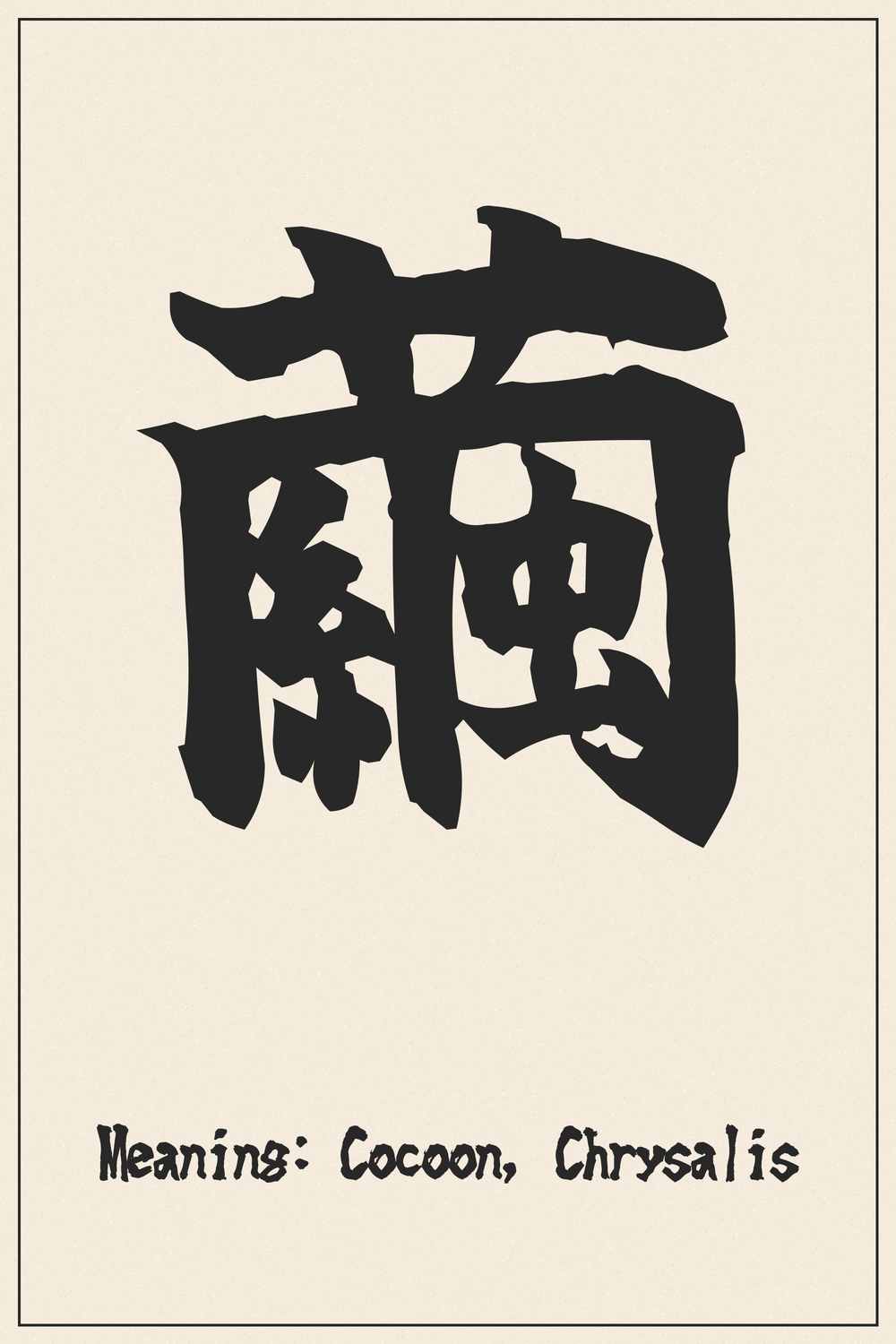
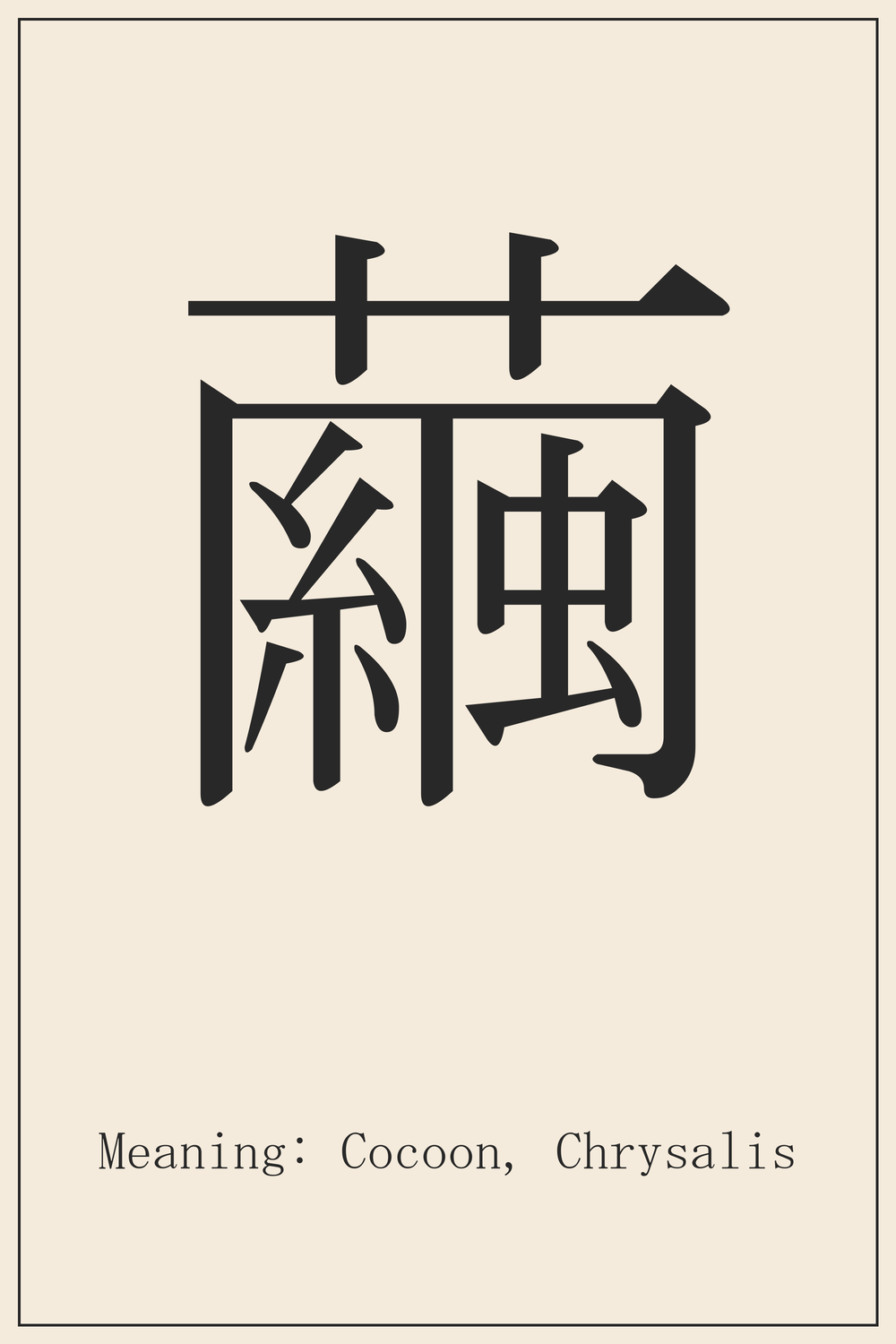
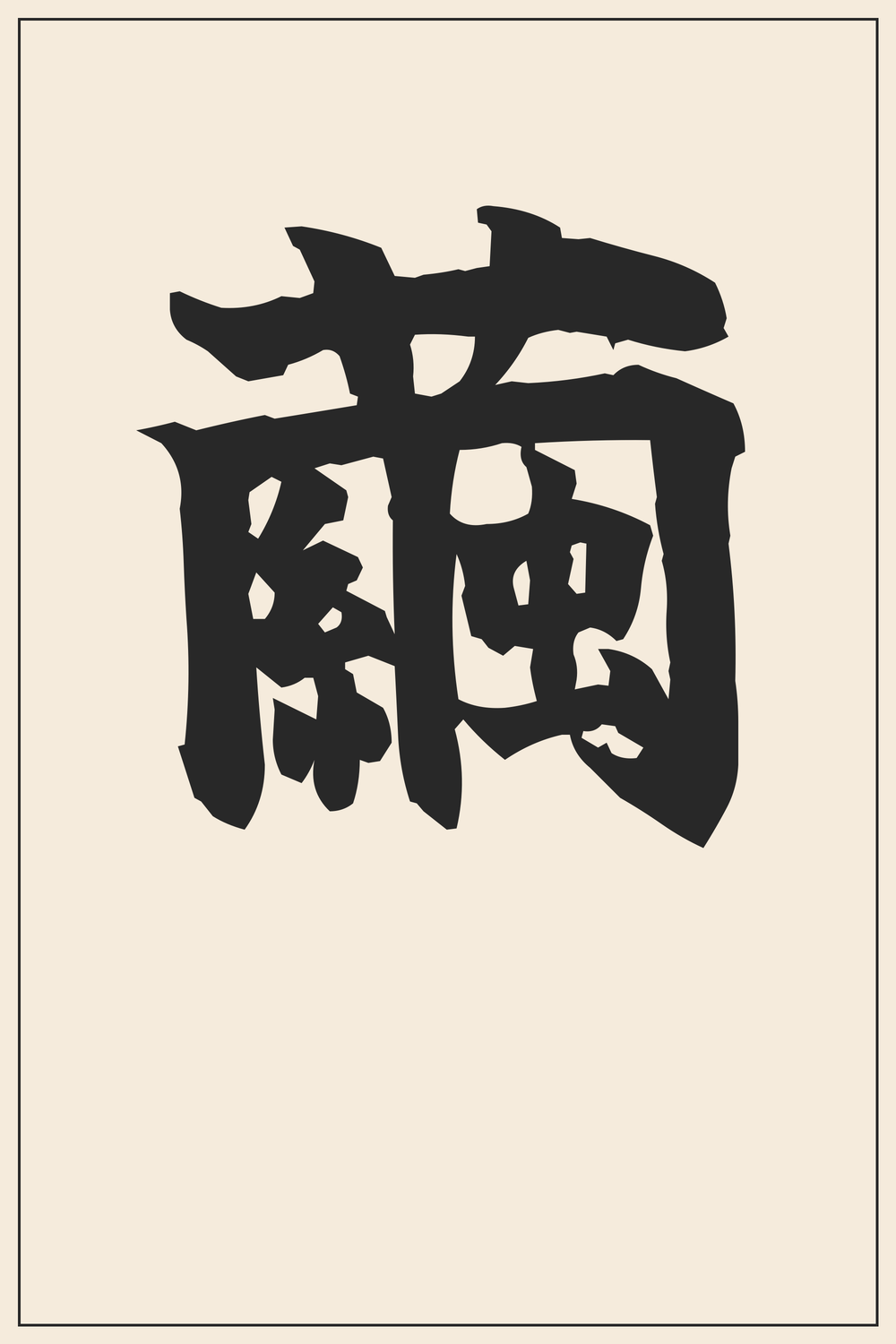
The Kanji 繭 (Mayu) encapsulates the profound symbolism of transformation, protection, and hidden potential. It represents the delicate casing that cradles life through its most significant metamorphosis.
The atmosphere of a Kanji character changes dramatically depending on the font style. A character that looks elegant in a brush style might look bold and modern in a different font.
Recommendation:
Since a tattoo is permanent, we strongly recommend comparing various font styles beyond what is shown here. Use our designs as a trusted reference for the correct structure, but feel free to explore different artistic variations to find the perfect match for your vision.
The Deep Meaning Behind 繭
The Kanji 繭 (Mayu) visually represents a cocoon, a silken case woven by an insect. Its etymological roots combine elements signifying ‘thread’ and ‘insect,’ vividly illustrating its origin and purpose.
Culturally, the cocoon is a powerful metaphor for development, protection, and the journey toward rebirth. It symbolizes a period of quiet growth and transformation, often associated with inner strength and the emergence of a new self.
Kanji Breakdown
The character 繭 is composed of semantic components that clearly indicate its meaning:
Thread/Silk: This radical (ito) directly points to the material from which a cocoon is spun, highlighting its delicate yet resilient nature.
Insect: This radical (mushi) clearly identifies the biological origin of the cocoon, linking it to the animal kingdom and life cycles.
Conclusion
The Kanji 繭 represents not just a physical object, but a powerful emblem of personal growth, resilience, and the quiet journey towards an ultimate unveiling. It signifies a period of introspection and preparation before a magnificent transformation.
Choosing 繭 for a tattoo is a beautiful way to symbolize personal evolution, new beginnings, or a protective phase in life. Its elegant form and deep meaning resonate profoundly with anyone embarking on a path of change.
Comments