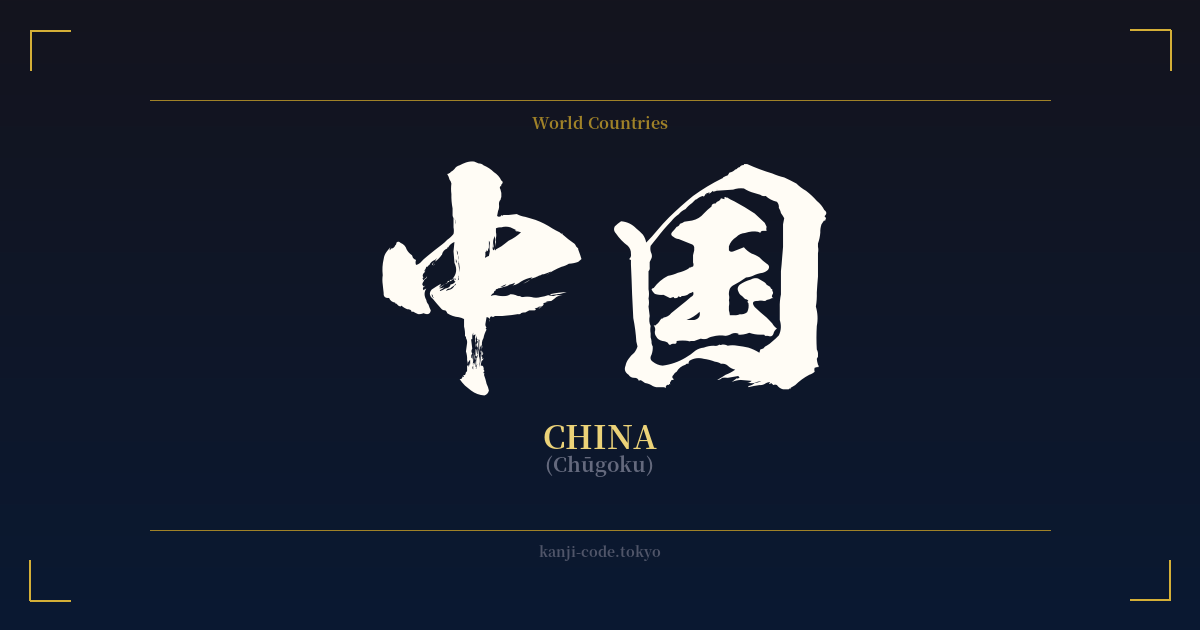
✍️ 中国 (Chūgoku) — Cultural Context
The term 中国 (Chūgoku) is the Japanese word for China, but its origins reveal a worldview that shaped East Asia for centuries. Literally translated, the characters mean 'Middle Kingdom' or 'Central Nation'. This name stems from the ancient Chinese concept of Sinocentrism, the belief that China was the geographical, cultural, and political center of the world, a divine kingdom surrounded by 'lesser' tributary states and 'barbarian' peoples.
This perspective wasn't just an internal belief; it was the bedrock of international relations in the region for millennia. Emperors of China were seen as the 'Son of Heaven,' ruling over everything 'under heaven.' The name 中国, therefore, is not just a geographical descriptor but a powerful statement of historical identity and perceived cosmic importance.
When Japan adopted the Chinese writing system (kanji), it also imported many of these cultural and political concepts. Over time, as Japan developed its own distinct national identity, its relationship with the 'Middle Kingdom' evolved. Today, Chūgoku is the standard, neutral term used in Japan to refer to the modern nation of China, the People's Republic of China (PRC).
Interestingly, the word 'Chūgoku' has a secondary, purely Japanese meaning. It also refers to the Chūgoku region (中国地方, Chūgoku-chihō), the westernmost part of Japan's main island, Honshu. This region includes prefectures like Hiroshima, Okayama, and Shimane. In conversation and writing, context is everything. Japanese speakers can easily distinguish between the two based on the discussion topic, and in formal writing, the term for the region is often explicitly written as 中国地方 to avoid any ambiguity.
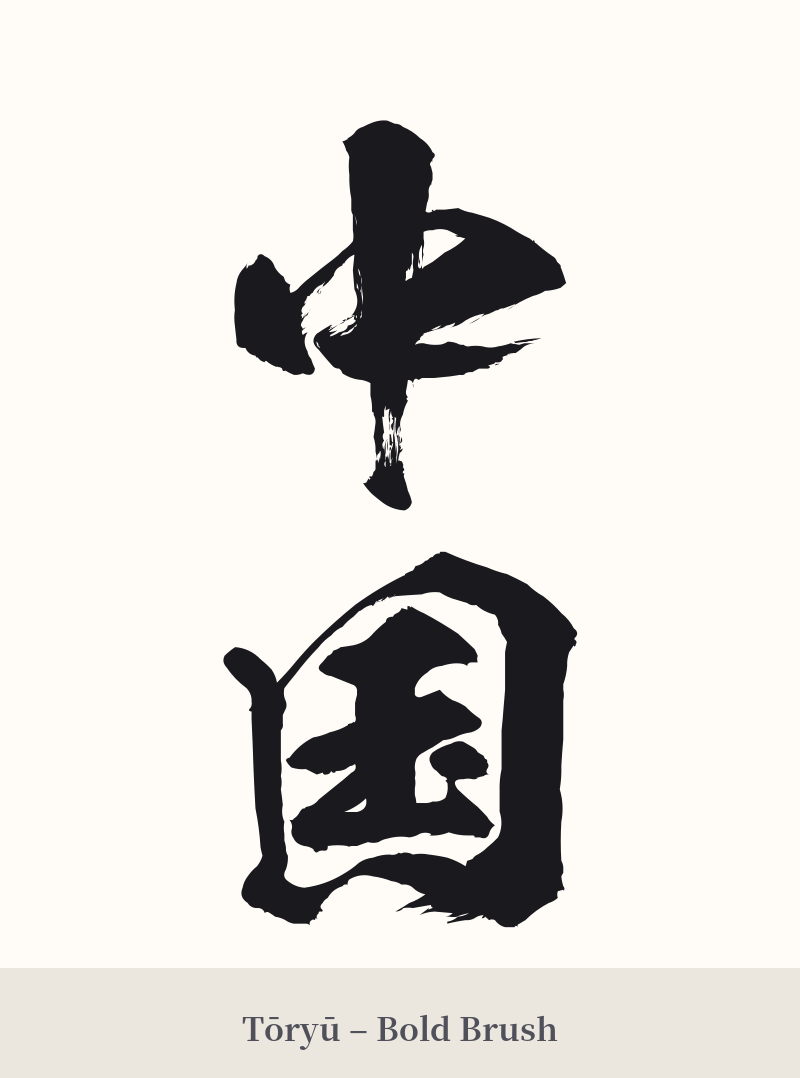
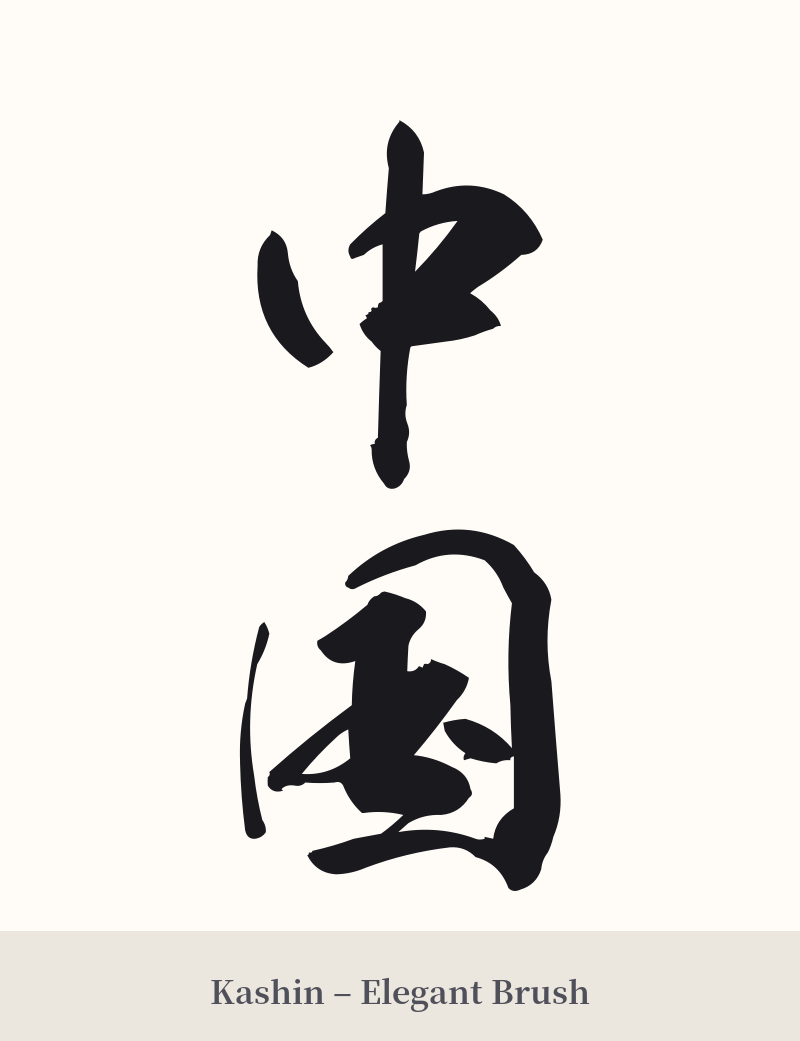
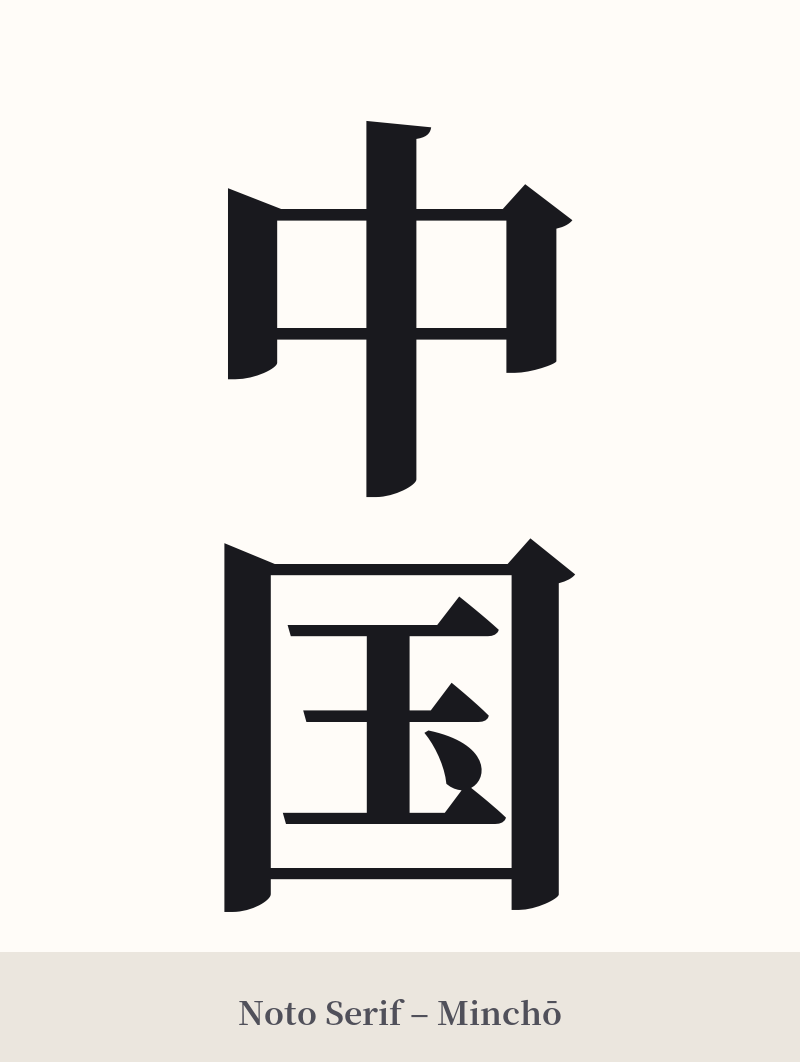
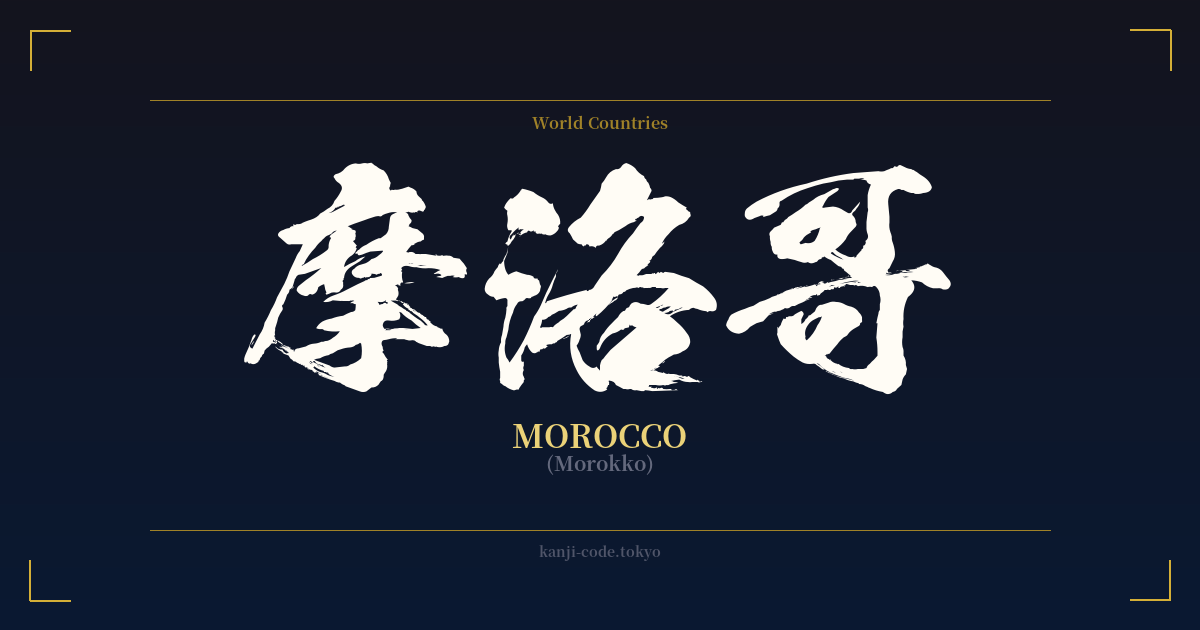
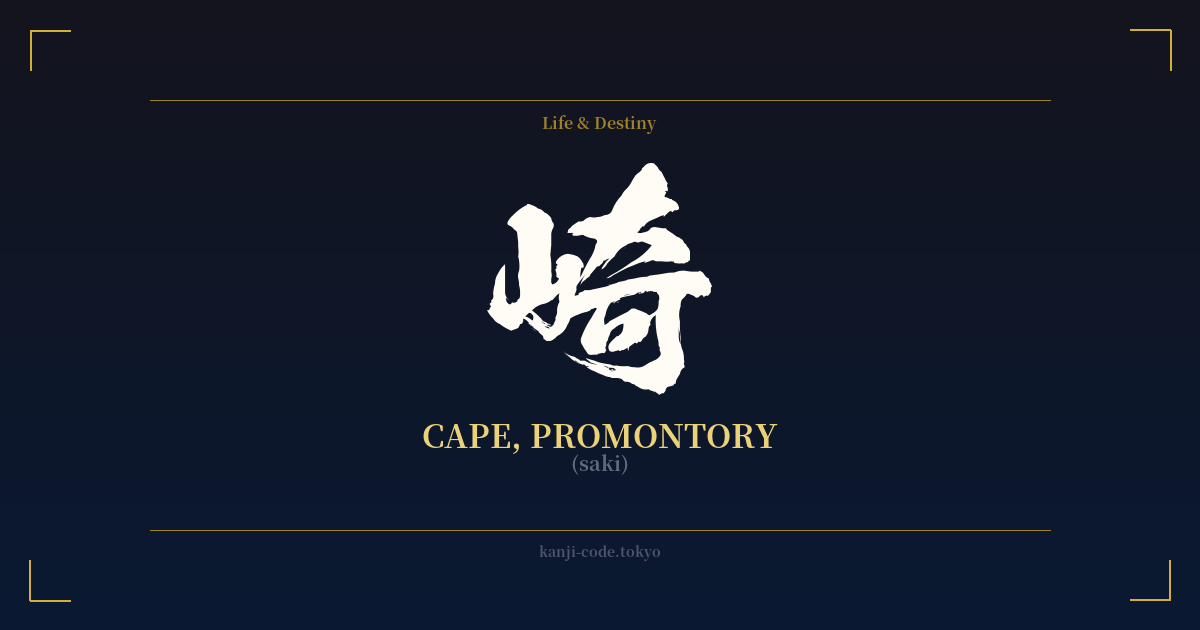
🖌️ Font Styles for 中国
The same kanji can look dramatically different depending on the calligraphy style. Choose a font that matches the mood you want for your tattoo or design.
🎨 Tattoo Suitability
📐 Tattoo Design Guide
The kanji for 中国 (Chūgoku) offers a balanced and straightforward design, whether written horizontally or vertically.
– Placement: A vertical alignment is classic and works well on the forearm, back of the neck, or along the spine. A horizontal alignment fits nicely on the chest, upper back, or above the elbow.
– Font Style: For a historical feel, consider a traditional calligraphy script like Kaisho (block script) for clarity and formality, or Gyosho (semi-cursive) for a more fluid, artistic look. A modern, bold Mincho or Gothic font would give the characters a stark, graphic quality, but may feel less organic.
– Visual Tips: Given the simplicity of the characters, the quality of the linework is paramount. Ensure your artist is skilled in executing kanji. Because this is a country name, adding other common 'oriental' imagery like dragons or cherry blossoms can make the design feel generic or stereotypical. It's often best to let the characters stand on their own.
Comments