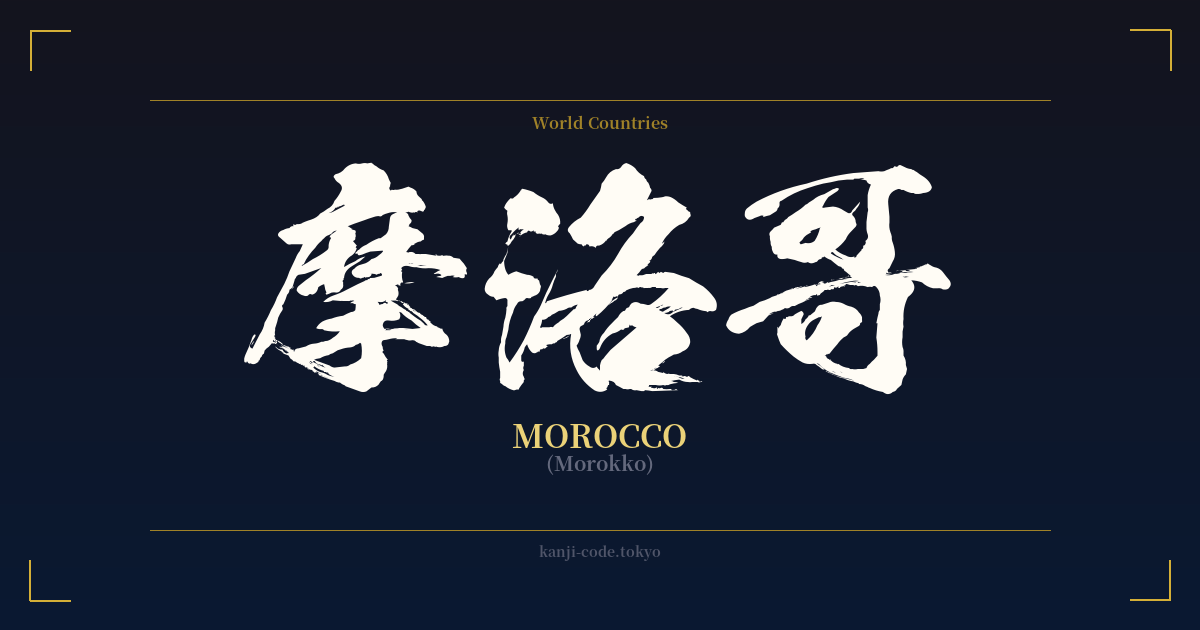
✍️ 摩洛哥 (Morokko) — Cultural Context
The Japanese word 摩洛哥 (Morokko) is a fascinating example of a practice known as 'ateji' (当て字), where kanji characters are used to phonetically represent a foreign word, often with little to no regard for their original meanings. This method was common during the Meiji period (1868-1912) when Japan was rapidly opening up to the world and needed ways to write the names of foreign countries, people, and concepts.
In this case, the characters were chosen solely for their sounds. '摩' provides the 'mo' sound, '洛' the 'ro' sound, and '哥' the 'kko' sound. Together, they form 'Mo-ro-kko', a close approximation of the country's name. The literal meanings—'to rub' or 'chafe' (摩), 'the capital' (洛), and 'big brother' (哥)—are completely ignored. To a Japanese reader, this combination doesn't mean 'a rubbing capital's big brother'; it simply and unambiguously means 'Morocco'.
Today, the use of ateji for country names is considered somewhat formal or even archaic. The modern, standard way to write 'Morocco' in Japanese is with katakana, the script specifically designed for foreign words: モロッコ (Morokko). You will see モロッコ used in news articles, on websites, and in everyday conversation. The kanji form 摩洛哥 is more likely to appear in formal documents, historical texts, or as a stylistic choice to evoke a sense of classicism or officialdom.
This distinction is crucial for anyone considering this word for a design. While the characters themselves are legitimate and part of Japanese history, their use for 'Morocco' represents a specific linguistic tool from a specific era. It’s not a word that carries deep philosophical meaning; it is a clever phonetic puzzle, a relic of a time before katakana became the universal standard for loanwords. It’s a testament to the flexibility of the Japanese writing system, but it is, at its core, a proper noun.
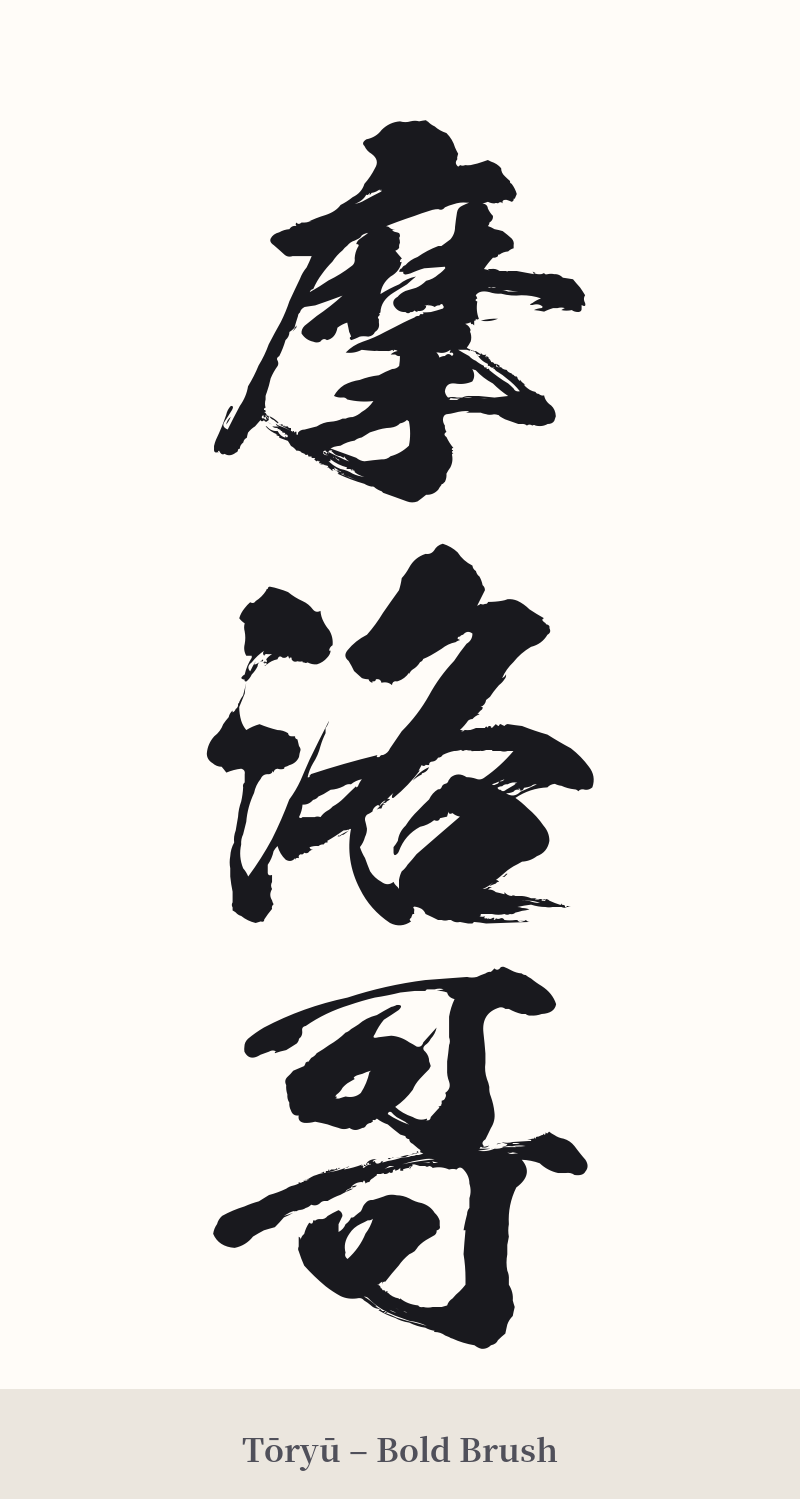
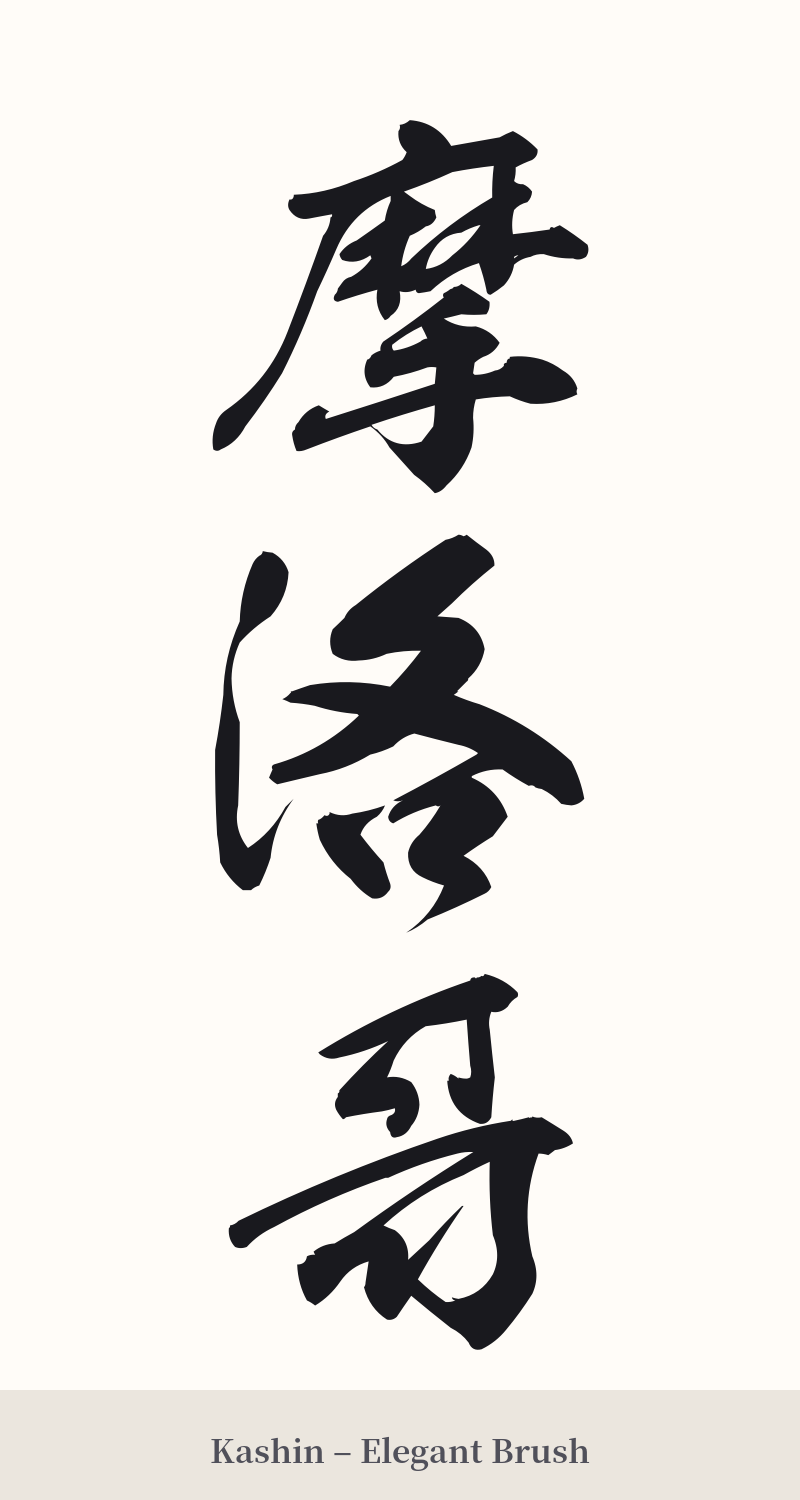
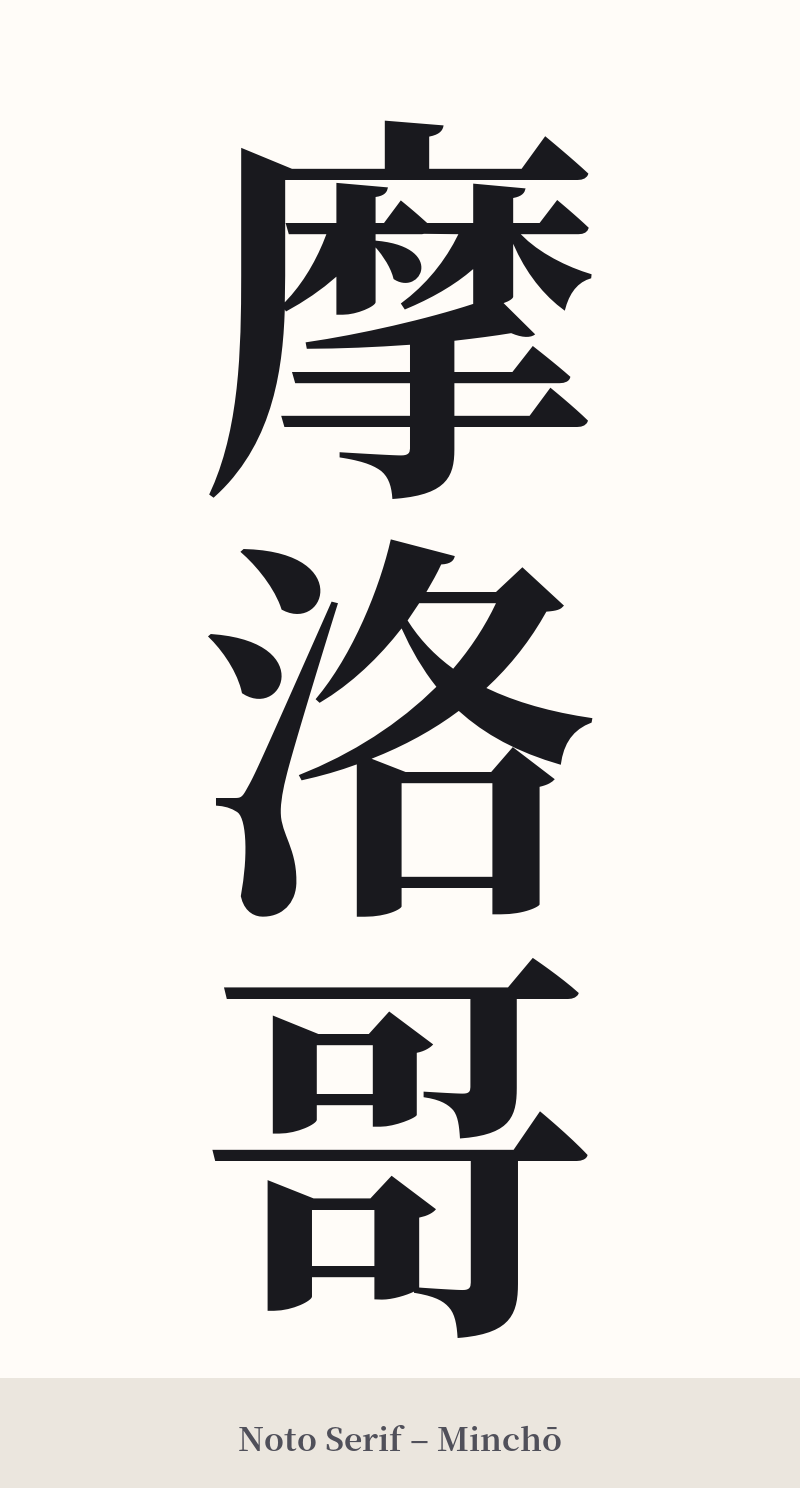
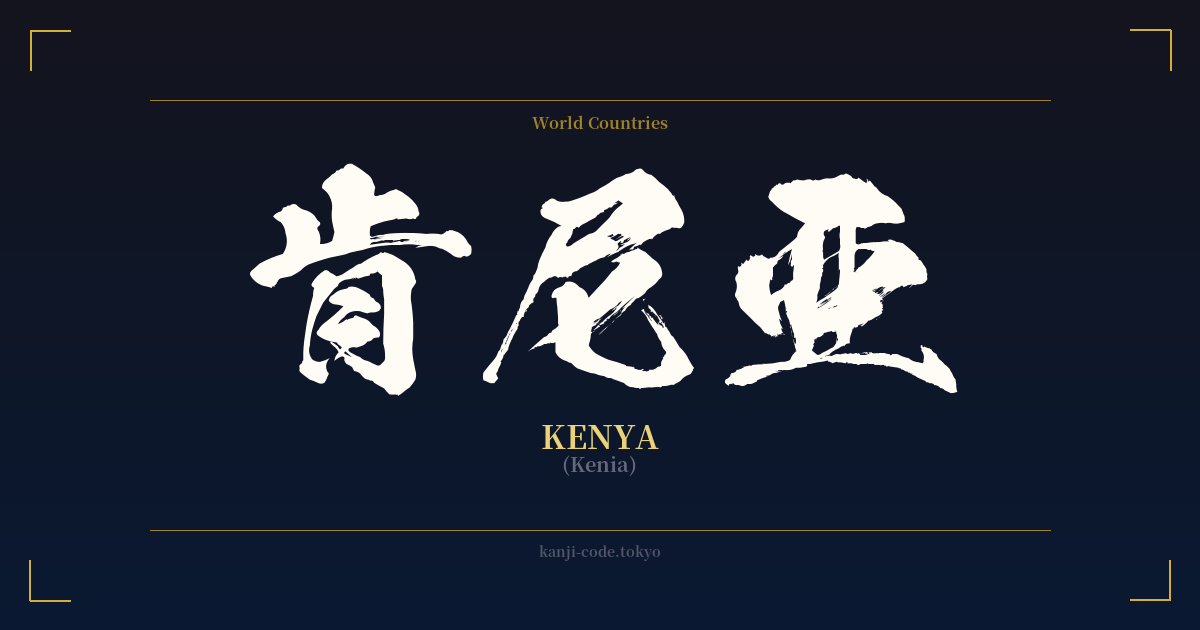
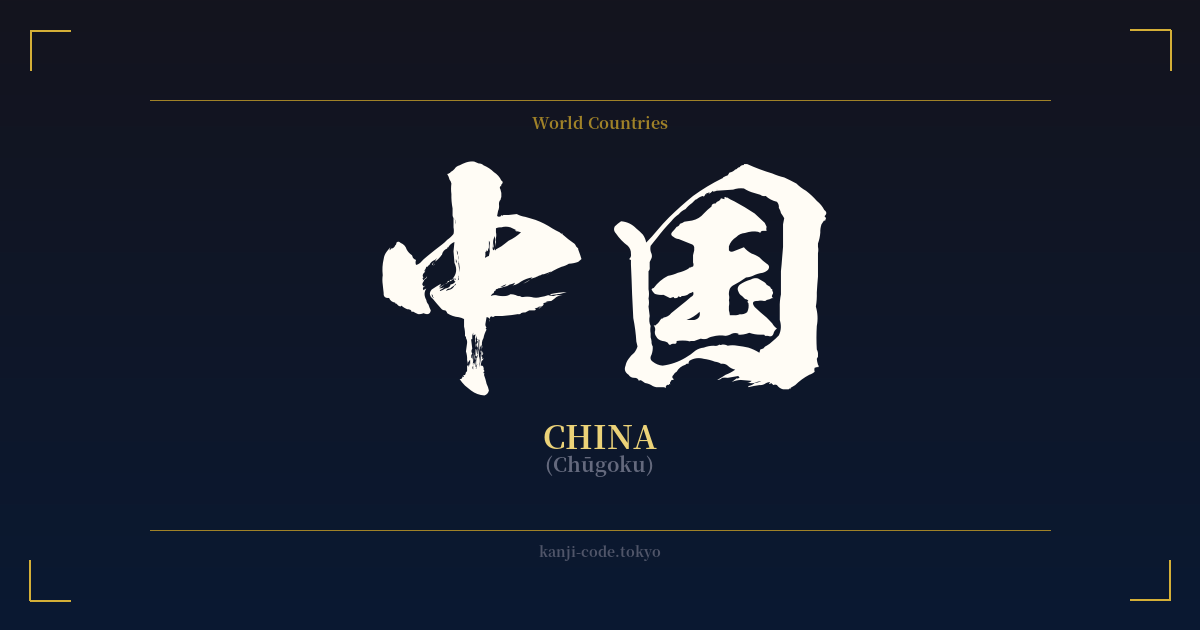
🖌️ Font Styles for 摩洛哥
The same kanji can look dramatically different depending on the calligraphy style. Choose a font that matches the mood you want for your tattoo or design.
🎨 Tattoo Suitability
📐 Tattoo Design Guide
When designing a tattoo for 摩洛哥, the three-character structure offers good visual balance, especially in a vertical orientation.
– Placement: A vertical arrangement is classic for multi-kanji words. It works well along the forearm, the calf, or down the spine. For a horizontal design, the upper back or chest would provide a suitable canvas.
– Font Style: Due to the high stroke count of the first character (摩), a clear, legible font is important. A bold 'kaisho' (block script) would look strong and defined. For a more fluid look, a semi-cursive 'gyosho' (running script) can connect the characters dynamically, but be careful not to let the strokes in '摩' become a blur.
– Visual Tips: This is not a design to be tattooed small. The complexity requires a certain size to remain legible and avoid looking like an ink blot over time. Consider it as a standalone piece, as its meaning is very specific and may not blend well with other symbolic imagery unless the theme is travel or geography.
Comments