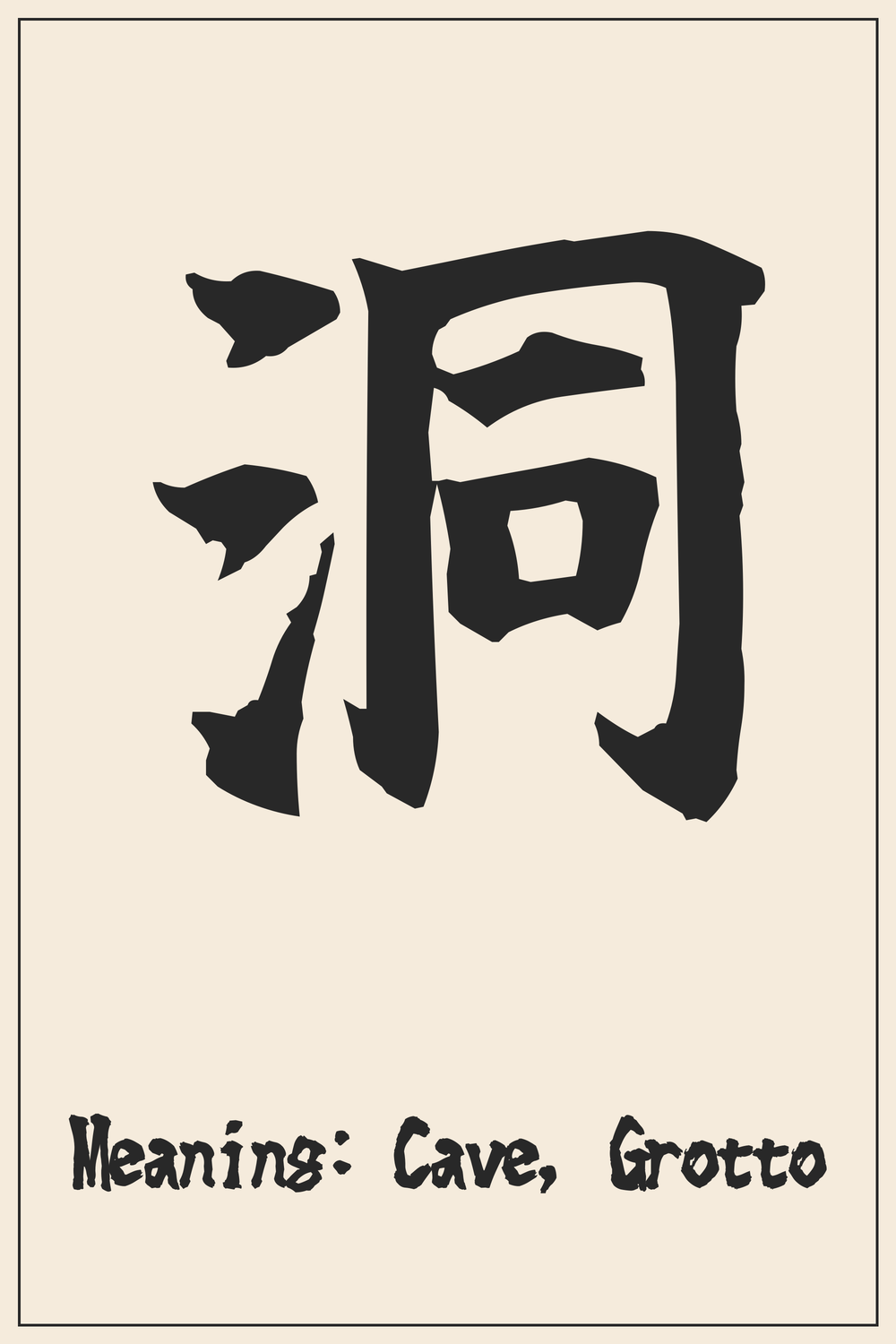
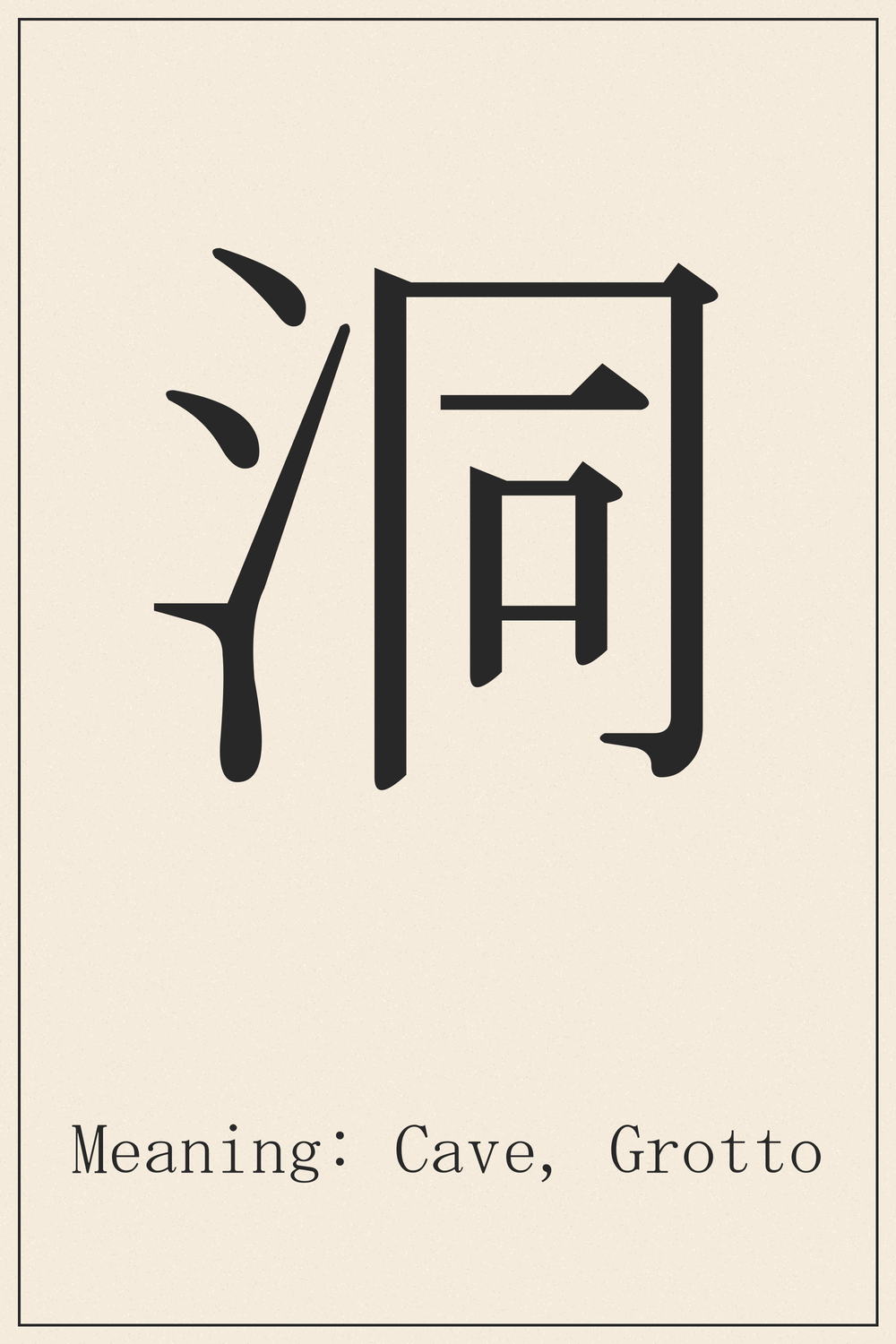
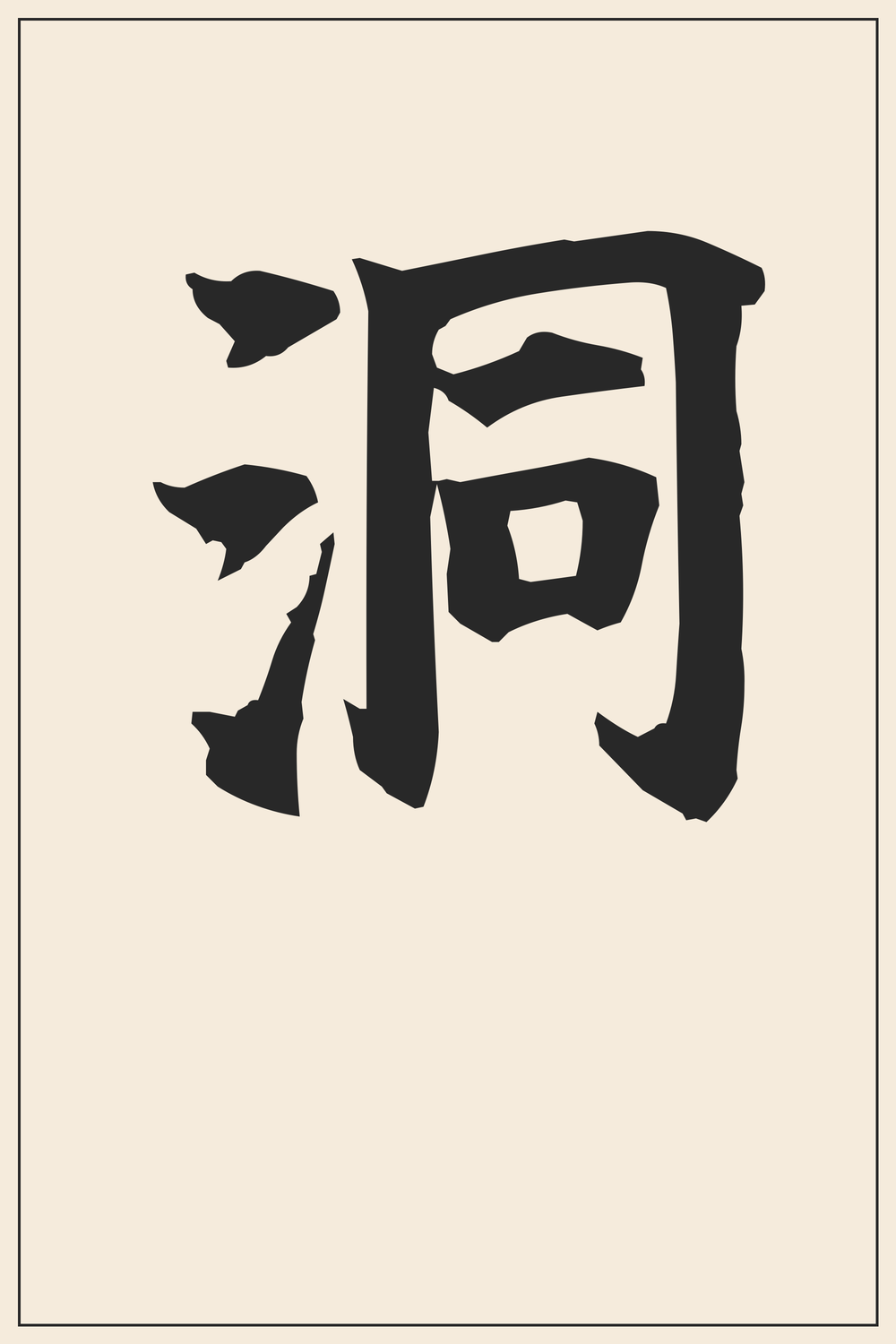
The Kanji 洞 evokes images of hidden depths and natural wonders, representing caves and grottoes. It carries a sense of mystery and the profound silence of enclosed natural spaces.
The atmosphere of a Kanji character changes dramatically depending on the font style. A character that looks elegant in a brush style might look bold and modern in a different font.
Recommendation:
Since a tattoo is permanent, we strongly recommend comparing various font styles beyond what is shown here. Use our designs as a trusted reference for the correct structure, but feel free to explore different artistic variations to find the perfect match for your vision.
The Deep Meaning Behind 洞
The Kanji 洞 (dō, hora) vividly captures the essence of a cave or grotto. Its etymology combines the radical 氵 (sui), meaning ‘water,’ and the component 同 (dō), which signifies ‘same’ or ‘uniform,’ often implying an enclosed or hollow space. This combination suggests how water shapes and hollows out the earth to create uniform, enclosed spaces.
Culturally, caves have held significant roles across various civilizations, often perceived as sacred sites, places of refuge, or gateways to other realms. In Japanese folklore and spirituality, certain caves are associated with deities, ascetic practices, or as the birthplace of natural phenomena, imbuing 洞 with a deeper, mystical resonance.
Kanji Breakdown
The Kanji 洞 is composed of two primary elements that combine to convey its meaning.
Water Radical: This radical, a variant of 水 (water), frequently appears in characters related to liquids, rivers, or phenomena influenced by water. Its presence here highlights the role of water in forming natural cavities and erosive processes that create caves.
Same, Together: This component primarily acts as a phonetic indicator for the ‘dō’ reading. However, it also subtly conveys a semantic element of ‘enclosed’ or ‘uniform,’ suggesting the consistent, often regular, internal space of a cave.
Conclusion
The Kanji 洞 is a powerful symbol of nature’s hidden sanctuaries, embodying mystery, enclosure, and the profound beauty of geological formations. It speaks to the allure of the unknown and the silent strength found within the earth.
For a tattoo, 洞 offers a unique blend of natural imagery and cultural depth. It is an excellent choice for those who feel a connection to the natural world, value introspection, or are drawn to symbols of hidden wisdom and adventure. Its clean lines and evocative meaning make it a truly striking and meaningful piece of body art.
Comments