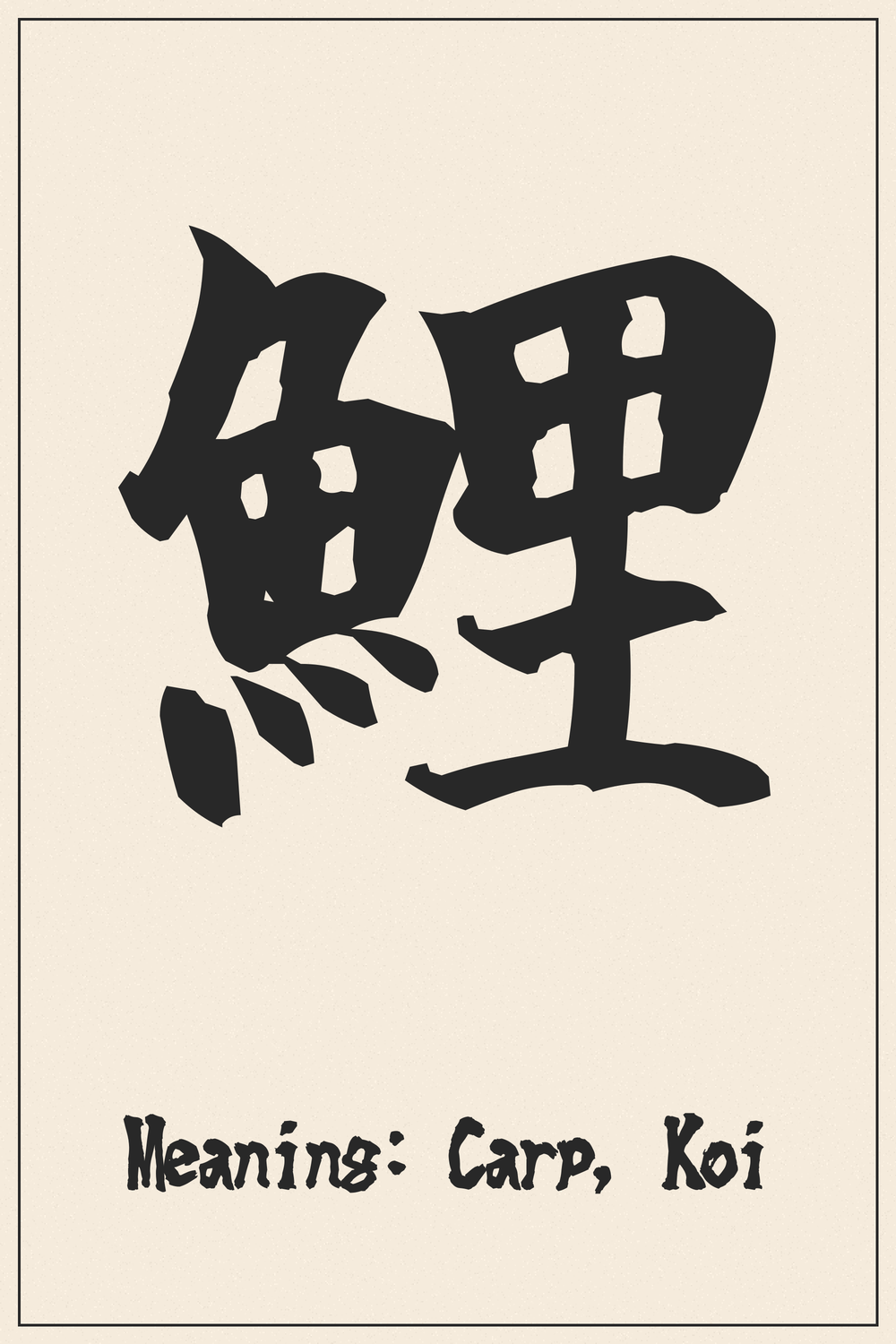
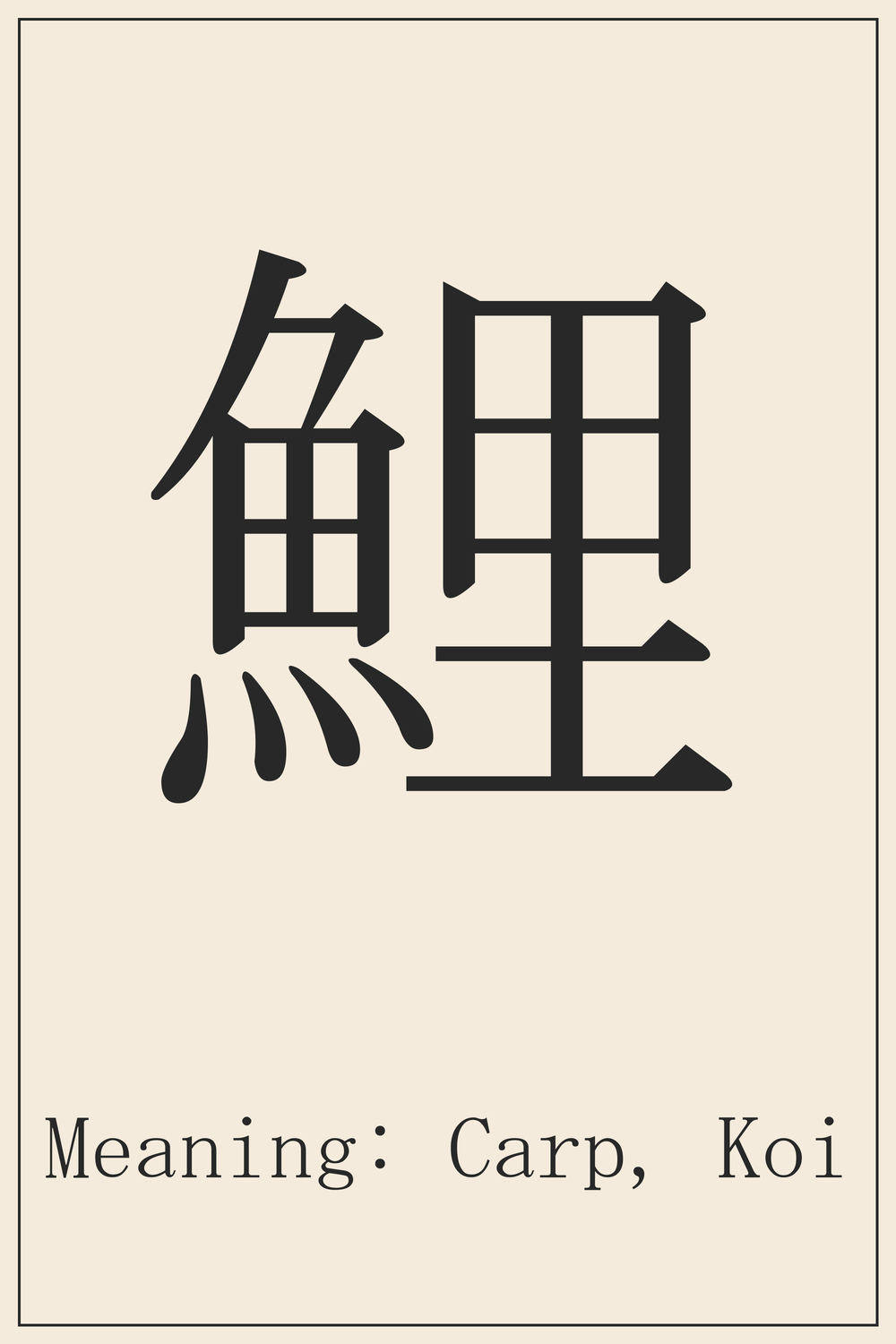
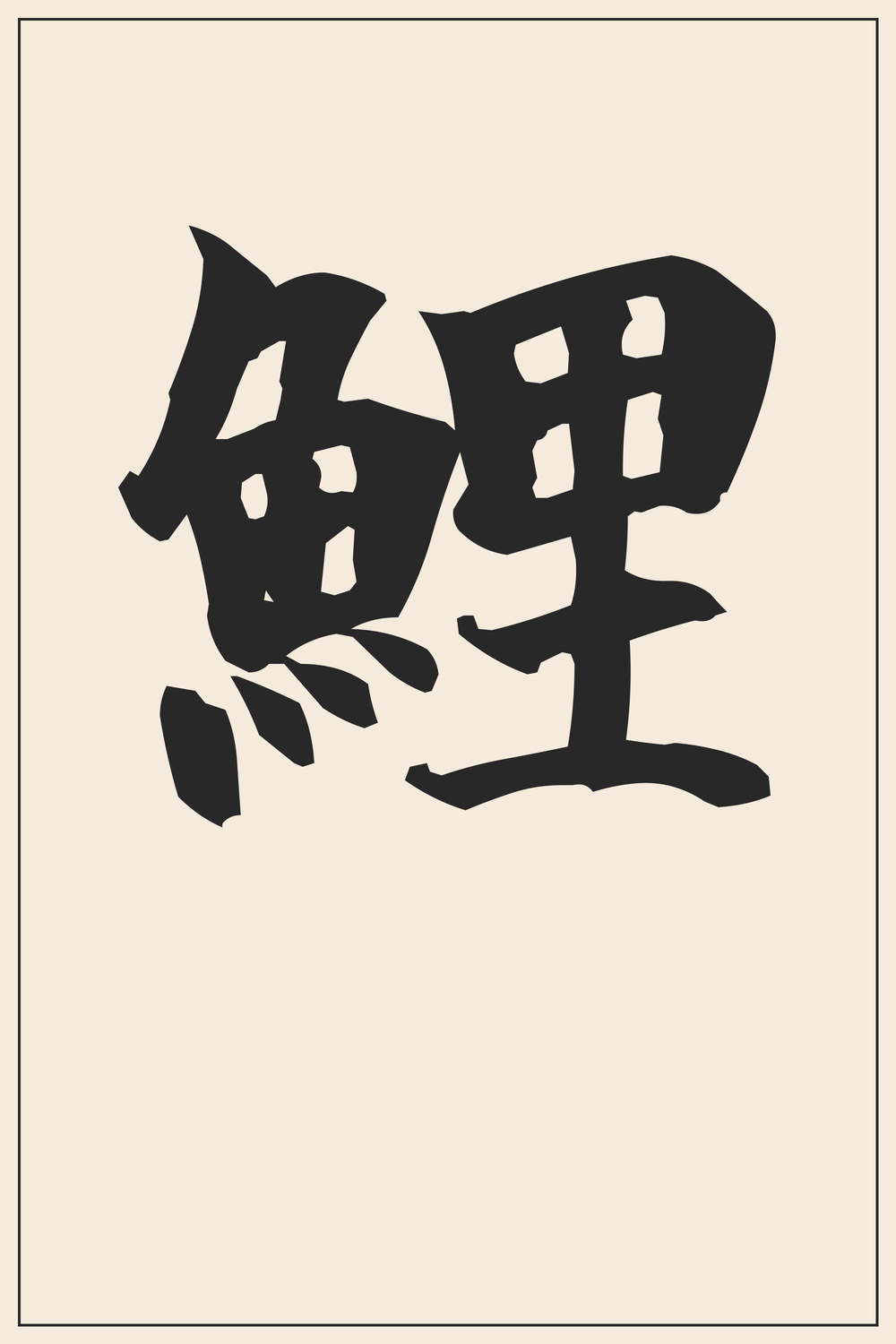
The Kanji 鯉 embodies the vibrant spirit of the carp, a symbol revered for its indomitable will and journey towards greatness. It represents not just a fish, but a powerful narrative of perseverance and transformation.
The atmosphere of a Kanji character changes dramatically depending on the font style. A character that looks elegant in a brush style might look bold and modern in a different font.
Recommendation:
Since a tattoo is permanent, we strongly recommend comparing various font styles beyond what is shown here. Use our designs as a trusted reference for the correct structure, but feel free to explore different artistic variations to find the perfect match for your vision.
The Deep Meaning Behind 鯉
The character 鯉 combines the radical 魚 (uō, fish) with 里 (lǐ, village), which acts as a phonetic component. This combination directly denotes the carp, a fish deeply ingrained in East Asian culture and folklore.
In Japanese culture, the Koi fish is a powerful symbol of perseverance, strength, and ambition. Its most famous legend involves swimming upstream against strong currents and waterfalls to transform into a dragon, signifying success against adversity, determination, and personal growth.
Kanji Breakdown
The Kanji 鯉 is composed of two primary elements that convey its meaning and sound.
Meaning: Fish. This radical clearly indicates that the character 鯉 pertains to a type of aquatic creature, specifically a fish.
Meaning: Village, unit of distance. In 鯉, this component primarily serves as a phonetic element, influencing the ‘ri’ or ‘li’ sound in its ancient readings.
Conclusion
The Kanji 鯉 is more than just a character for ‘carp’; it’s a profound symbol of aspiration, courage, and the relentless pursuit of one’s goals. It speaks to the journey of overcoming obstacles and achieving greatness through unwavering effort.
Choosing 鯉 for a tattoo is a powerful statement, embracing its rich symbolism of strength and perseverance. Ensure a skilled artist and appropriate sizing to honor its intricate strokes and timeless cultural significance.
Comments