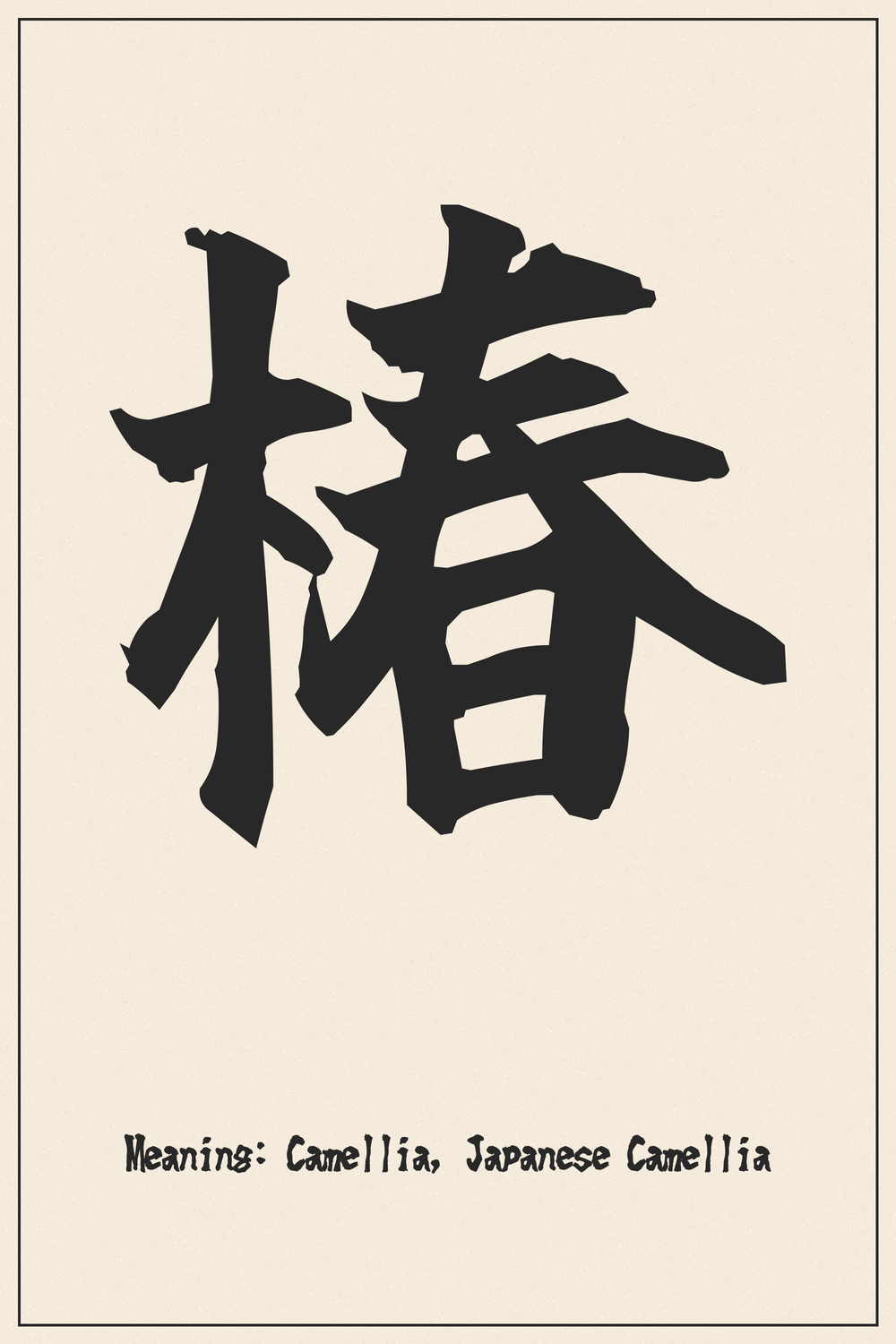
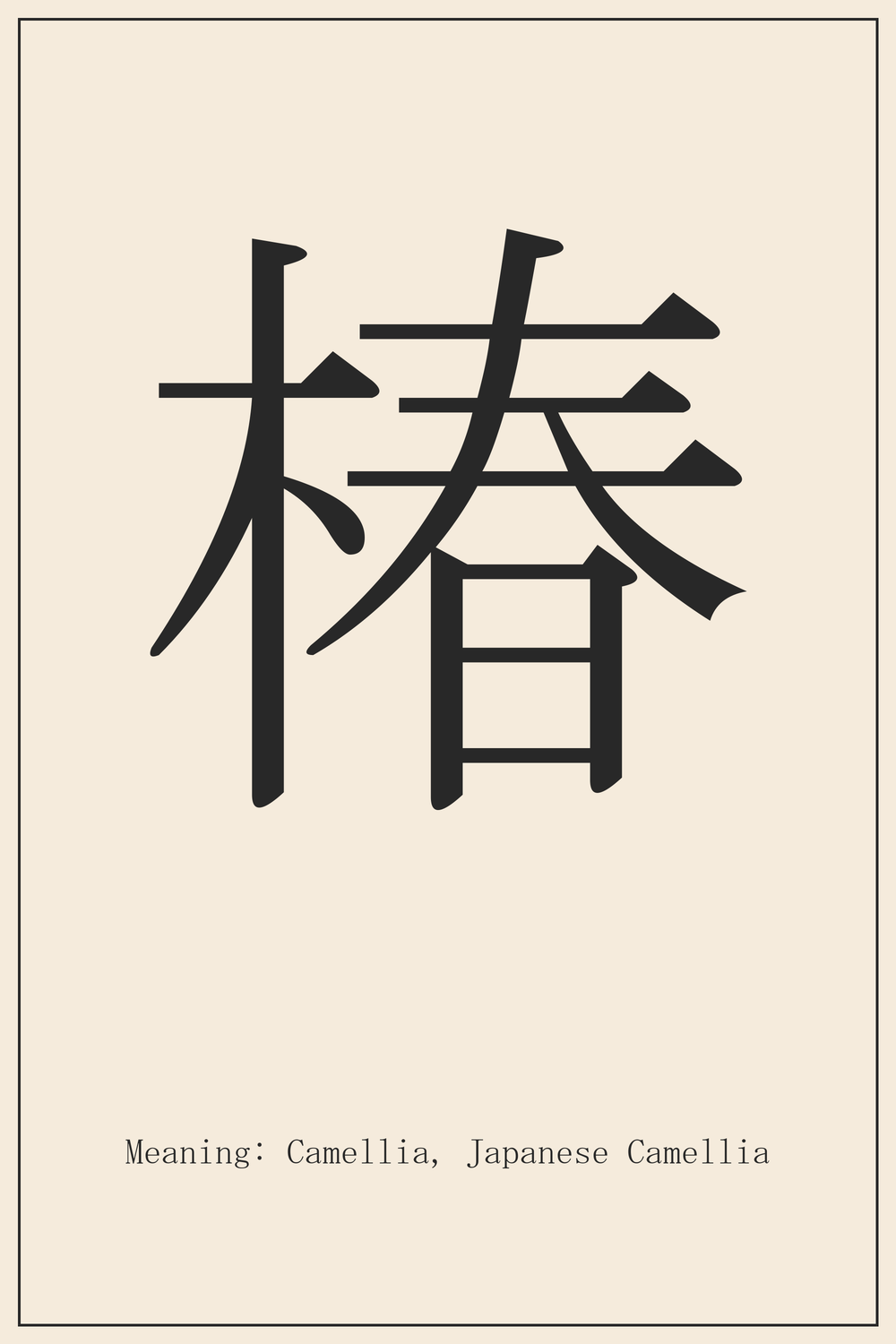
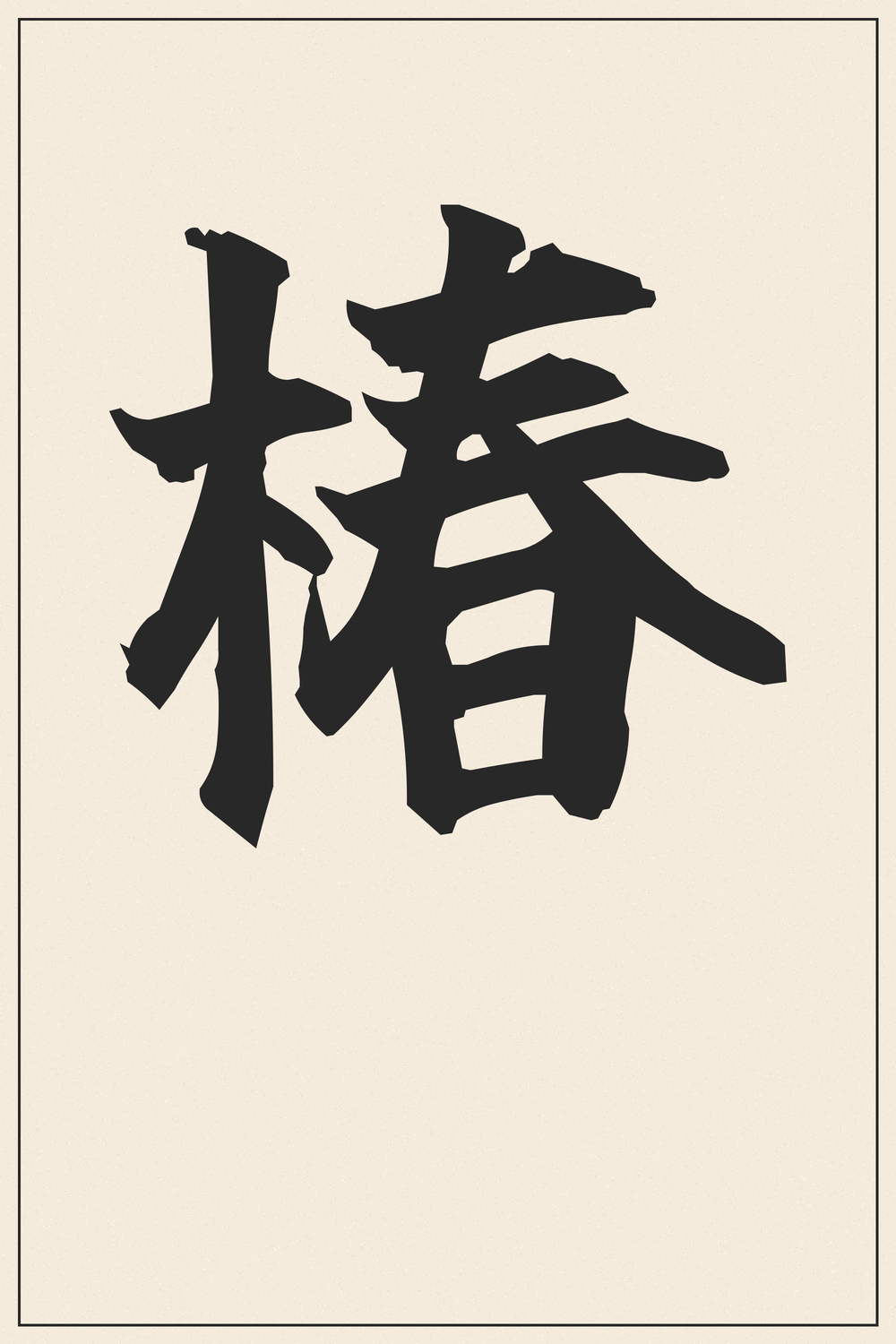
The Kanji 椿, pronounced Tsubaki, embodies the exquisite beauty and enduring spirit of the camellia flower. This symbol transcends mere botanical representation, carrying layers of cultural significance that resonate deeply within Japanese aesthetics.
The atmosphere of a Kanji character changes dramatically depending on the font style. A character that looks elegant in a brush style might look bold and modern in a different font.
Recommendation:
Since a tattoo is permanent, we strongly recommend comparing various font styles beyond what is shown here. Use our designs as a trusted reference for the correct structure, but feel free to explore different artistic variations to find the perfect match for your vision.
The Deep Meaning Behind 椿
The character 椿 combines the radical 木 (ki/moku, meaning “tree” or “wood”) with 春 (haru, meaning “spring”). This etymology beautifully signifies a “tree that blooms in spring,” even though the camellia often begins to bloom in late winter, heralding the coming season.
In Japanese culture, the camellia (Tsubaki) is celebrated for its vibrant flowers that bloom in the colder months, symbolizing perseverance, longevity, and purity. It is often associated with winter elegance and the herald of spring, a poignant reminder of beauty in adversity.
Kanji Breakdown
The Kanji 椿 (Tsubaki) is a fascinating compound, skillfully blending two distinct components to convey its meaning.
Tree/Wood: This radical is fundamental, indicating that the character pertains to plants or trees. It visually grounds the camellia as a botanical entity, emphasizing its natural origin and form.
Spring: This component lends the character its conceptual association with the season of renewal and blooming. It highlights the camellia’s role as an early bloomer and a harbinger of warmer weather, symbolizing hope and new beginnings.
Conclusion
The Kanji 椿 beautifully encapsulates the essence of the Japanese camellia: a flower that defies the cold to bloom with unwavering grace. It symbolizes resilience, enduring beauty, and the promise of renewal, making it a profound emblem in Japanese aesthetics.
Choosing 椿 as a tattoo is an affirmation of these profound qualities. It’s a statement of elegance and strength, a timeless emblem that resonates with both natural beauty and deep cultural significance, perfect for those who appreciate understated power.
Comments