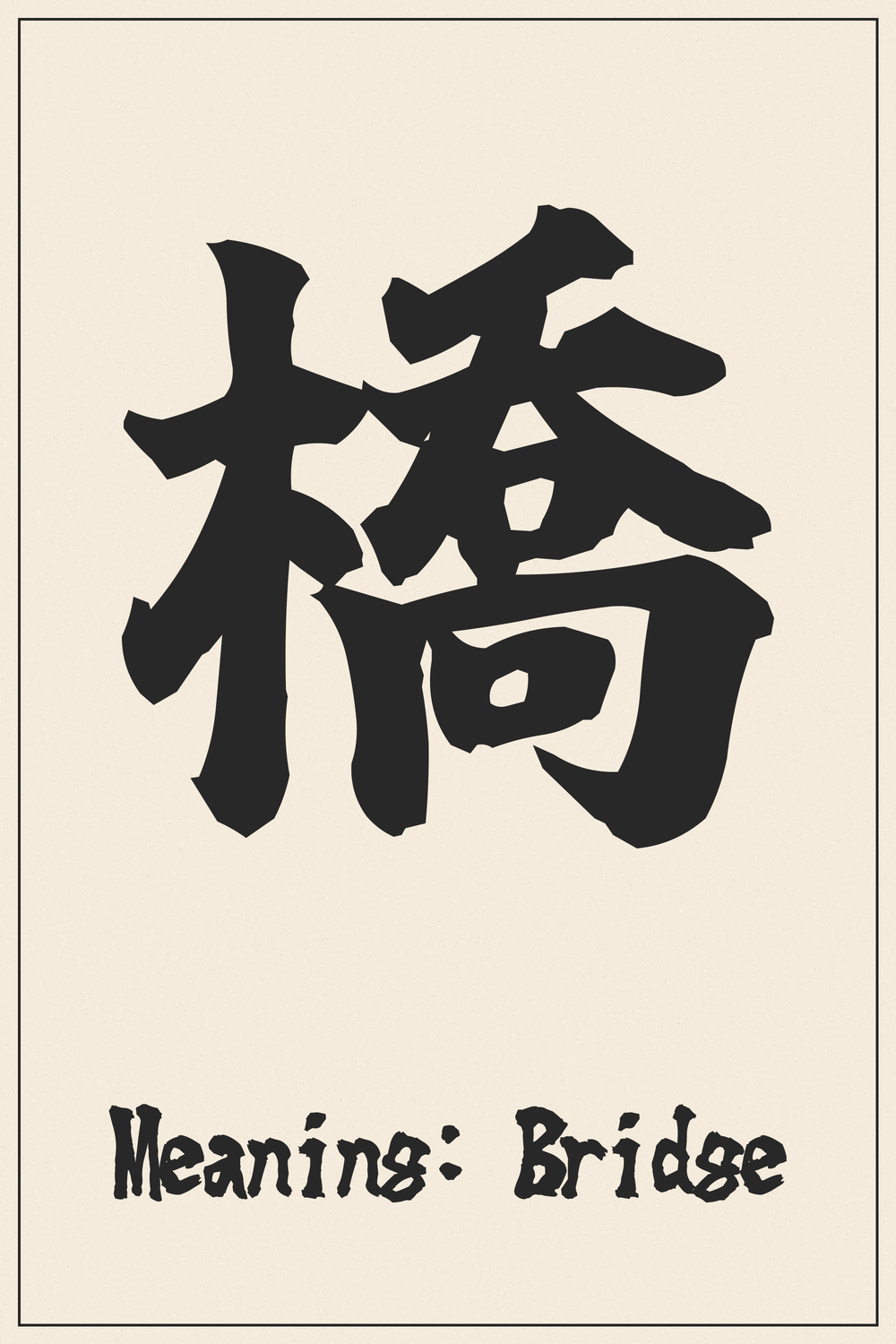
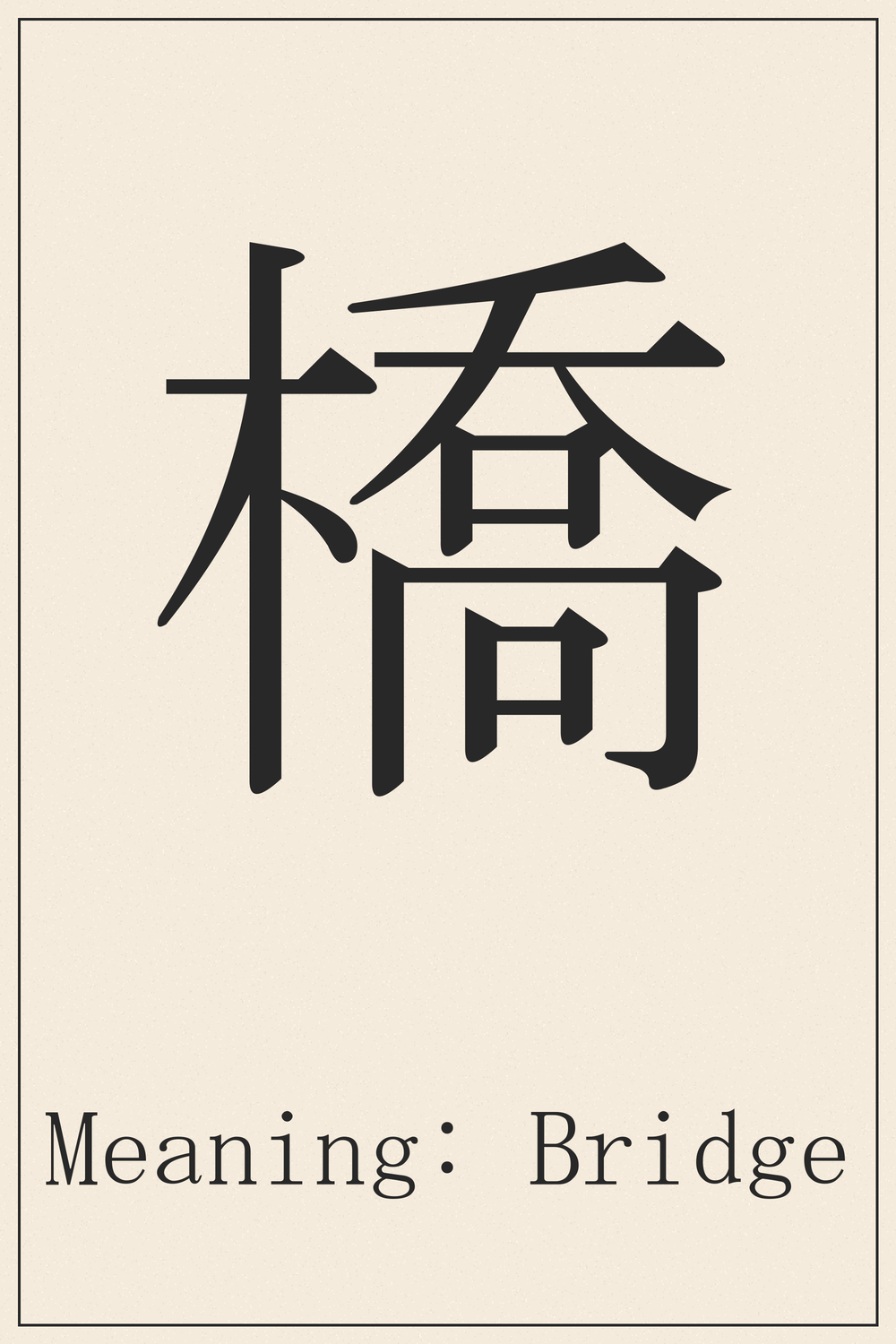
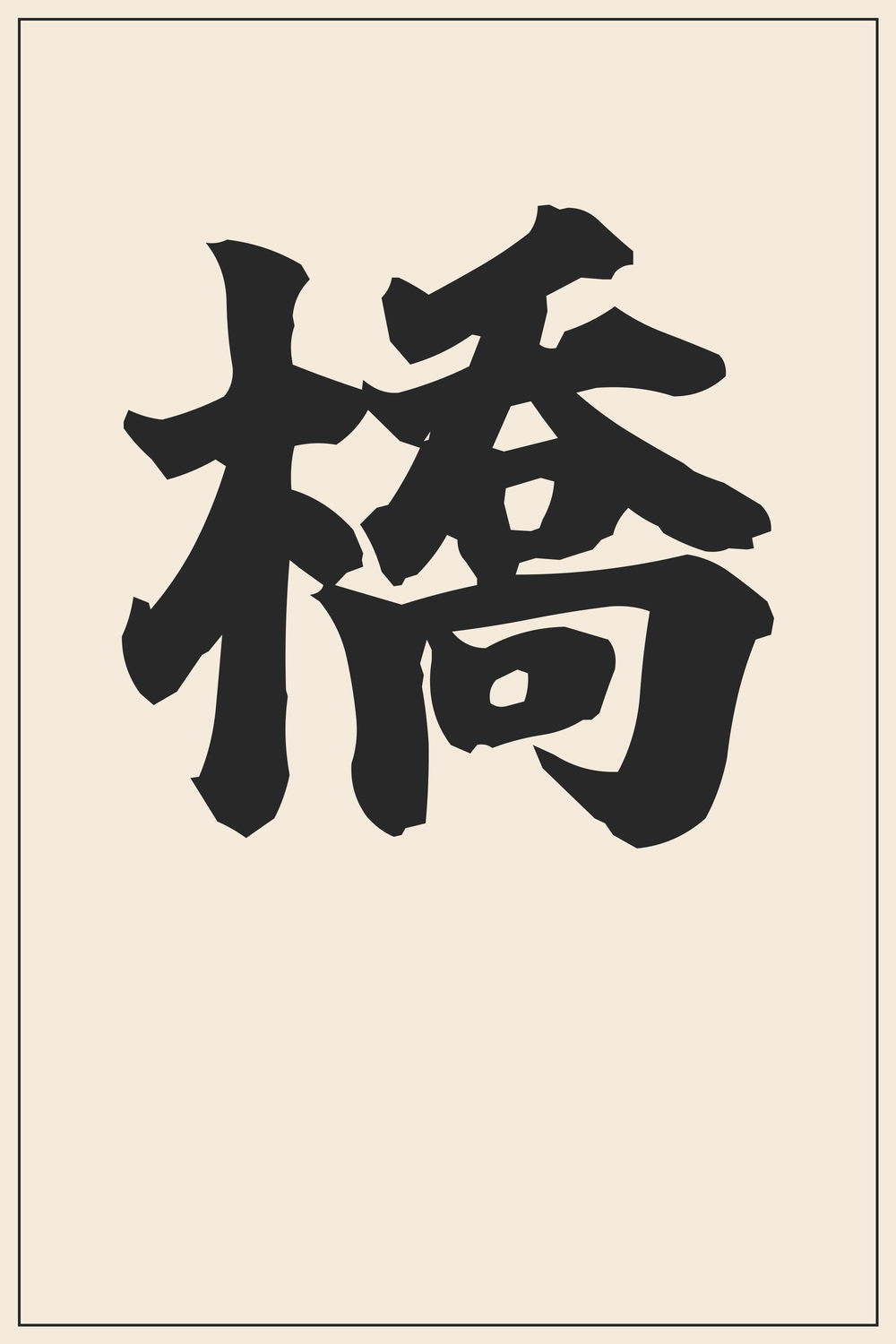
The Kanji 橋 (Hashi) beautifully encapsulates the essence of connection and passage. It stands as a symbol of overcoming divides, linking disparate elements, and facilitating journeys.
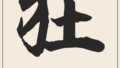
The atmosphere of a Kanji character changes dramatically depending on the font style. A character that looks elegant in a brush style might look bold and modern in a different font.
Recommendation:
Since a tattoo is permanent, we strongly recommend comparing various font styles beyond what is shown here. Use our designs as a trusted reference for the correct structure, but feel free to explore different artistic variations to find the perfect match for your vision.
The Deep Meaning Behind 橋
The character 橋 originally depicted a wooden bridge (木) over water, with the right side representing a tall structure or an elevated crossing. It elegantly conveys the idea of a path or structure that spans an obstacle.
In Japanese culture, bridges often hold significant symbolic meaning beyond their physical function. They can represent transitions, new beginnings, or even spiritual journeys, connecting realms or people.
Kanji Breakdown
The Kanji 橋 consists primarily of two main components, each contributing to its overall meaning and form.
Meaning: Tree, wood. This radical clearly indicates that bridges were historically constructed from wooden materials.
Meaning: Tall, lofty. This component suggests the elevated structure of a bridge, emphasizing its role in spanning across a gap or obstacle.
Conclusion
The Kanji 橋 is a powerful symbol of connection, progress, and the ability to traverse obstacles. Its structure reflects its function, emphasizing the deliberate act of linking people, places, or even abstract ideas.
Choosing 橋 for a tattoo signifies an appreciation for bridging gaps, forming bonds, and embracing the journey of life. Its clear form and profound meaning make it an excellent choice for a personal emblem of connection and transition.
Comments