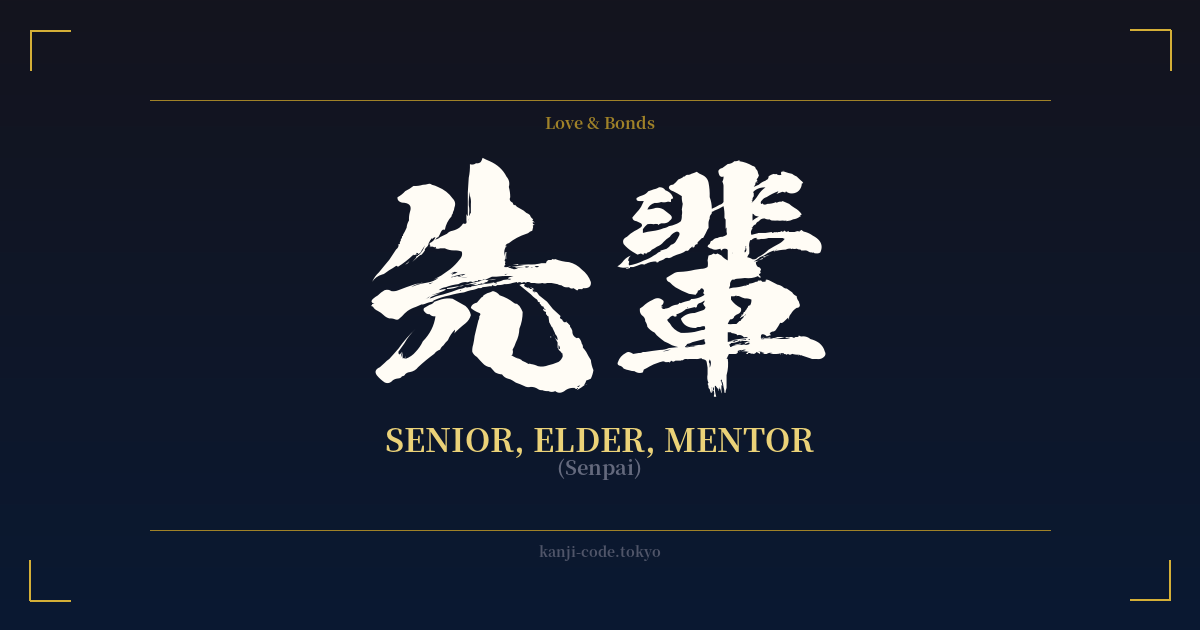
✍️ 先輩 (Senpai) — Cultural Context
The word 先輩 (Senpai) is one of the most well-known Japanese terms in the West, yet its full meaning is often simplified. It translates to 'senior,' but it embodies a complex and fundamental aspect of Japanese social structure. It’s not just about age; it’s about precedence and experience within a specific context—be it a school, a company, a sports team, or a dojo.
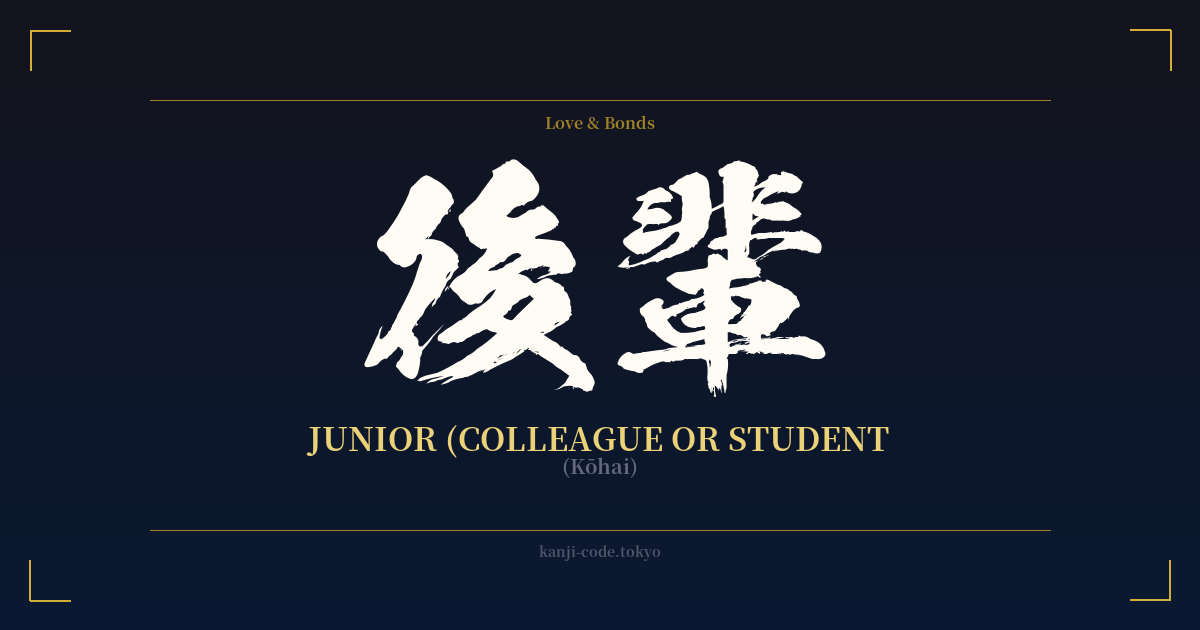
The counterpart to 'senpai' is 'kōhai' (後輩), meaning 'junior.' Together, they form the senpai-kōhai relationship, a cornerstone of Japanese society. This dynamic is an informal, hierarchical relationship built on mutual respect and obligation. The senpai’s role is to guide, mentor, and even protect the kōhai, passing down knowledge and institutional wisdom. In return, the kōhai is expected to show respect, listen attentively, and offer support to their senpai.
This system has deep historical roots, influenced by Confucian principles that emphasize hierarchy and respect for elders as a means of maintaining social harmony. In feudal Japan, this structure was essential for passing down skills in martial arts, crafts, and other disciplines. It created a clear chain of command and ensured that traditions were preserved and passed from one generation to the next.
In a modern workplace, a new employee would refer to their more experienced colleagues as senpai. The senpai would be responsible for showing them the ropes, answering questions, and providing professional guidance. Similarly, in a school club, a third-year student is the senpai to the first- and second-year students. This relationship often extends beyond the formal setting, with senpai taking their kōhai out for meals or offering life advice.
While the concept is deeply traditional, its recent surge in global popularity is largely thanks to anime and manga. In countless stories, the senpai is a figure of admiration, respect, and sometimes unrequited love. This has led to the term becoming a pop culture phenomenon, but it's crucial to remember the rich cultural system of mentorship and duty that lies beneath the surface. It represents a bond forged through shared experience and a promise of guidance.
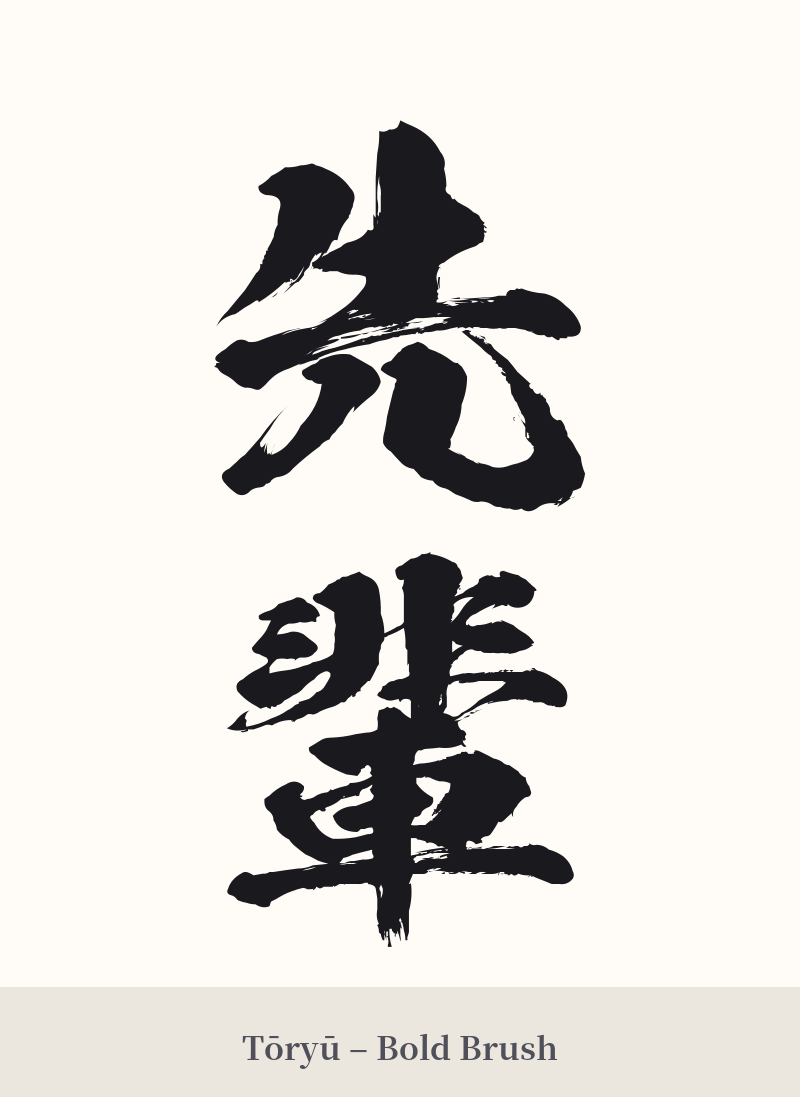
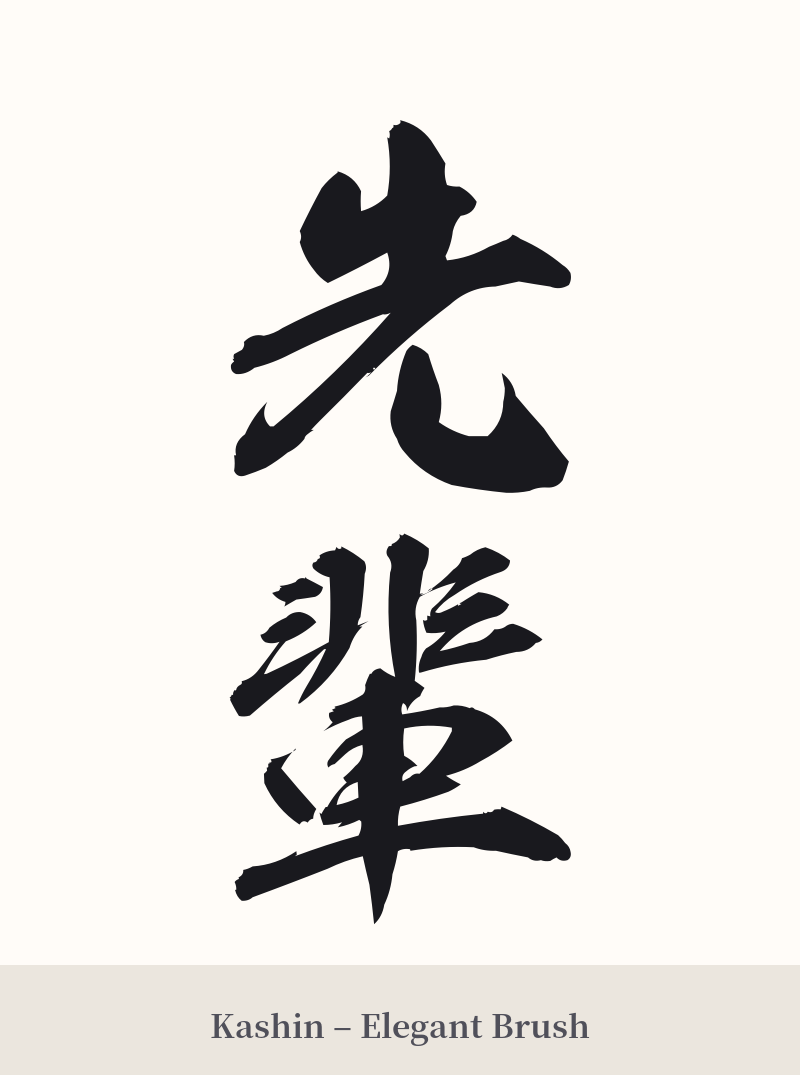
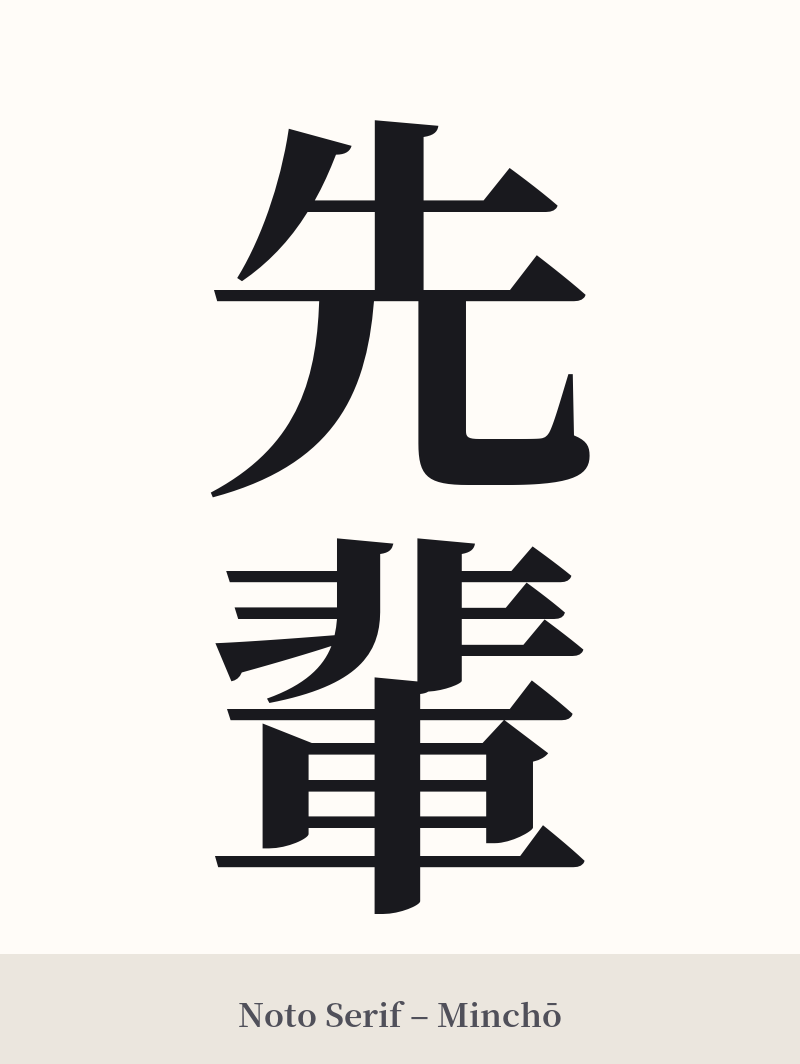
🖌️ Font Styles for 先輩
The same kanji can look dramatically different depending on the calligraphy style. Choose a font that matches the mood you want for your tattoo or design.
🎨 Tattoo Suitability
📐 Tattoo Design Guide
A 先輩 (Senpai) tattoo is a great way to honor a mentor or the principle of guidance. Due to the differing complexity of the two kanji, design choices are important.
– Placement: A vertical alignment is traditional and visually appealing. Consider placing it on the forearm, calf, or along the bicep where there is enough space to prevent the second character (輩) from looking cramped.
– Size: Avoid making this tattoo too small. The 15 strokes in 輩 can blur together over time if not given enough room, compromising legibility.
– Style: A classic Kaisho (block) script emphasizes the formality and respect inherent in the word. For a more fluid and artistic feel, a Gyosho (semi-cursive) or a dynamic Shodo (calligraphy) brushstroke style would be excellent choices.
– Pairing: You could pair the kanji with an element that symbolizes your specific mentor-mentee relationship. For example, a compass to represent guidance or a bamboo stalk to symbolize the strength and growth gained from the relationship.
Comments