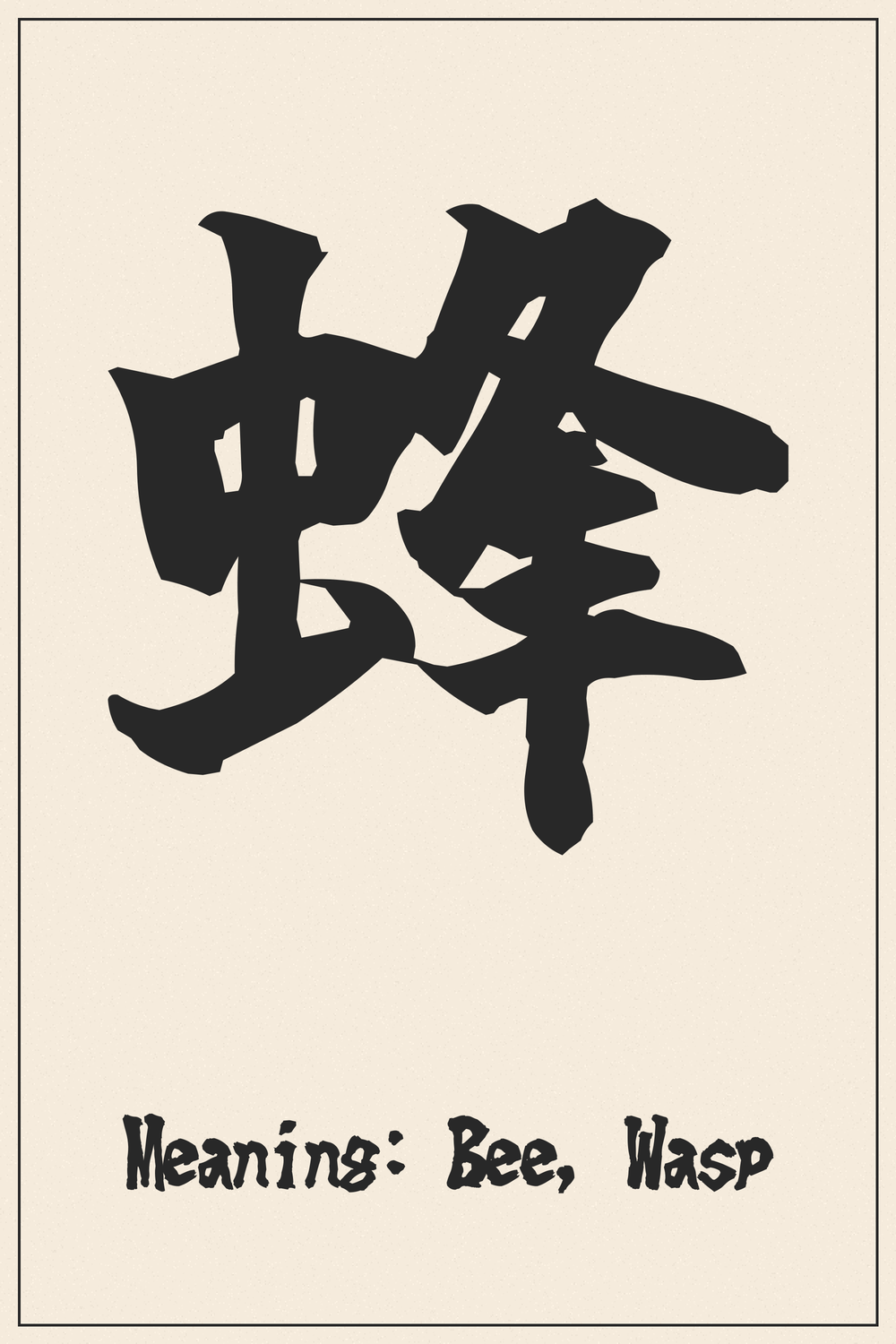
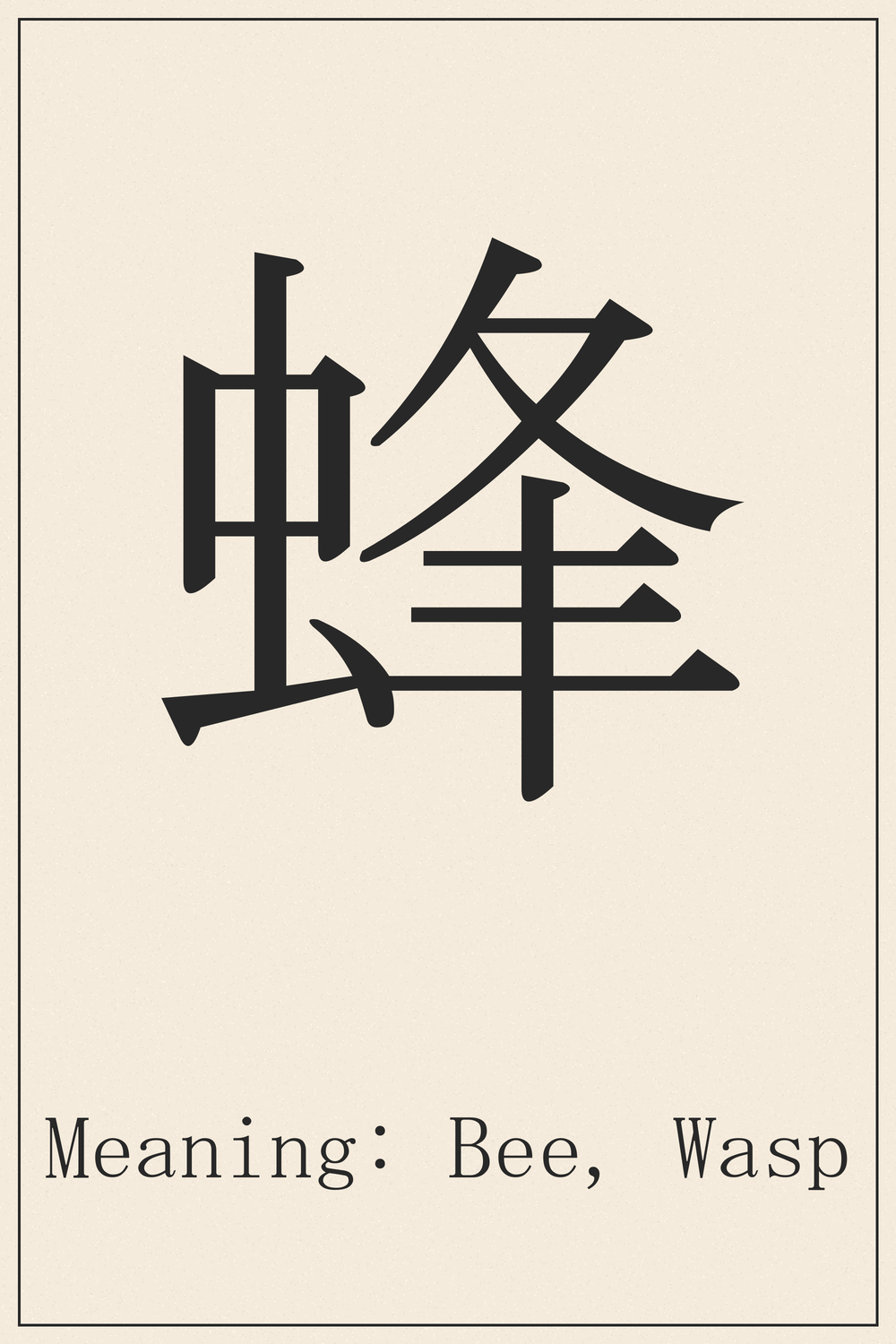
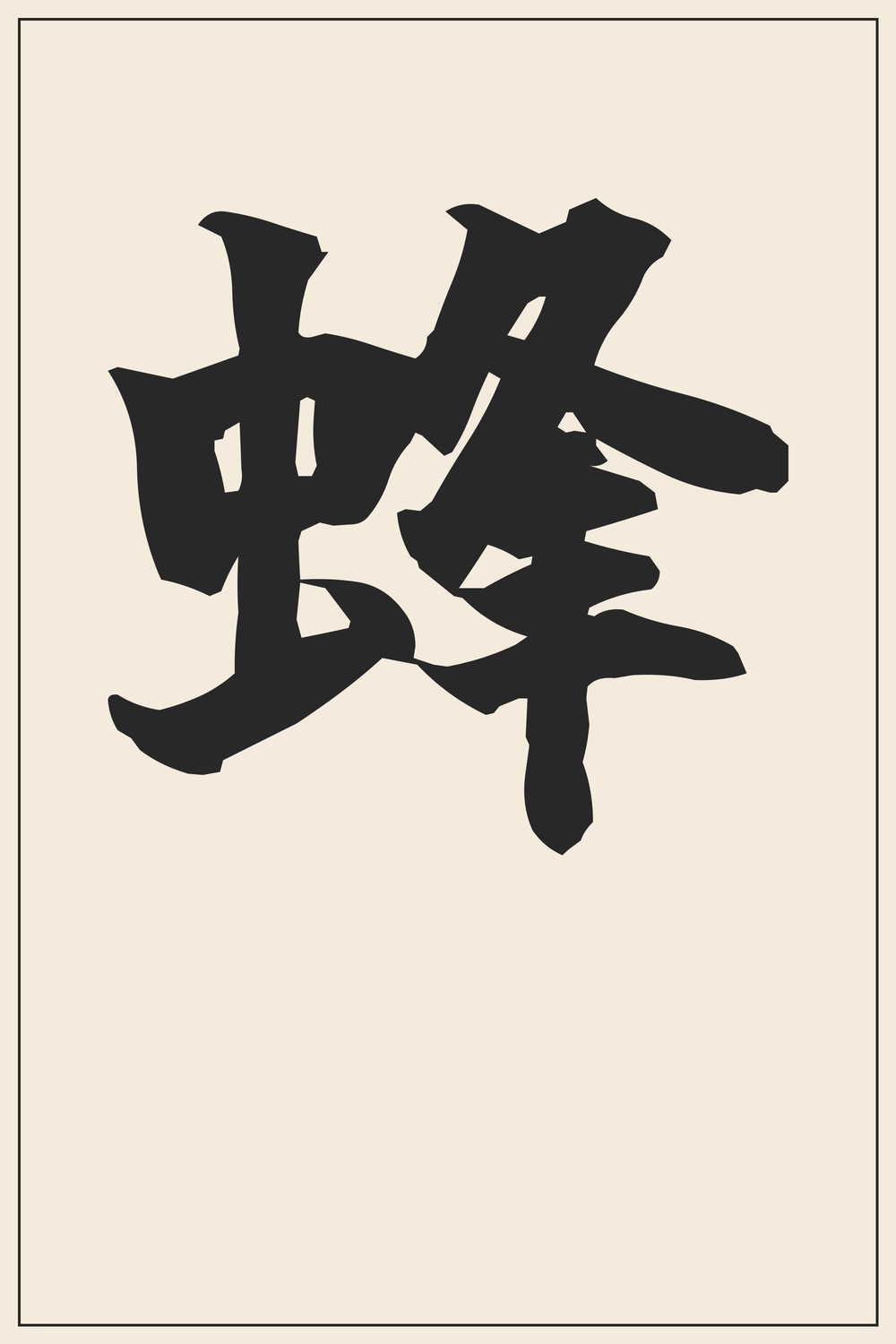
The Kanji 蜂 embodies the essence of the bee, an insect revered for its industriousness and intricate social structure. It represents diligence, community, and the surprising power found in small, persistent beings.
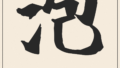
The atmosphere of a Kanji character changes dramatically depending on the font style. A character that looks elegant in a brush style might look bold and modern in a different font.
Recommendation:
Since a tattoo is permanent, we strongly recommend comparing various font styles beyond what is shown here. Use our designs as a trusted reference for the correct structure, but feel free to explore different artistic variations to find the perfect match for your vision.
The Deep Meaning Behind 蜂
The character 蜂 (hachi) is a phono-semantic compound. It combines 虫 (mushi), meaning “insect,” as the semantic component, and 夆 (hō), which acts as the phonetic component. 夆 originally depicted a person holding a spear, implying ‘attacking’ or ‘stinging’, which is relevant to a bee’s defense mechanism. Thus, the Kanji beautifully encapsulates both the creature’s classification and a key characteristic.
In Japanese culture, bees are often associated with diligence, teamwork, and prosperity due to their honey production and disciplined colony life. While wasps (also represented by 蜂) can symbolize aggression, the primary association with 蜂 is often the hardworking honeybee, representing harmony and productivity. The character evokes an image of nature’s efficiency and the collective spirit.
Kanji Breakdown
The Kanji 蜂 is a fascinating example of how semantic and phonetic elements combine to form a comprehensive meaning.
Meaning: Insect
This radical directly categorizes the creature, signifying that the character refers to an insect. It is a common semantic component for many Kanji representing insects or small creatures.
Meaning: To sting / To attack (phonetic and semantic hint)
While primarily a phonetic component guiding the reading, 夆 historically depicted a person holding a weapon, suggesting concepts of striking or confronting. This subtly alludes to the bee’s sting, adding a layer of descriptive meaning to its phonetic role.
Conclusion
The Kanji 蜂 profoundly symbolizes diligence, community, and the subtle strength found in the natural world. It encapsulates the essence of a creature that, though small, achieves great feats through collective effort.
Choosing 蜂 for a tattoo is a powerful statement, celebrating the values of hard work, collaboration, and the intricate beauty of nature. It serves as a personal reminder of the importance of persistence and unity in achieving one’s goals.
Comments