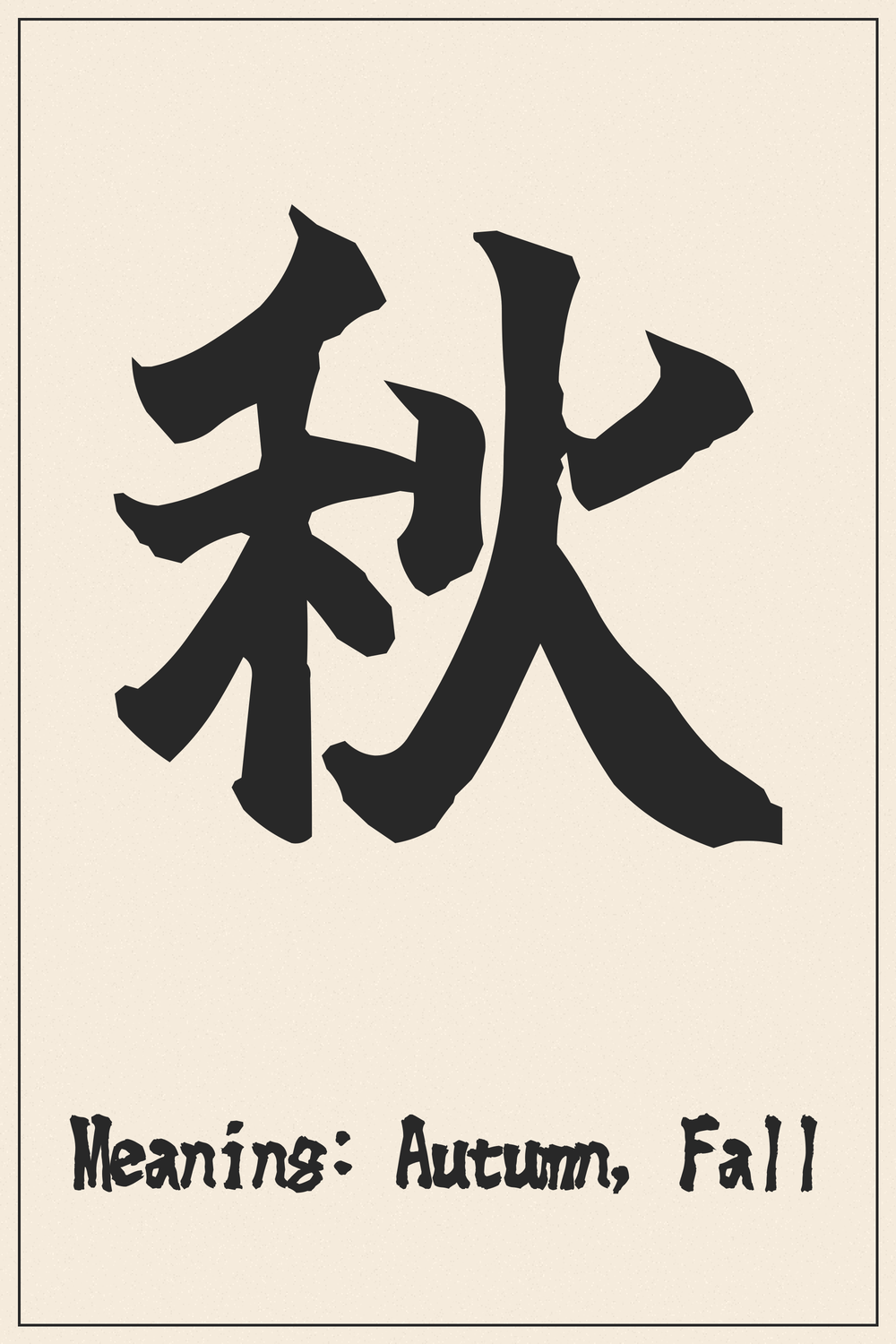
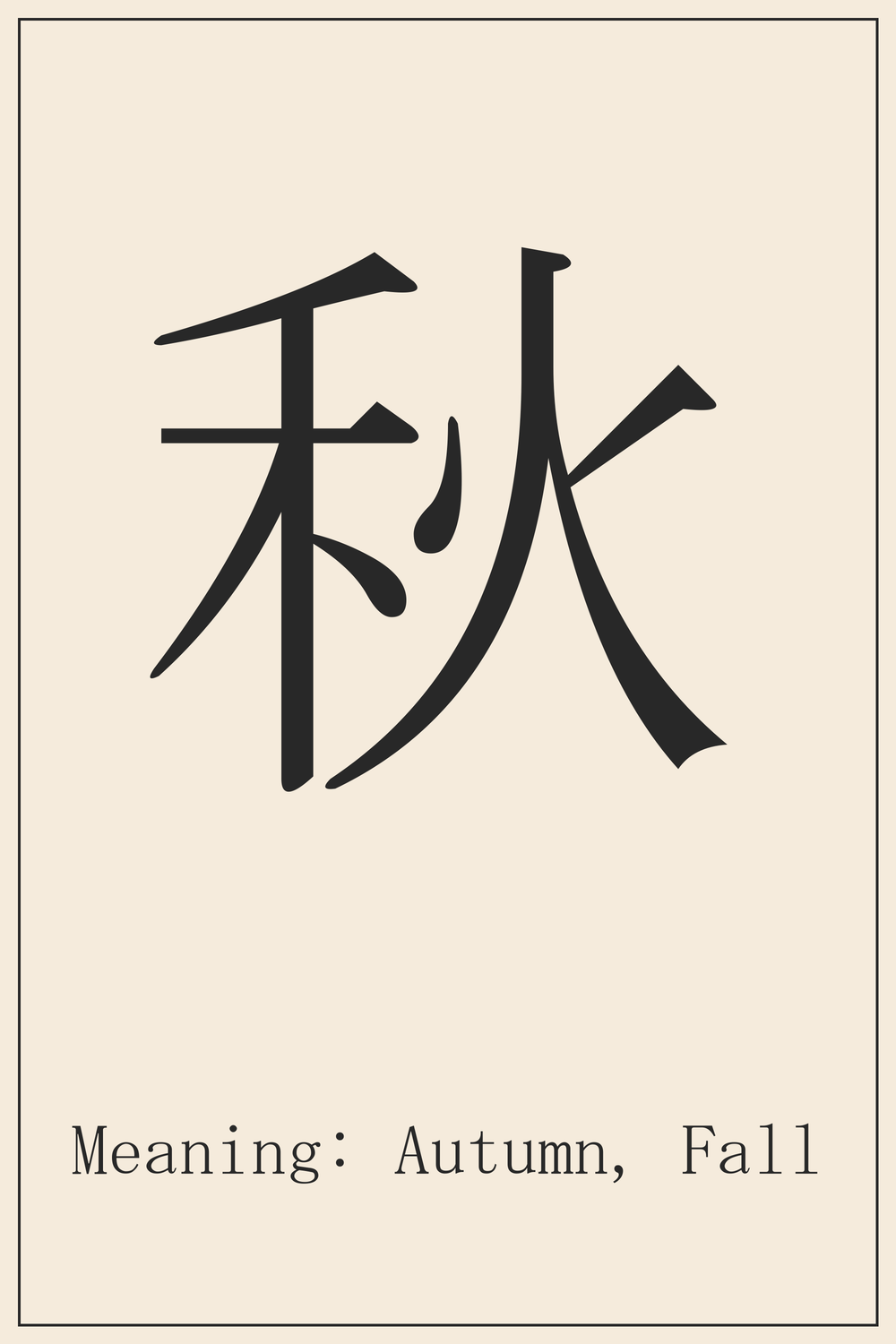
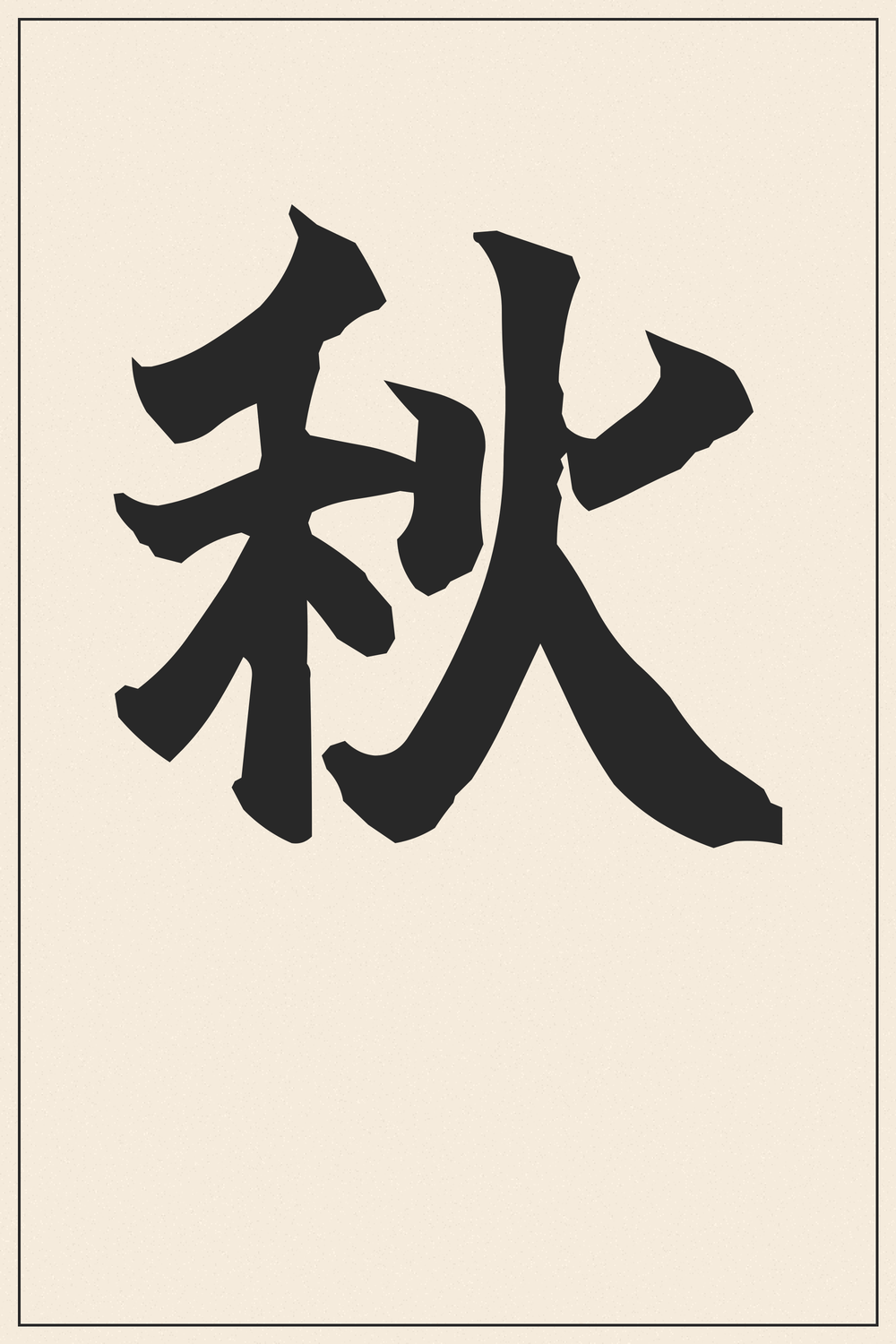
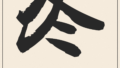
The Kanji for ‘Autumn’, 秋, evokes images of vibrant landscapes and bountiful harvests. It represents a period of profound transition, reflecting both nature’s grand cycle and moments of serene reflection.
The atmosphere of a Kanji character changes dramatically depending on the font style. A character that looks elegant in a brush style might look bold and modern in a different font.
Recommendation:
Since a tattoo is permanent, we strongly recommend comparing various font styles beyond what is shown here. Use our designs as a trusted reference for the correct structure, but feel free to explore different artistic variations to find the perfect match for your vision.
The Deep Meaning Behind 秋
The Kanji 秋 (aki) originally depicted grain (禾, nogi) under fire (火, hi), symbolizing the harvest season when grains ripen under the sun’s warmth and are dried. Over time, the lower component simplified to 夂, which is sometimes interpreted as fire, or a stylized representation of an insect or turtle shell, linking to ancient divination practices for predicting harvests.
In Japanese culture, autumn is highly revered for its natural beauty, epitomized by vibrant changing leaves (koyo) and the clear autumn sky. It is also a time of significant harvest festivals and is often associated with melancholic beauty, reflection, and the transient nature of life, as seen in poetry and art.
Kanji Breakdown
The Kanji 秋 is composed of two primary elements, each contributing to its seasonal meaning:
Nogi (Grain): This radical directly signifies grain, crops, or rice plants, representing the agricultural abundance of the autumn season.
Hi (Fire): In its original form, this component represented fire, referencing the warmth needed for crops to ripen, the vibrant red hues of autumn foliage, or the burning of fields after harvest. The modern form simplifies to 夂, retaining the essence of its historical context.
Conclusion
The Kanji 秋 beautifully encapsulates the essence of autumn—a season of harvest, reflection, and profound natural transformation. It symbolizes the culmination of growth, the splendor of changing colors, and a serene period of transition before winter.
Choosing 秋 for a tattoo is a powerful statement about appreciating nature’s cycles, the beauty of change, and the bountiful rewards of life. Its elegant form and rich cultural associations make it a timeless and meaningful symbol for personal adornment.
Comments