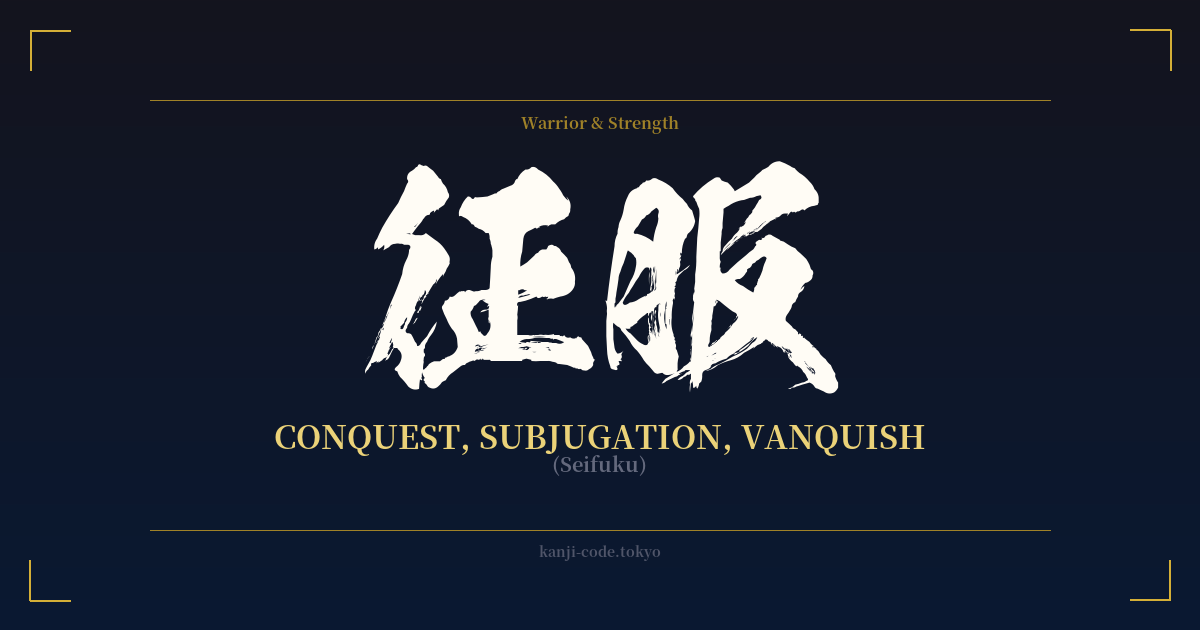
✍️ 征服 (Seifuku) — Cultural Context
征服 (Seifuku) is a Japanese word that packs a powerful, uncompromising punch. It translates directly to 'conquest,' 'subjugation,' or 'vanquishing,' and it carries the full weight of these English meanings. This is not a term for a minor victory; it signifies total domination and the bringing of an entity—be it a nation, a people, or a force of nature—under complete control.
Historically, 'seifuku' is deeply rooted in the annals of warfare and territorial expansion. It's the word you would use to describe the campaigns of great warlords like Oda Nobunaga or Toyotomi Hideyoshi as they sought to unify Japan through military might. In this context, it is unambiguous: it is about forcing others to submit to your will. This historical association lends the word a heavy, almost ruthless quality that persists to this day.
However, the meaning of 征服 can also extend into the metaphorical realm, which is where its appeal often lies for modern audiences. One can speak of conquering a formidable mountain (山を征服する, yama o seifuku suru), a difficult illness, or even one's own fears and weaknesses. In this sense, it represents the pinnacle of achievement through struggle—the ultimate triumph over a great obstacle. It embodies a spirit of indomitable will and the refusal to be defeated.
Despite this positive interpretation, the word's aggressive core cannot be ignored. In pop culture, such as anime and video games, villains often declare their intent for 'world conquest' (世界征服, sekai seifuku). This usage reinforces its association with forceful domination rather than noble, personal struggle. When choosing this word, one must understand that it communicates power through force, not just resilience.
For anyone considering this word, especially as a tattoo, the cultural baggage is significant. Outside of the specific context of overcoming a personal, non-human challenge, the word can come across as intensely aggressive and insensitive. It is a declaration of power that, without careful framing, can easily be interpreted as a threat or a statement of superiority, making it a truly double-edged sword.
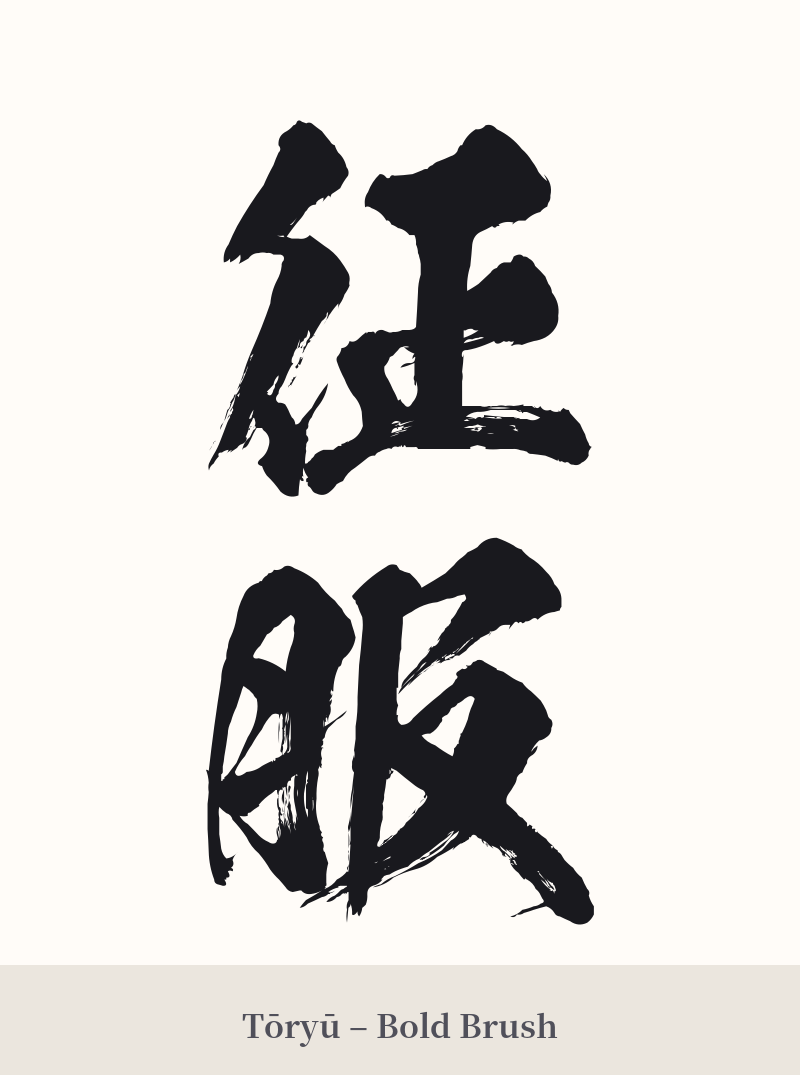
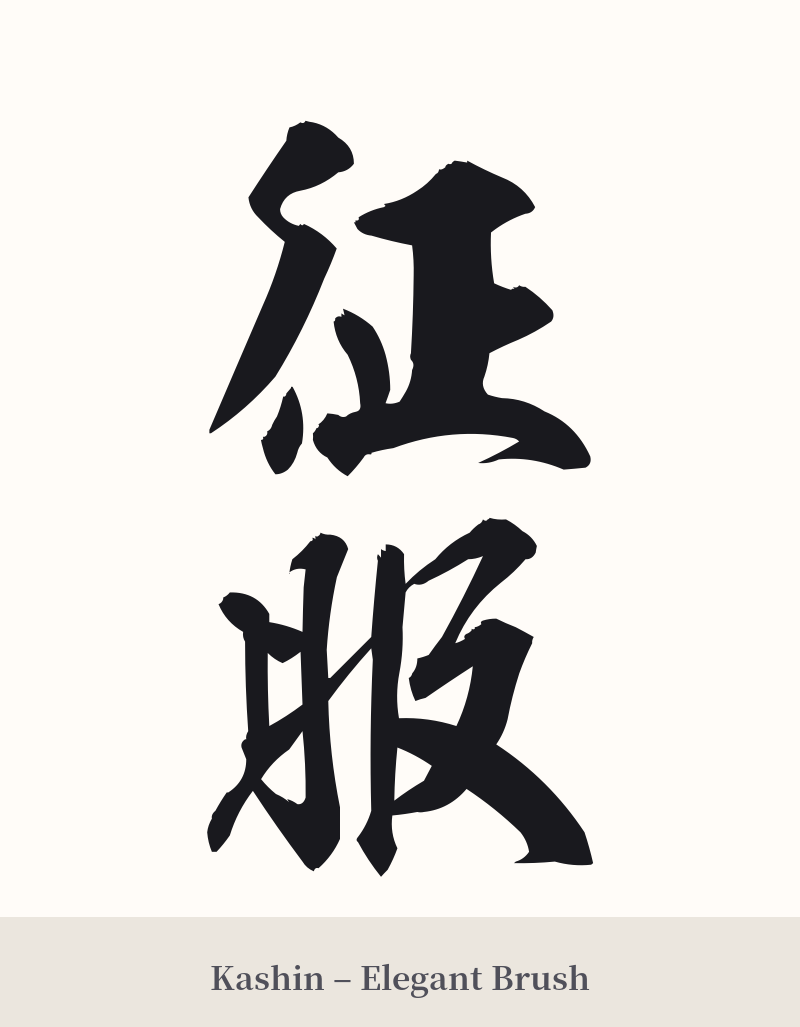
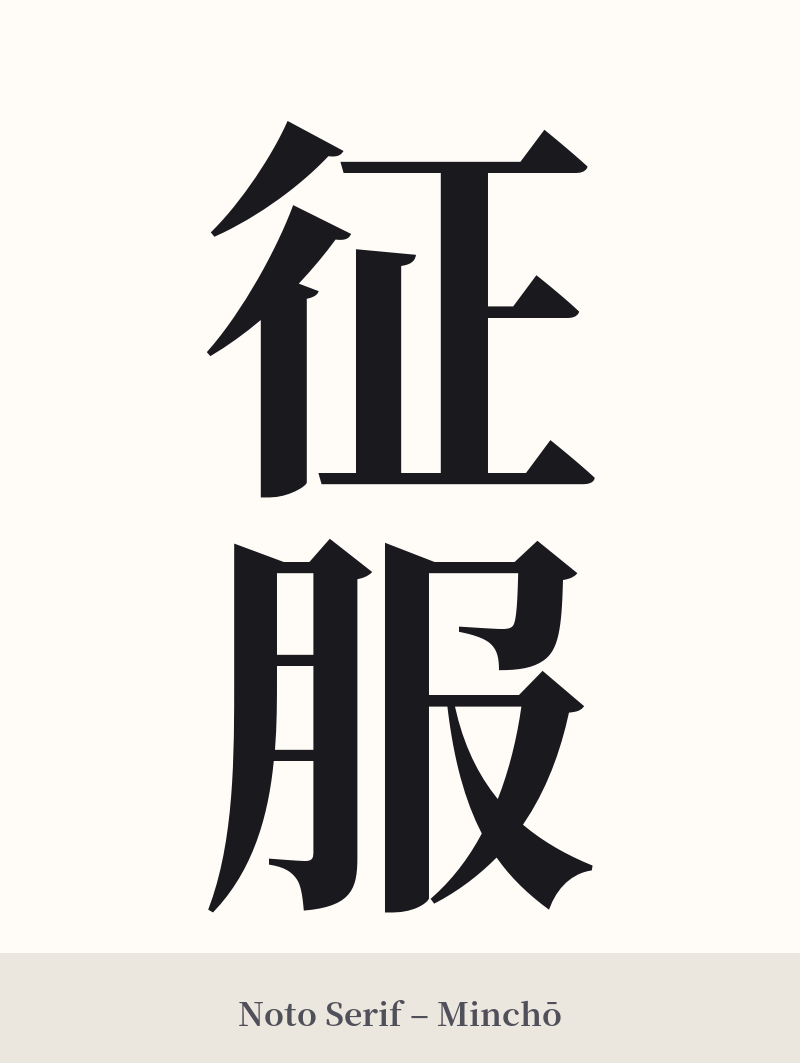
🖌️ Font Styles for 征服
The same kanji can look dramatically different depending on the calligraphy style. Choose a font that matches the mood you want for your tattoo or design.
🎨 Tattoo Suitability
📐 Tattoo Design Guide
Given its powerful and aggressive meaning, the design for 征服 should reflect strength and intent. It is not a word for subtle or delicate aesthetics.
– Placement: This word demands a prominent and strong placement. Consider areas like the back, across the shoulders, on the chest, or along the forearm. These locations provide a flat, broad canvas that reinforces the kanji's authority.
– Font Style: Strong, angular, and clear fonts are best. A bold Kaisho (block script) style emphasizes the formal and unyielding nature of conquest. For a more dynamic and raw feel, a powerful Gyosho (semi-cursive) or even a very aggressive Sosho (cursive) script can capture the chaos and energy of a struggle.
– Visual Tips: To steer the meaning towards personal achievement, consider pairing the kanji with specific imagery. For instance, incorporating a mountain range or a stormy sea can frame the 'conquest' as an internal or natural challenge. Avoid pairing it with any imagery that could be construed as military or nationalistic, as this will amplify its most negative connotations.
Comments