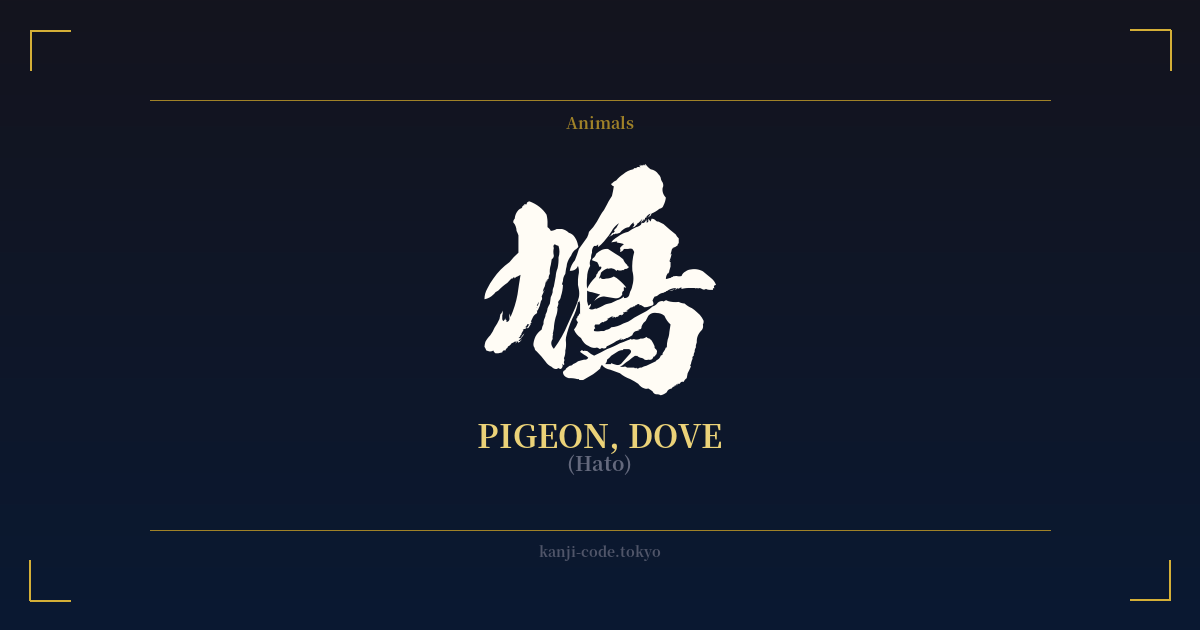
✍️ 鳩 (Hato) — Cultural Context
The Japanese kanji 鳩, read as 'hato,' is a fascinating character because it holds two seemingly contradictory identities in one form: the common, everyday pigeon and the sacred, symbolic dove. This duality defines its cultural significance in Japan.
On one hand, 'hato' are a familiar sight in Japan's urban landscapes, just as they are in cities worldwide. They flock in parks, temple grounds, and train stations, cooing and searching for food. You'll often see them gathered at famous spots like the Senso-ji Temple in Tokyo or Nara Park. In this context, the 'hato' is a symbol of the ordinary, a constant and unremarkable part of daily life.
This everyday image is captured in a common Japanese expression: "hato ga mamedeppō o kutta yō," which translates to acting "like a pigeon shot by a peashooter." It vividly describes a state of being utterly dumbfounded or stunned by an unexpected event, highlighting the bird's often startled and flustered nature.
However, the 'hato' has a much deeper, more sacred role in Japanese tradition. It is famously known as the divine messenger of Hachiman, the Shinto god of archery and war. According to legend, a pair of doves guided Emperor Ōjin, who was later deified as Hachiman, to his destiny. Because of this connection, many shrines dedicated to Hachiman, such as the Tsurugaoka Hachimangū in Kamakura, use the dove as a prominent motif in their architecture, amulets, and crests. Here, the 'hato' is not a common bird but a holy creature, a link between the human and divine realms.
After World War II, the 'hato' also embraced the global symbol of the dove of peace (平和の鳩, heiwa no hato). This association is particularly poignant in places like Hiroshima, where the imagery of doves is deeply connected to the prayers for world peace and the memory of the atomic bombing. The Children's Peace Monument, for instance, is often adorned with origami doves, symbolizing hope and peace.
Therefore, the single character 鳩 encapsulates a spectrum of meaning, from the mundane city bird to a divine messenger and a modern icon of peace. This rich layering makes it a word that is both grounded in daily life and capable of reaching for profound spiritual and historical ideals.
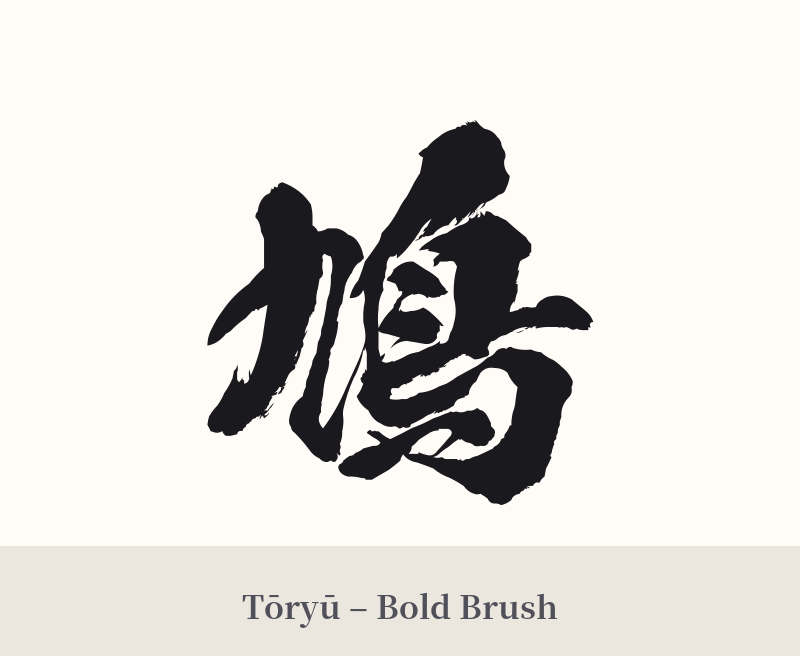
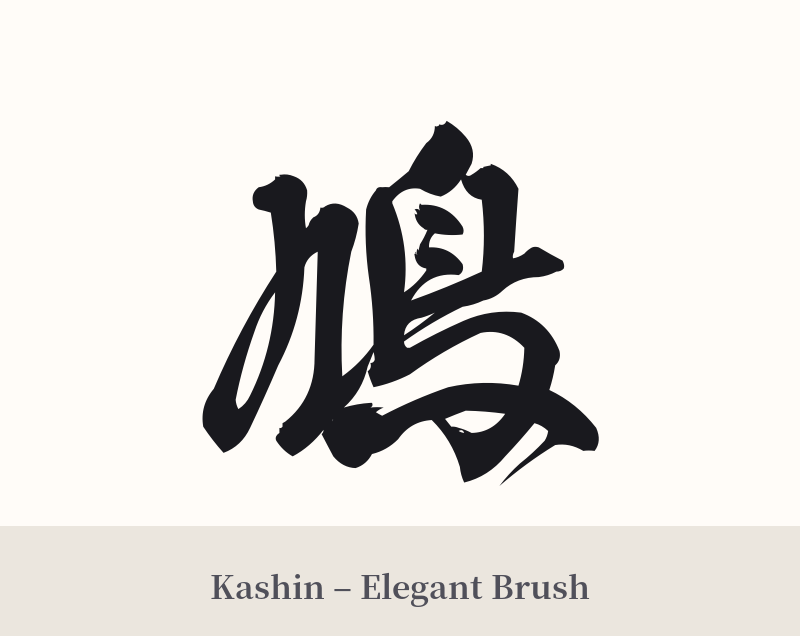
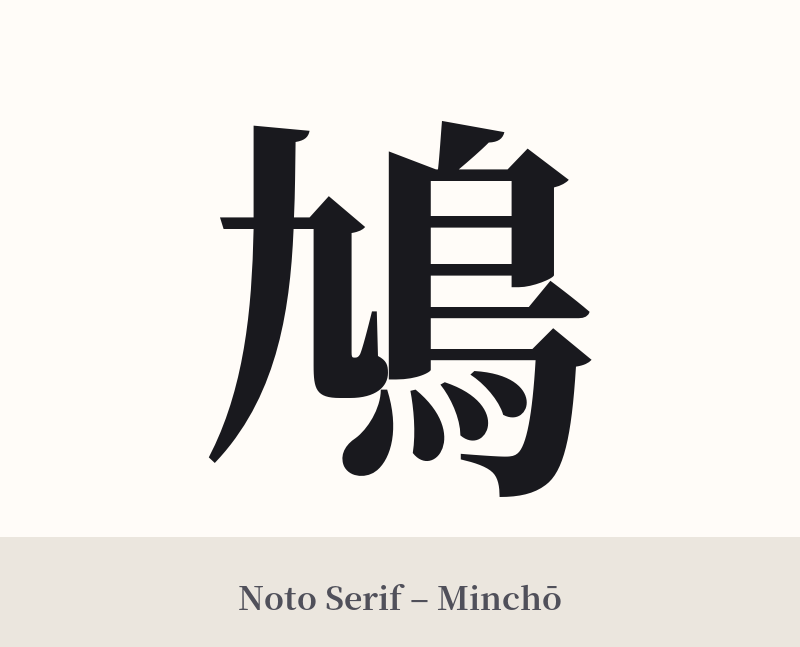
🖌️ Font Styles for 鳩
The same kanji can look dramatically different depending on the calligraphy style. Choose a font that matches the mood you want for your tattoo or design.
🎨 Tattoo Suitability
📐 Tattoo Design Guide
The kanji 鳩 (hato) has a moderate level of complexity, which offers opportunities for a detailed and interesting tattoo.
– Placement: Due to its 13 strokes, this character works best in medium-to-large formats. Consider placements like the forearm, calf, shoulder blade, or the back, where the details of the character won't be lost over time.
– Style: A traditional Japanese calligraphy style (shodō) can emphasize its connection to Shintoism and the Hachiman messenger myth. For a more modern or minimalist look, a clean, crisp Mincho or Gothic-style font can highlight the character's structure.
– Visual Pairing: To steer the meaning towards 'dove of peace,' consider incorporating an olive branch, subtle wings, or a rising sun. To honor its role as a divine messenger, you could pair it with abstract elements suggesting a bow or arrow, referencing the god Hachiman.
Comments