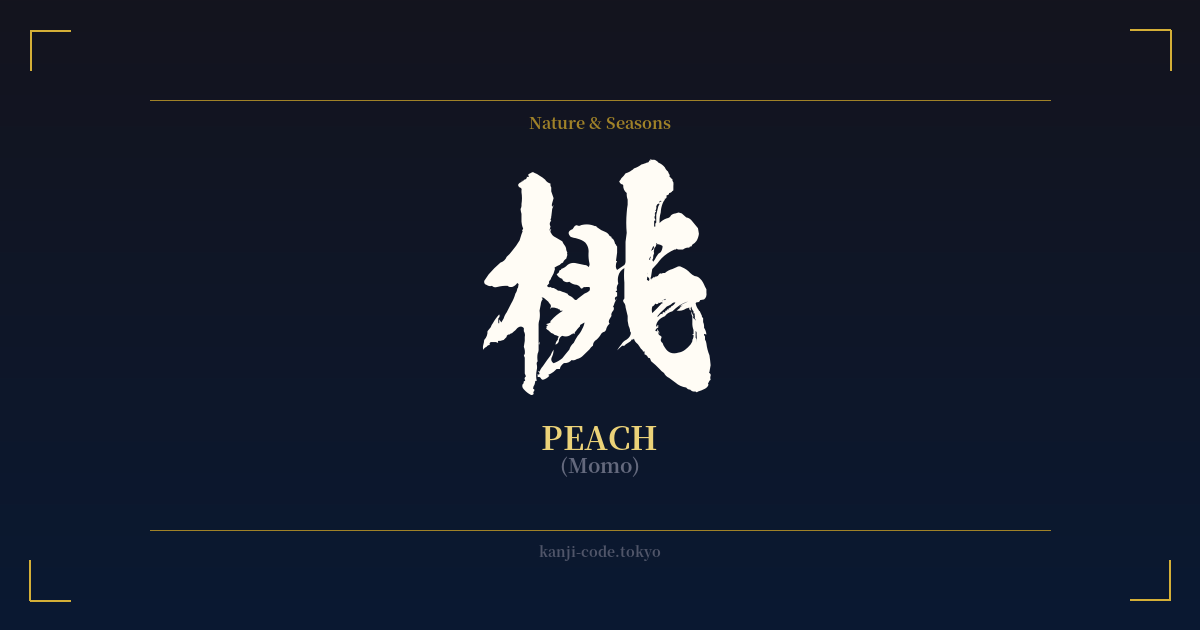
✍️ 桃 (Momo) — Cultural Context
In Japan, the peach, or 桃 (Momo), is far more than just a sweet summer fruit. It is a symbol steeped in centuries of folklore, mythology, and spiritual belief, representing longevity, purification, and protection against evil.
The character 桃 itself is a combination of the radical 木 (ki), meaning 'tree', and the phonetic component 兆 (chō), which means 'sign' or 'omen'. This structure beautifully captures the essence of the peach tree as a bearer of something significant and auspicious.
This significance is rooted in ancient Chinese mythology, which heavily influenced Japanese culture. In Chinese tales, the Peaches of Immortality grew in the garden of the goddess Xi Wangmu, granting eternal life to anyone who ate them. This association of peaches with longevity and the divine carried over into Japan, where the fruit is seen as a symbol of a long and healthy life.
The most famous story involving a peach in Japan is the beloved folktale of Momotarō (桃太郎), the Peach Boy. The tale begins with an old, childless woman finding a giant peach floating down a river. When she and her husband open it, they discover a baby boy inside. They name him Momotarō, and he grows up to be a strong and courageous hero who, with the help of his animal companions—a dog, a monkey, and a pheasant—sails to a distant island to defeat a band of marauding oni (demons).
This story cements the peach's role as a vessel of divine blessings and a powerful agent of purification and protection. The very act of being born from a peach gives Momotarō his supernatural strength to vanquish evil. Because of this, peach wood charms and arrows were traditionally believed to ward off demons and evil spirits.
Beyond folklore, the peach blossom (桃の花, momo no hana) is also significant. It blooms in early spring and is a key feature of the Hina Matsuri (雛祭り), or Girls' Day, on March 3rd. The blossoms are displayed to ward off evil and to symbolize a happy marriage, feminine beauty, and gentle nature. This has given the kanji 桃 a distinctly gentle and feminine connotation in many contexts.
🖌️ Font Styles for 桃
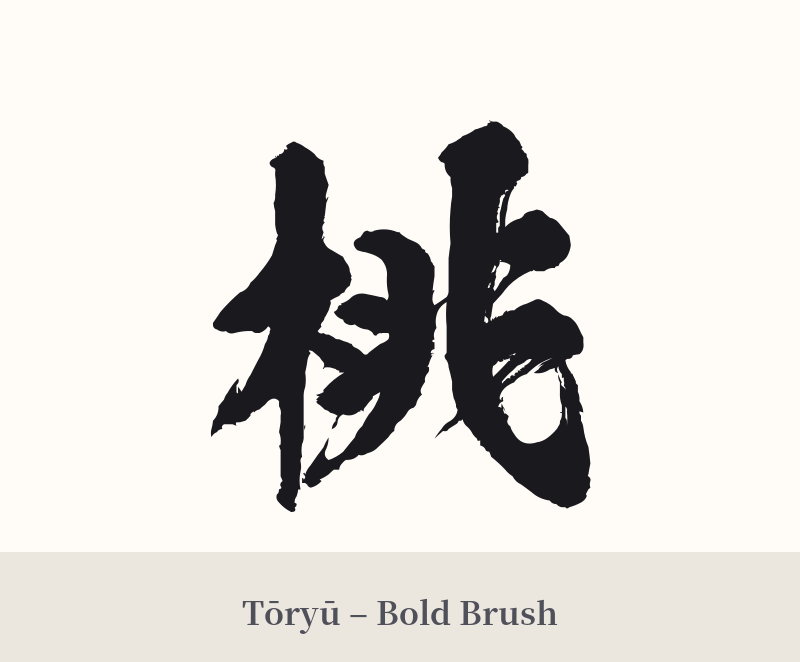
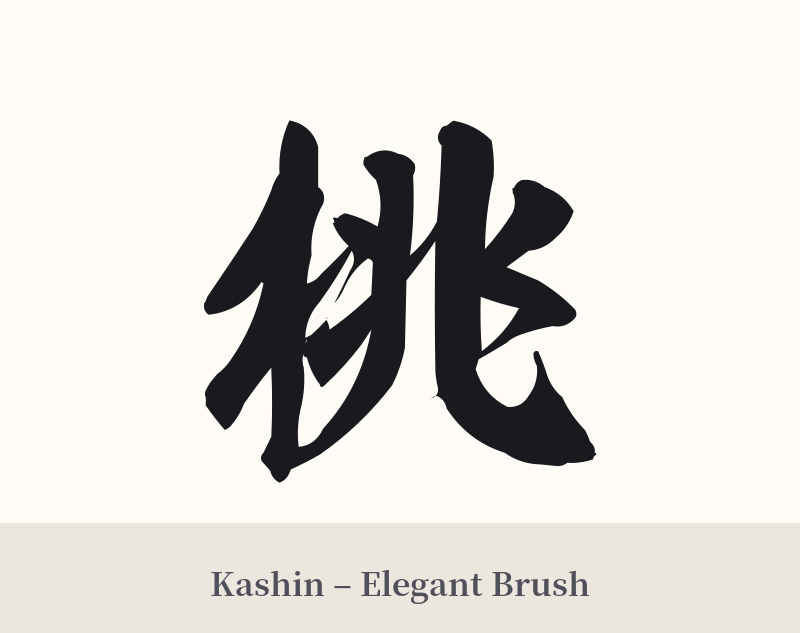
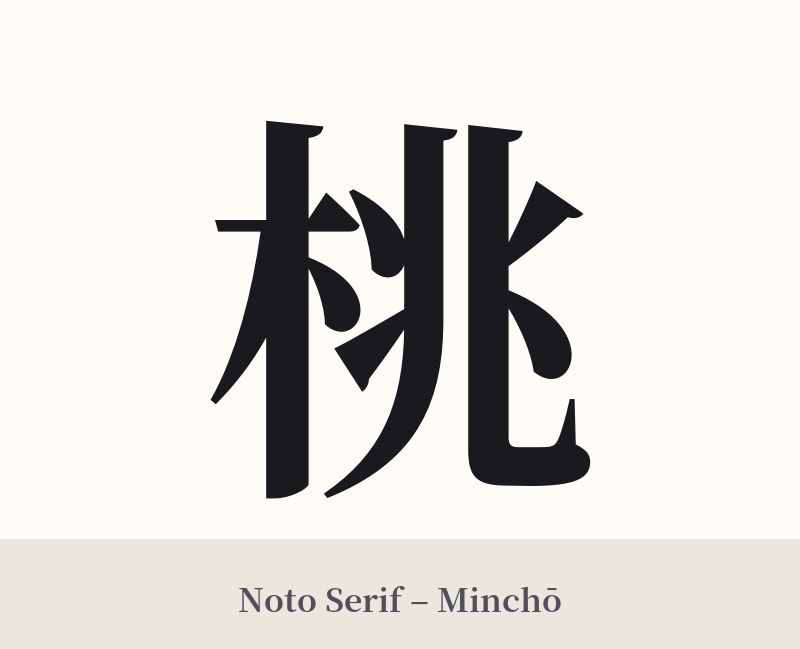
The same kanji can look dramatically different depending on the calligraphy style. Choose a font that matches the mood you want for your tattoo or design.
🎨 Tattoo Suitability
📐 Tattoo Design Guide
The kanji 桃 offers wonderful flexibility for a tattoo design, whether you prefer something subtle or a larger, more elaborate piece.
– Placement: For a small, simple design, the wrist, ankle, or behind the ear are excellent choices. A medium-sized character looks striking on the inner forearm or the back of the neck. For a larger statement, consider the shoulder blade or calf, where it can be integrated with other elements.
– Style: A flowing, semi-cursive or cursive calligraphy style (gyōsho or sōsho) can emphasize the organic, natural beauty of the peach. For a more modern and elegant look, a crisp Mincho or Kaisho font works beautifully. The character's balanced structure holds up well in various styles.
– Visual Complements: Consider incorporating imagery from its rich cultural background. A single 桃 kanji surrounded by peach blossoms creates a classic and beautiful design. You could also subtly embed the kanji within an image of a peach fruit or a branch from a peach tree. For fans of folklore, pairing it with a small, stylized element representing Momotarō or one of his animal companions can add a unique narrative layer.
Comments