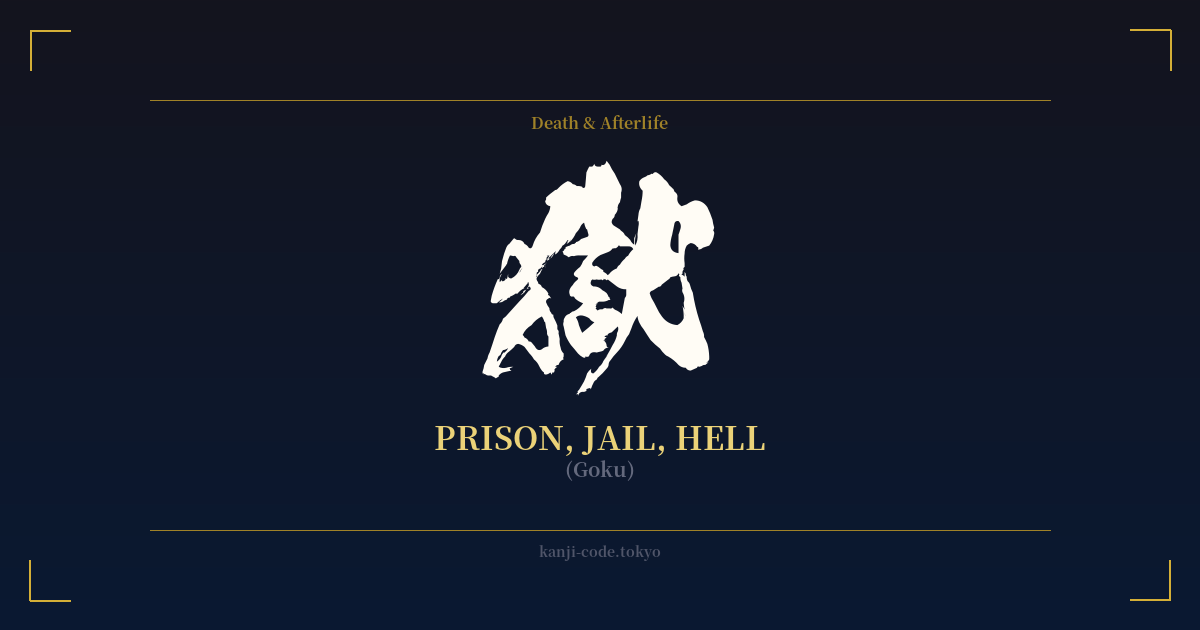
✍️ 獄 (Goku) — Cultural Context
The kanji 獄 (goku) is one of the most intense and somber characters in the Japanese language, encapsulating concepts of confinement, judgment, and ultimate suffering. Its meanings range from the literal—prison or jail—to the profound and terrifying—hell.
The character's origin offers a glimpse into its grim nature. The pictograph is a composite of three elements: a central 言 (gen, meaning 'words' or 'speech') flanked by two 犬 (ken, meaning 'dog'). This ancient image depicts two guard dogs overseeing a trial or dispute, symbolizing litigation, accusation, and the final judgment that leads to incarceration. It is a character born from conflict and consequence.
In its most common, modern usage, 獄 is found in the word 監獄 (kangoku), the formal term for prison. It speaks to a physical place of confinement, a cage for those who have broken societal laws. This usage is straightforward and devoid of spiritualism, representing the mundane reality of the justice system.
However, the true power of 獄 lies in its connection to the afterlife. It is the core component of 地獄 (jigoku), the Japanese word for hell. Rooted in Buddhist cosmology, Jigoku is not a single place but a complex realm with multiple fiery and frozen hells, each designed to punish specific types of sins. Japanese art and literature are filled with terrifying depictions of Jigoku, from the famous Hell Screen scrolls (Jigoku Zoshi) to countless folktales warning of the consequences of a wicked life. In this context, 獄 is not just a prison of stone and bars, but an eternal prison of the soul.
This character is a symbol of absolute entrapment. Whether it refers to a physical jail cell or a spiritual realm of torment, 獄 signifies a state from which there is no easy escape. It represents the finality of judgment, the weight of sin, and the suffering that follows. It is a heavy, foreboding kanji that commands respect for its sheer intensity.
🖌️ Font Styles for 獄
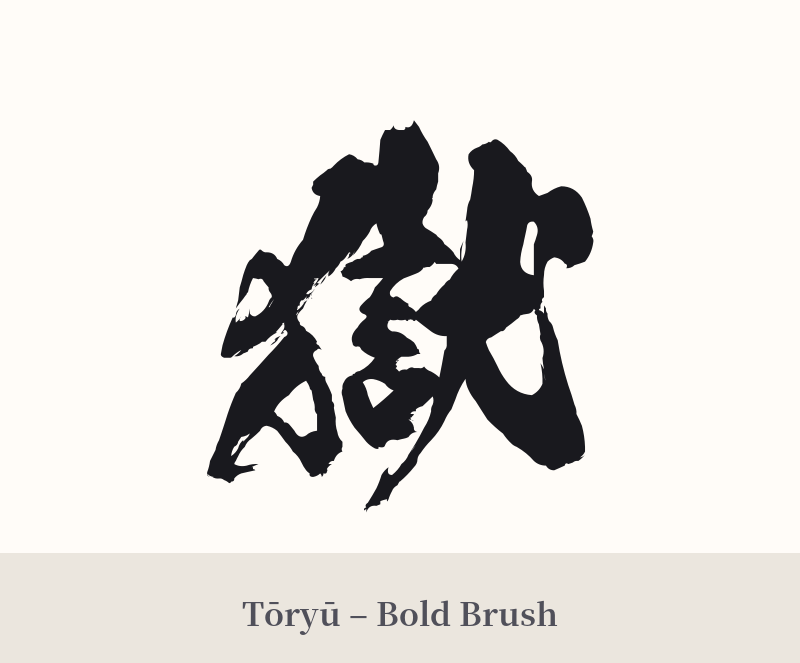
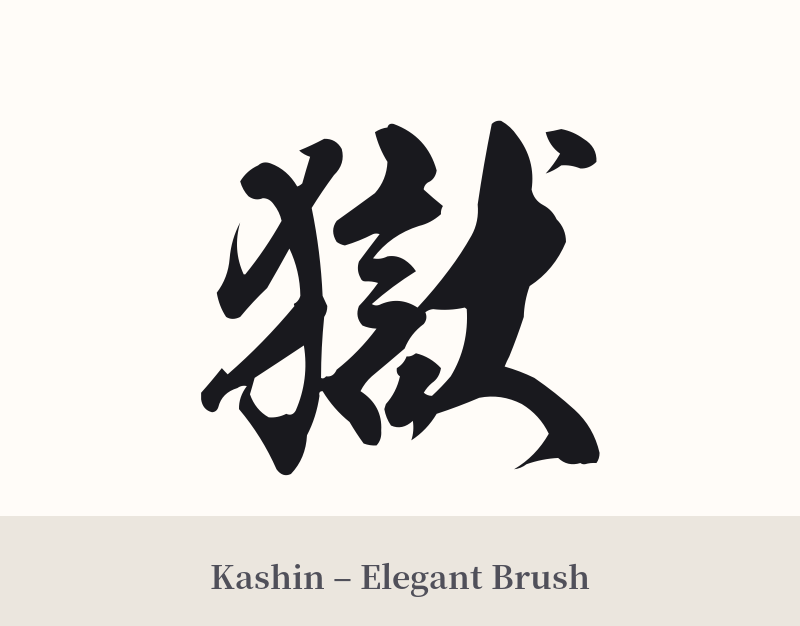
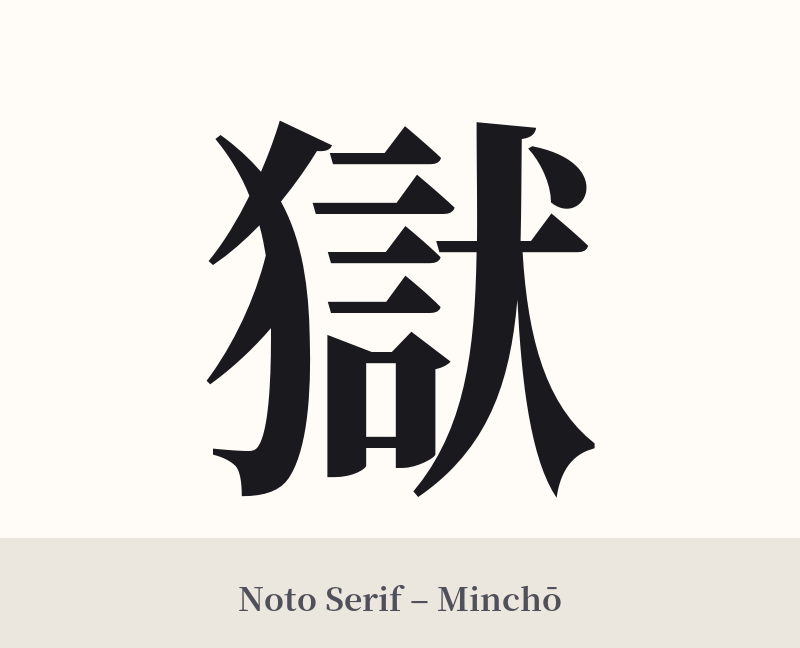
The same kanji can look dramatically different depending on the calligraphy style. Choose a font that matches the mood you want for your tattoo or design.
🎨 Tattoo Suitability
📐 Tattoo Design Guide
A tattoo of 獄 is a bold and uncompromising statement. Due to its complexity and powerful meaning, design choices are critical.
– Placement: The character's 14 strokes require space to be legible and to age well. Consider larger areas like the back, chest, forearm, or calf. Avoid small or cramped placements like the wrist or fingers, where the lines would blur into an unintelligible mark.
– Font Style: The style can dramatically alter the feeling. A rigid, blocky Kaisho (print) style emphasizes the 'prison' aspect, evoking bars and confinement. A chaotic, flowing Sōsho (cursive) style can express the 'hell' aspect, suggesting flames and torment. A strong, brush-stroke style (Gyōsho) strikes a balance between legibility and raw energy.
– Visual Tips: This kanji stands powerfully on its own, but can be integrated with other imagery. Pairing it with chains reinforces the prison theme. Surrounding it with flames or red ink highlights the connection to Jigoku (hell). A design showing the character breaking or shattering could symbolize liberation from confinement, but this subverts the kanji's core meaning.
Comments