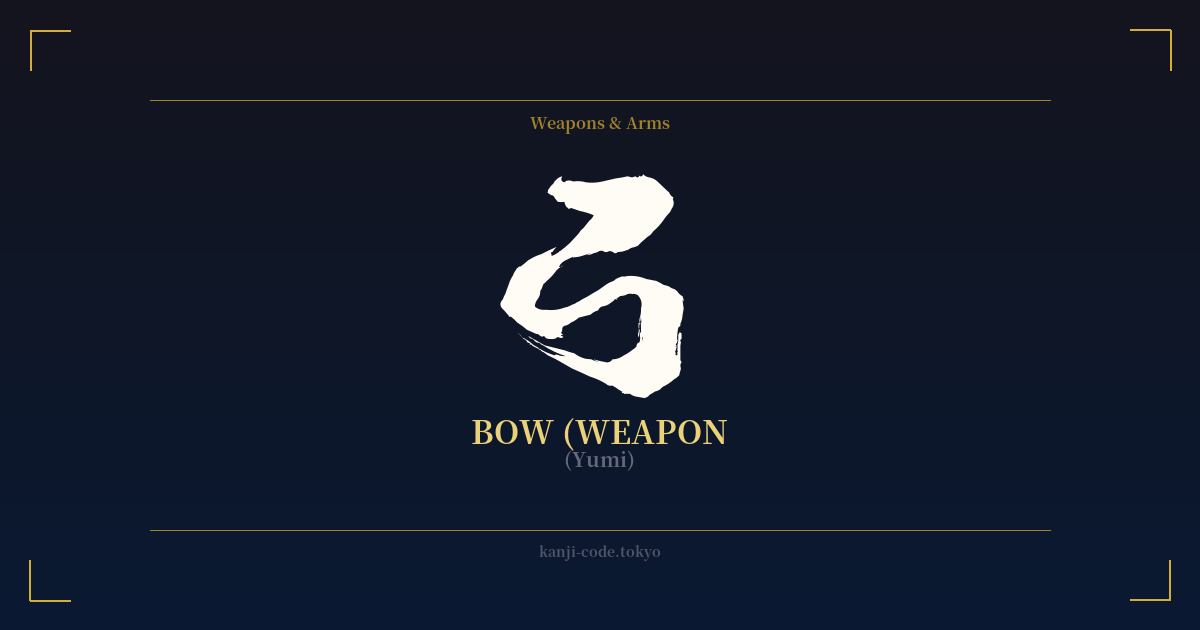
✍️ 弓 (Yumi) — Cultural Context
The kanji 弓 (yumi) is a beautiful example of a pictograph, a character that visually represents its meaning. With just three strokes, it perfectly captures the elegant, powerful form of a bow. Its origins are ancient, but its cultural significance in Japan is tied inextricably to the history of the samurai and the spiritual discipline of archery.
Historically, the yumi was the quintessential weapon of the samurai class for centuries, even predating the iconic katana. The Japanese bow is unique in its asymmetrical design, a feature developed to allow mounted archers to handle the long weapon with greater ease. This connection to the warrior class imbues the character with a sense of martial prowess, precision, and historical weight. The art of mounted archery, known as yabusame (流鏑馬), is still practiced today as a solemn Shinto ritual, a breathtaking display of skill that connects the present to a martial past.
However, the story of 弓 goes far beyond the battlefield. It is the central element in Kyūdō (弓道), "The Way of the Bow." Kyūdō is a modern martial art that treats archery as a form of standing meditation. The goal is not merely to hit the target but to achieve a state of perfect harmony between mind, body, and spirit. The process—the stance, the breathing, the release—is more important than the result. This practice elevates the bow from a simple weapon to a tool for self-cultivation and spiritual enlightenment, embodying the principles of shin-zen-bi (真善美), or truth, goodness, and beauty.
This spiritual dimension is also seen in Shintoism. The hamayumi (破魔弓), or "evil-destroying bow," is a decorative bow given to newborn boys at their first New Year to ward off evil spirits and bring good fortune. Similarly, arrows are often sold at shrines as good luck charms. This tradition frames the bow not as an instrument of violence, but as a sacred object of purification and protection.
From the warrior's battlefield to the quiet of the dōjō and the sanctity of the shrine, the kanji 弓 encapsulates a rich tapestry of Japanese culture. It represents focus, discipline, spiritual clarity, and the elegant tension between power and grace.
🖌️ Font Styles for 弓
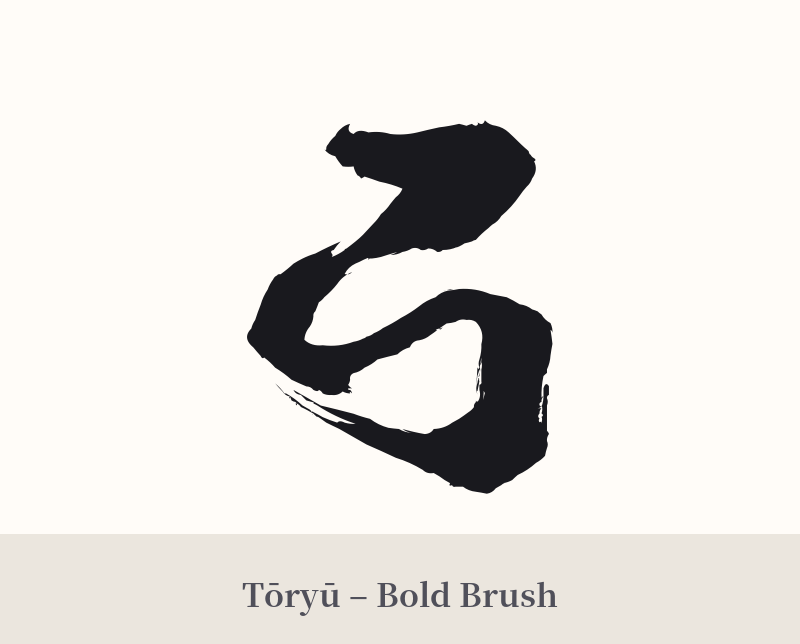
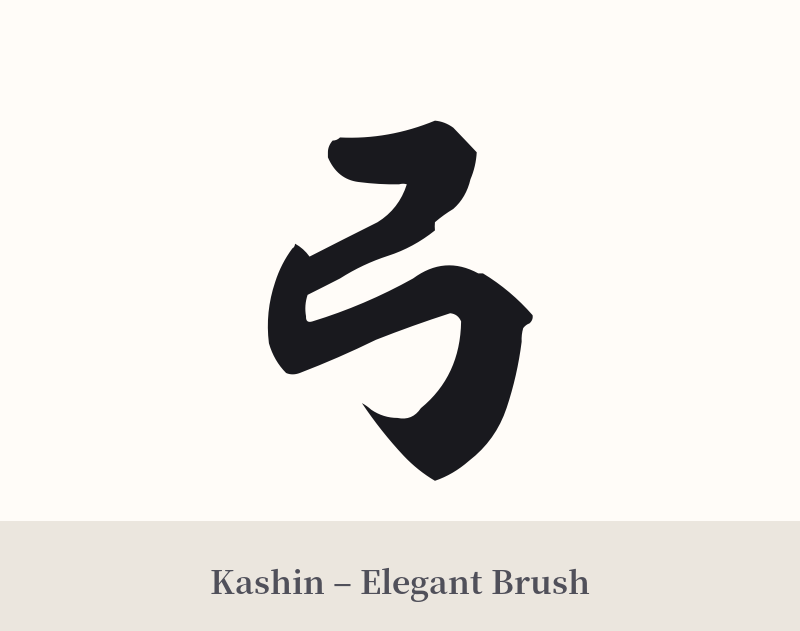
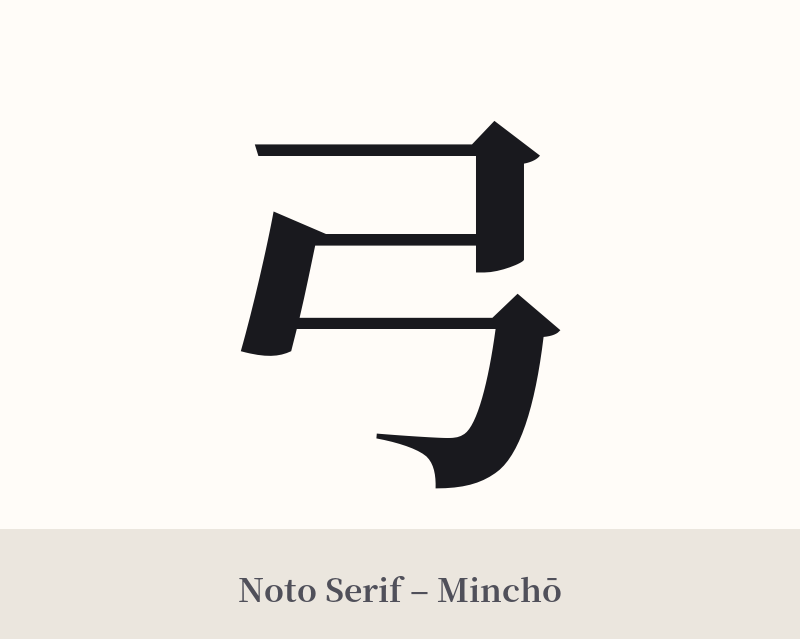
The same kanji can look dramatically different depending on the calligraphy style. Choose a font that matches the mood you want for your tattoo or design.
🎨 Tattoo Suitability
📐 Tattoo Design Guide
The kanji 弓 is an excellent choice for a tattoo due to its clean lines and strong symbolism. Its simplicity allows for a wide range of artistic interpretations.
– Placement: Its natural verticality makes it well-suited for placements along the forearm, bicep, calf, or even the spine. For a smaller, more subtle design, the wrist, ankle, or behind the ear are excellent spots.
– Font Style: A bold, dynamic calligraphy style (shodō) can emphasize the bow's power and history, with ink splashes suggesting movement and energy. Conversely, a clean, minimalist style like a sans-serif or Mincho font can highlight its elegant simplicity and modern appeal.
– Visual Tips: While powerful on its own, 弓 can be combined with other elements. Consider pairing it with its counterpart, 矢 (ya, arrow), either nocked on the string or flying towards an unseen target. It can also be integrated into a larger design featuring a Zen circle (ensō), a cherry blossom branch to symbolize the transient nature of life, or subtle mountain scenery.
Comments