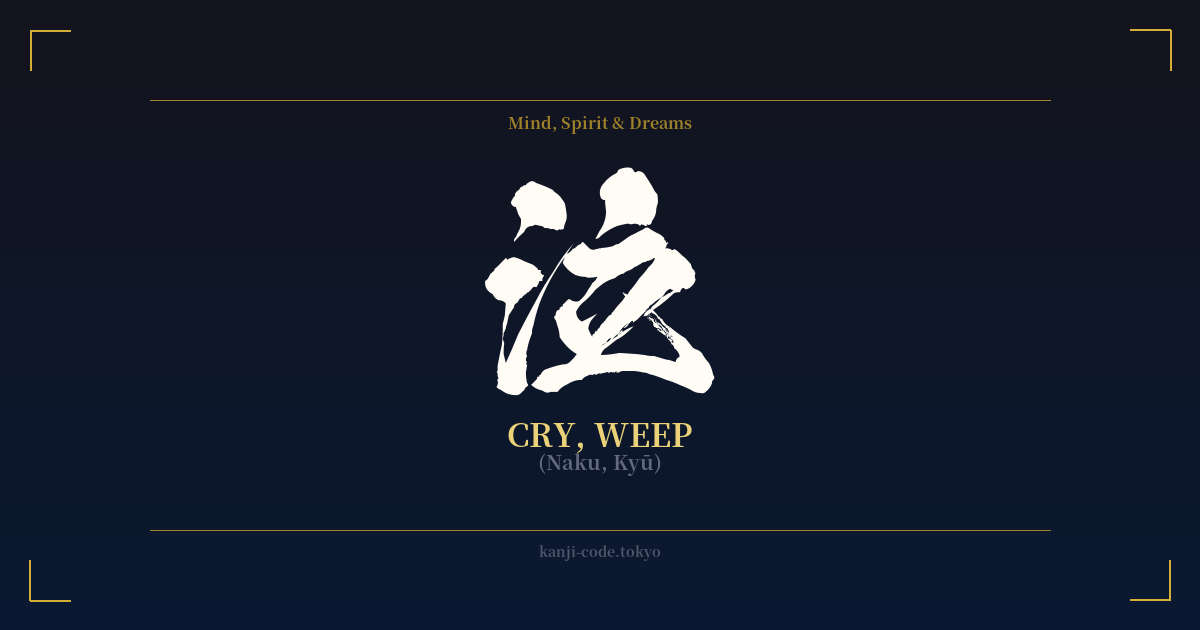
✍️ 泣 (Naku, Kyū) — Cultural Context
The kanji 泣 (naku) is a beautifully simple yet profound character that captures the universal human act of crying. Its visual construction tells a story in itself. The character is a combination of the radical 氵 (sanzui), which means 'water,' and the character 立 (tatsu), meaning 'to stand.' Together, they create the vivid image of tears (water) flowing while a person is standing, a powerful depiction of an emotional state.
In Japanese culture, the act of crying is layered with complexity. While it is a natural expression of emotion, there is also a strong cultural value placed on 'gaman' (我慢), the act of enduring the seemingly unbearable with patience and dignity. Public displays of strong emotion are often restrained. Therefore, crying is frequently seen as a very personal, private act of release, reserved for moments of overwhelming sadness, joy, or frustration.
This doesn't mean the emotion is absent. Japanese literature, film, and art are filled with poignant scenes of weeping. The concept of 'mono no aware' (物の哀れ), a gentle sadness for the transience of things, often finds its expression in quiet tears. Think of a character crying silently as cherry blossoms fall, a scene that perfectly blends beauty with sorrow. The act of crying is a pivotal moment, a breaking point where suppressed feelings finally surface.
It's crucial to understand that 'naku' encompasses a wide spectrum of feelings, not just grief. The Japanese language has specific words for different types of crying: 'ureshi-naki' (嬉し泣き) for tears of joy, 'kuyashi-naki' (悔し泣き) for tears of frustration, and 'kandō shite naku' (感動して泣く) for being moved to tears. This demonstrates the culture's deep recognition of the nuances of this powerful emotional release.
One fascinating linguistic point is the existence of another kanji pronounced 'naku': 鳴く. While 泣く is exclusively for human crying, 鳴く refers to the sounds made by animals—a bird's chirp, a cat's meow, or a frog's croak. This distinction highlights a sensitivity in the language, separating the complex emotional tears of humans from the vocalizations of the animal kingdom.
🖌️ Font Styles for 泣
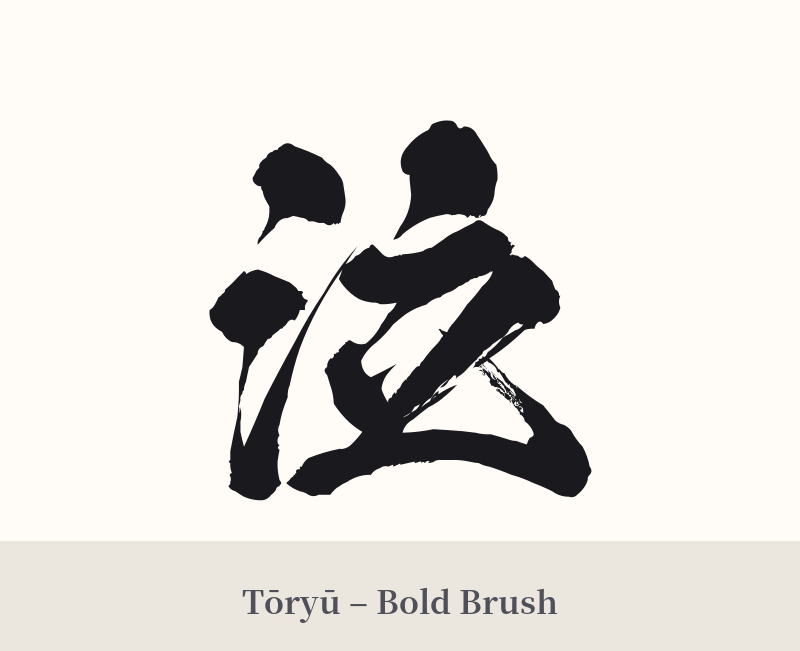
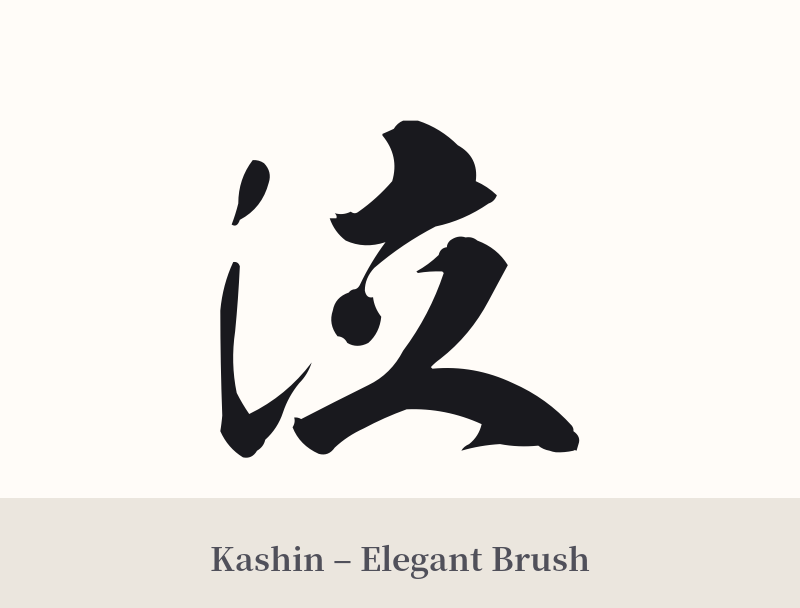
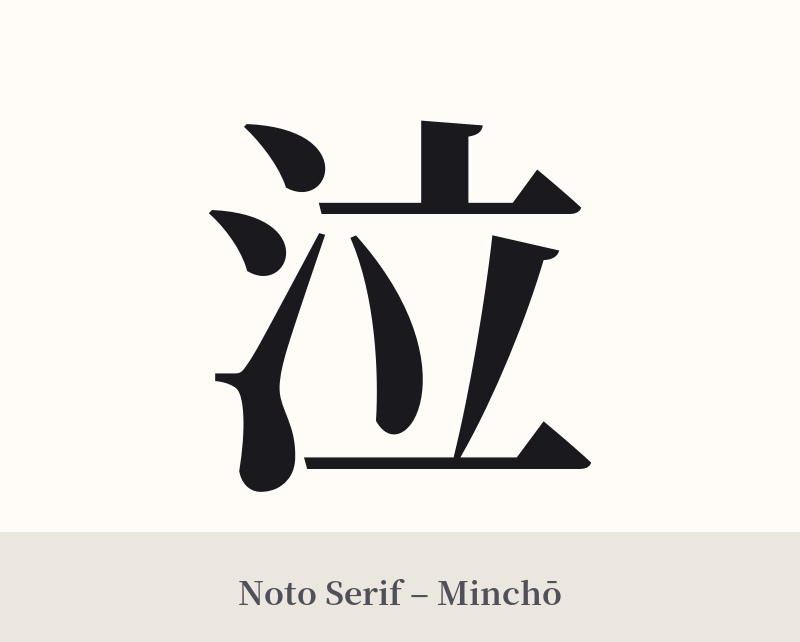
The same kanji can look dramatically different depending on the calligraphy style. Choose a font that matches the mood you want for your tattoo or design.
🎨 Tattoo Suitability
📐 Tattoo Design Guide
For a tattoo of 泣, the design choices can deeply influence its meaning. Consider these points:
– Placement: Because crying is such a personal act, small, intimate placements can be very effective. Consider the inner wrist, behind the ear, on the collarbone, or over the heart. These locations suggest a private, deeply felt emotion.
– Font Style: The style of calligraphy can change the entire mood. A fluid, cursive script like 'gyōsho' or 'sōsho' can evoke the flowing of tears and a sense of release. In contrast, a bold, blocky 'kaisho' or 'Mincho' style might represent a more stark, painful, or definitive sorrow.
– Visual Elements: Adding other elements can provide context. For tears of joy, surround the kanji with cherry blossom petals. For grief or remembrance, pair it with a single falling maple leaf. You could even stylize the 'water' radical (氵) on the left to look like actual tears dripping down, integrating the meaning directly into the form.
Comments