✍️ 歌舞伎 (Kabuki) — Cultural Context
Kabuki is one of Japan's three major classical theaters, alongside Noh and Bunraku puppet theater. Its origins are surprisingly rebellious and avant-garde. The word itself is believed to derive from the verb 'kabuku,' meaning 'to lean' or 'to be out of the ordinary.' In the early 17th century, 'kabukimono' were eccentrically dressed samurai or commoners who defied social norms. This spirit of the bizarre and fashionable was captured on stage by a woman named Izumo no Okuni, who began performing unique, stylized dances in the dry riverbeds of Kyoto around 1603. Her performances, which blended folk dance with sensual and comedic skits, were an instant sensation and are considered the birth of Kabuki.
Initially performed by all-female troupes (onna-kabuki), the performances often had an erotic charge that drew huge crowds but also the ire of the ruling Tokugawa shogunate. Citing concerns over public morality and fights breaking out among patrons for the affection of the actresses, the government banned women from the stage in 1629. Young male actors (wakashu-kabuki) took over, but they too were banned for similar reasons in 1652. This led to the final and lasting form of Kabuki: yaro-kabuki, performed exclusively by adult male actors. This is the origin of the 'onnagata,' male actors who specialize in female roles and have mastered the art of portraying idealized femininity through gesture, voice, and movement.
During the Edo period (1603-1868), Kabuki became the premiere form of entertainment for the burgeoning merchant class. Its stories fell into two main categories: 'jidaimono' (historical plays) depicting grand tales of samurai, gods, and epic battles, and 'sewamono' (domestic plays) focusing on the lives, loves, and tragedies of common people. The stagecraft became increasingly sophisticated, featuring revolving stages, trapdoors, and the 'hanamichi' (flower path), a long runway extending from the stage into the audience, used for dramatic entrances and exits. The visual spectacle of Kabuki is one of its defining features. Actors wear elaborate costumes and dramatic 'kumadori' makeup, where bold lines of color symbolize the character's nature—red for heroic strength, blue for villainy, and brown for supernatural beings. A performance's climax is often marked by a 'mie,' where the actor freezes in a powerful, expressive pose, creating a living woodblock print for the audience to appreciate. Today, Kabuki is recognized as a UNESCO Intangible Cultural Heritage, a vibrant art form that continues to captivate audiences with its blend of drama, music, dance, and breathtaking spectacle.
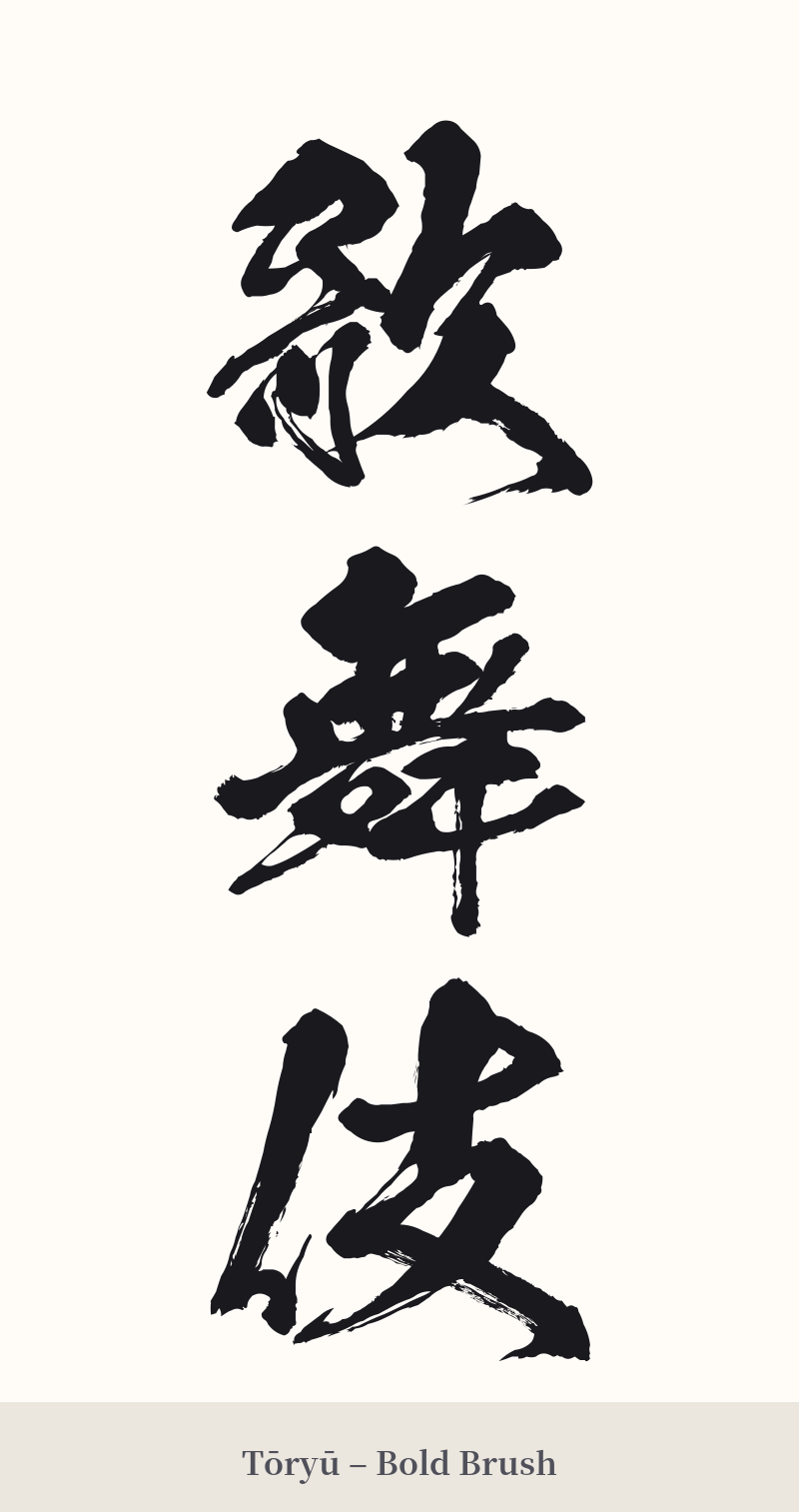
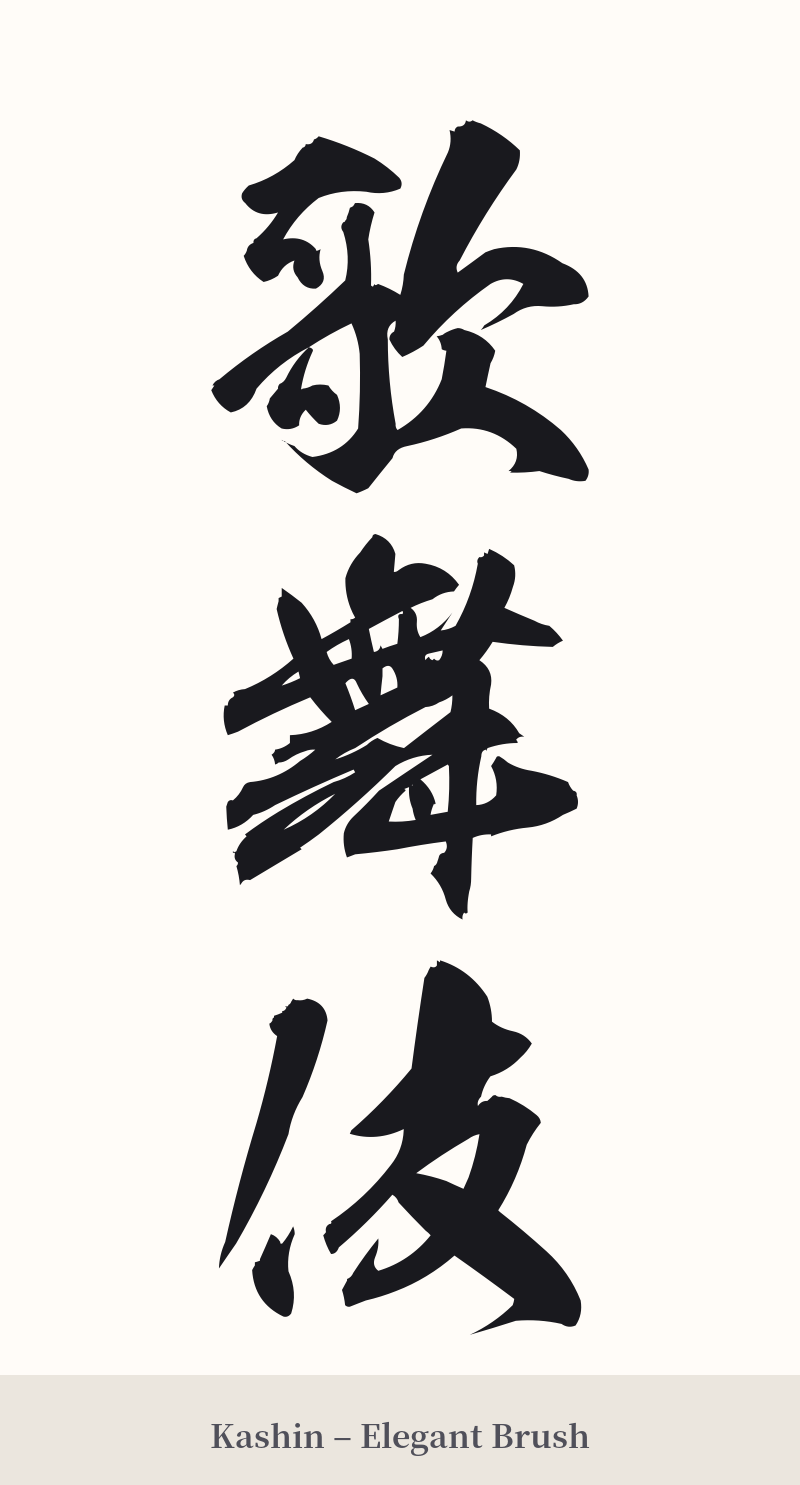
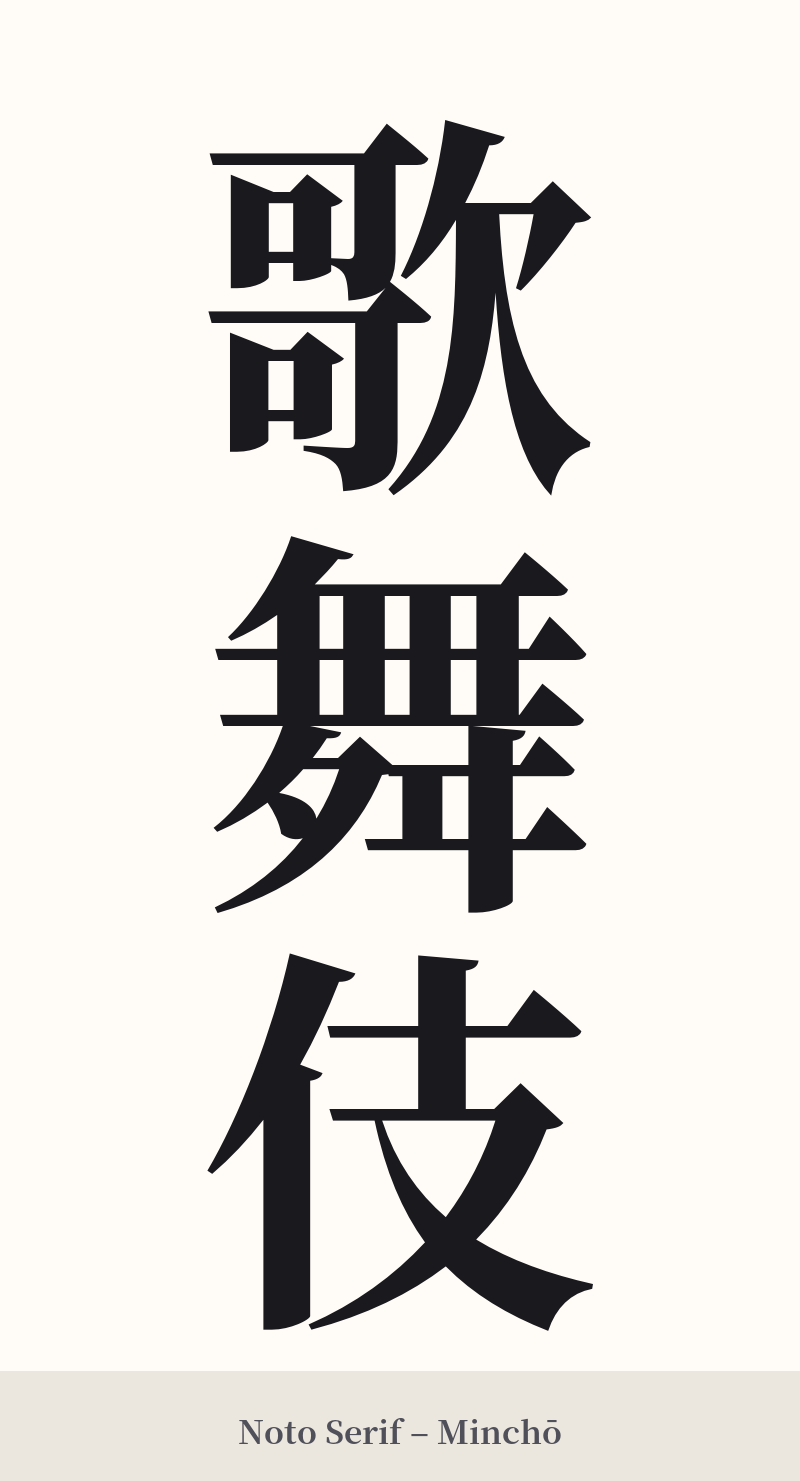
🖌️ Font Styles for 歌舞伎
The same kanji can look dramatically different depending on the calligraphy style. Choose a font that matches the mood you want for your tattoo or design.
🎨 Tattoo Suitability
📐 Tattoo Design Guide
For a 歌舞伎 tattoo, a vertical alignment is almost always the best choice, echoing traditional Japanese calligraphy scrolls. This layout allows the three characters to flow into one another gracefully.
– Placement: The forearm, calf, or along the spine are excellent locations that provide the necessary vertical space for the design to breathe. These spots allow for a large enough size to preserve the detail in the complex characters.
– Font Style: The font should match the dramatic nature of Kabuki itself. A dynamic, semi-cursive style like Gyosho can capture the movement and emotion of the performance. For a more powerful and traditional look, a bold, angular Kaisho (block script) emphasizes the weight and history of the art form.
– Visual Tips: Consider incorporating iconic Kabuki elements. You could ask your artist to use the colors from 'kumadori' makeup, such as a splash of red or blue, within or around the kanji. Another idea is to frame the characters with a pattern from a traditional Kabuki costume or a motif like a folding fan.
Comments