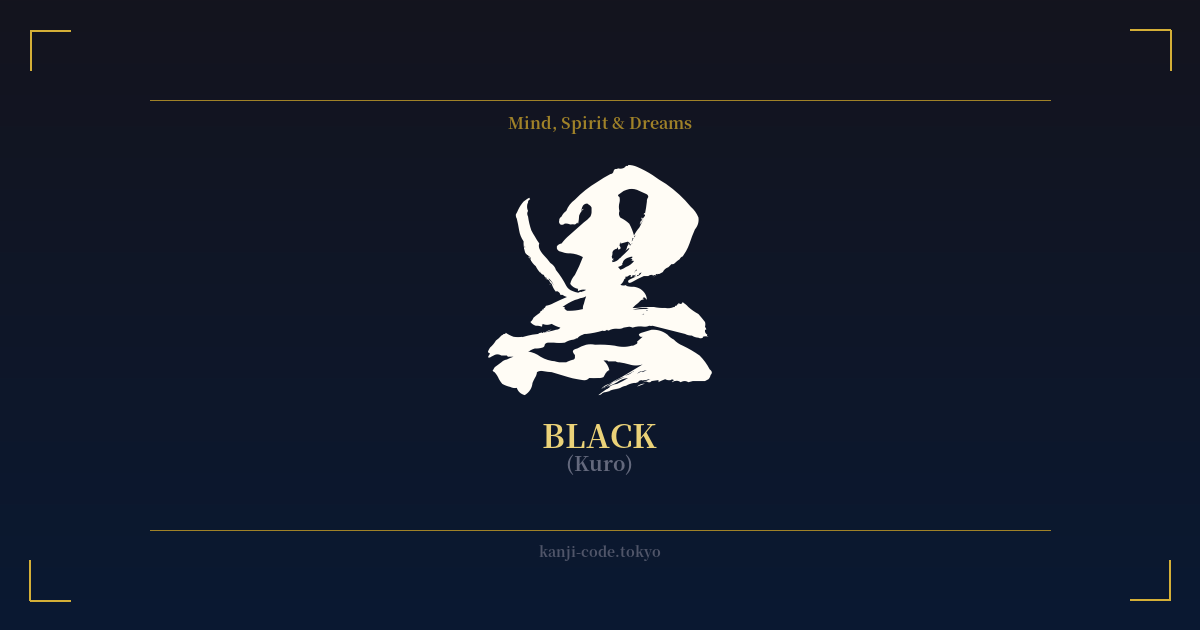
✍️ 黒 (Kuro) — Cultural Context
The Japanese kanji for black, 黒 (kuro), is far more than a simple descriptor of color. Its origins are deeply pictorial and evocative. The character is a pictograph of a fire (火, represented by the four dots at the bottom) under a chimney, with the top part depicting the soot blackening the opening. This ancient image grounds the character in a tangible, almost primal experience of darkness created by smoke and ash.
In Japanese culture, black holds a complex and dualistic symbolism. On one hand, it is the color of formality, elegance, and sophistication. The term 'shikkoku' (漆黒) refers to the deep, lustrous black of high-quality lacquerware, an object of great beauty and craftsmanship. In martial arts, the black belt (黒帯, kuro-obi) signifies mastery and the highest level of achievement, representing the culmination of years of dedication.
This association with depth and mastery extends into aesthetics and philosophy. The art of sumi-e (墨絵), or ink wash painting, relies entirely on the infinite gradations of black ink to create worlds of profound beauty on white paper. It embodies the concept of 'yūgen' (幽玄), a deep, mysterious grace that is hinted at rather than explicitly shown, often found in the shadows and the darkness.
On the other hand, black can represent the unknown, the mysterious, and the negative. It is the color of night (夜, yoru) and darkness (闇, yami). Certain phrases capture this darker side, such as 'haraguroi' (腹黒い), which literally means "black-bellied" and describes someone who is cunning, scheming, and has a hidden dark heart. In a business context, however, 'kuroji' (黒字), or "black figures," is a positive term meaning to be profitable, contrasting with 'akaji' (赤字), "red figures," which means to be in debt.
While white was the traditional color for mourning in Shinto rituals, modern Japanese funerals have adopted the Western custom of wearing black. This blending of traditions shows how the meaning of black continues to evolve. Today, black is a staple in Japanese fashion, representing a chic, minimalist, and powerful aesthetic, championed by designers like Yohji Yamamoto and Rei Kawakubo. It is a color of power, mystery, and profound beauty, holding within its single stroke a universe of meaning.
🖌️ Font Styles for 黒
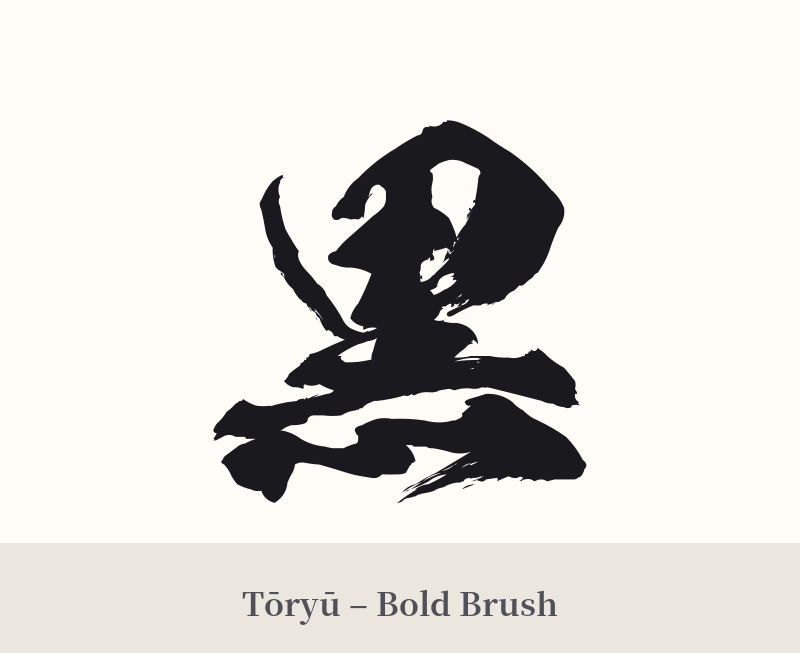
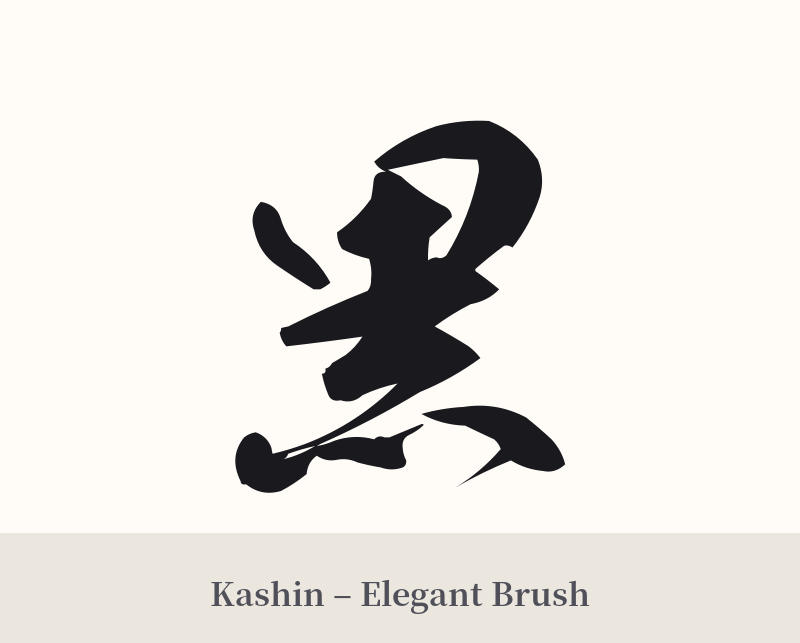
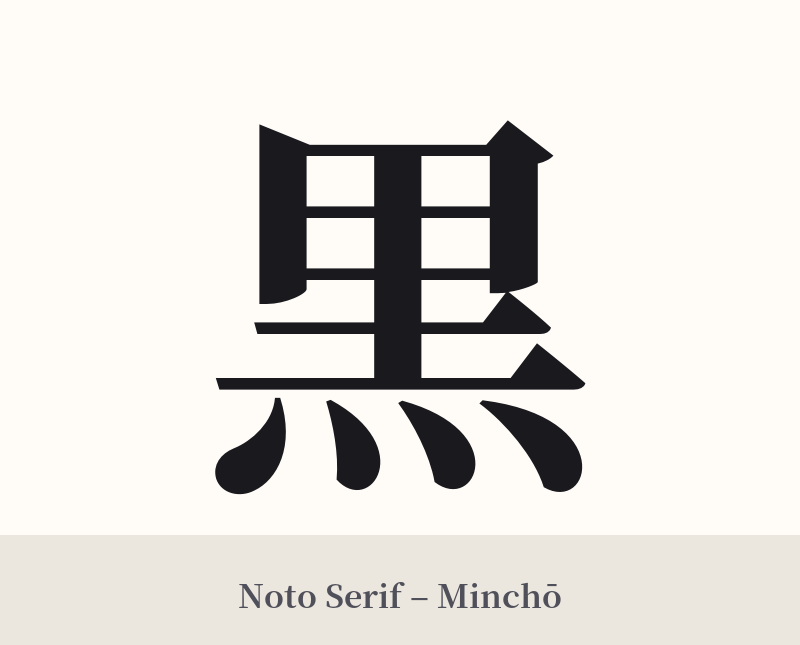
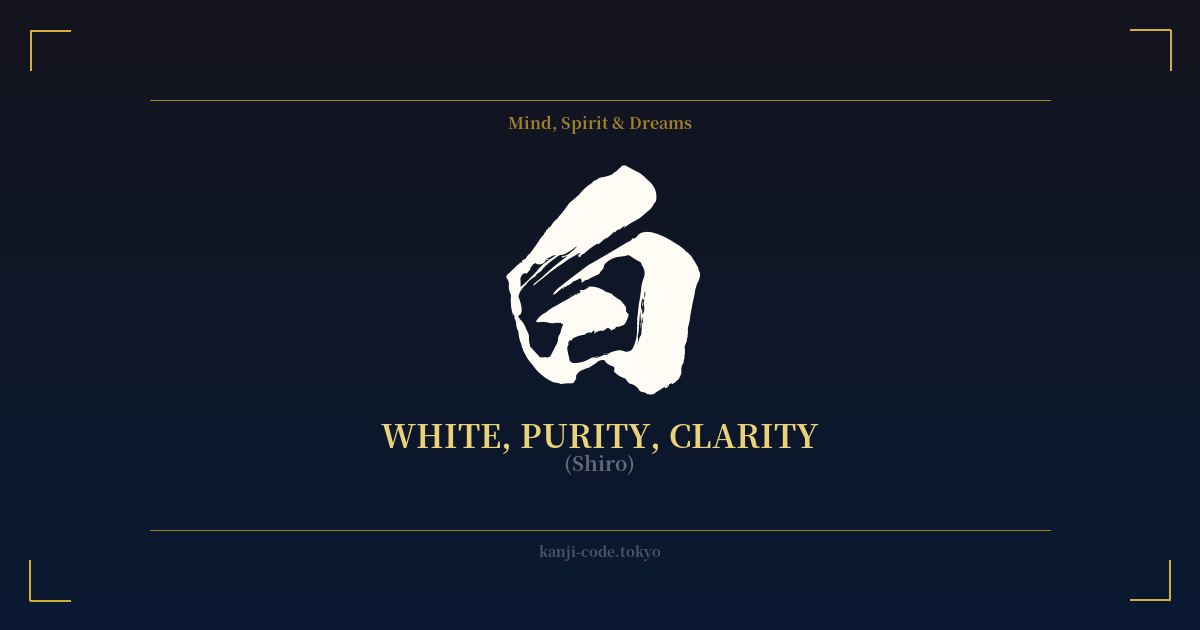
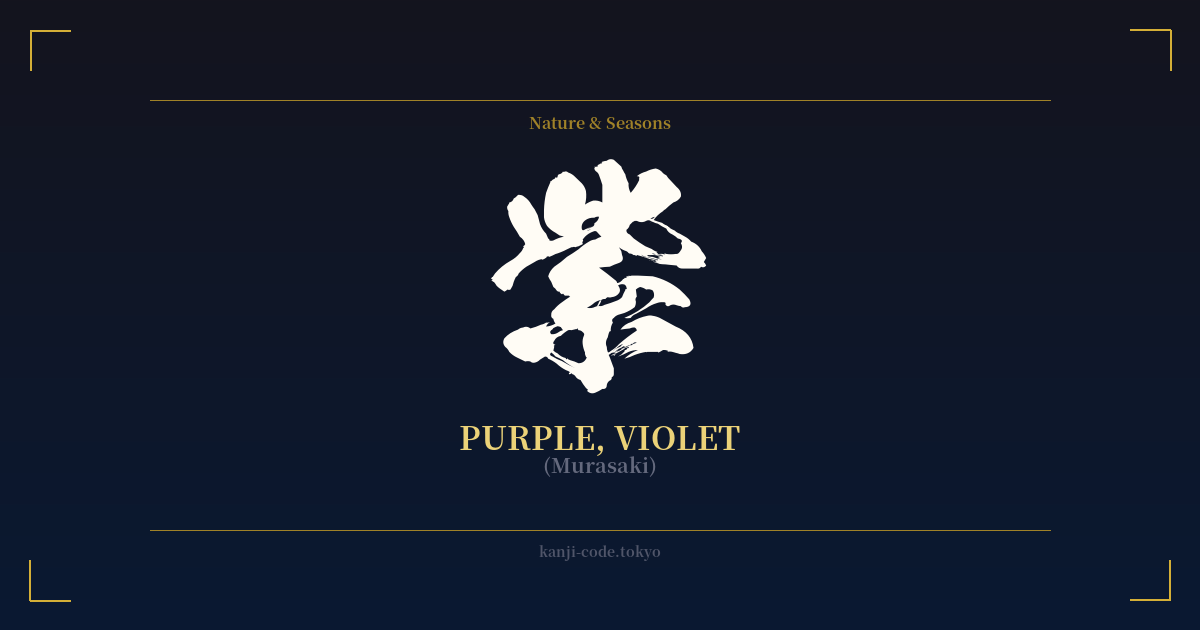
The same kanji can look dramatically different depending on the calligraphy style. Choose a font that matches the mood you want for your tattoo or design.
🎨 Tattoo Suitability
📐 Tattoo Design Guide
The kanji 黒 (Kuro) is a visually strong and versatile character, making it an excellent choice for a tattoo. Its balanced form and solid presence work well in a variety of styles and placements.
– Placement: For a bold statement, consider the forearm, calf, or the back of the shoulder. Its compact, squarish shape also makes it suitable for smaller, more subtle placements like the wrist or behind the ear.
– Style Suggestions: A thick, powerful brushstroke style (Gyosho or Kaisho) can emphasize its connection to strength and mastery, like a calligrapher's mark. For a more modern and chic look, a clean, sharp Mincho or Gothic font can highlight its association with elegance and design.
– Visual Tips: Consider incorporating it into a larger piece. A single black character within a red circle (Enso or Hinomaru) creates a classic, high-contrast design. It can also serve as a powerful background element or be paired with symbolic imagery like a white lotus, a koi fish, or a dragon to create a narrative of balance between light and dark, chaos and order.
Comments