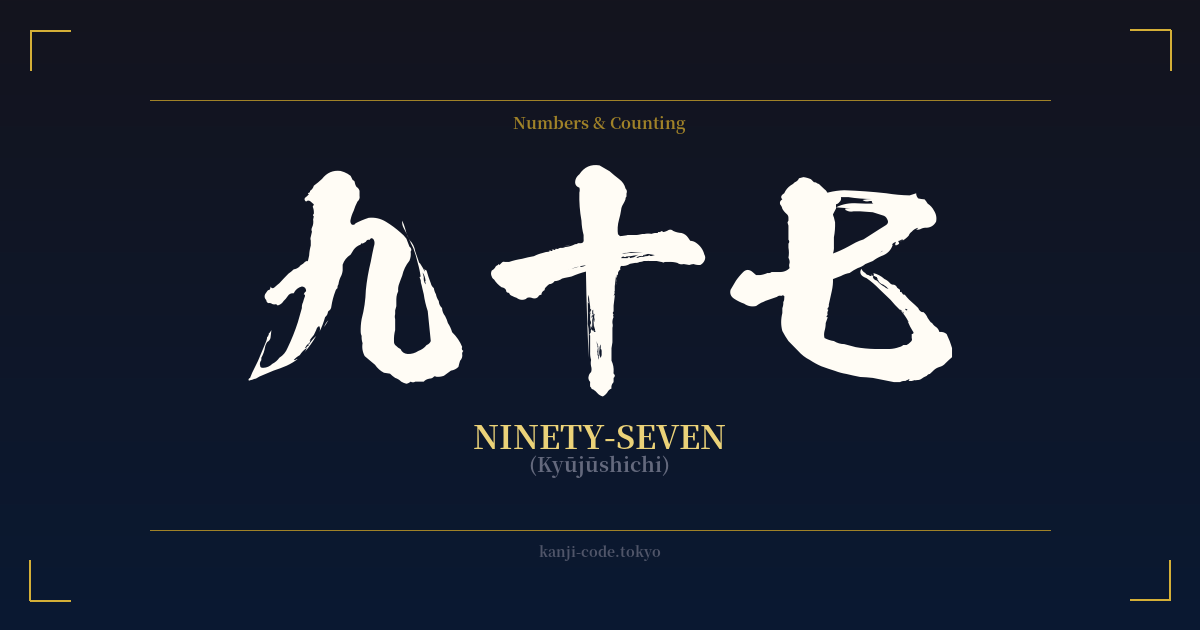
✍️ 九十七 (Kyūjūshichi) — Cultural Context
The kanji 九十七 (Kyūjūshichi) literally means 'ninety-seven'. In the Japanese language, large numbers are constructed in a logical, additive, and multiplicative way. The structure is 'nine-ten-seven', or (九 x 十) + 七, which equals 97. This systematic approach is a hallmark of how numbers are expressed using kanji, creating a clear and unambiguous system that has been used for centuries in official documents, literature, and formal contexts.
While Arabic numerals (0-9) are ubiquitous in modern Japan for everyday use like prices and phone numbers, kanji numerals, known as 'daiji' (大字), are still required for legal and financial documents to prevent fraud. The simplicity of characters like 一 (one), 二 (two), and 三 (three) makes them easy to alter, so more complex kanji are sometimes used. However, for general use, 九, 十, and 七 are standard.
The number 97 itself does not hold a widespread, powerful cultural significance like some other numbers. However, the individual digits can carry associations. The number nine, 九 (kyū), is sometimes considered unlucky because its reading is homophonous with the word for suffering, 苦 (ku). Similarly, seven, 七, can be read as 'shichi', which sounds somewhat like 死 (shi), the word for death. For this reason, the alternative 'nana' reading is often preferred for the number seven. Despite these potential negative homophones, in the context of a larger number like 九十七, these associations are completely lost. No Japanese person would look at 'ninety-seven' and think of suffering or death; it is simply a number.
In specific contexts, 97 can gain meaning. For example, it could represent the year 1997 (平成9年, Heisei 9-nen). In Shinto, the number holds significance in certain rituals at the Ise Grand Shrine, one of Japan's most sacred sites. Historically, it can also refer to the 97th Emperor of Japan, Emperor Go-Murakami. The beauty of 九十七 lies not in a universal meaning, but in its potential to represent a specific, personal, or historical data point with the elegance and tradition of the kanji system.
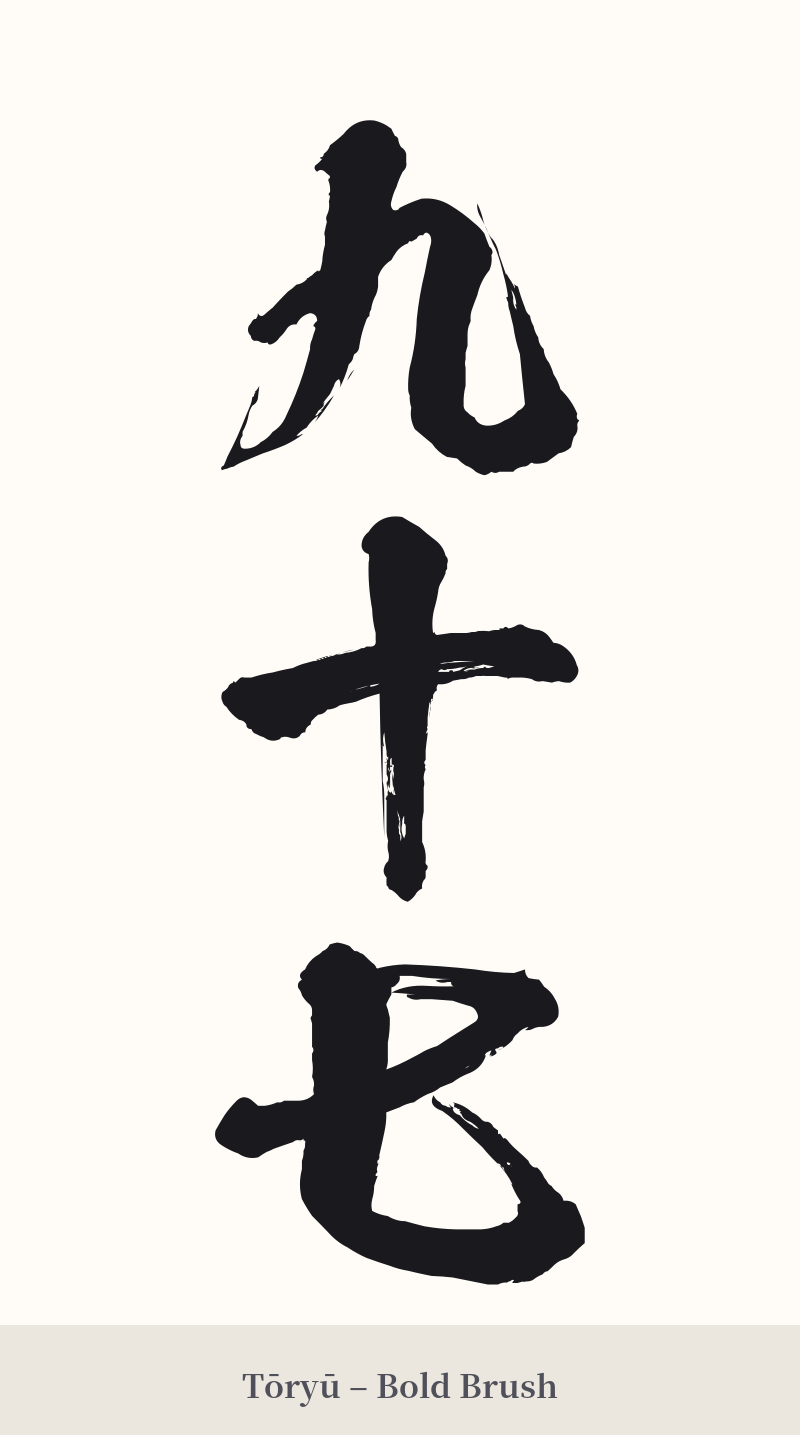
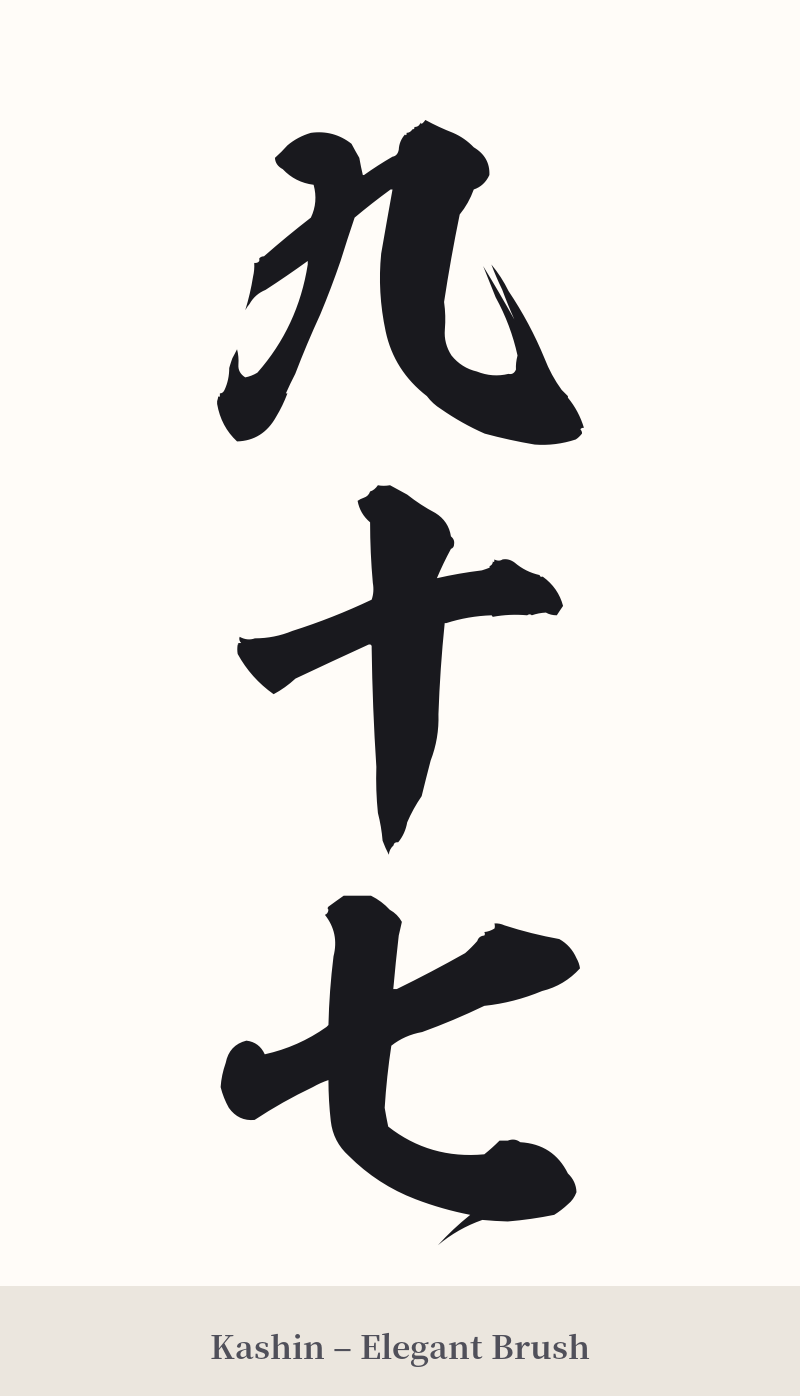
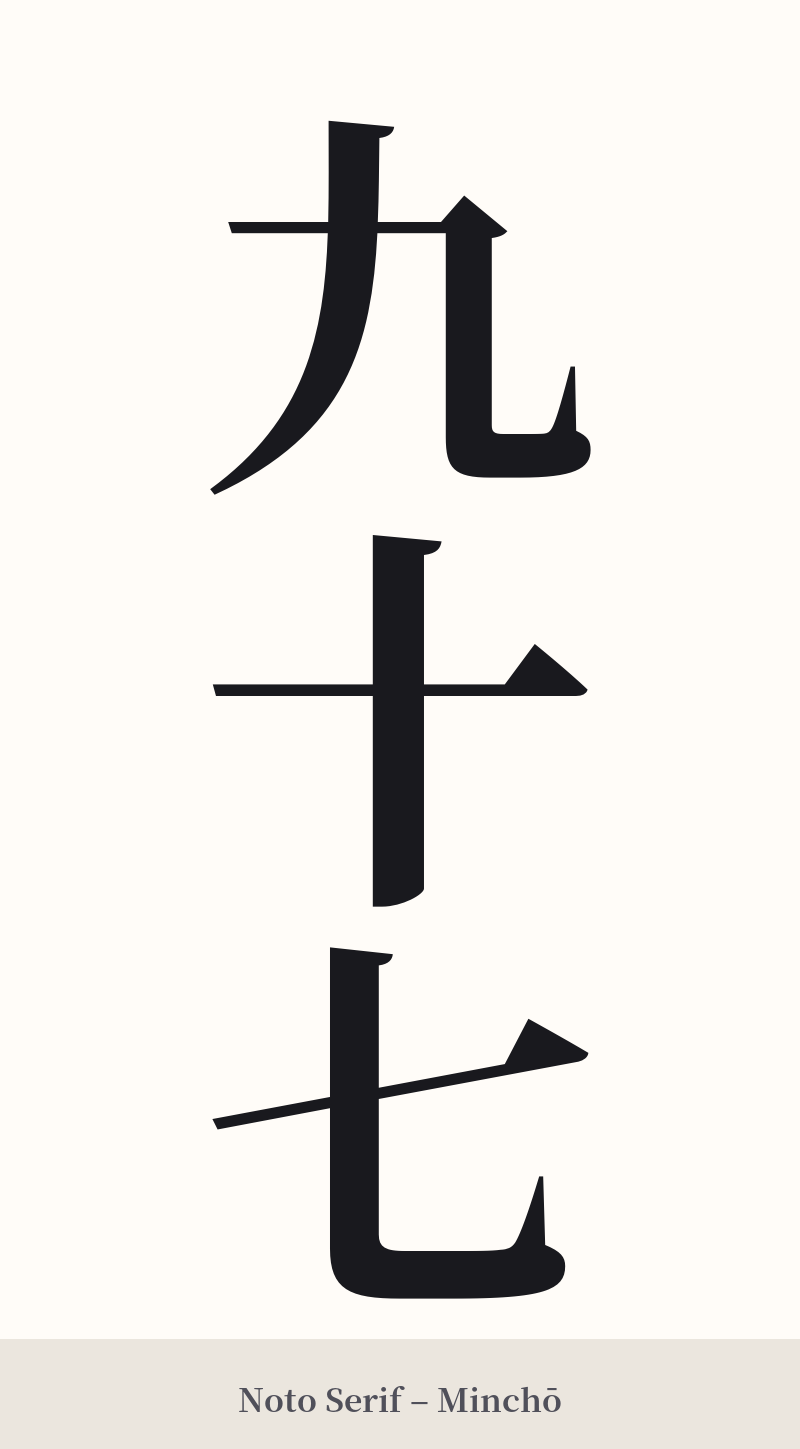
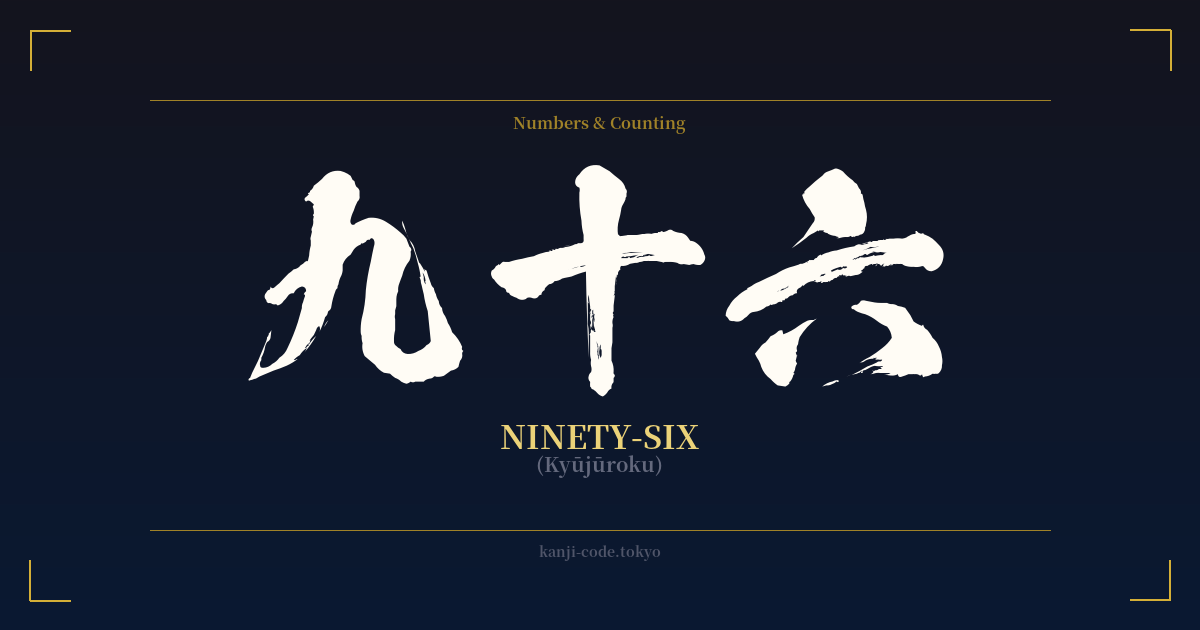
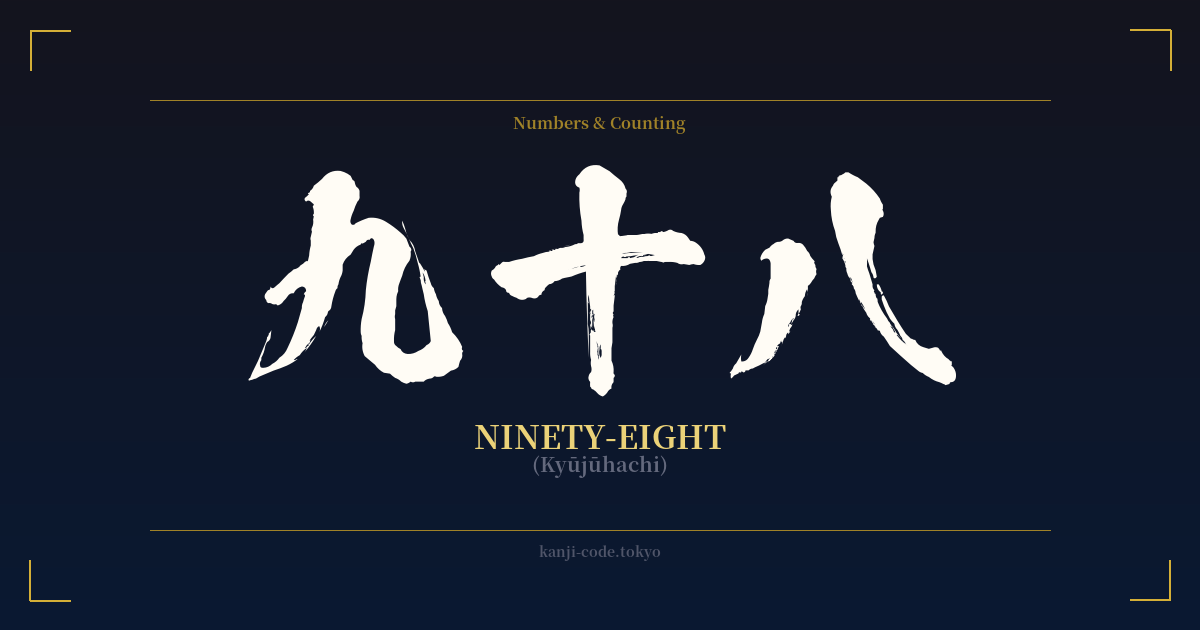
🖌️ Font Styles for 九十七
The same kanji can look dramatically different depending on the calligraphy style. Choose a font that matches the mood you want for your tattoo or design.
🎨 Tattoo Suitability
📐 Tattoo Design Guide
The kanji 九十七 offers a clean, minimalist aesthetic. Its three simple characters work well in both vertical and horizontal arrangements, making it versatile for various placements.
– Placement: For a traditional vertical look, the spine, forearm, or along the ribs are excellent choices. A horizontal arrangement fits nicely across the collarbone, on the wrist, or above the elbow.
– Style: A bold, blocky font like a Gothic or Kaisho (block script) style will emphasize the clean lines and geometric nature of the characters. For a more artistic and fluid feel, a semi-cursive (Gyōsho) or full cursive (Sōsho) style can link the characters together, creating a sense of motion.
– Visual Tips: Consider incorporating it as part of a larger design. For instance, if '97 represents a birth year, it could be subtly integrated into a larger image that symbolizes something from that time. The simplicity of the characters allows them to be a supporting element without overwhelming the main design.
Comments