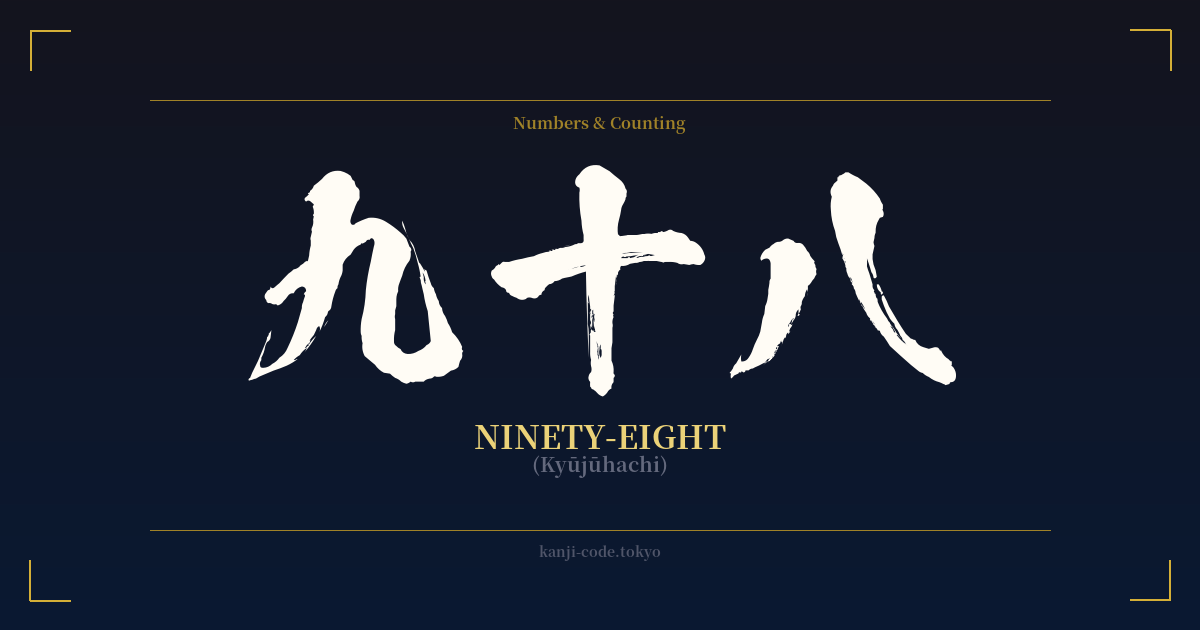
✍️ 九十八 (Kyūjūhachi) — Cultural Context
The Japanese word for ninety-eight, 九十八 (Kyūjūhachi), is a straightforward and logical construction. It is composed of the kanji 九 (kyū, nine), 十 (jū, ten), and 八 (hachi, eight). The structure follows a multiplicative and additive principle common in East Asian numbering systems: (九 x 十) + 八, or (9 x 10) + 8, equaling 98. This makes reading and writing larger numbers in kanji an elegant and systematic process.
While the number 98 itself doesn't hold a major, universally recognized symbolic meaning in Japanese culture, the individual characters that form it are rich with association. The number eight, 八 (hachi), is widely considered to be lucky. Its character shape widens at the bottom, a form known as 'suehirogari' (末広がり), which suggests expanding fortune and prosperity. In contrast, the number nine, 九 (kyū), can sometimes be considered unlucky because its pronunciation is homophonous with the word for suffering or hardship, 苦 (ku). However, it also shares a pronunciation with 久 (kyū), meaning 'long-lasting' or 'eternity,' giving it a dualistic nature.
One fascinating cultural lens through which to view the number 98 is its proximity to 100. In Japanese folklore, the concept of 'Tsukumogami' (付喪神) describes tools or objects that, upon reaching their 100th birthday, come to life and acquire a spirit. A 99-year-old object is on the very brink of this transformation. Therefore, the number 98 can be seen metaphorically as representing a state of being on the cusp of a profound change, a long journey nearing its powerful conclusion, or the accumulation of immense experience just before a new state of existence is achieved.
This idea positions 九十八 not just as a number, but as a symbol of advanced age, wisdom, and imminent transformation. It could represent the 98th year of a person's life, a 98th anniversary, or even the 98th step in a 100-step journey toward enlightenment or mastery. It speaks to endurance, longevity, and the quiet power that comes with vast experience, standing right at the threshold of a momentous milestone.
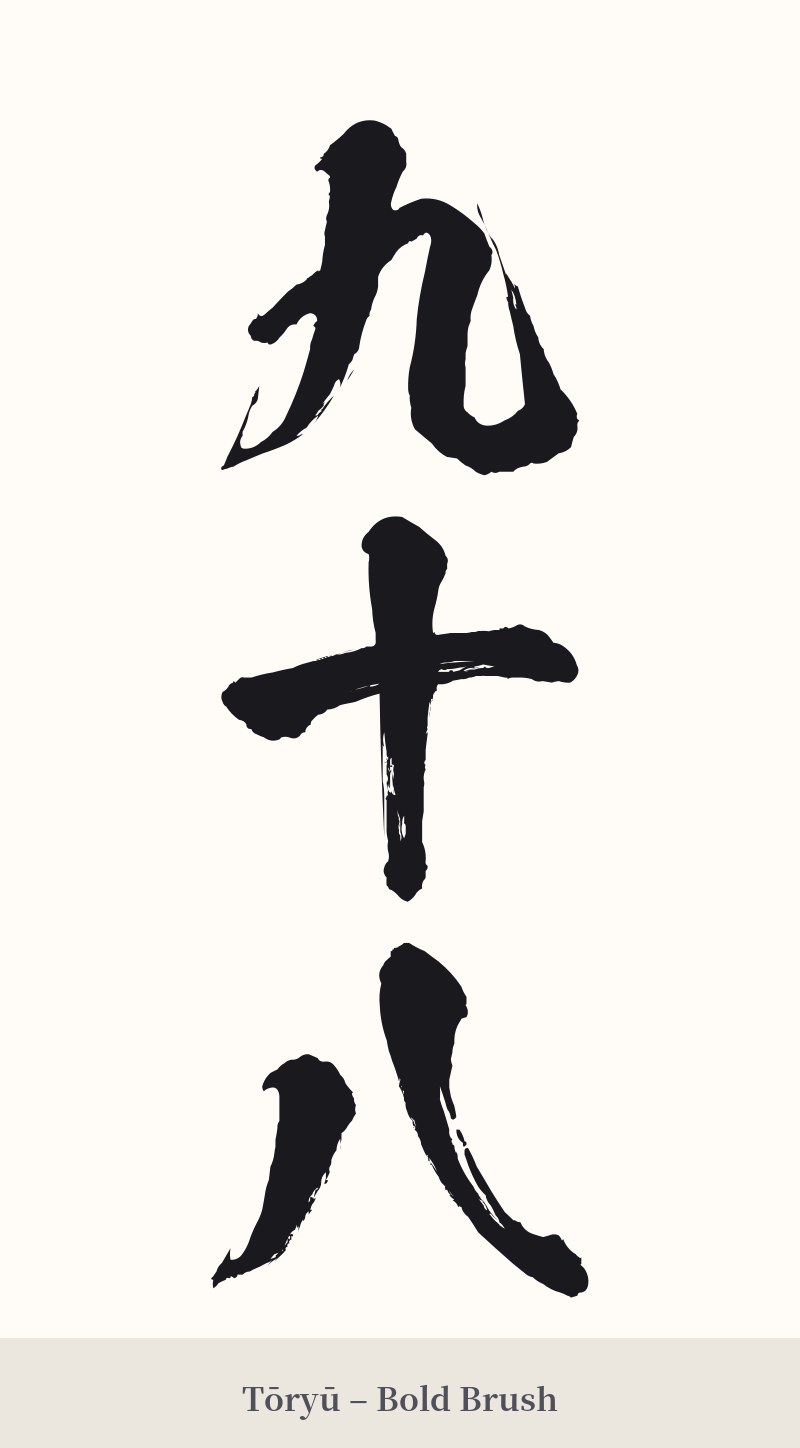
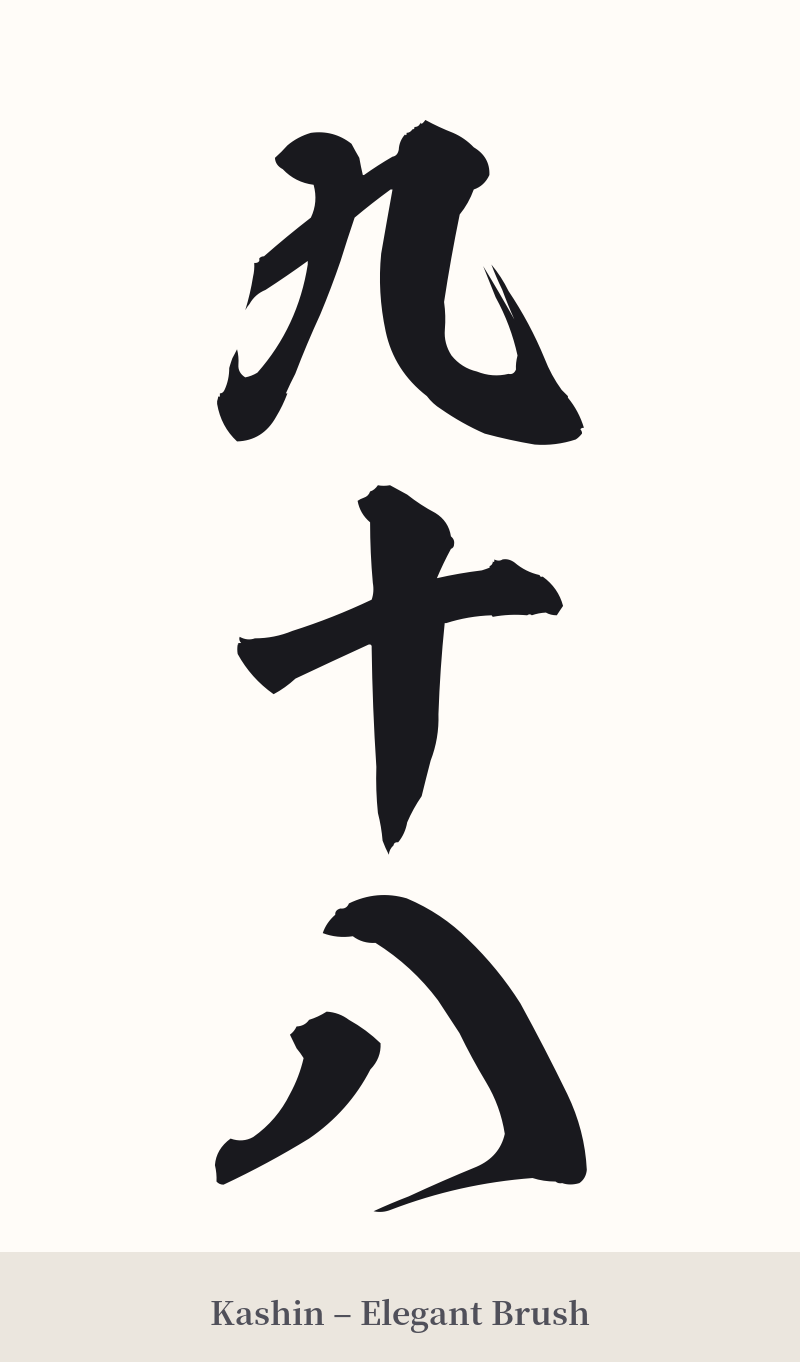
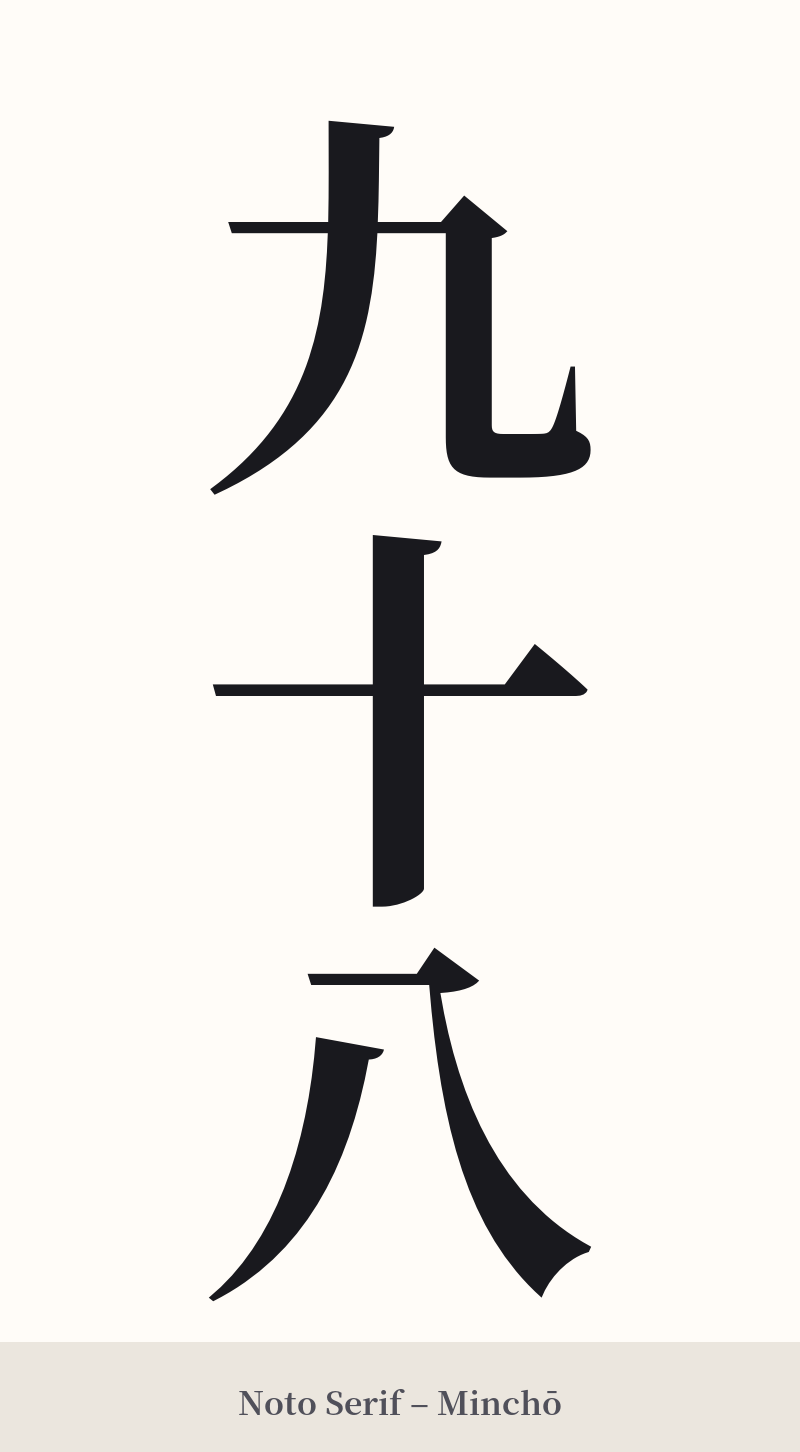
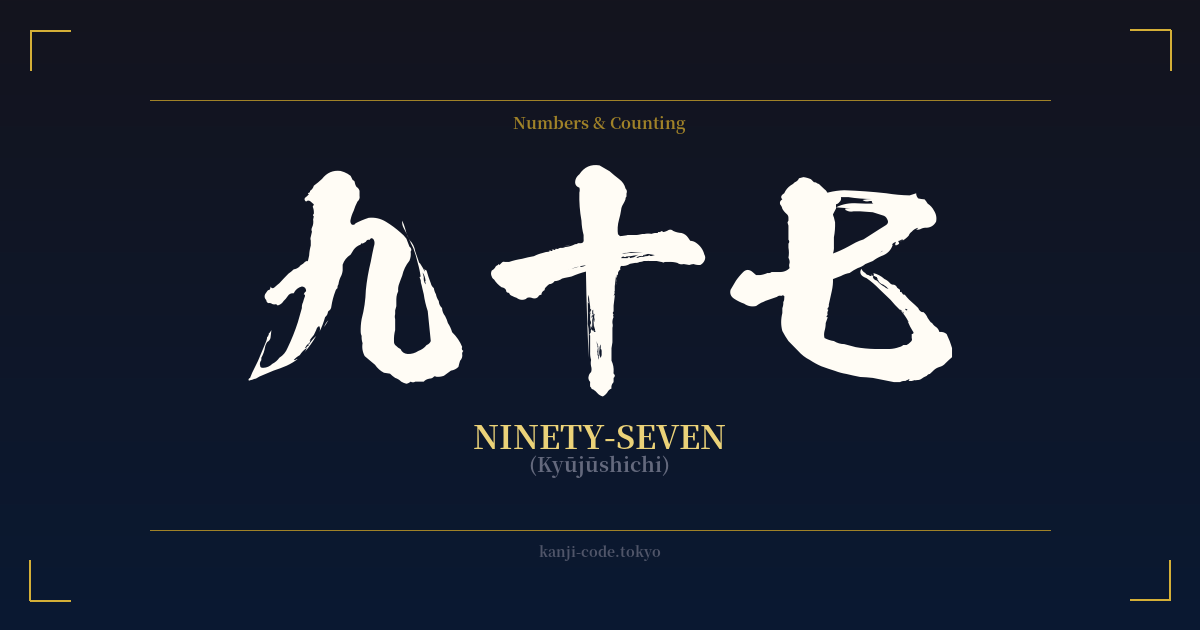
🖌️ Font Styles for 九十八
The same kanji can look dramatically different depending on the calligraphy style. Choose a font that matches the mood you want for your tattoo or design.
🎨 Tattoo Suitability
📐 Tattoo Design Guide
For a tattoo of 九十八, the design should honor its linear and numerical nature. The characters are all simple, with only two strokes each, which offers a clean, minimalist aesthetic.
– Placement: Vertical alignment is the most traditional and visually appealing choice for a multi-character kanji compound. It would look excellent running down the forearm, the calf, or along the bicep. A horizontal placement could work across the collarbone or upper back.
– Style: A crisp, clean font like a Mincho (serif) or Gothic (sans-serif) style would emphasize the simplicity and clarity of the characters. For a more artistic and dynamic look, a semi-cursive (gyōsho) or full-cursive (sōsho) calligraphy style could inject energy into the simple forms, making the strokes flow together.
– Visual Tips: Since the meaning is highly personal, consider incorporating a small, subtle element that hints at the number's significance to you. This could be a date in numerals, a tiny symbol of a hobby, or an abstract design that complements the flow of the kanji without overpowering them.
Comments