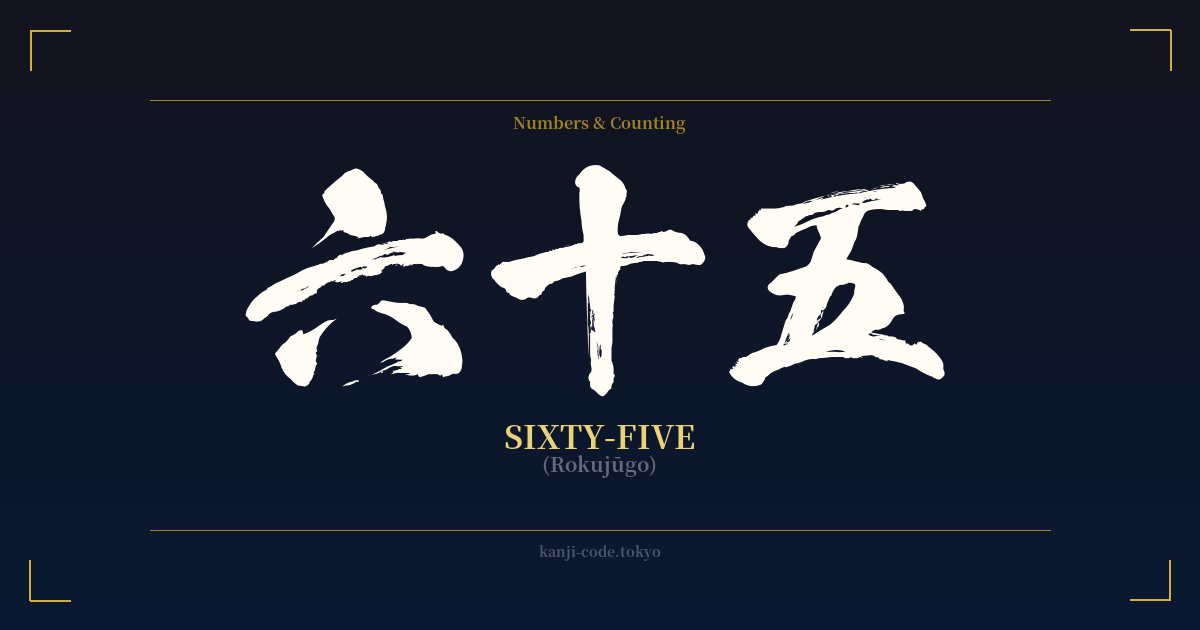
✍️ 六十五 (Rokujūgo) — Cultural Context
The Japanese word for sixty-five, 六十五 (Rokujūgo), is a perfect example of the logical and straightforward nature of the Japanese numerical system. It is not a single, abstract symbol but a compound word constructed with mathematical precision. The structure is simple: 六 (roku) means six, 十 (jū) means ten, and 五 (go) means five. The formula is (六 × 十) + 五, or (6 x 10) + 5, which equals 65. This multiplicative-additive system is consistent across most numbers, making it easy to read and understand once you know the basic characters from one to ten, plus the characters for hundred, thousand, and so on.
While the number itself doesn't carry deep mythological or spiritual symbolism, the age of sixty-five holds significant social and cultural weight in modern Japan. It comes just after the traditionally pivotal age of sixty, known as 還暦 (kanreki). Kanreki marks the completion of a full 60-year cycle of the Chinese zodiac and was historically seen as a second childhood, a time of rebirth and retirement. Traditionally, companies set their mandatory retirement age at 60.
However, with Japan's aging population and increasing life expectancy, the concept of retirement is changing. The age of sixty-five has become the new benchmark for the full receipt of public pensions and is increasingly the de facto retirement age. For many, turning sixty-five is no longer about ending a career but transitioning into a new phase of life. This could involve finding new, less demanding work, dedicating more time to hobbies like gardening or calligraphy, traveling, or volunteering in the community.
Therefore, while 六十五 is numerically plain, as an age it represents a significant milestone in contemporary Japanese life. It signifies the beginning of one's "silver years," a period of post-career freedom, personal rediscovery, and often, a deeper engagement with family and community. It embodies a quiet transition from the structured obligations of working life to a more self-directed and leisurely existence, a chapter earned after decades of contribution to society.
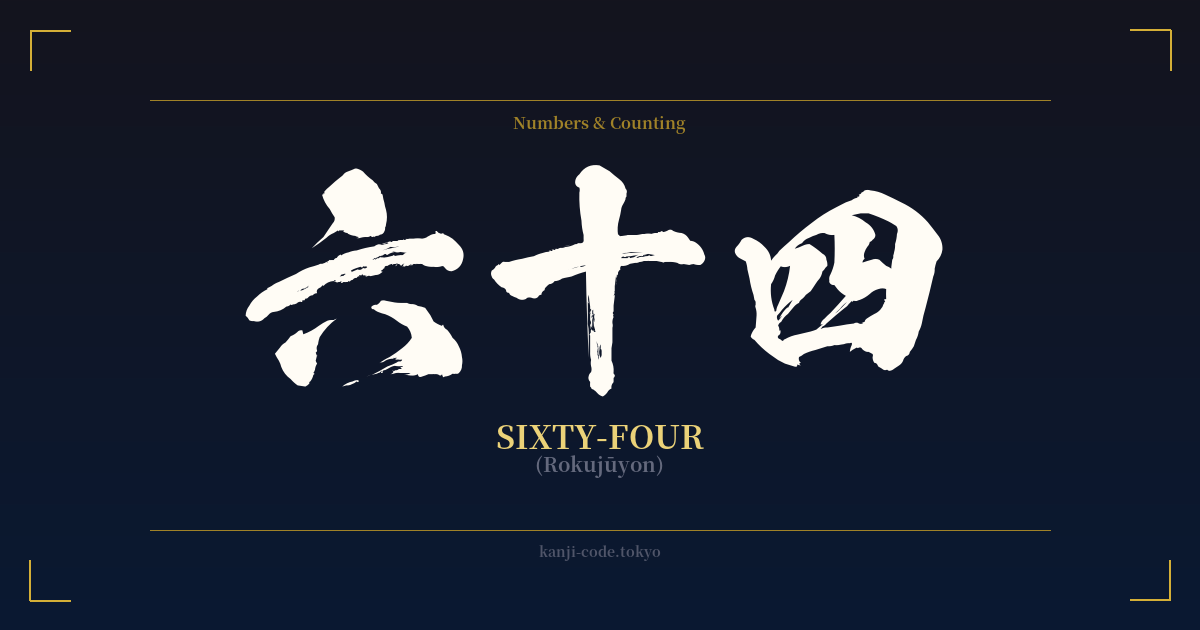
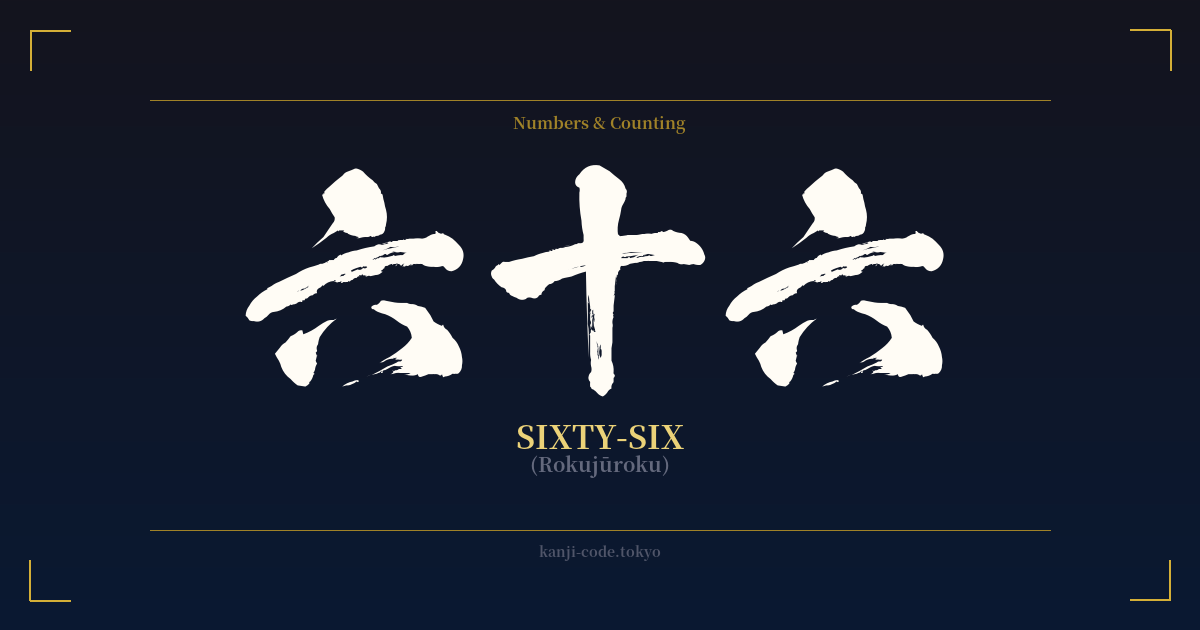
🖌️ Font Styles for 六十五
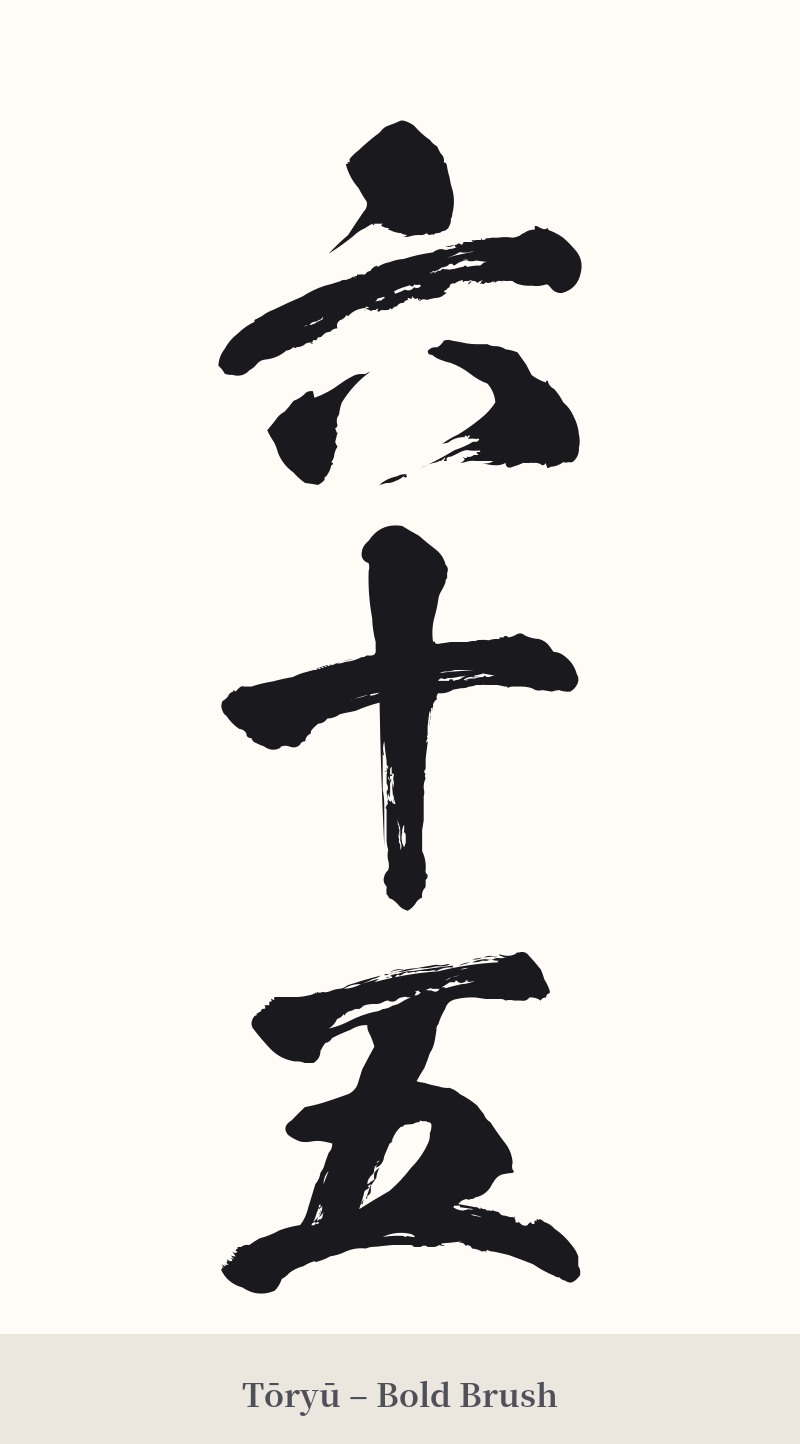
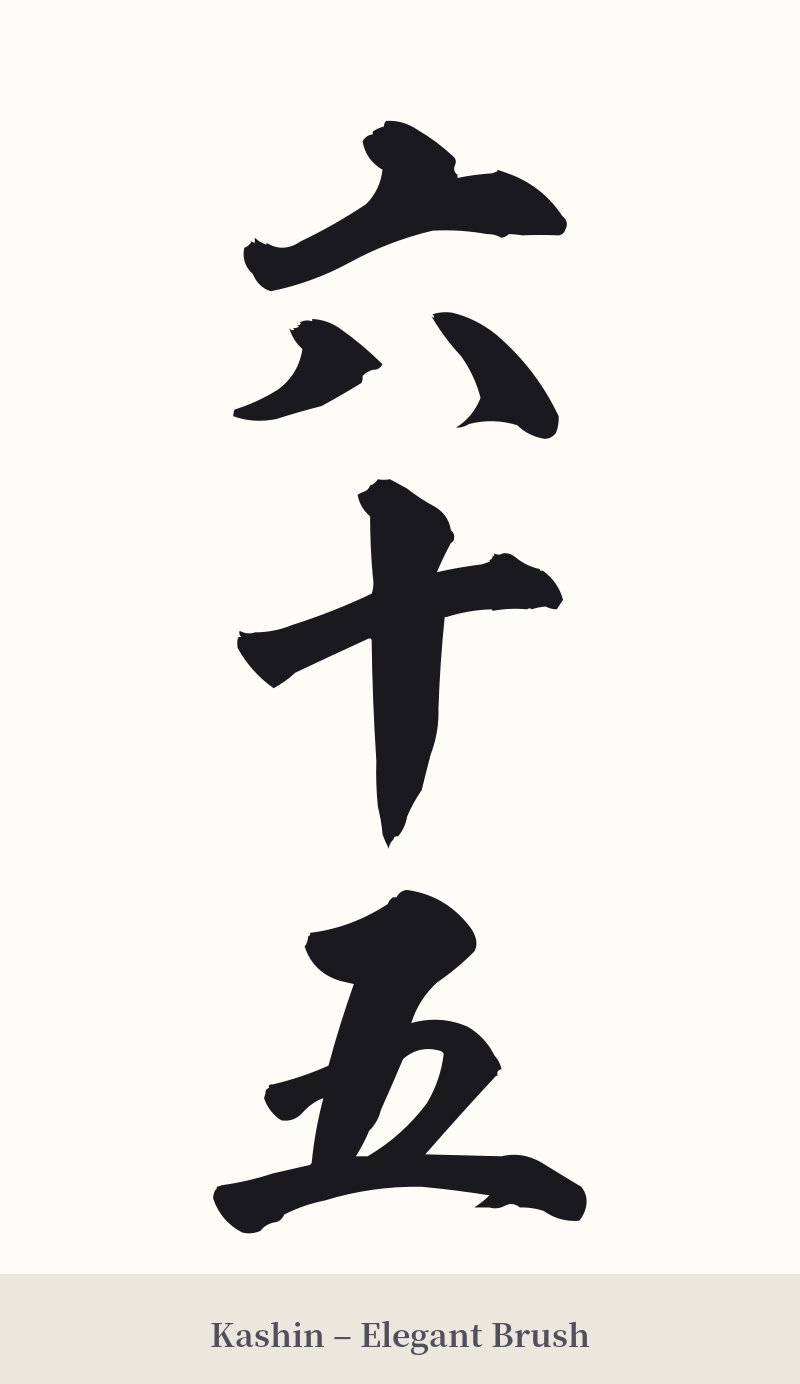
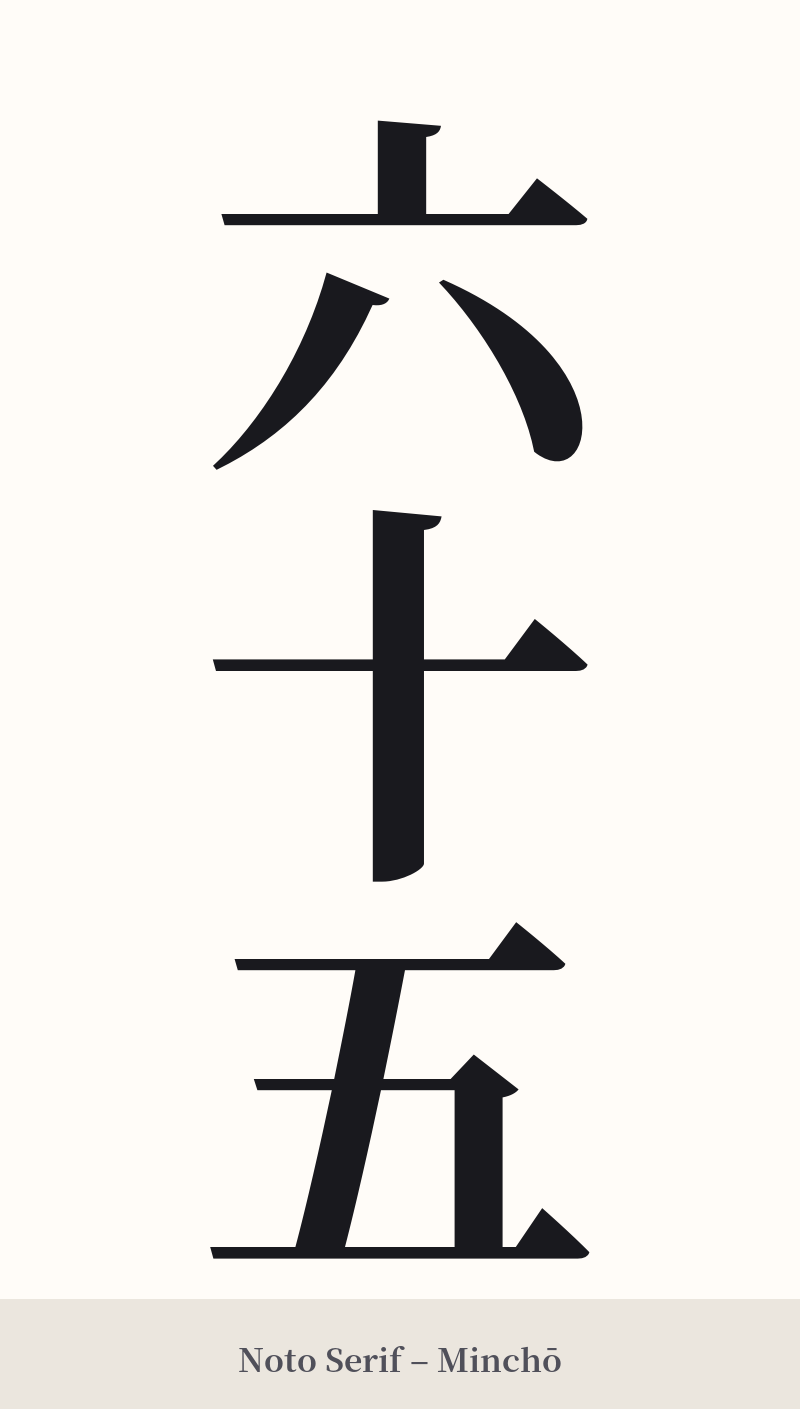
The same kanji can look dramatically different depending on the calligraphy style. Choose a font that matches the mood you want for your tattoo or design.
🎨 Tattoo Suitability
📐 Tattoo Design Guide
While a literal number like 六十五 is an unconventional tattoo choice, it can be designed with personal significance. The key is in the presentation.
– Placement: For a number that holds personal meaning, discreet placements like the inner wrist, behind the ear, or on the ankle can work well. If it represents a bold public statement, a larger piece on the forearm or calf could be considered.
– Style: The characters are simple, so the font style is crucial. A crisp, architectural Mincho or Kaisho font will emphasize its literal, numerical quality. Conversely, a flowing, dynamic calligraphy script (Gyōsho or Sōsho) can imbue the simple characters with energy and artistic flair, making it feel less like a label and more like an abstract piece of art.
– Orientation: A vertical alignment (六, then 十, then 五 below) is the most traditional and aesthetically pleasing arrangement for Japanese script. It creates a natural, top-to-bottom flow that is visually balanced.
Comments