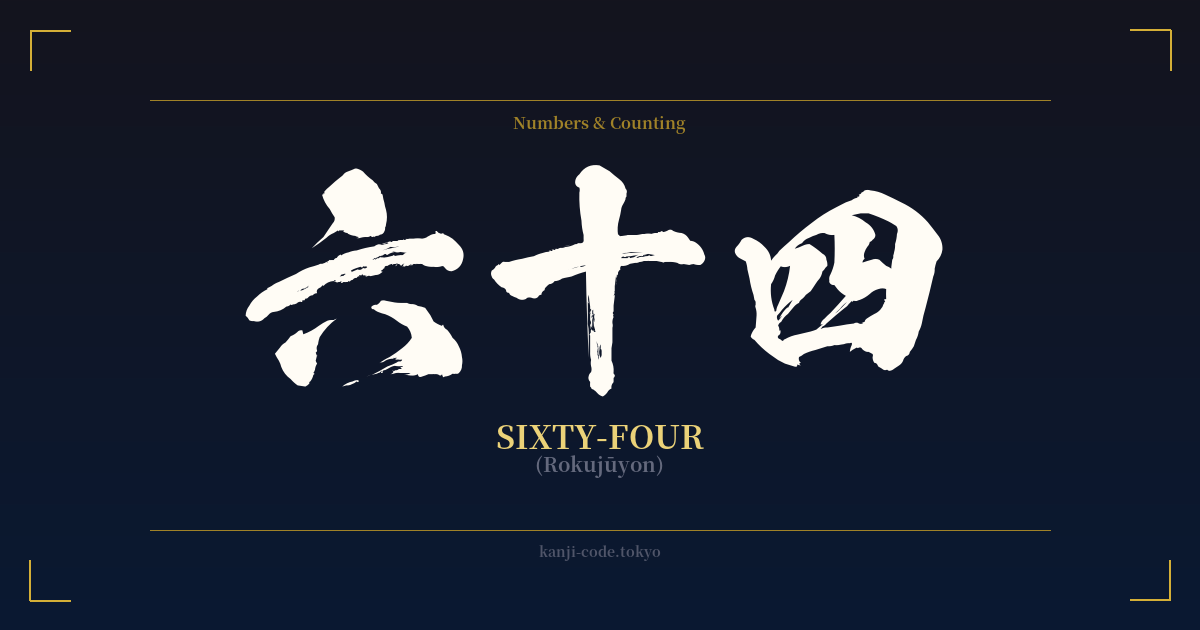
✍️ 六十四 (Rokujūyon) — Cultural Context
At first glance, 六十四 (rokujūyon) is simply the Japanese word for the number sixty-four. Its construction is logical and follows standard Japanese numbering: 六 (roku) means six, 十 (jū) means ten, and 四 (yon) means four. Together, they form "six-tens-four," or sixty-four.
However, the true significance of this number transcends simple arithmetic. Its cultural weight is almost entirely derived from the ancient Chinese text, the I Ching, or "Book of Changes," known in Japan as the 易経 (Ekikyō). This foundational text of East Asian philosophy is not just a book for divination; it is a profound work of wisdom that explores the dynamic balance of the cosmos and the full spectrum of human experience.
The core of the I Ching consists of 64 hexagrams. Each hexagram is a figure composed of six stacked horizontal lines, where each line is either broken (Yin) or unbroken (Yang). These 64 unique combinations are said to represent all possible situations, states of being, and patterns of change in the universe. From "Creative Heaven" (乾) to "Before Completion" (未済), the hexagrams provide a symbolic map of life's journey, offering insight and guidance rather than rigid predictions.
This philosophical framework was imported into Japan alongside many other elements of Chinese culture, deeply influencing various aspects of Japanese thought. It was studied by scholars, monks, and samurai alike. Zen Buddhism found resonance in its ideas of flow and transformation. The samurai class, particularly strategists, saw the I Ching's principles as a metaphor for the ever-changing battlefield. The famous swordsman Miyamoto Musashi, in his "Book of Five Rings," speaks of understanding rhythm and timing, concepts that echo the I Ching's emphasis on recognizing the flow of events.
Therefore, the number sixty-four, represented by 六十四, is not just a quantity. It is a symbol of completeness, totality, and the entire cycle of universal change. It evokes the idea that every possible scenario and its resolution are contained within a single, elegant system. Choosing this number is to embrace a worldview that sees life as a series of patterns and transformations, a complex but ultimately comprehensible dance of opposing forces.
🖌️ Font Styles for 六十四
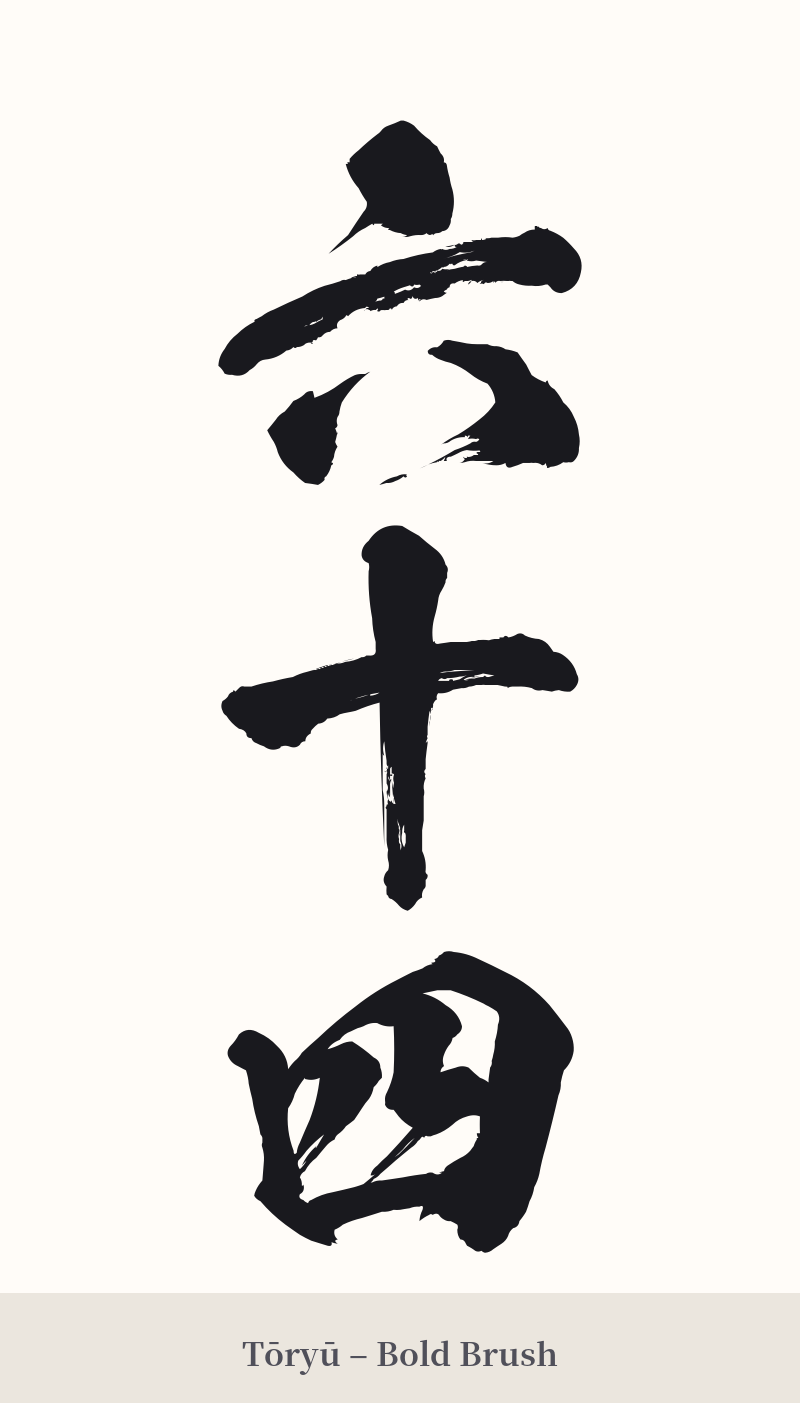
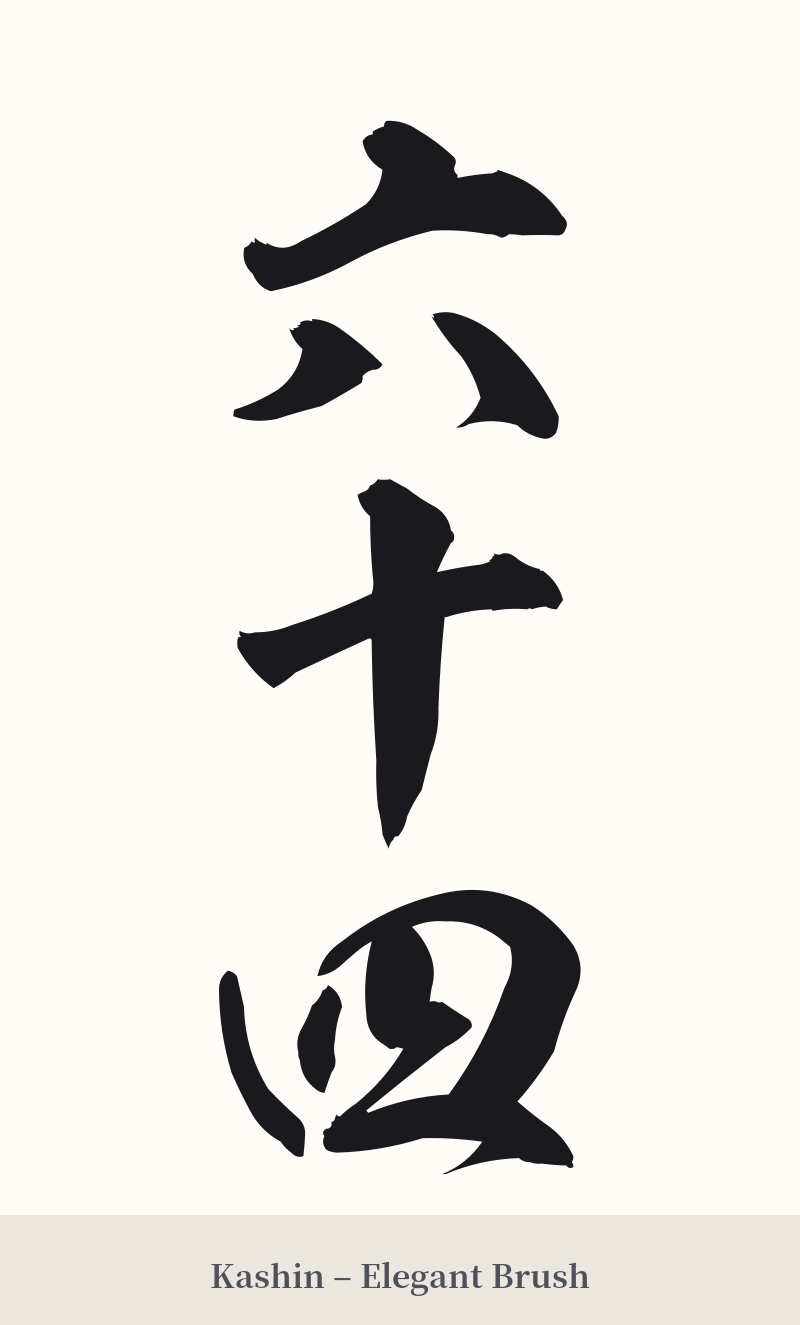
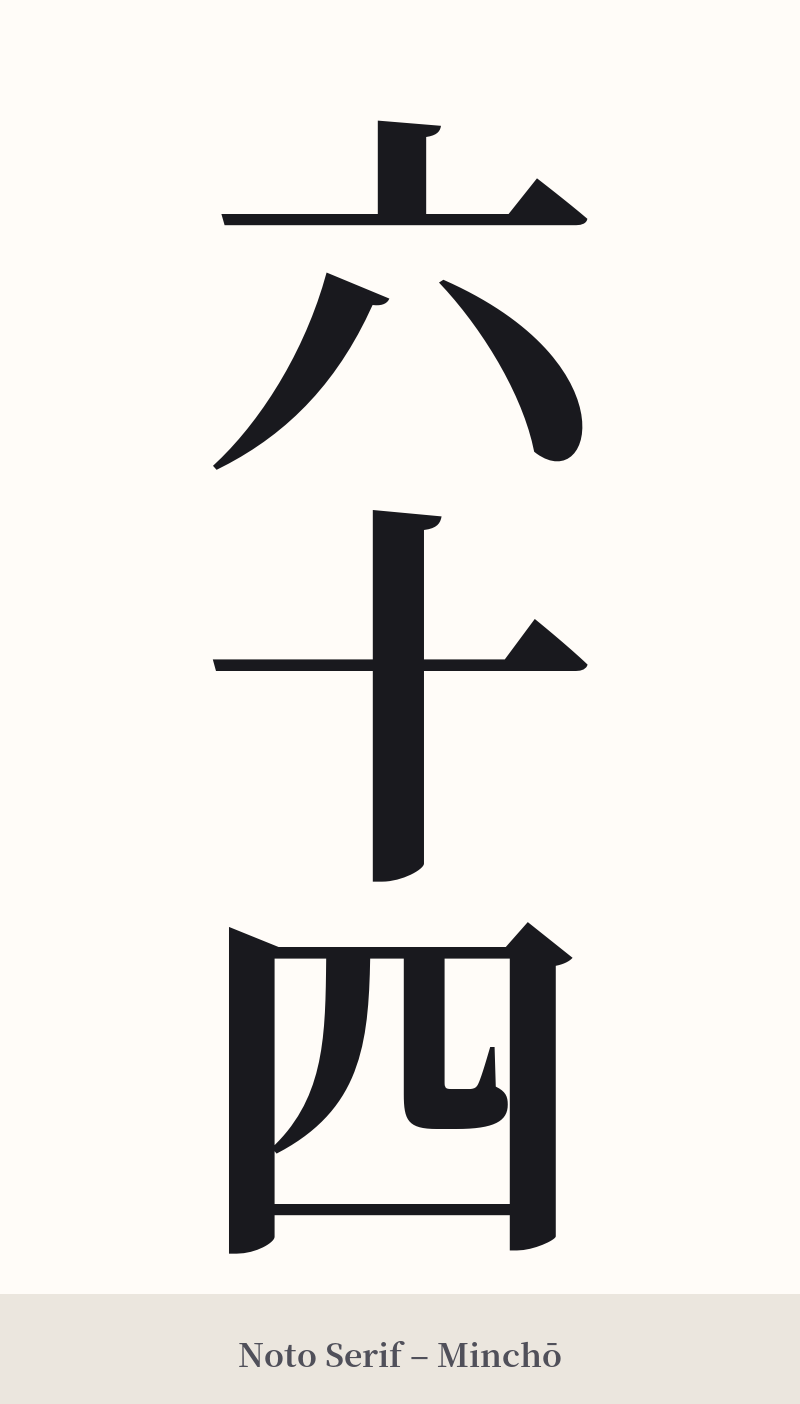
The same kanji can look dramatically different depending on the calligraphy style. Choose a font that matches the mood you want for your tattoo or design.
🎨 Tattoo Suitability
📐 Tattoo Design Guide
For a tattoo of 六十四, the design choices should aim to elevate it beyond a simple numerical label and hint at its philosophical depth.
– Placement: Vertical alignment is strongly recommended, as it is the traditional direction for Japanese writing. This orientation works beautifully along the spine, the forearm, or the calf, creating an elegant and flowing look.
– Font Style: Avoid standard digital or block fonts, which will make it look sterile. Instead, opt for a traditional calligraphy (shodō) style. A semi-cursive style (gyōsho) can add a sense of dynamism and flow, reflecting the 'changes' of the I Ching. A more formal block script (kaisho) can give it a feeling of ancient authority and structure.
– Visual Tips: Because the kanji alone may not convey its full meaning, consider incorporating a related visual element. You could pair it with the specific I Ching hexagram that holds personal meaning for you. Another option is to subtly embed the kanji within a larger design, perhaps an Enso circle to represent the universe the 64 hexagrams describe.
Comments