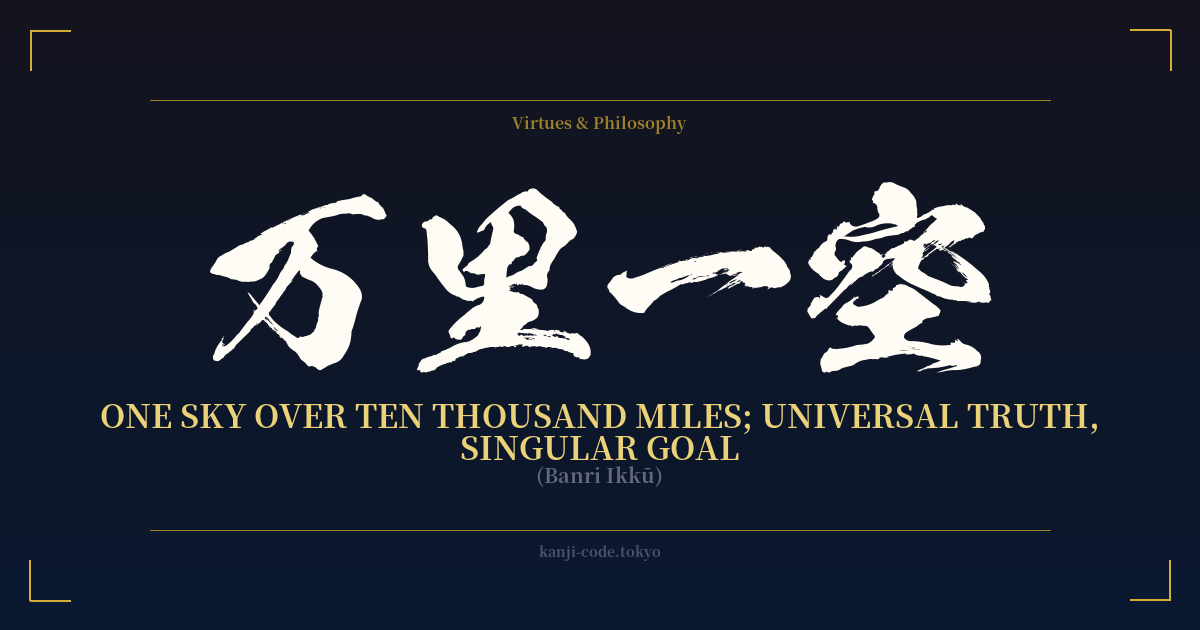
✍️ 万里一空 (Banri Ikkū) — Cultural Context
万里一空 (Banri Ikkū) is a four-character idiom that encapsulates a deep philosophical concept, famously wielded by Japan's most legendary swordsman, Miyamoto Musashi. Literally translated, it means "ten thousand miles, one sky." This evocative imagery paints a picture of a vast, unending journey under a single, constant sky.
The phrase's true power lies in its metaphor. No matter how far you travel, how many obstacles you face, or how much the world changes around you, the sky—your ultimate goal, your core principle, your fundamental truth—remains singular and unchanging. It is a powerful call for unwavering focus and dedication to a single purpose.
Miyamoto Musashi (c. 1584–1645) was an undefeated duelist, philosopher, and strategist. He is said to have survived over sixty duels, his first at the age of thirteen. In his later years, he retired from combat to reflect, teach, and write. It was during this period, in texts like the Hyōhō Sanjūgo-kajō (The Thirty-Five Articles on the Art of Swordsmanship), that he articulated the mindset of Banri Ikkū.
For Musashi, this was the essence of mastery. Whether facing a single opponent or a dozen, whether wielding a long sword or a short one, the underlying principles of combat were the same. The goal was to achieve a state of mind so focused that all distractions fall away, allowing one to act with pure intention. This is the "one sky"—a mental state of clarity and singular purpose that transcends the chaos of the "ten thousand miles" of worldly struggle.
While born from the crucible of samurai combat, the wisdom of Banri Ikkū has long since permeated mainstream Japanese culture. It has become a source of inspiration for anyone facing a long and challenging path. An athlete training for the Olympics uses it to maintain focus through years of grueling practice. A student preparing for life-changing exams invokes it to stay committed to their studies. An entrepreneur keeps it in mind while navigating the endless challenges of building a business.
The phrase teaches a vital lesson: do not let the vastness of the journey overwhelm you. Do not be distracted by the myriad of small obstacles. Instead, keep your eyes on the "one sky," the ultimate purpose that guides every step you take. It is a philosophy of perseverance, focus, and the relentless pursuit of a singular, all-encompassing goal.
🖌️ Font Styles for 万里一空
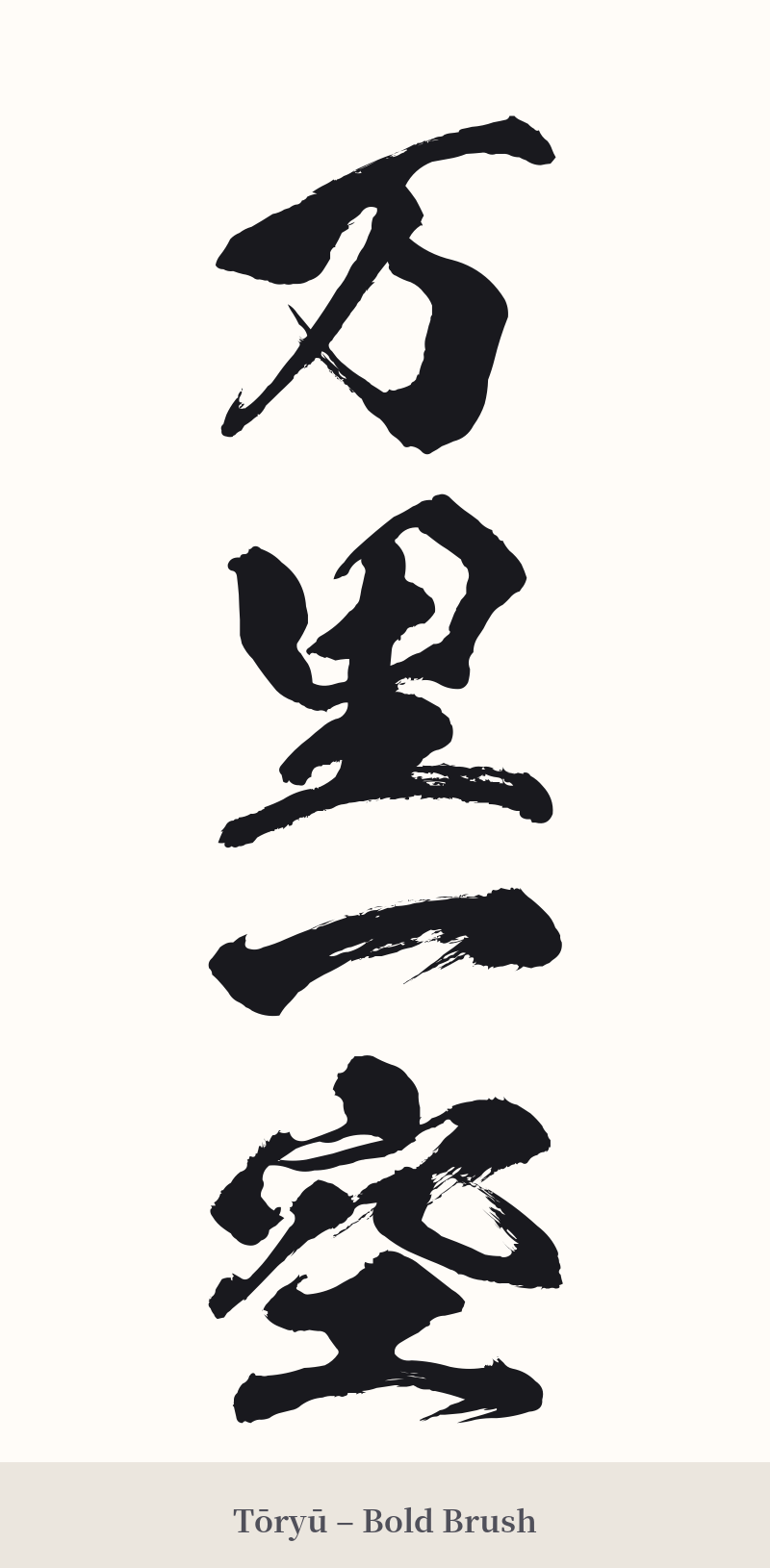
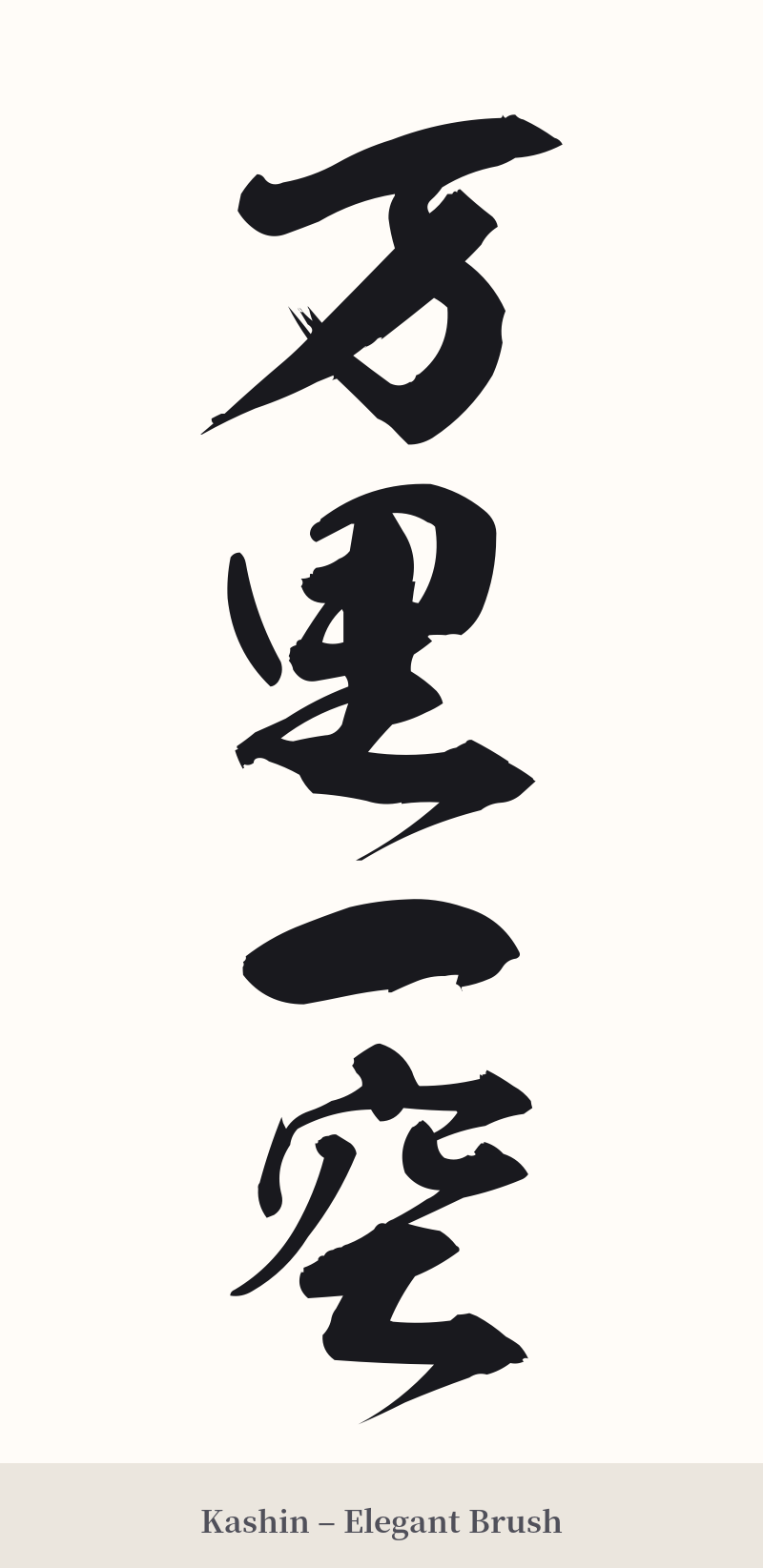
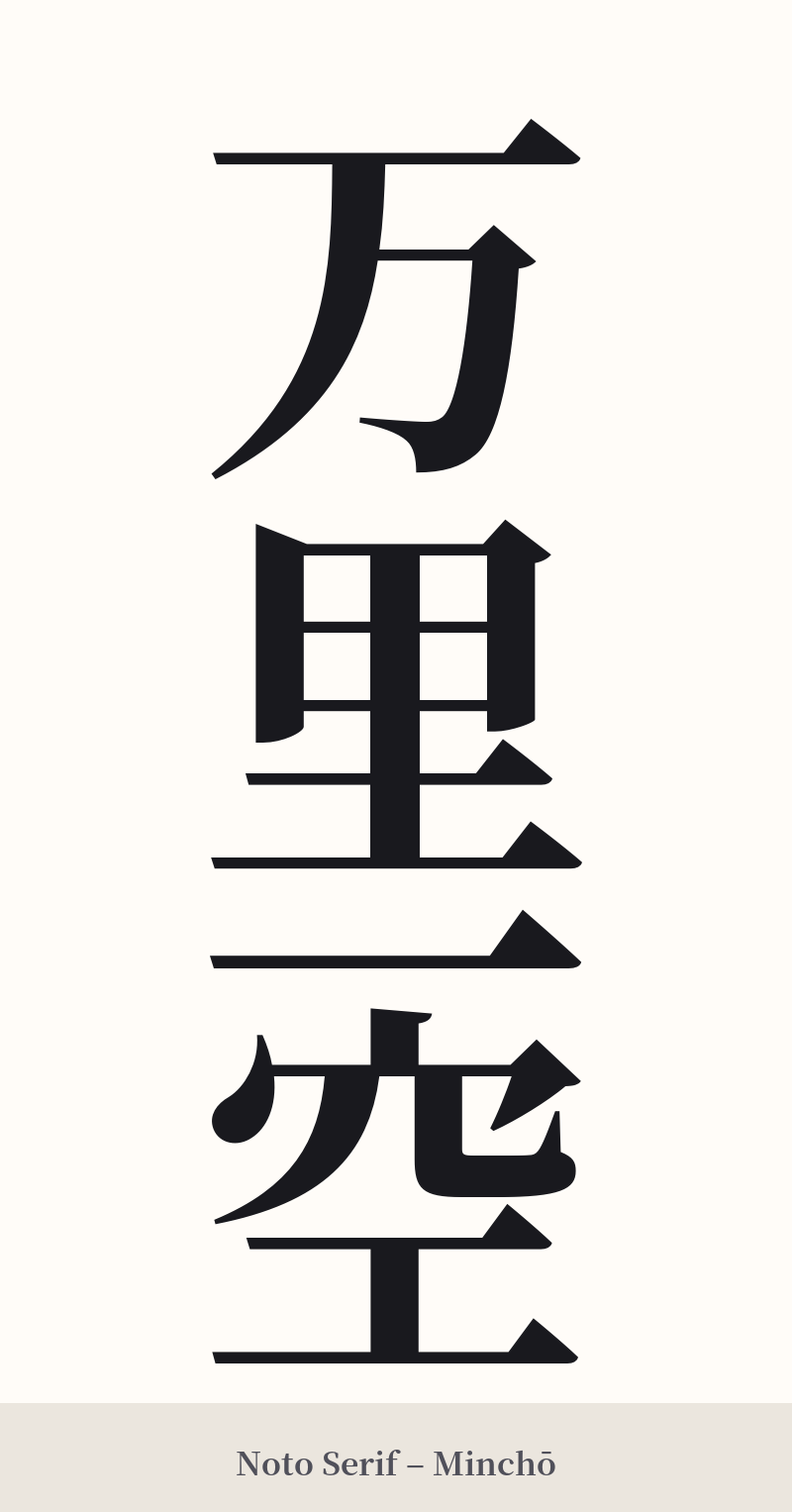
The same kanji can look dramatically different depending on the calligraphy style. Choose a font that matches the mood you want for your tattoo or design.
🎨 Tattoo Suitability
📐 Tattoo Design Guide
万里一空 is a classic four-character idiom (yojijukugo) that lends itself beautifully to tattoo design. Its balance and philosophical weight offer many creative possibilities.
– Placement: Vertical alignment is the most traditional and visually striking way to display this phrase. It works exceptionally well along the spine, forearm, or the side of the calf. A horizontal arrangement can also be effective across the chest, upper back, or below the collarbone.
– Font Style: For a powerful and classic look, consider a Kaisho (block script) style. Its clear, strong strokes emphasize the conviction behind the words. For a more fluid and artistic feel, a Gyosho (semi-cursive) script can add a sense of movement and grace, reflecting the journey aspect of the phrase.
– Visual Tips: The four characters are strong enough to stand alone, creating a minimalist yet profound statement. You could also incorporate a subtle background element, such as a light ink wash or a minimalist enso circle, to evoke the 'sky' or the Zen concept of 'emptiness' (空). Placing it within a larger design, such as a landscape or alongside a portrait of a samurai, can also tie it directly to its origins.
Comments